Garage Doors
Practical advice
The guides below are the explanations we give on site, written down. They cover the parts, the wear, the seasons and the upgrades, so you can revisit them whenever the door raises a question.
Asked and answered
What happens if the report lists a stop-use item?
The door is parked in a safe position, usually closed, with the opener disconnected so nobody runs it by habit, and the reason is shown to you. The correction is explained and quoted as its own piece of work, and once it is done the door is retested through the balance, reversal and photo-eye checks before it goes back into daily service. Another door into the house or garage is used in the meantime.
What is the balance test and why does it matter so much?
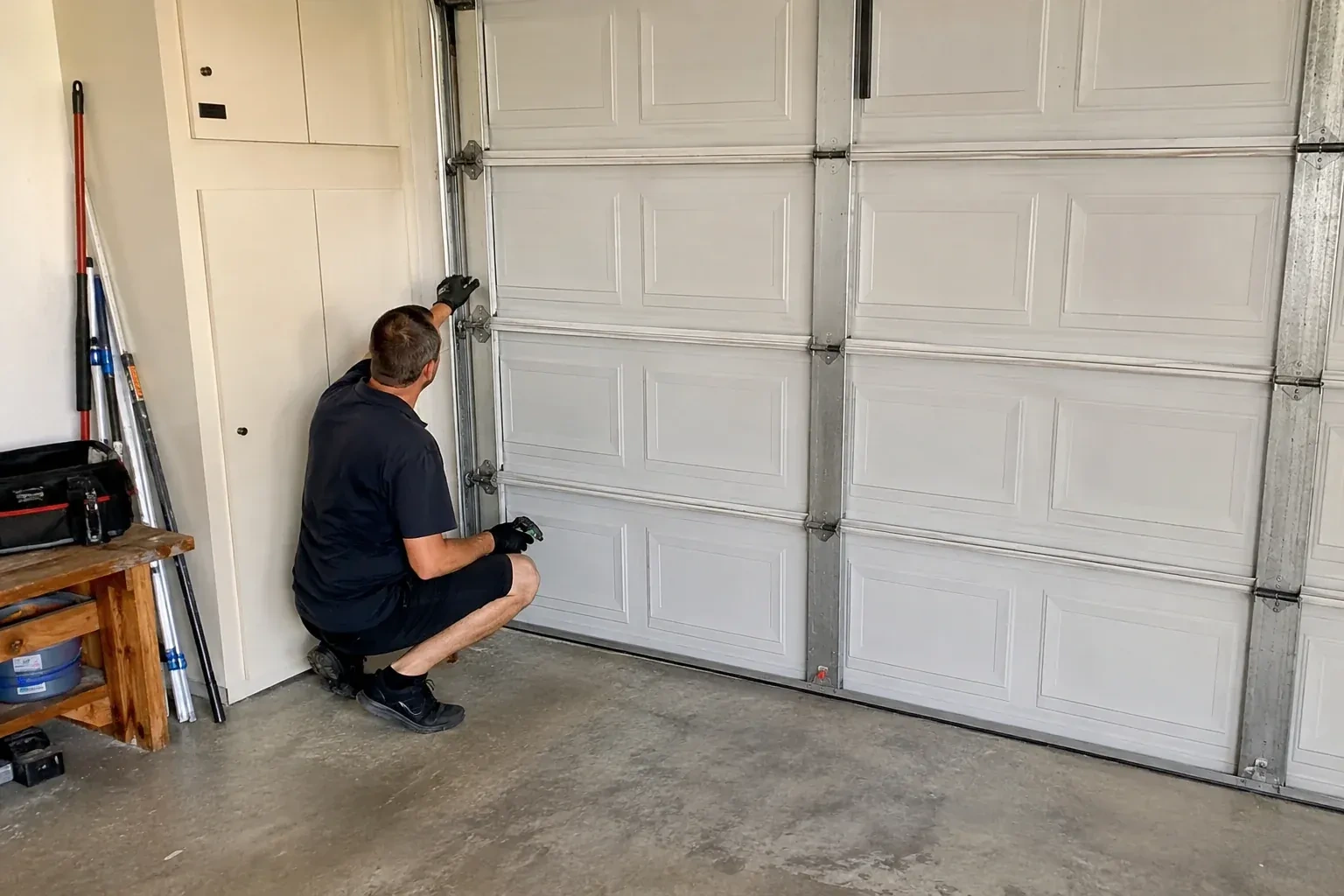
With the door closed, the opener is disconnected using the red release handle and the door is lifted by hand. A balanced door rises with modest effort, stays fully open and holds still about a metre off the floor. The springs are meant to carry nearly all the weight so the opener only guides the door. A heavy or sinking door means the opener is lifting weight it was not built to lift, wearing its gear and making the reversal system less reliable.
Should I choose nylon or steel replacement rollers?
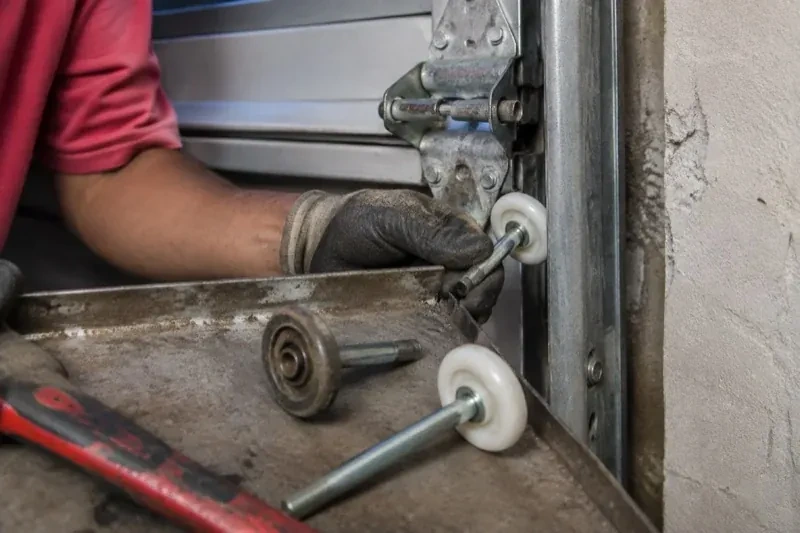
Both work when matched to the door. Steel rollers are durable and cope with heavy doors but run louder; nylon rollers with sealed bearings are noticeably quieter and need less attention, which suits an attached garage under a bedroom. What matters more than the material is the stem length and wheel size matching the hinges and track, and replacing all the rollers together so the door rides evenly on every one.
How long does it take to get a replacement section?
Sections are made to order for a specific model, size, position and colour rather than kept in stock, so there is a lead time from the manufacturer. It varies with the maker, the colour and the season, and the technician confirms the expected timing when the order is placed. In the meantime the door is left in a safe state, either in normal use or braced and closed, depending on the damage.
How do I know which size and type my door takes?
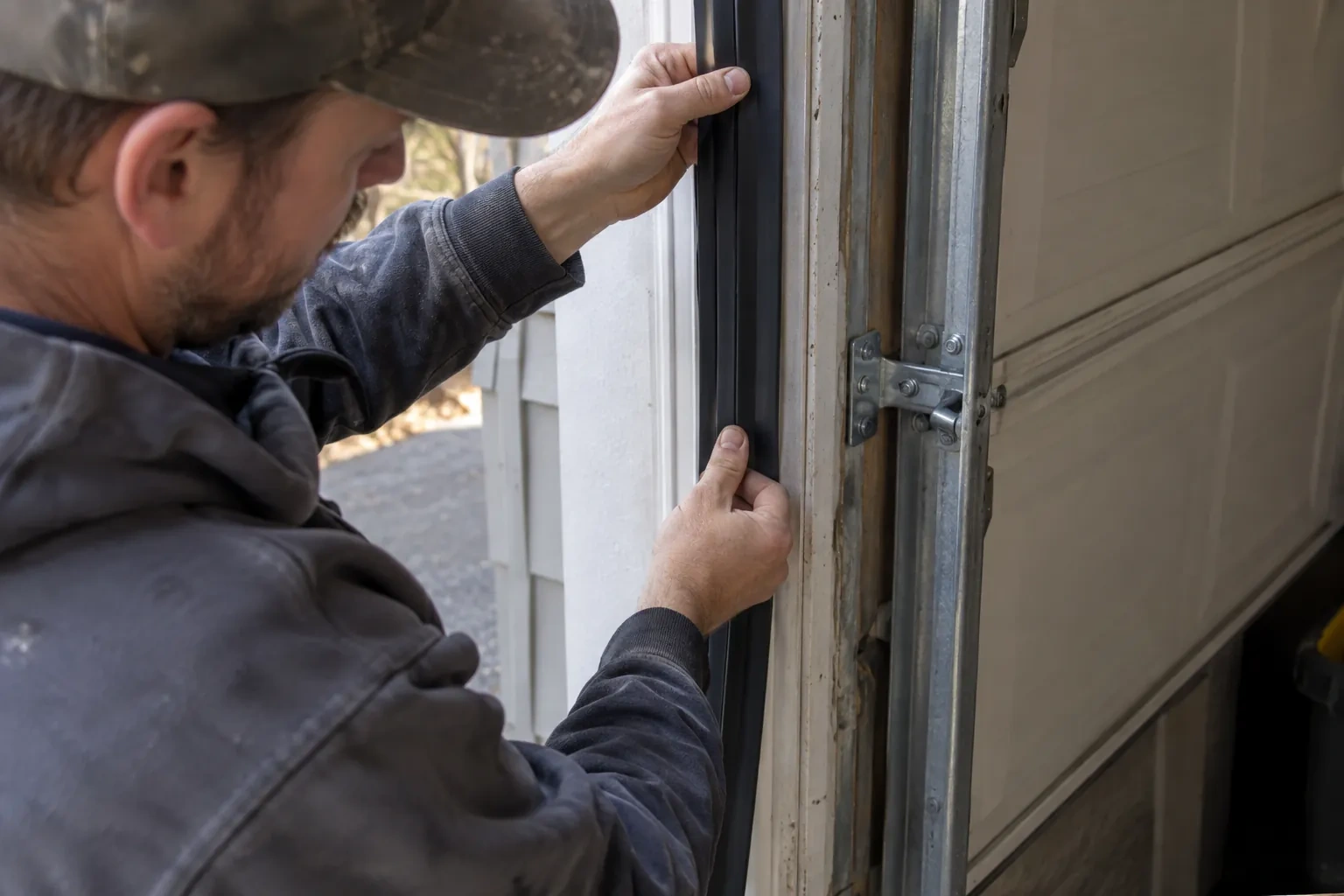
Look at the end of the bottom section for the metal or plastic strip that holds the seal. Count the channels, note whether they are slotted or rounded, and measure the distance between them and the width of the door. A photo of the end of the retainer and one of the seal's cross-section is usually enough for the technician to identify the profile before the visit and bring the right roll.
What colours does perimeter weatherstrip come in?
Standard ranges cover white, almond, brown, grey, black and a sandstone or clay tone, which between them match most trim, garage door and brickmould colours. The technician brings the colour that suits your trim once you describe it or send a photo. A one-piece vinyl stop is coloured through, so it does not show scratches, and a fin on a painted wood stop can be matched to the paint.
The wood around my lock is soft. Can it still be repaired?
Yes. The decayed wood is cut back to sound material and a hardwood block or a steel backing plate is let in behind the handle and along the stile where the bar guides sit. The handle, mechanism and guides are then fixed to that new material with through-bolts rather than screws into soft grain, so the lock turns without rocking and the bars hold their line.
What is the difference between nylon and steel rollers?
Both are a wheel on a steel stem, commonly on ball bearings though standard nylon rollers can be bearingless; the bigger difference is the wheel material. A steel wheel is tough and suits very heavy or commercial doors, but steel on a steel track is loud and grows louder as bearings wear. A nylon wheel wraps a tire around the hub, absorbing vibration rather than passing it into the track, so the door runs more quietly and the wheel never rusts. For most residential doors, nylon is the usual recommendation.
Can a light bump from the car damage a hinge?
Yes, more often than people expect. The bottom two panels take the contact, and the edge hinge at that joint bends along with the stile behind it, so the panel edges rub and the roller leans. The damage sometimes only shows as a new squeak at the curve. The technician straightens or renews the stile, fits a new hinge and roller, and checks the strut and track on that side.
Can a bent garage door track be straightened, or does it need replacing?
Both happen, and the damage decides. A shallow dent in the vertical run away from the curve is usually dressed back to shape with track pliers or a block, and a channel that has spread can be squeezed closed. A kink, a crack, a bend in the curved piece or steel thinned by rust is replaced with a matching section, because a hard spot in the roller path keeps catching however carefully it is worked.
How do I tell a cable problem from a spring problem?
Look above the door with it closed. A torsion spring that has broken shows a clear gap in the coil, and both cables usually go slack together because nothing is turning the shaft. A cable problem tends to show on one side only: a frayed length, a coil of loose cable, or one corner sitting higher. Either way the technician inspects both, since a weak spring is a common reason a cable fails.
Can extension springs be converted to a torsion system?
In many garages, yes. A conversion adds a shaft, centre and end bearings, drums and torsion springs above the opening and removes the extension springs and pulleys from beside the tracks. It needs enough headroom above the door for the shaft and solid framing for the centre bracket. The technician measures the space and the door before recommending it, and the result is smoother, more even lifting with hardware kept clear of the sides.
Why does the door slam down the last bit?
A door that drops the final stretch is telling you the springs are no longer holding it. As an extension spring loses its temper it gives less pull near the bottom of travel, where the door needs the most support, so the door falls that last foot. Fresh springs matched to the door's weight bring the door down under control and take that shock off the bottom section and the opener.
What information helps when I book the visit?
Whether the door drifts up, sinks, or hangs crooked when released; whether there is one spring on a shaft above the door or springs along the tracks; whether it is a single or double door and roughly how tall; when the springs were last changed if you know; what has been added to the door; and whether the opener strains, reverses or stalls. A photo of the spring area is useful.
What does an opener diagnosis actually involve?
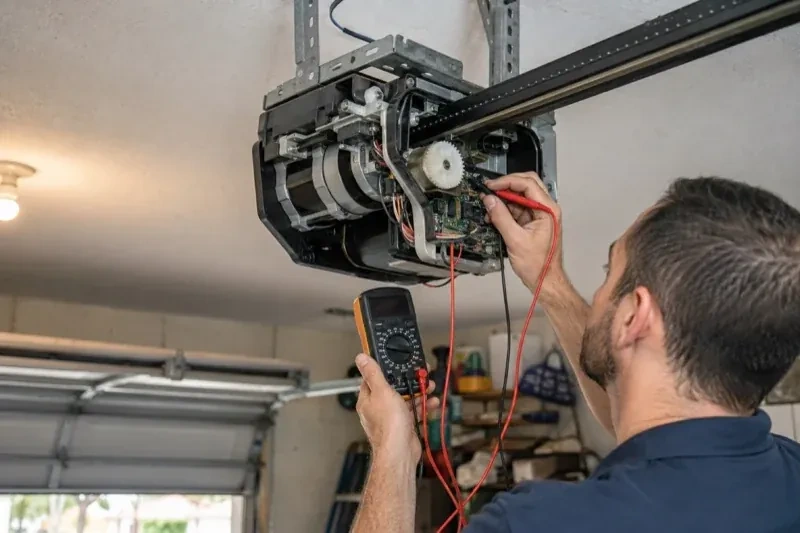
A fixed sequence of checks, done in order so nothing is assumed. Power at the receptacle. Each control tried on its own. The photo eyes and their indicator lights. The head unit's flash code, if it has one. The drive train from motor to trolley. Then the door itself, disconnected and lifted by hand to test its balance. Only after that is a part named and, where it is a small one, replaced during the same visit.
Why does the technician lift the door by hand before repairing the opener?
Because the chain only guides a door that the springs already carry. With the operator unplugged and the red handle pulled, a balanced door lifts with moderate effort and holds about a metre off the floor. If it is heavy or sinks, the springs have lost tension and the drive has been hauling weight it was never meant to, which is exactly how gears strip and chains stretch. Correcting the door first means the repaired drive lasts.
How long does a belt-drive repair take?
A tension adjustment with the safety tests is a short visit. Replacing the belt, trolley or idler pulley, then phasing the motor, relearning limits and running the reversal tests, is usually an hour or two. A gear-and-sprocket kit at the motor head takes longer because the head unit is opened. If the balance test turns up spring work, that is agreed as a separate job with its own time.
Can the new opener use my old rail?
The rail, trolley and drive are designed as one system with the head unit, so a new operator comes with its own rail matched to its motor and drive type. Reusing an old rail would mix parts that were never meant to run together. The old rail, head and hangers come down and are recycled, and a fresh rail is assembled to suit your door's height.
Can the sensors be mounted on the wall instead of the track?
Track-mounted clips are the preferred, manufacturer-recommended arrangement. A wall-mounted angle bracket is the next choice where the track sits far back from the opening or the clip keeps getting bumped; mounting to the concrete floor is kept as a last resort, used only when the sensor's own instructions allow it. The same rules apply: both sensors at a matched height no higher than about 15 cm, level, facing each other, with the wire secured. Wall mounting sometimes gives a cleaner beam line on older doors with unusual track layouts.
What should I gather before the technician arrives?
Every remote you own, working or not, and the keypad if it has been taken down. The opener's model label or a photo of the learn button under the light cover. The cars whose buttons need training, parked close to the door. A note of who should have access and whether any remote is missing. A code in mind for the keypad. All of this shortens the visit and makes the handover complete.
Where does the door sensor go, and what does it do?
It screws to the inside of the top door section and senses tilt: that panel stands vertical when the door is closed and lies horizontal once the door is open, and the sensor reports the change to the hub by short-range radio. It is placed clear of the opener arm, lock bar and handles, on a flat part of the panel, then paired and proven through full cycles under the maker's own setup procedure so the status in the app is reliable.
My car is trapped inside and I have an appointment. Can I just push the door open?
Better not. A door forced against a jammed trolley or a locked door can bend the arm, the top section or the track, and a vehicle driven at a door releases the stored tension in the springs. The release is the tool for this moment: with the door closed, pull the handle and lift the door by its handle. If the handle is missing or the trolley will not let go, a technician can reach the lever and have the door moving by hand.
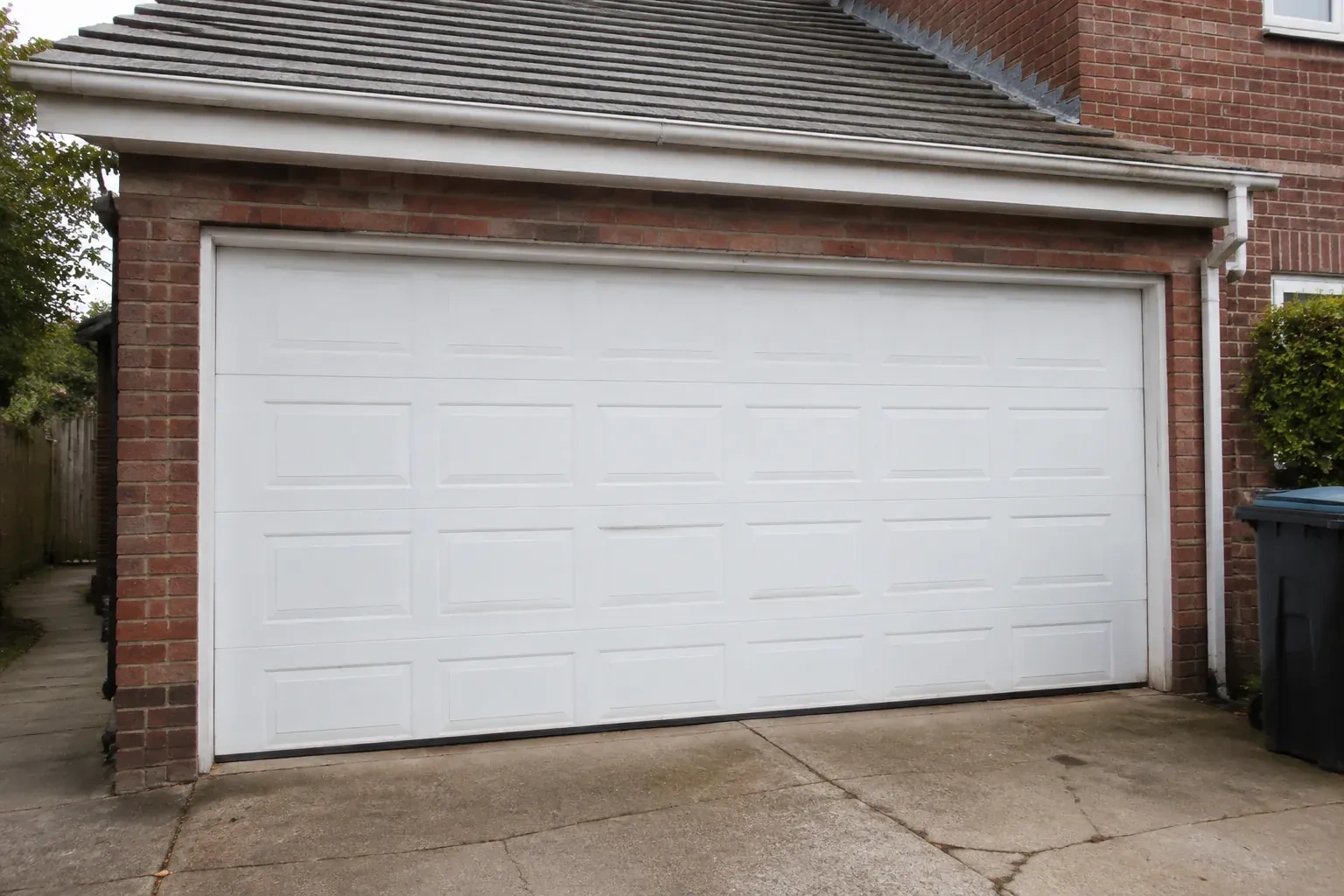
Can replacement work with a low ceiling?
Often, provided the opening and overhead space are measured before ordering. Low-headroom track and other model-supported arrangements can change how the upper section moves through the curve and where counterbalance parts sit. The technician maps beams, pipes and the operator rail, then selects from configurations supported for the particular door.
What if there is very little room above the opening?
Low headroom can often be addressed with a track arrangement designed for the available space. Accurate measurements are essential because the top section, track curve, springs and opener all compete for clearance. The installer maps ceiling obstructions and selects a supported configuration from the door system options. Storage or lighting may need repositioning to preserve the required travel zone.
How are springs chosen for the new assembly?
Spring selection uses the completed door's weight, height, lift arrangement, drum geometry, and expected operating cycle. Reinforcement and windows are included in that calculation. After installation, technicians apply tension with proper winding tools and check manual balance through the travel range, adjusting both sides so cables remain even and the door stays controlled.
How is the new door balanced before handover?
The opener is disconnected and the door is moved manually through its path. Technicians observe the effort required, whether the door stays controlled at intermediate positions, how cables wind on the drums and whether rollers move freely through the track curves. Spring tension and alignment are refined as a system. Powered settings are addressed only after the manual assembly behaves consistently.
What should I move before the installation visit?
Clear vehicles, bicycles, shelving on wheels and stored items from the door path and the areas beside the tracks. The crew also needs an unobstructed route for glazed sections and a clean staging space on padded supports. Mention fixed cabinets, ceiling storage, vehicle lifts or delicate flooring early so protection and handling can be planned around them.
Which measurements are needed before ordering the door?
The core measurements are finished opening width and height, headroom above the header, sideroom beyond each jamb and backroom into the garage. The installer also records floor level, jamb and header surfaces, roof pitch and anything occupying the door path. Operator space, trim thickness and final cladding matter too. Multiple readings reveal an opening that is tapered, out of square or changing with unfinished surfaces.
Does fire-rated status affect sectional door repair?
It can. If the opening is part of a required fire separation, its label, approved assembly, release equipment and building fire-safety documentation shape what components and procedures are appropriate. Share any door labels or inspection records before work begins. The repair can then preserve the intended closure function and align with the property's applicable fire-safety responsibilities.
Why is there a grinding or clattering sound near the hood?
Noise at the head can come from worn barrel bearings, loose brackets, misaligned drive chain or sprockets, shifting slats, an uneven coil or hardware contacting the hood. The pattern matters: once per revolution suggests something different from continuous guide scrape. Controlled observation locates the source before a specific part is selected.
What records should I receive after the work?
Keep a record of the high-lift dimension, final open-door clearance, track arrangement, drums, cables, spring specification, shaft parts and operator configuration. Component labels, manuals, layout notes and completed test results are also useful. These details help future service and allow other garage projects to respect the door's movement, attachment and access requirements.