Repairs · St. Catharines
Off-Track Garage Door Reset
A delivery van backed into the shop's overhead door this afternoon.
In plain words
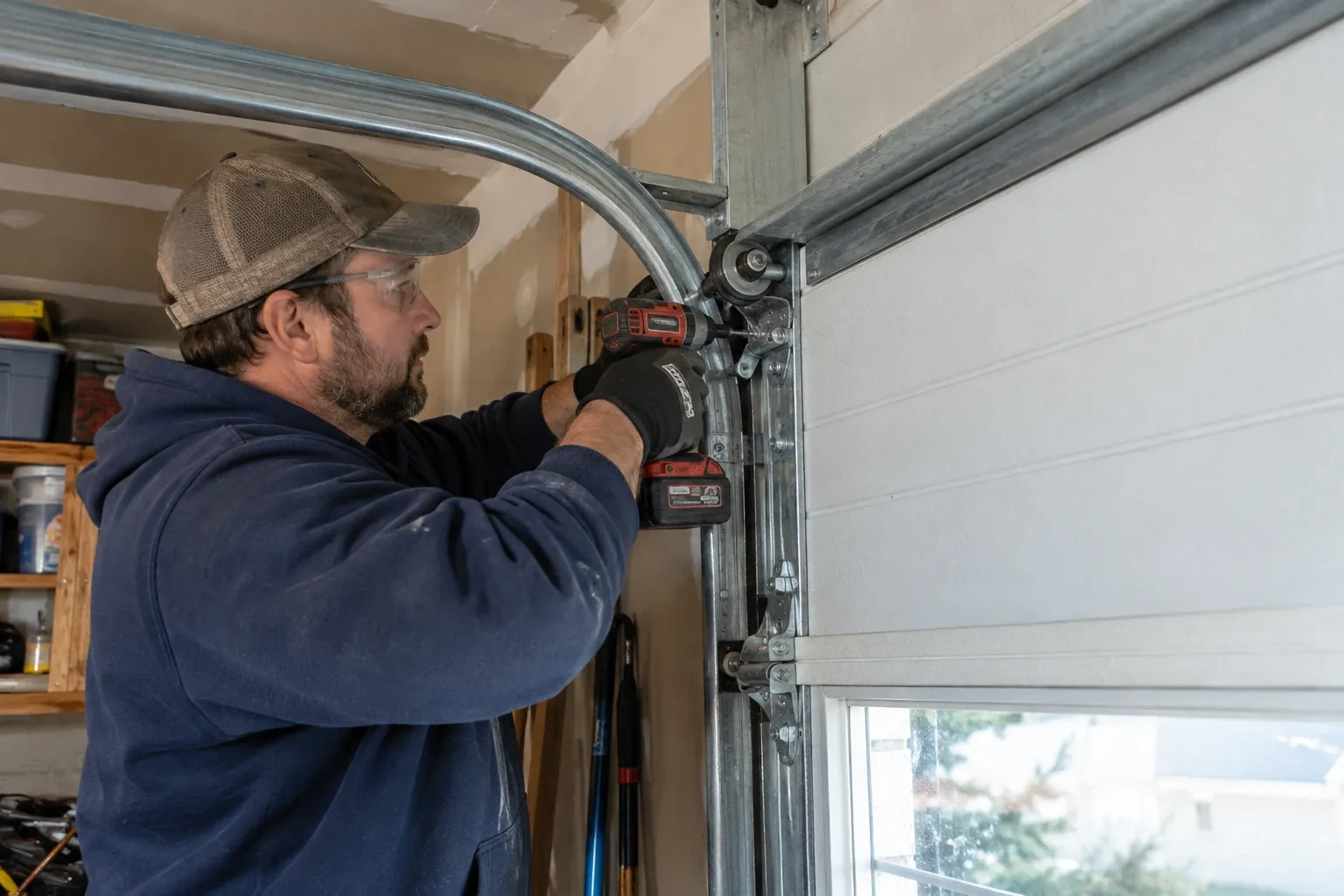
A reset is different from a track repair, although one visit can include both. Resetting means returning the rollers, cables and sections to the path the track already defines and correcting the small misalignments that let them leave it. Track repair means the rail itself is bent, crushed or torn from the jamb and must be re-formed or replaced before anything can ride on it. The technician looks at the door and tells you which situation you have. Many doors need only a reset with a few new rollers; a door hit by a vehicle often needs a length of new track as well.
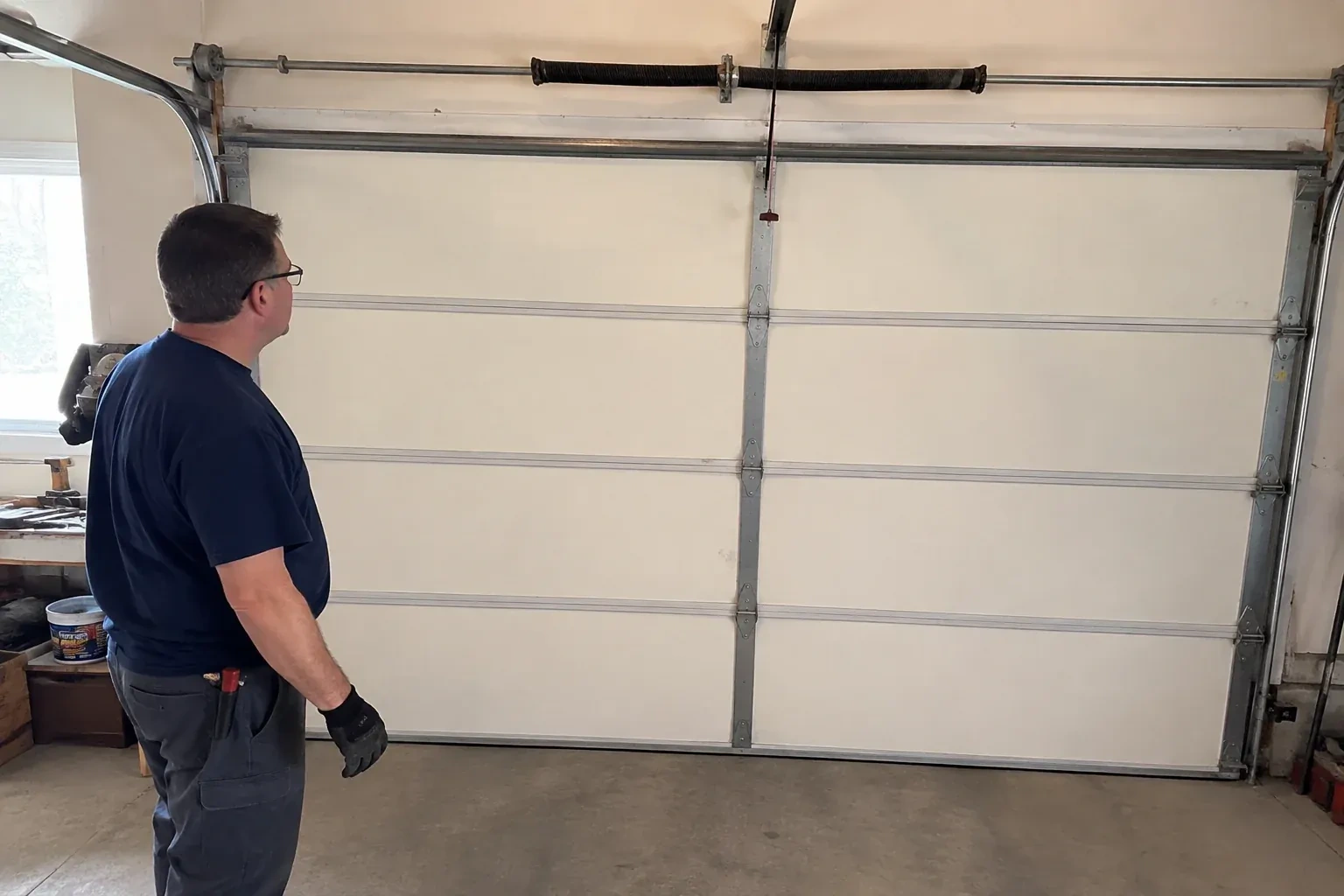
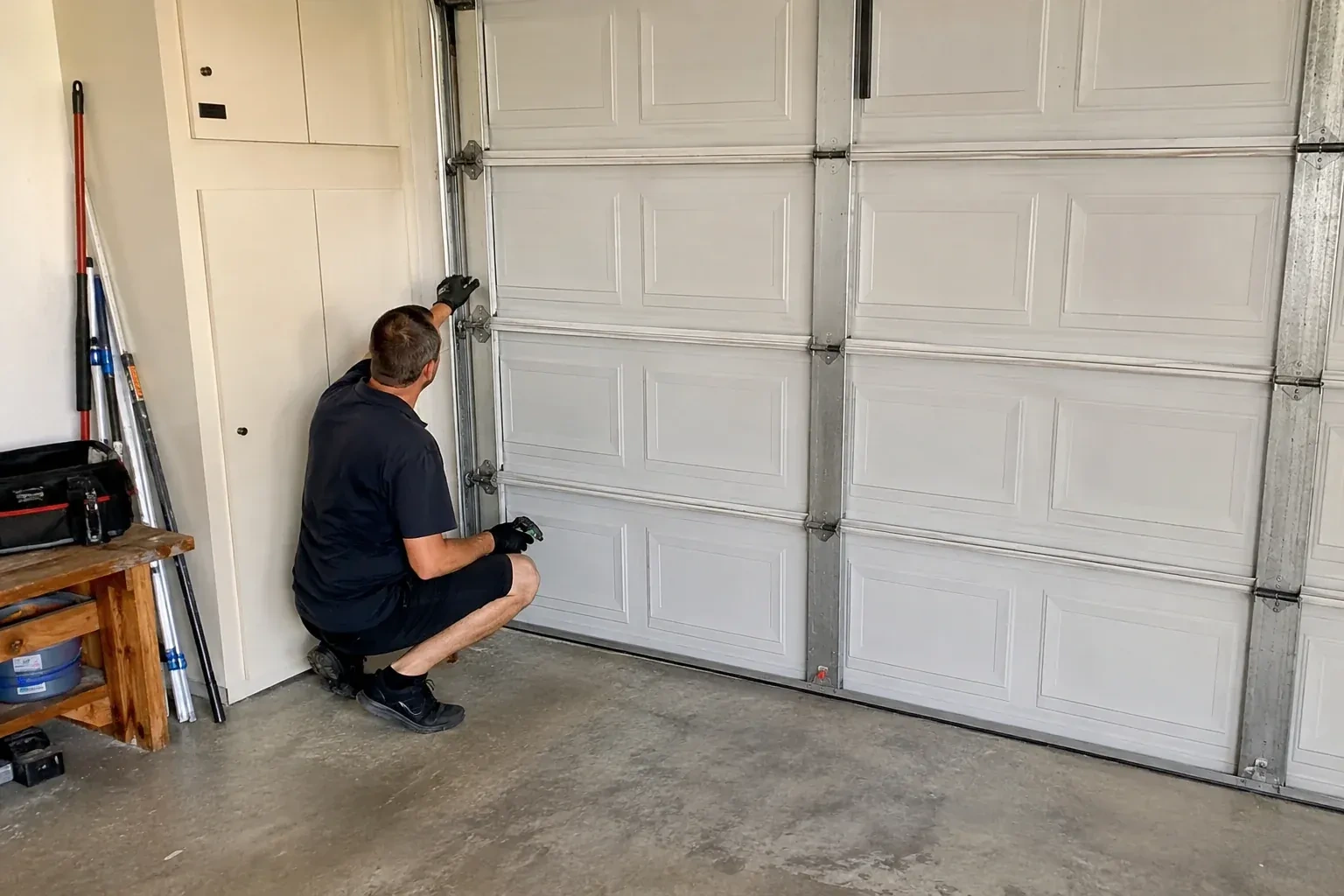
How the visit goesA delivery van backed into the shop's overhead door this afternoon. The lower panel is pushed in, the track on that side is kinked, and the door is hanging unevenly with staff unable to close up for the night.
Off-Track Garage Door Reset
How the visit goes
Making the door safe before anything is touched
The first job is to stop the door doing anything unexpected. The technician clears people, pets and anything stored near the opening, unplugs the opener or pulls the release cord so the motor cannot be triggered from a remote, and looks at how the door is holding its position. Locking pliers go onto the track below the lowest roller and a support goes under a section that could drop. Only once the door is clamped and steady does the closer look begin. This takes a few minutes and it is what lets the rest of the visit proceed calmly rather than around a door that could shift.
Putting the cables back on their drums
A cable that unwound or crossed on its drum is stripped back and rewound in its groove, beginning at the cable stop and laying each turn beside the last. Both cables are set to equal length so the bottom section hangs level, then the drums are locked to the shaft and the springs are rewound to the door's weight. A cable with kinks, rust or broken strands is replaced along with its partner so the two sides age together. This part of the work is done with the door clamped fully closed and the sections held, because a cable coming under tension is exactly when a door wants to move.
Keeping the opener honest
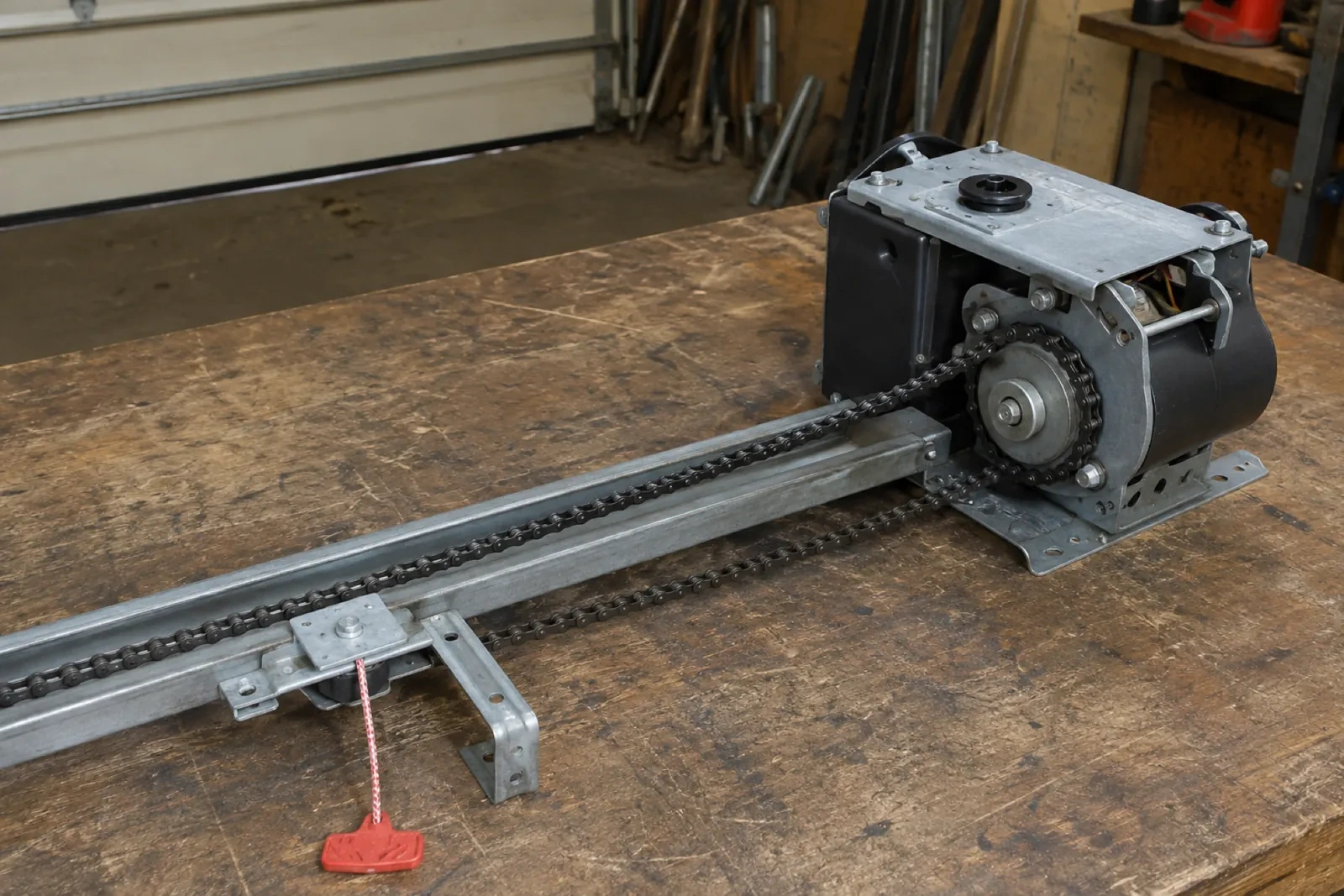
The opener leaves the visit re-taught to the trued door, and a monthly test keeps it that way. Lay a piece of wood about 1.5 inches thick flat on the floor in the door's path and close the door from the wall button: it must touch the block and reverse. Then start the door closing again and pass an object through the photo-eye beam near the floor: it must stop and go back up. If either test fails, unhook the door from the opener and operate it by hand until it has been looked at. A door that reverses properly is one that stops before it can rack itself against an obstruction.
Off-Track Garage Door Reset
In the van
Track pliers
Vertical or horizontal track section
Replacement rollers, steel or nylon
Graduated edge hinges
Lifting cables, matched pair
Off-Track Garage Door Reset
What affects the quote
Whether the cables are involved
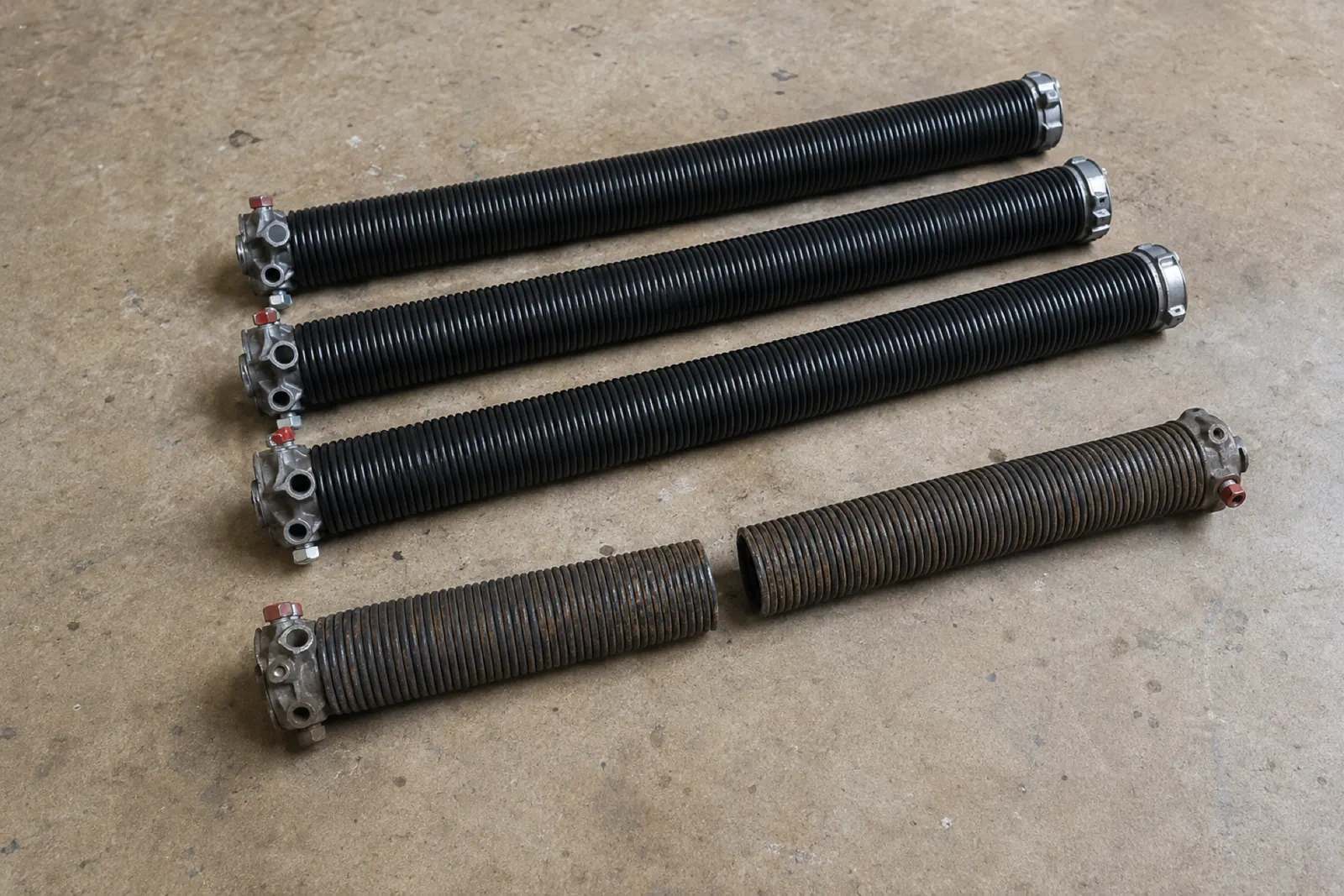
A cable that simply jumped its drum is rewound; one that is frayed or broken is replaced along with its partner, and the springs are unwound and rewound to do it. Each step is listed separately.
Hinges, brackets and fixtures bent in the event
A twisted bottom bracket, a bent graduated hinge or a distorted top fixture is replaced rather than straightened. Each one is a small part but is priced and listed on its own so you see what was changed.
Access and a trapped vehicle
A car inside, a tight garage with shelving beside the tracks or a low ceiling around the horizontal rails all slow the work of supporting and moving the door, and the estimate allows for the working space available.
What to have ready
- Have you unplugged the opener or pulled the red release cord?
- Did a vehicle or anything else bump the door before this happened?
- Are the springs mounted above the door or stretched along the sides?
Off-Track Garage Door Reset: questions
QuestionsShould I choose nylon or steel replacement rollers?
Both work when matched to the door. Steel rollers are durable and cope with heavy doors but run louder; nylon rollers with sealed bearings are noticeably quieter and need less attention, which suits an attached garage under a bedroom. What matters more than the material is the stem length and wheel size matching the hinges and track, and replacing all the rollers together so the door rides evenly on every one.
Why do rollers wear out, and how would I know?
Rollers turn thousands of times a year while carrying part of the door's weight, and their small ball bearings wear, fill with grit or fall out. Nylon tires can crack and steel wheels can wear flat spots or grind down to the stem. A worn roller squeals, wobbles in the rail or lets the door shudder at the curve. Replacing them as a set restores a quiet door and removes a common cause of a roller dropping out.
Are the springs involved in an off-track door?
Frequently, in one of two ways. Springs that are worn, broken or mismatched to the door's weight make the opener carry a load it was never meant to, dragging the sections out of line. And whenever cables must be re-seated or replaced, the spring tension has to be released and rewound to do it. The technician assesses the springs at the start and tells you whether they are part of the fix.
Related services
- Garage Door Tune-UpOn windy nights the door rattles in its frame, there is a line of daylight along one side, and the bottom seal has gone hard and flat.
- Garage Door Panel ReplacementA stray ball went through one of the window panes in the top section.
- Garage Door Bottom Seal ReplacementThe gap under the door is a finger wide at one end and nothing at the other.