Springs · St. Catharines
Torsion Spring Replacement
After pulling the red release cord, you tried lifting the door yourself and it would barely leave the floor.
In plain words
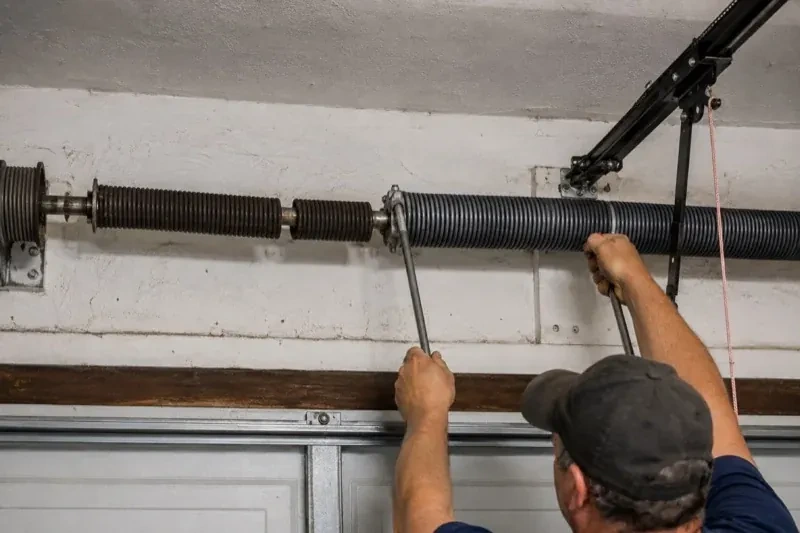
Torsion spring replacement is really a service on the whole balance system. The spring sits on a shaft that turns in a centre bearing and two end bearings, drives a pair of cable drums, and lifts the door through two steel cables. With the shaft out for the new spring, the technician inspects each of these parts, replaces bearings that grind or wobble, checks cables for fraying at the bottom brackets and confirms the drums are seated. Refreshing worn pieces at the same time means the new spring works on smooth hardware and the door runs true.
How the visit goesYou heard a sharp bang from the garage, and now the opener hums for a second and gives up. The door lifts a few centimetres at most, then settles back down as if something very heavy is holding it in place.
Torsion Spring Replacement
How the visit goes
Reading the spring itself
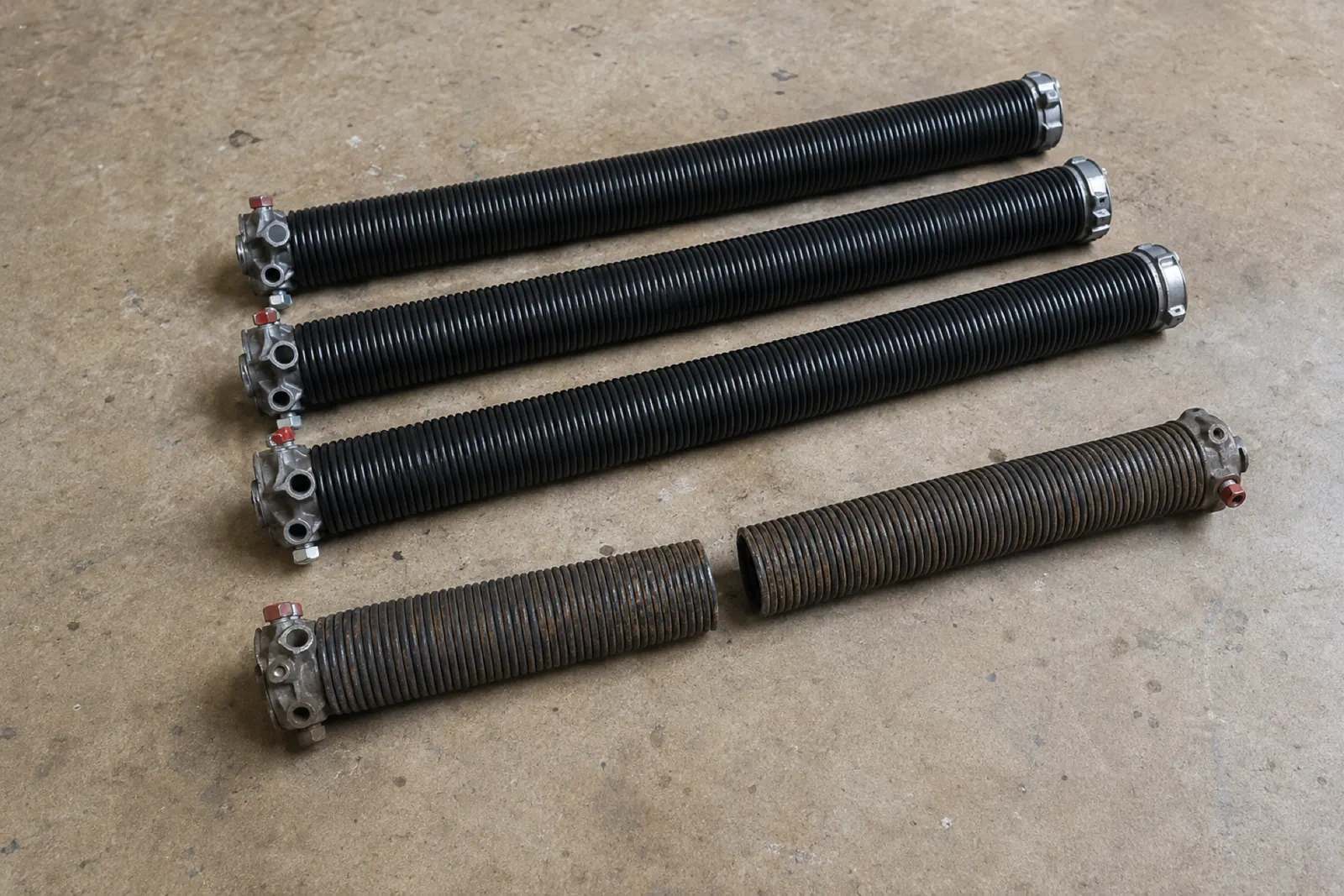
The first measurements come from the spring that is already on the shaft. The technician measures wire thickness across a run of ten or twenty coils, the inside diameter of the coil, the overall length of the spring when relaxed, and the wind direction, which is read from how the coils lean. On a two-spring door each spring is checked separately, because a left-wound and a right-wound spring sit on either side of the centre bracket. Any tag or colour marking is noted too. These numbers narrow down what the door was built with, and together with the door's weight they point to the correct replacement.
Finishing the job properly
After the balance and opener tests pass, the technician lubricates the new spring coils, bearings, hinges and roller bearings with a garage-door lubricant, leaving the track clean so the rollers run true. The old spring and any replaced parts are removed from the site. The customer is shown how the door should feel by hand, where the manual release is and how to use it, and what was installed, including the spring specification for future reference. A final look confirms clamps are off, tools are clear of the tracks and the area beneath the shaft is tidy.
Keeping the spring in good shape
A little care keeps the new spring running smoothly for its full life. Once or twice a year, spray the coils with a garage-door lubricant so the steel moves without rubbing, and do the same for the hinges, roller bearings and the end bearings at each side of the shaft. Autumn is a good time, since cold thickens grease and stiffens hardware. Leave the track dry, because lubricant there collects grit. Over the years, glance at the spring for gaps or rust streaks, and if the door starts to feel heavier by hand, book a balance check before a spring reaches its limit.
Torsion Spring Replacement
In the van
Locking pliers for the track
Torsion springs, oil-tempered or galvanized
Garage-door spring lubricant
Socket set and wrenches
End bearing plates
Torsion Spring Replacement
What affects the quote
Centre and end bearings
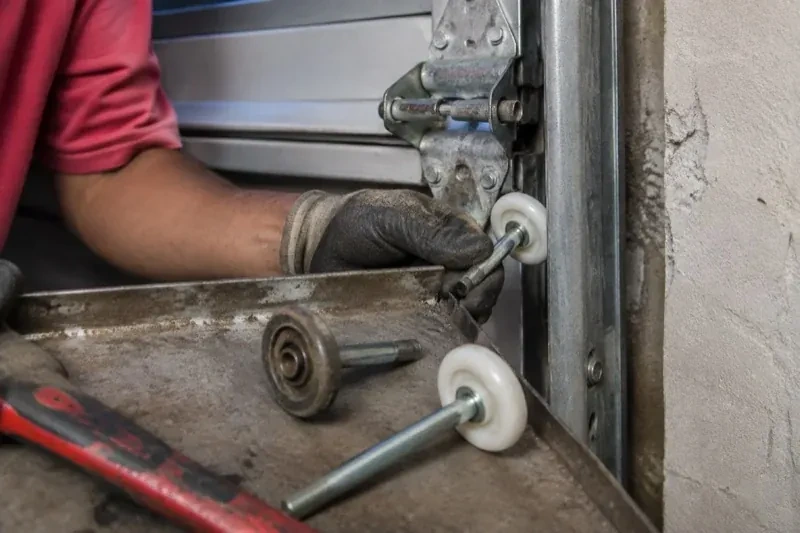
With the shaft out, bearings that grind, wobble or have seized are renewed. Smooth bearings reduce the load on the spring and opener, and their condition is confirmed by hand during the check.
Oversize or non-standard doors
Very wide doors, tall doors, carriage-house doors with heavy overlays and light-commercial doors may need duplex springs, multiple springs or larger drums, which changes both the hardware and the method.
Drum type and lift configuration
Standard-lift drums are the common case. High-lift, vertical-lift or low-headroom arrangements use different drums, cable lengths and turn counts, which changes the parts and the time involved.
What to have ready
- Do you know the door's age or when the springs were last replaced?
- Are the cables on either side still tight, or hanging loose?
- Is the door a single or double width, and roughly how tall?
Torsion Spring Replacement: questions
QuestionsCan extension springs be converted to a torsion system?
In many garages, yes. A conversion adds a shaft, centre and end bearings, drums and torsion springs above the opening and removes the extension springs and pulleys from beside the tracks. It needs enough headroom above the door for the shaft and solid framing for the centre bracket. The technician measures the space and the door before recommending it, and the result is smoother, more even lifting with hardware kept clear of the sides.
What should I do before the technician arrives?
Keep the door closed and leave it alone, move any vehicle you can reach out of the way or at least clear the space in front of the door inside the garage, and make sure there is room for a ladder beneath the shaft. Note whether there is one spring or two and whether a cable is loose. A photo of the spring area, the drums and the opener helps the technician bring the right parts.
What happens if the header wood or centre bracket is damaged?
The centre bracket anchors the spring's reaction force to the framing above the door, so it has to be solid. If the header has split or softened, or the lag bolts have pulled, the technician can refasten into sound wood, add a reinforcing plate or replace the bracket before the new spring is wound. Dealing with this first keeps the shaft level and the spring pulling straight, which protects the bearings and the door.
Related services
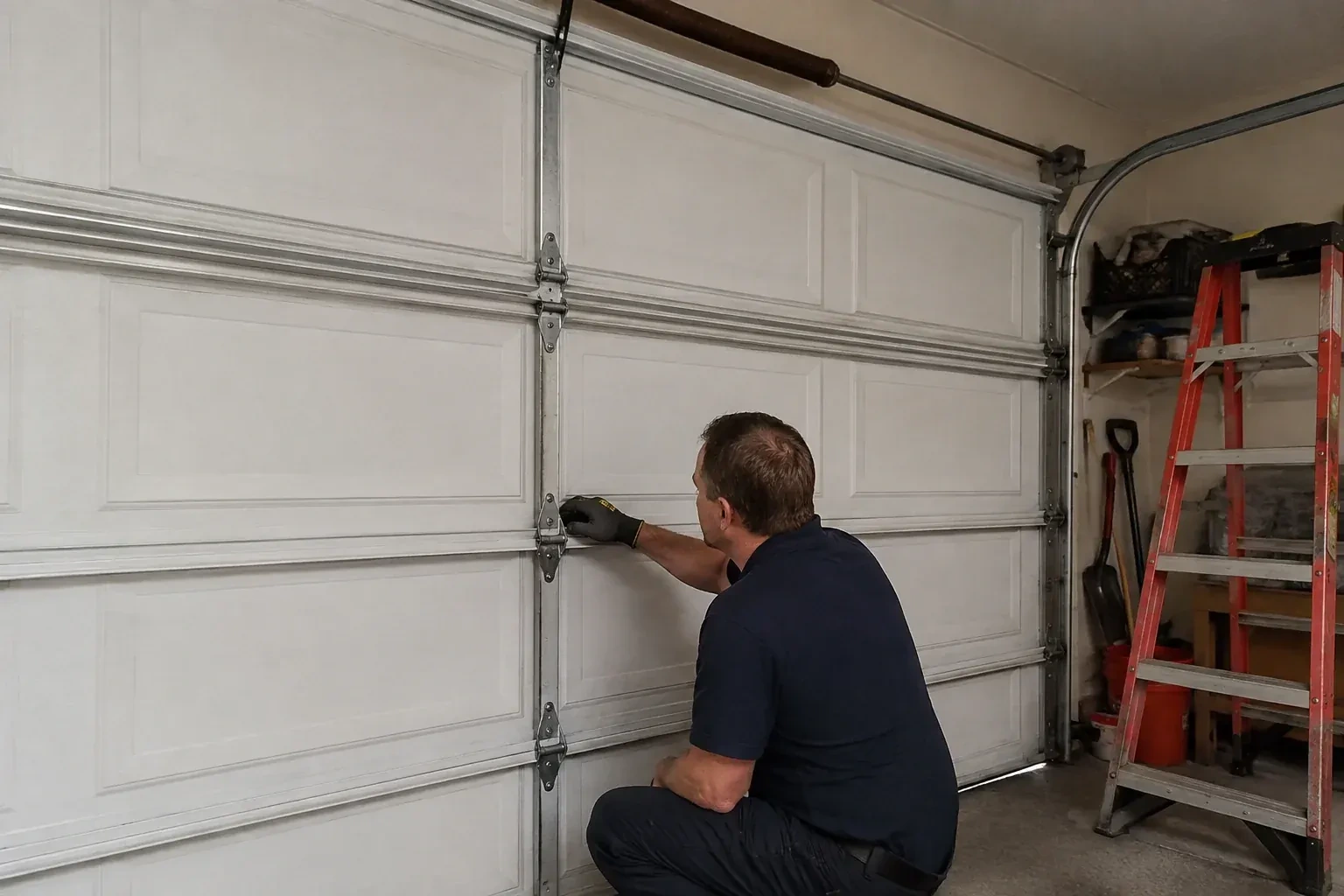
- Garage Door Hinge ReplacementOn the old wood door, one hinge has pulled away from the panel, dragging a screw and a chunk of soft timber with it.
- Garage Door Track Repair or ReplacementYou bought the house with a door that sticks near the top of its travel.
- Garage Door Cable ReplacementStanding inside with the door closed, you notice the cable on the right side near the floor has gone fuzzy.