Garage Doors in Port Weller, OntarioSafe for everyonewho walks under it.
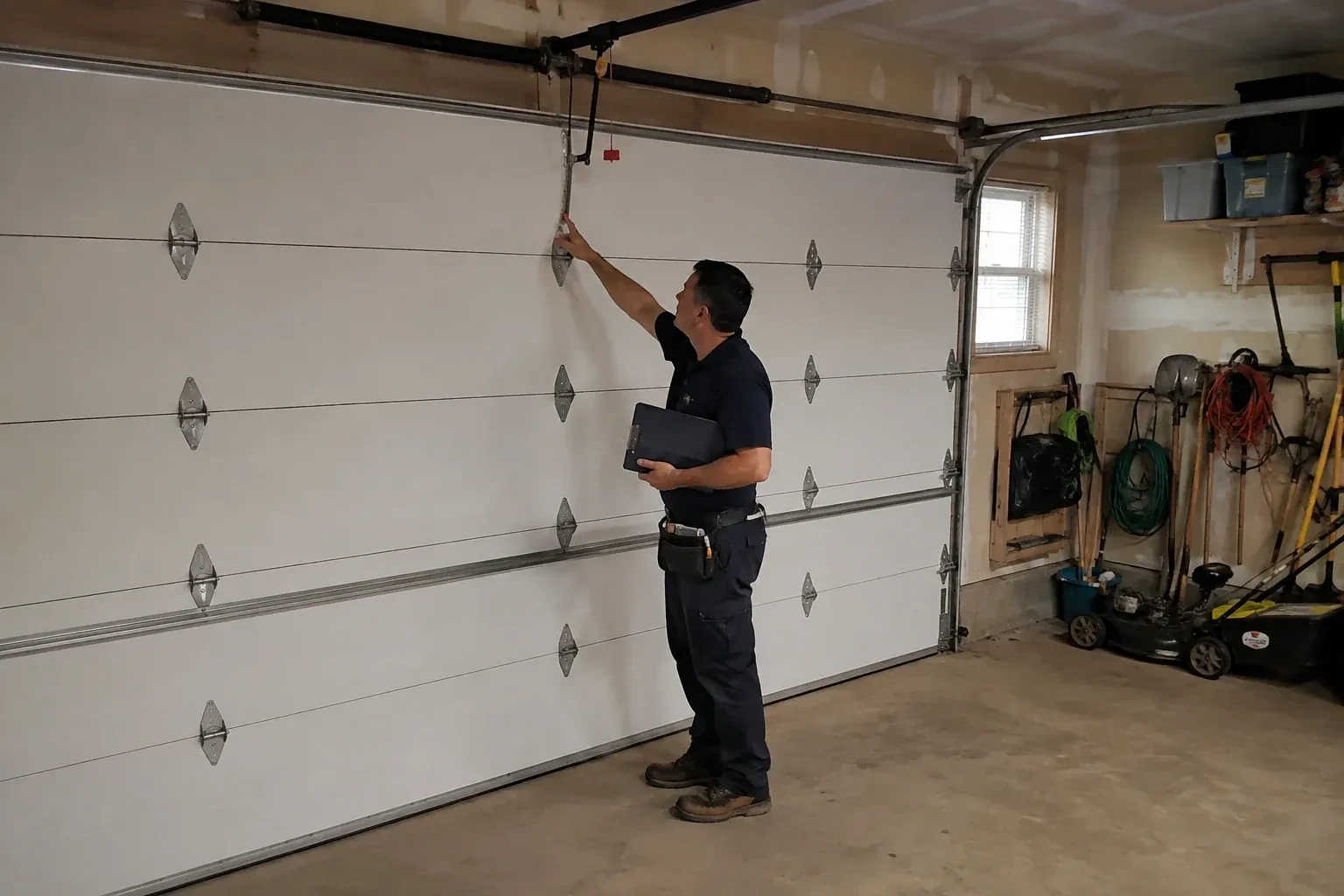
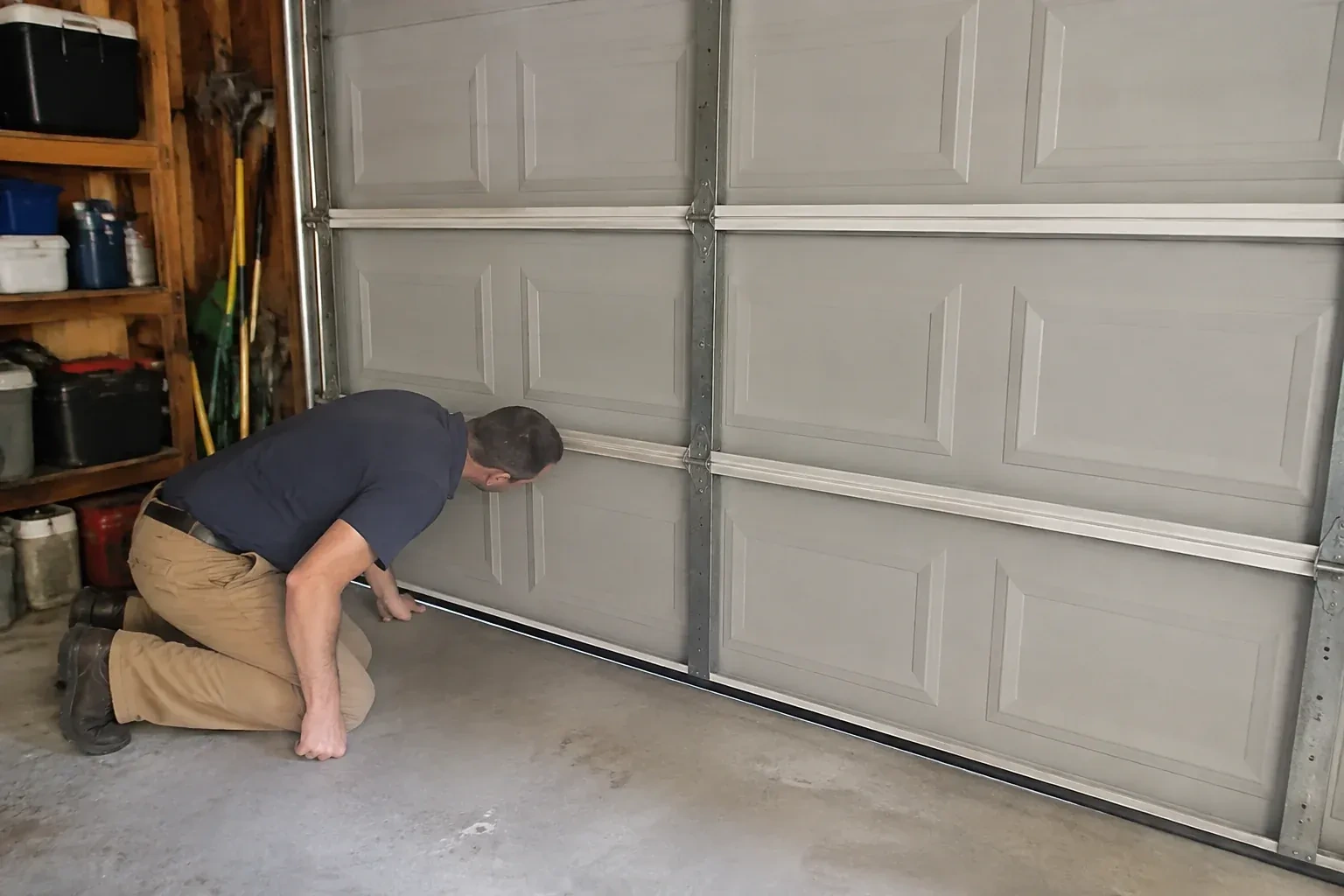
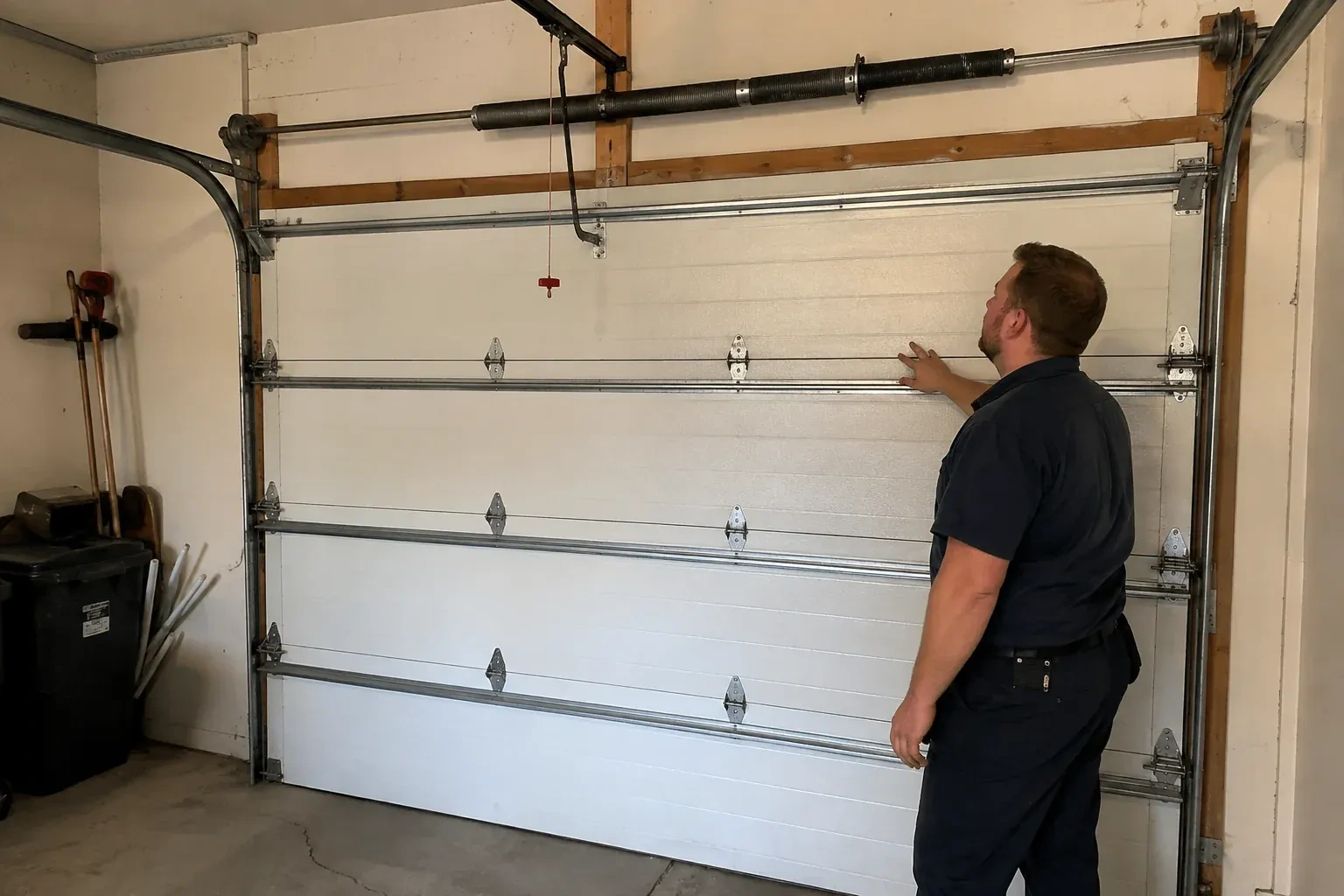
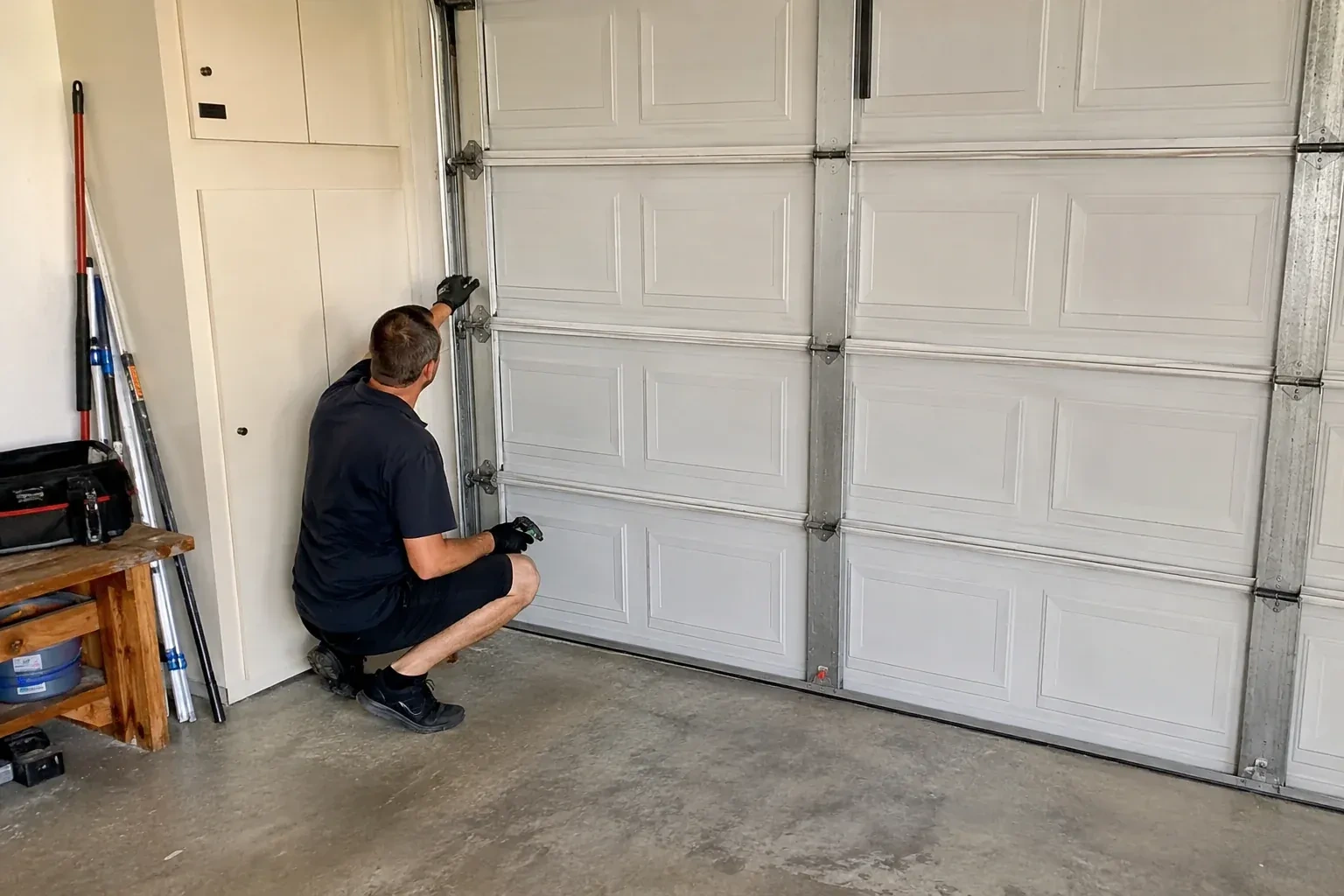
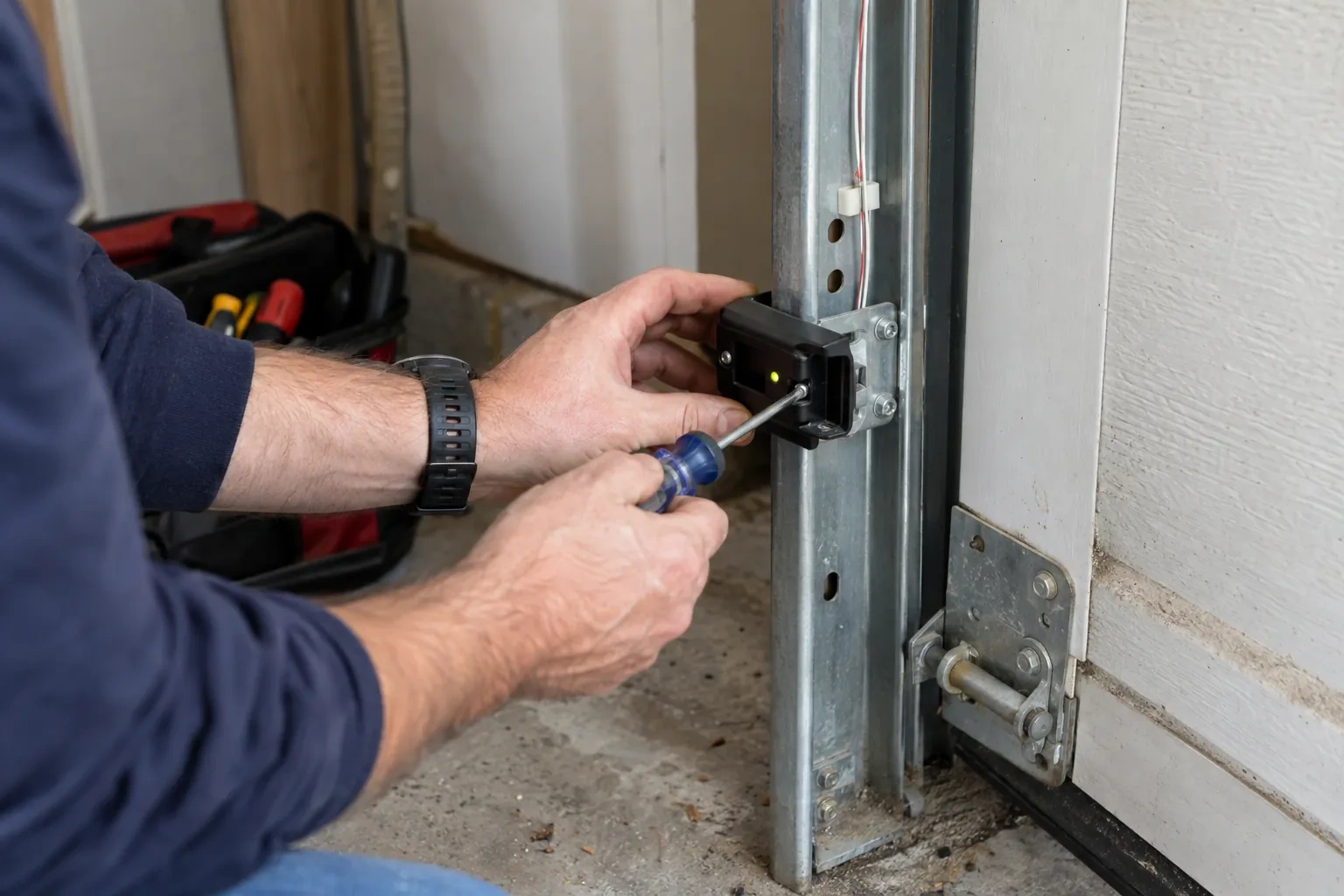
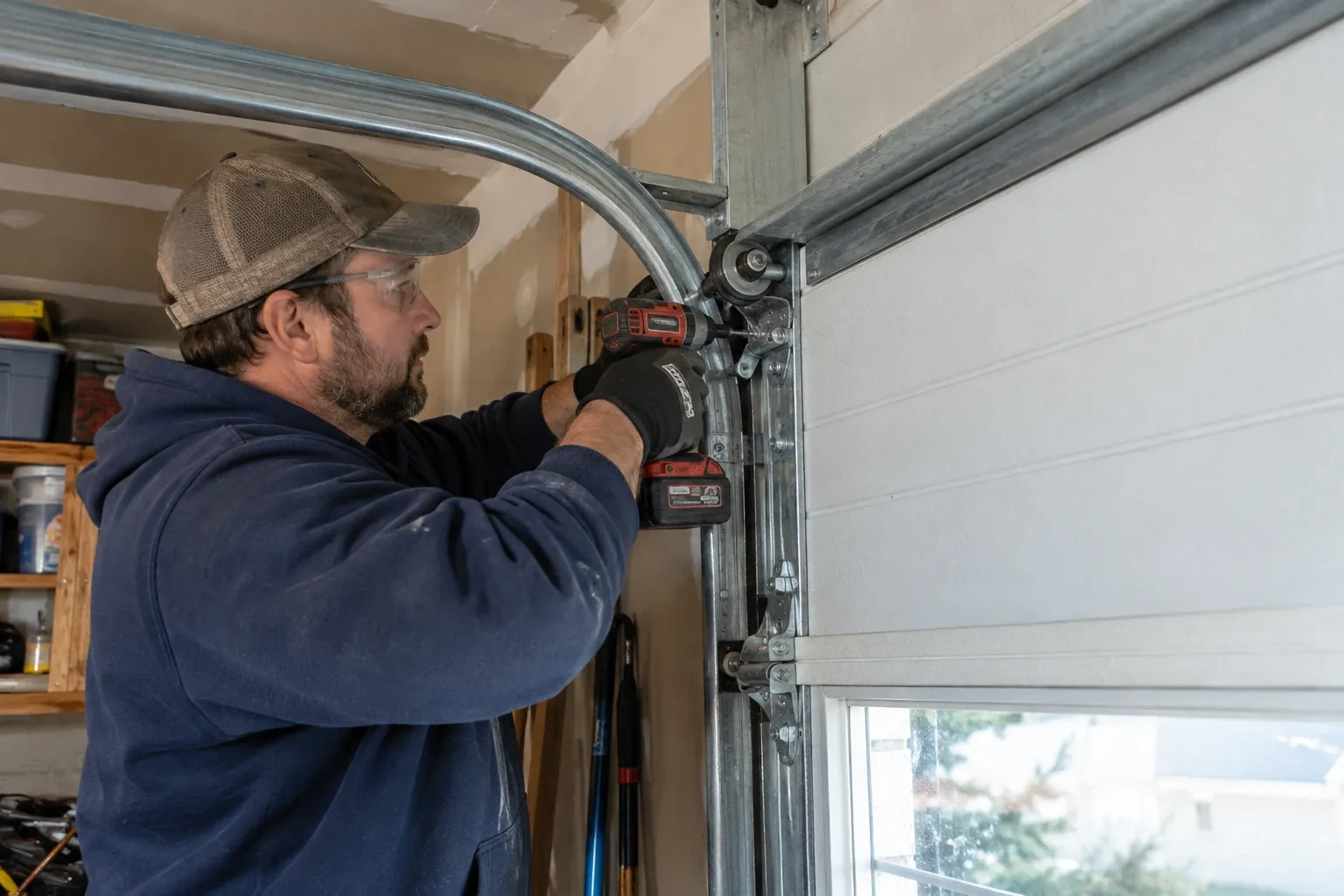
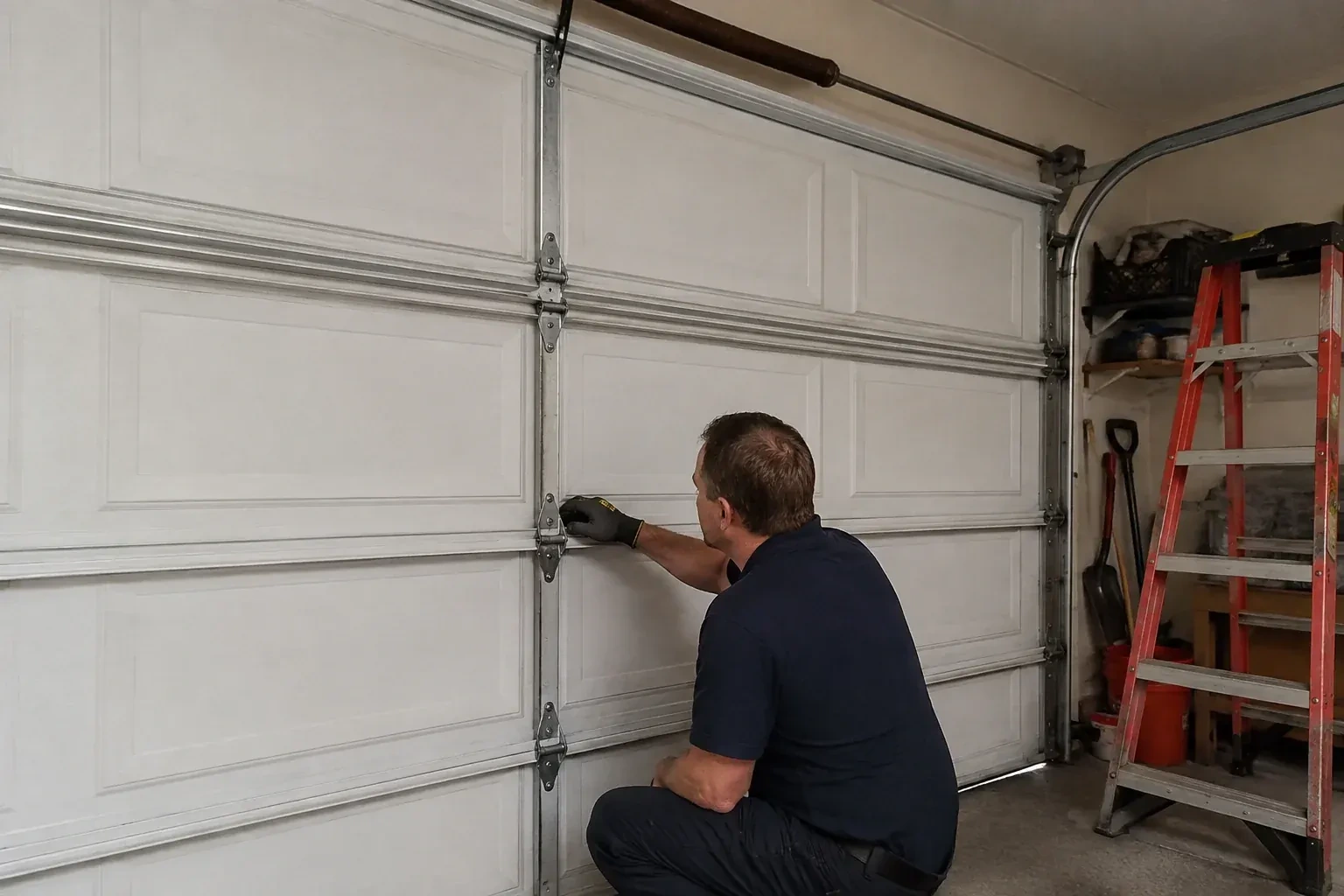
Photo-eyes, the auto-reverse force setting and a balanced door are what stand between a closing door and a child, a pet or a bicycle wheel. On every visit in Port Weller we test all three, correct whatever has drifted, and explain how you can check them yourself between visits.
Photo-eyes, the auto-reverse force setting and a balanced door are what stand between a closing door and a child, a pet or a bicycle wheel. On every visit in Port Weller we test all three, correct whatever has drifted, and explain how you can check them yourself between visits.
Explained before, tested after.
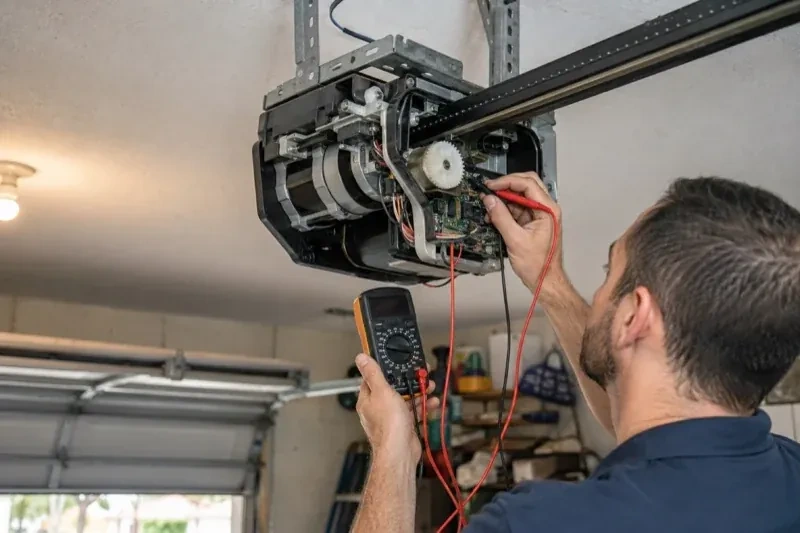
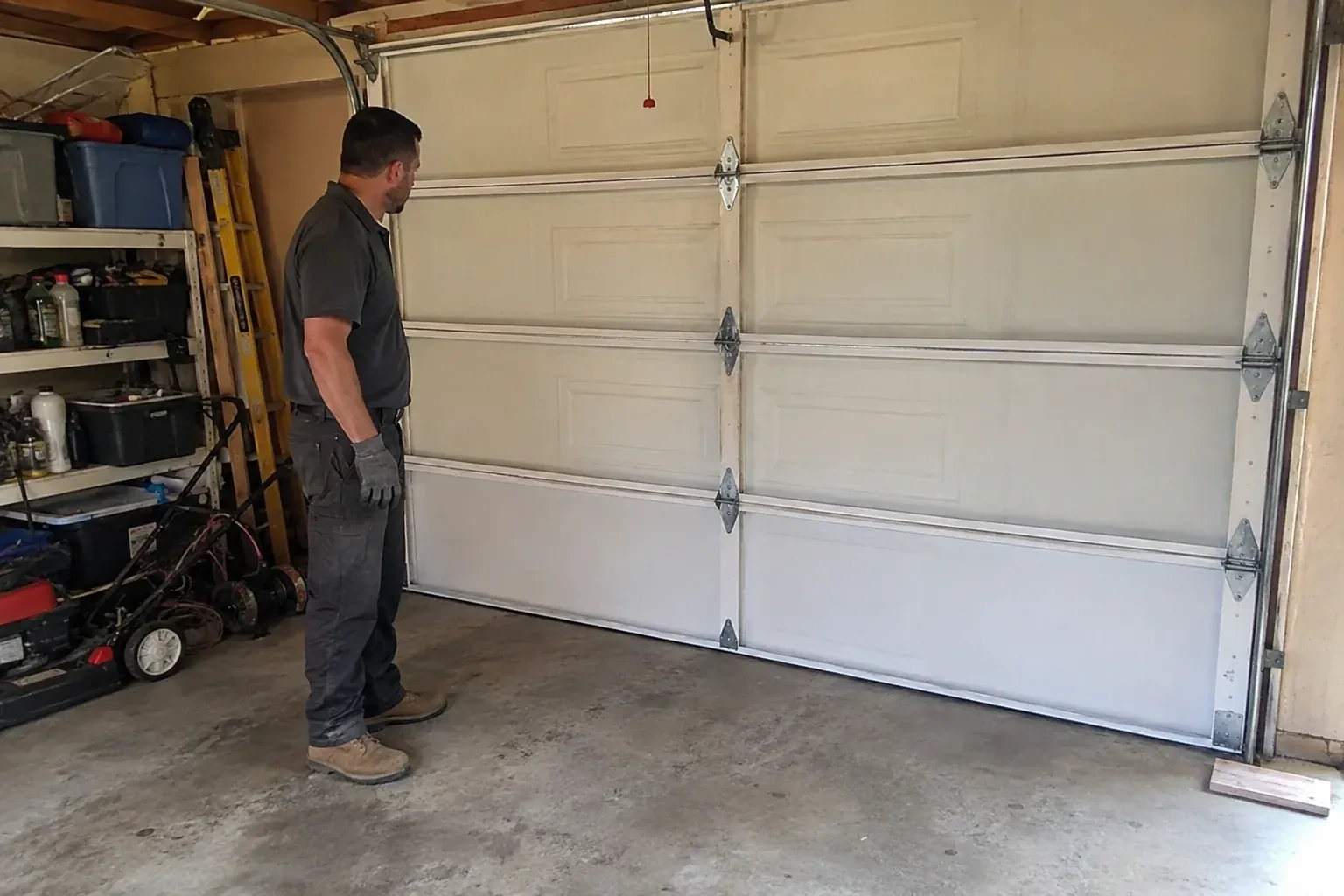
For homeowners in Port Weller, the visit begins with questions rather than tools: when did the door change, what does it sound like, does the wall button behave differently from the remote? Those answers point the technician to the right part, and the assessment that follows confirms it before any price is discussed.
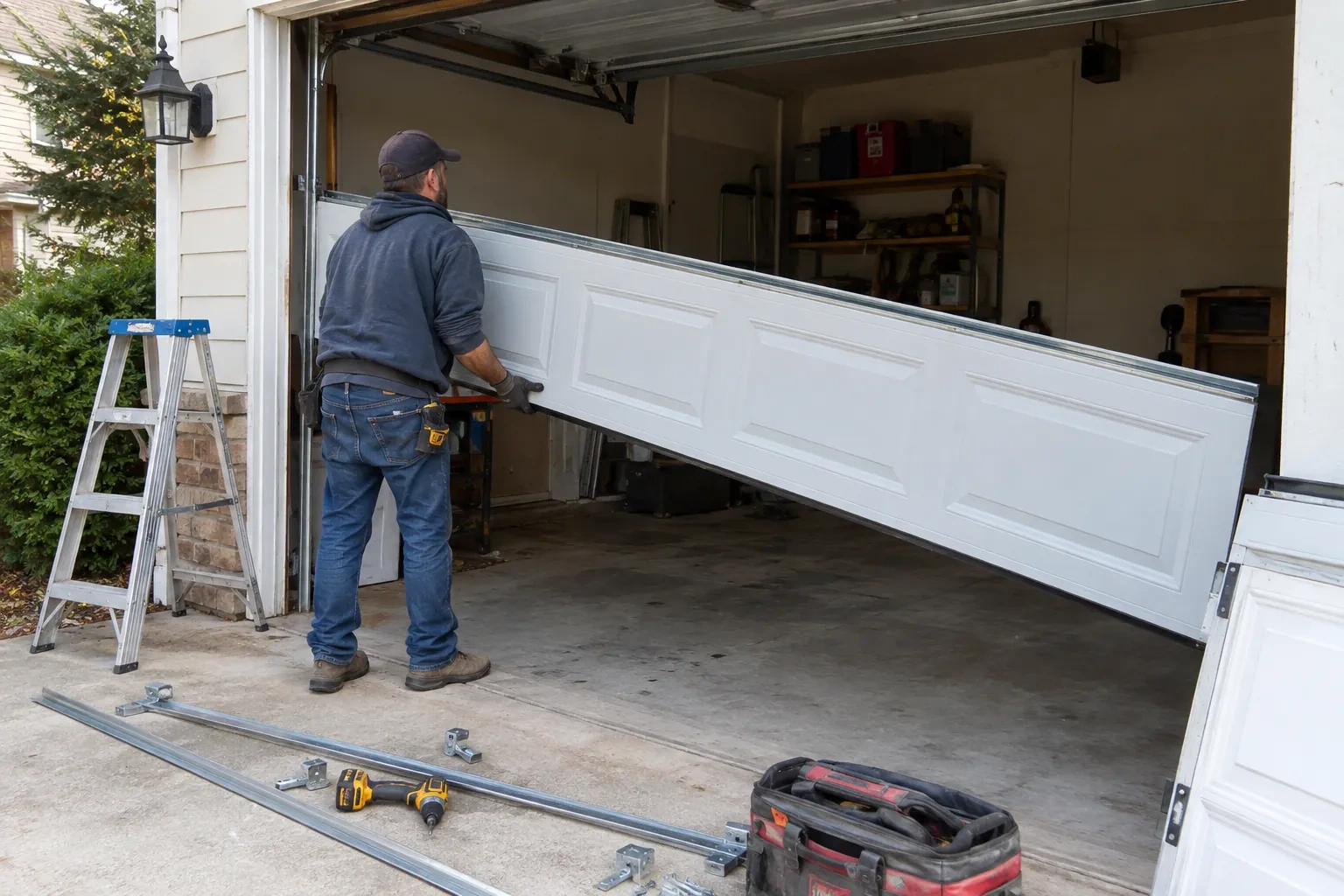
Many households in Port Weller are weighing an insulated garage door, and we are glad to help with the decision. An insulated door changes how the garage feels through the year, keeps nearby rooms more comfortable and runs more quietly. We check whether the springs and opener can carry the extra weight, then install the door so the seals meet the floor and jambs properly.
30years in business
24/7open every day
Real explanations. Every recommendation comes with the reason behind it, in words that make sense to someone who has never opened an opener.
Care in your space. We work around bikes, tools and vehicles carefully, protect what needs protecting, and leave the garage clean.
No pushing. You hear the choices once, clearly. Whether to go ahead, wait or take a different route is yours to decide.
A garage door in Port Weller rarely fails all at once. It gets louder, slower or less even first. Our services are arranged so you can act at any point: a tune-up while it is still working, a repair when something lets go, or a replacement when the door has earned its retirement.
About 71% of homes in St. Catharines were built in 1980 or earlier, according to the 2021 Census.
Older homes
Older garages are frequently used as workshops or storage as much as parking, which means the door opens many times a day and collects dust on the sensors. Sealed rollers, protected photo-eyes and a tune-up schedule suit that pattern well.
Single-detached houses make up about 56% of homes in St. Catharines (2021 Census).
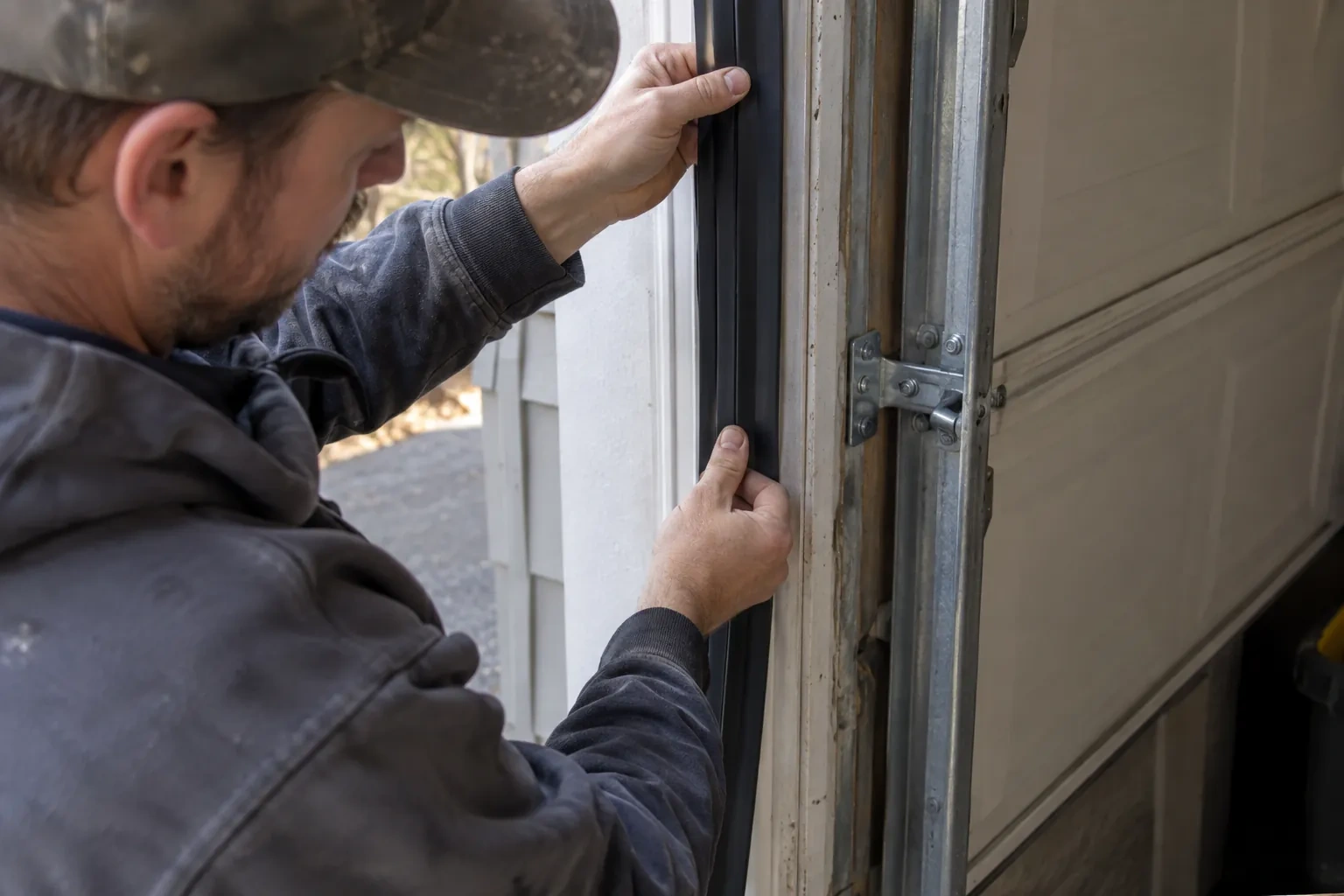
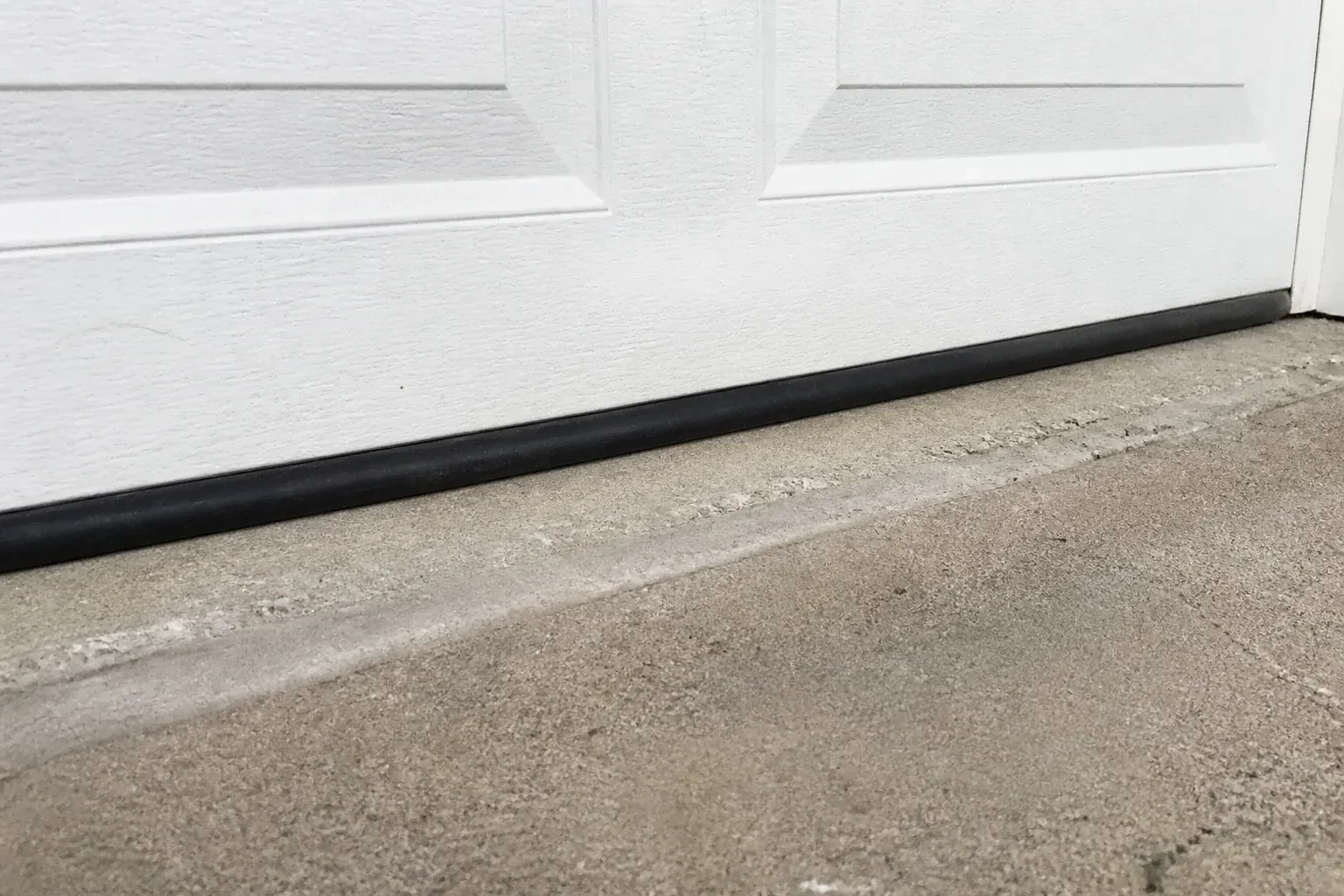
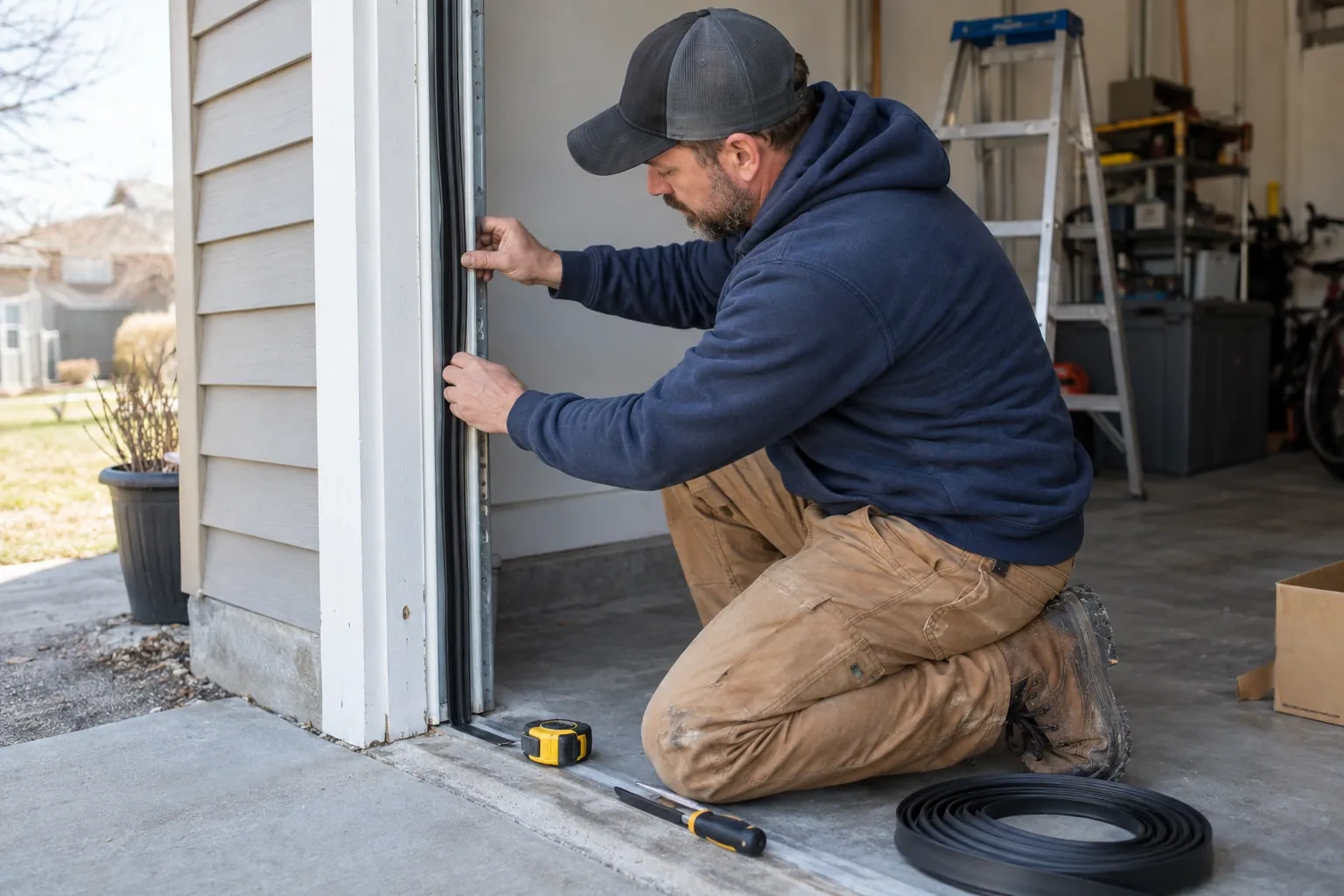
A mixed neighbourhood is where weatherproofing varies most. A detached garage with an old, uneven apron needs a thicker bottom seal; a newer townhouse door mostly needs a cracked section of seal replaced. We look at how each door meets its floor and fit what closes the gap.
Since the first cold snap the door has been sluggish. It climbs slowly, hesitates near the top and the opener motor sounds strained. On the coldest mornings it opens a hand's width, thinks about it, and comes back down.
After a spring rain there is a puddle inside the door that reaches the tires. The driveway slopes toward the garage, the slab has a low corner, and the flattened old seal is not making up the difference.
Every time the door closes there is a rubbing squeal along one side, and the flexible fin has folded under itself and torn. Someone painted the trim last summer and painted the seal with it; now it is stiff as a board.
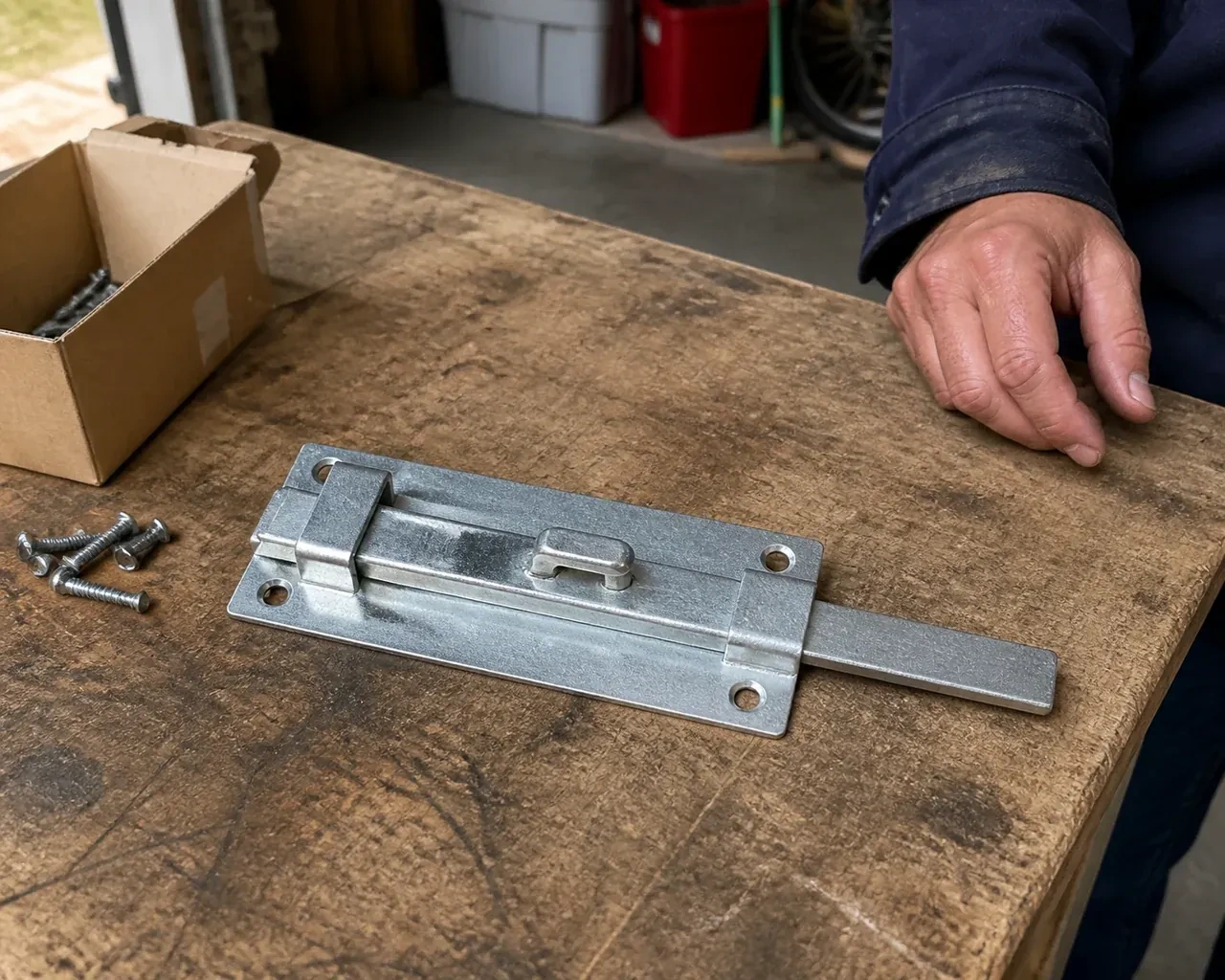
The T-shaped handle on the outside turns a full quarter, exactly as it has for twenty years, but nothing moves behind it. No clunk from the bars, no click at the tracks. The handle has stopped talking to the lock.
On cold mornings the door barely makes it up. The motor whines, the door crawls, and once or twice it has given up halfway. By afternoon, with the sun on the garage, it runs almost normally again.
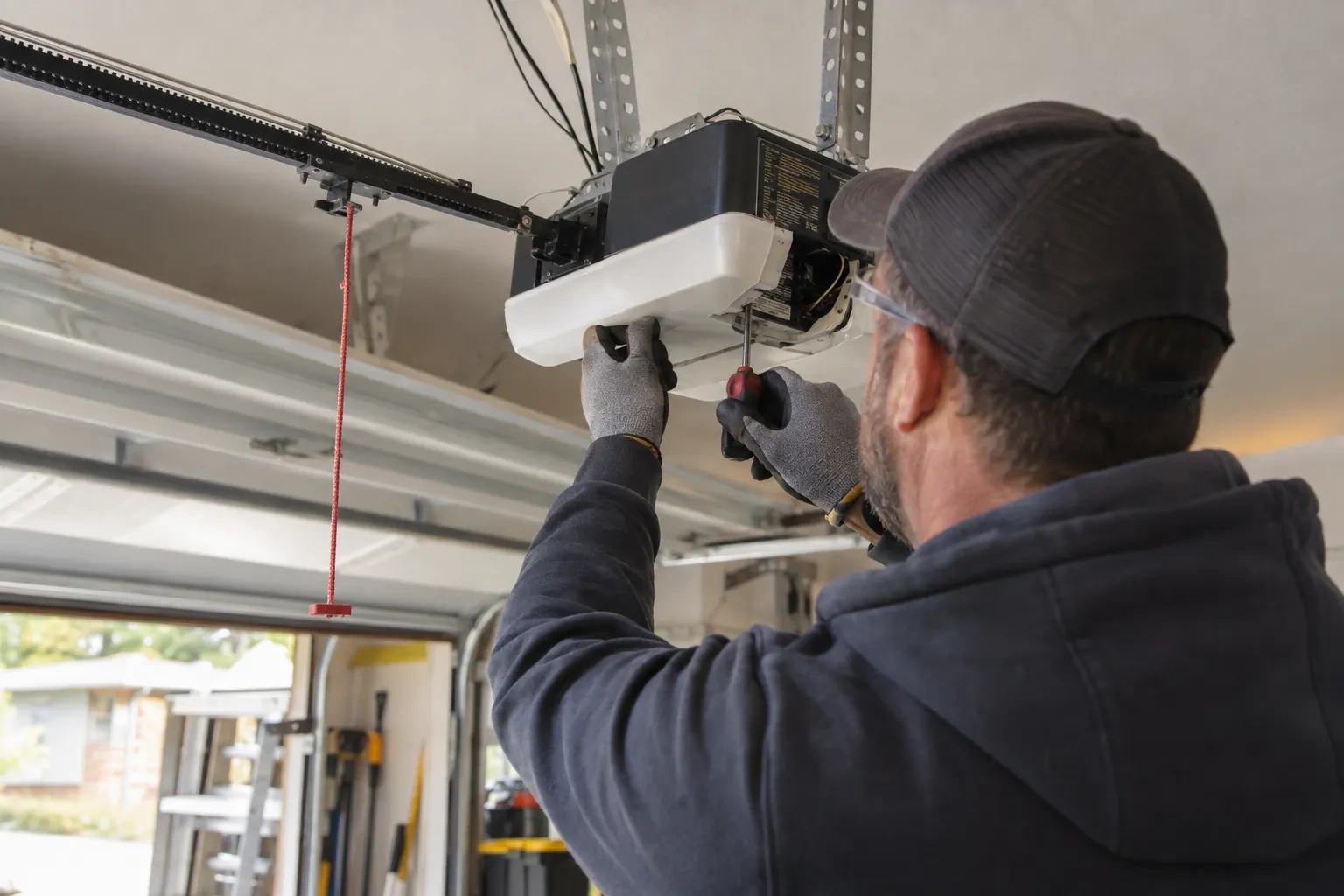
The door stops partway up for no reason, or opens fine and then refuses the next time. Some days the keypad works and some days it does not. The opener is the one that came with the house twenty-odd years ago, and nobody has the manual.
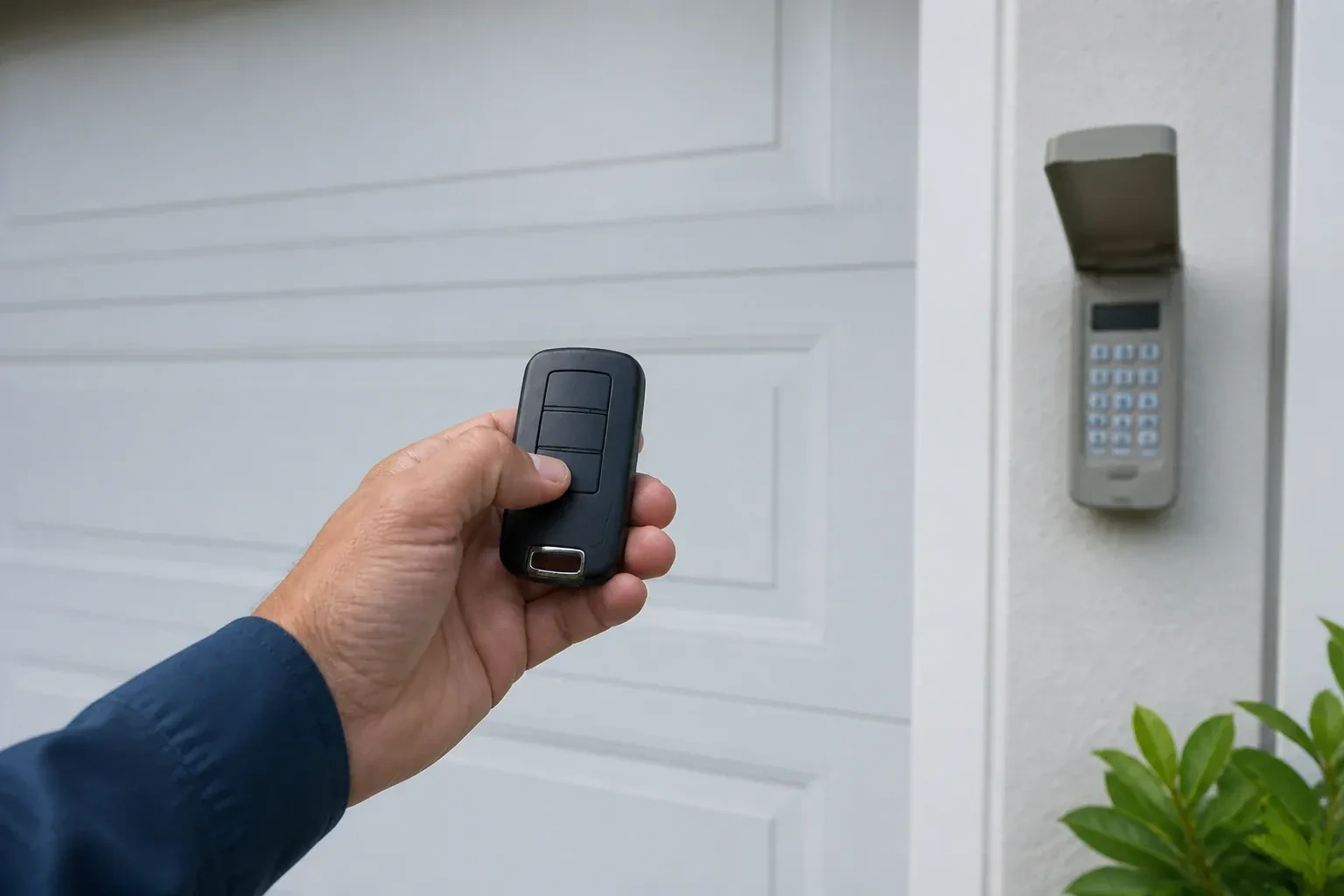
The new car has three buttons in the mirror for garage doors. You held the old remote up to it as the manual said, the light in the car changed, and yet the door ignores it completely. The handheld remote works fine.
The bottom section has absorbed years of moisture and road-salt residue. Its edge is swollen, the seal retainer is failing, and the door leaves an irregular gap across the floor whenever it closes.
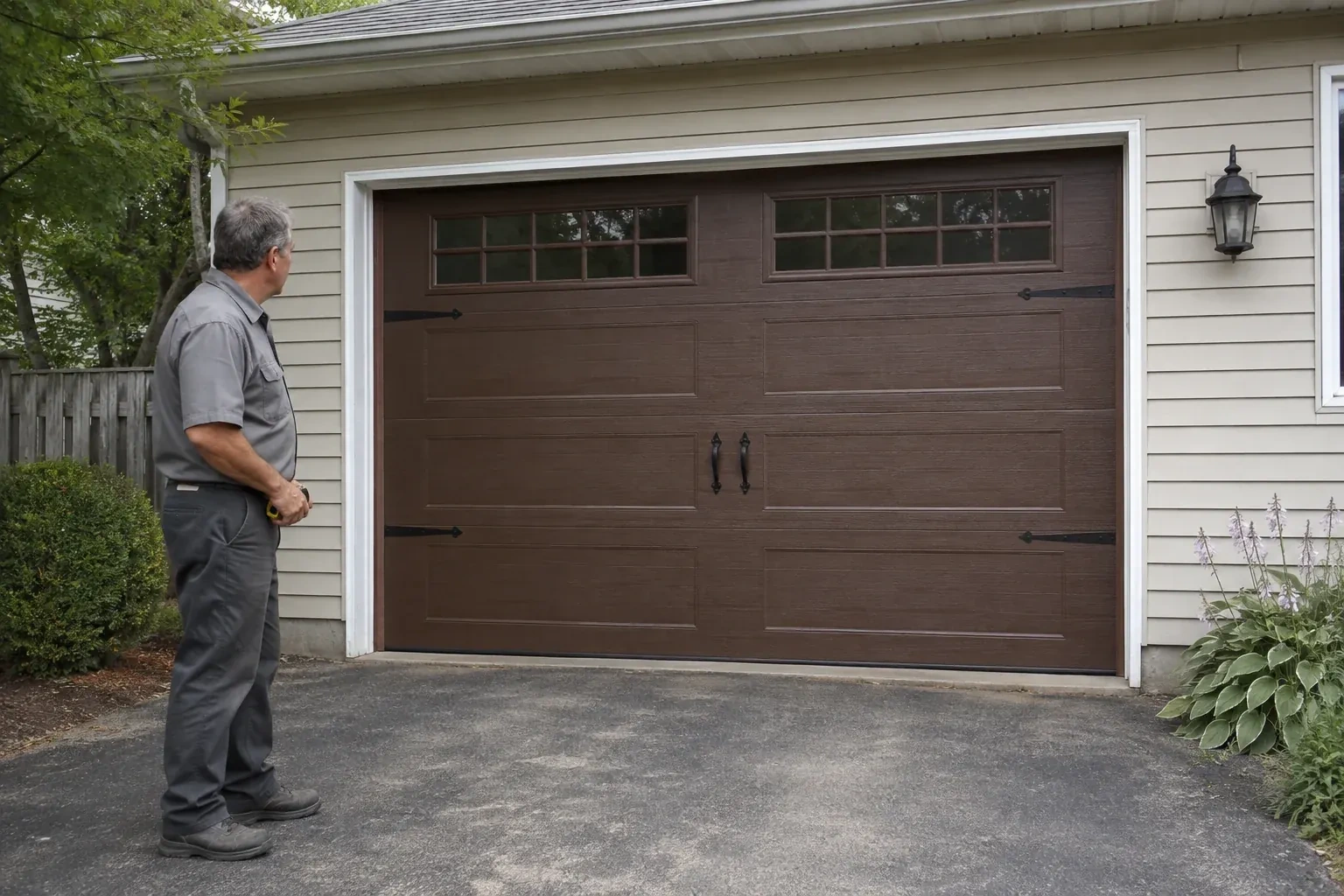
The garage feels dim whenever the overhead door is closed. You want a row of well-positioned windows that introduces daylight, protects privacy and fits naturally into a carriage-inspired panel layout.
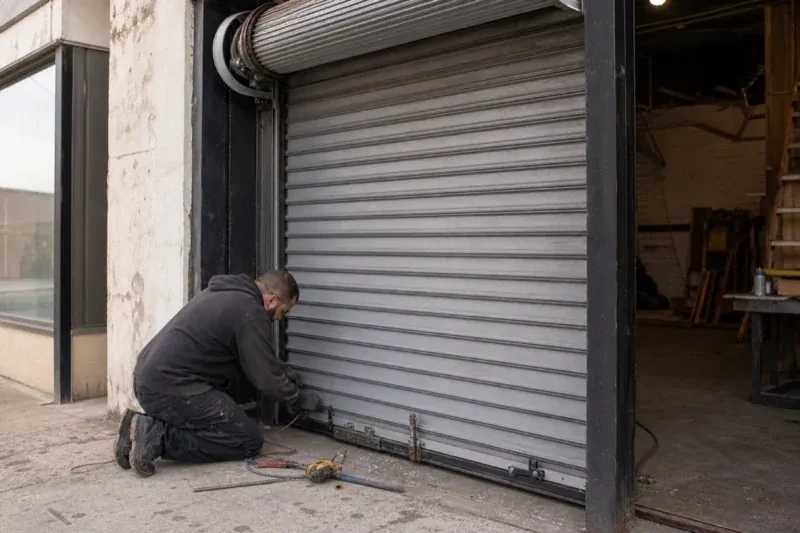
The hand chain takes far more effort than it did last month. The curtain feels heavy from the first pull, pauses around mid-travel, and settles downward instead of holding a steady position.
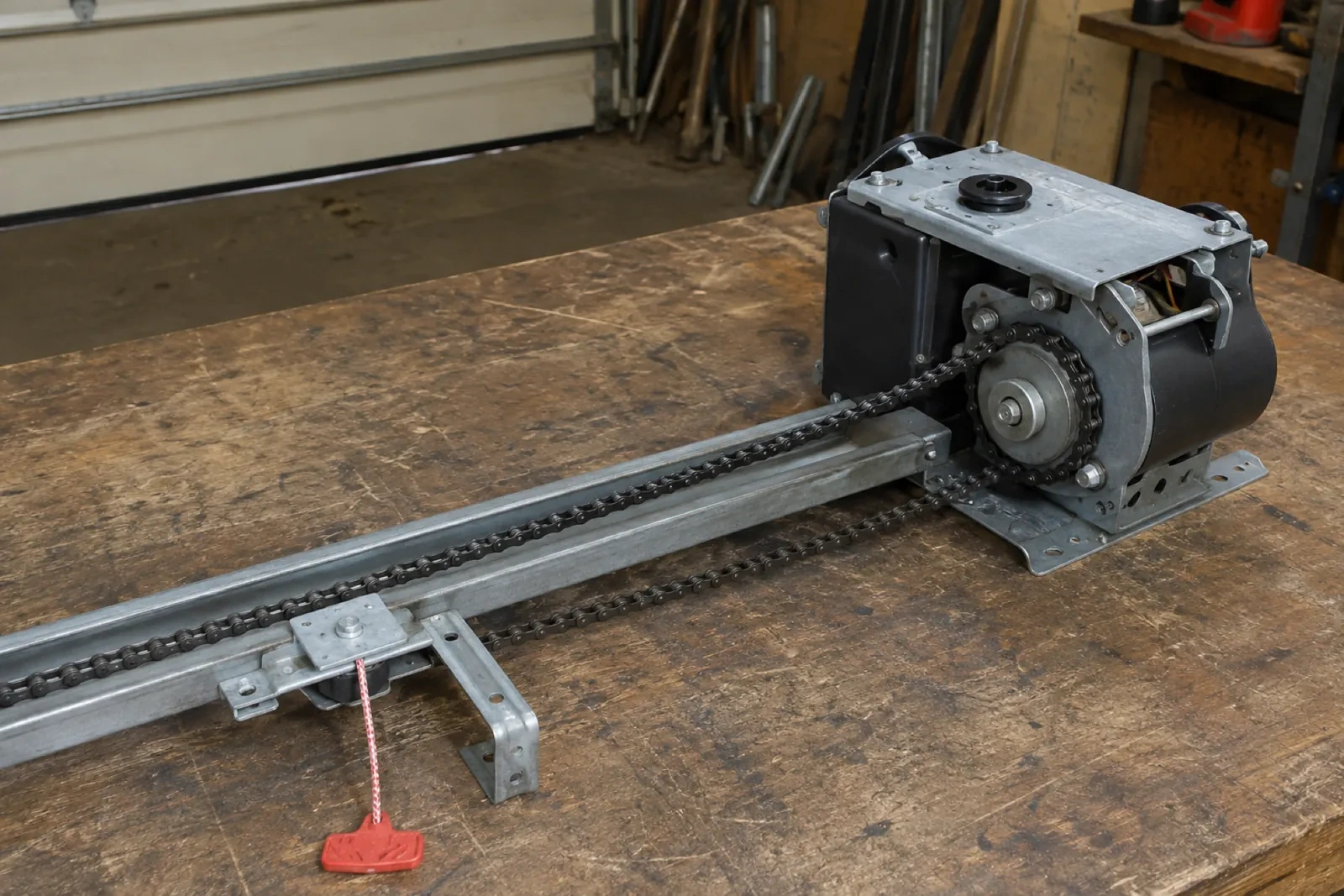
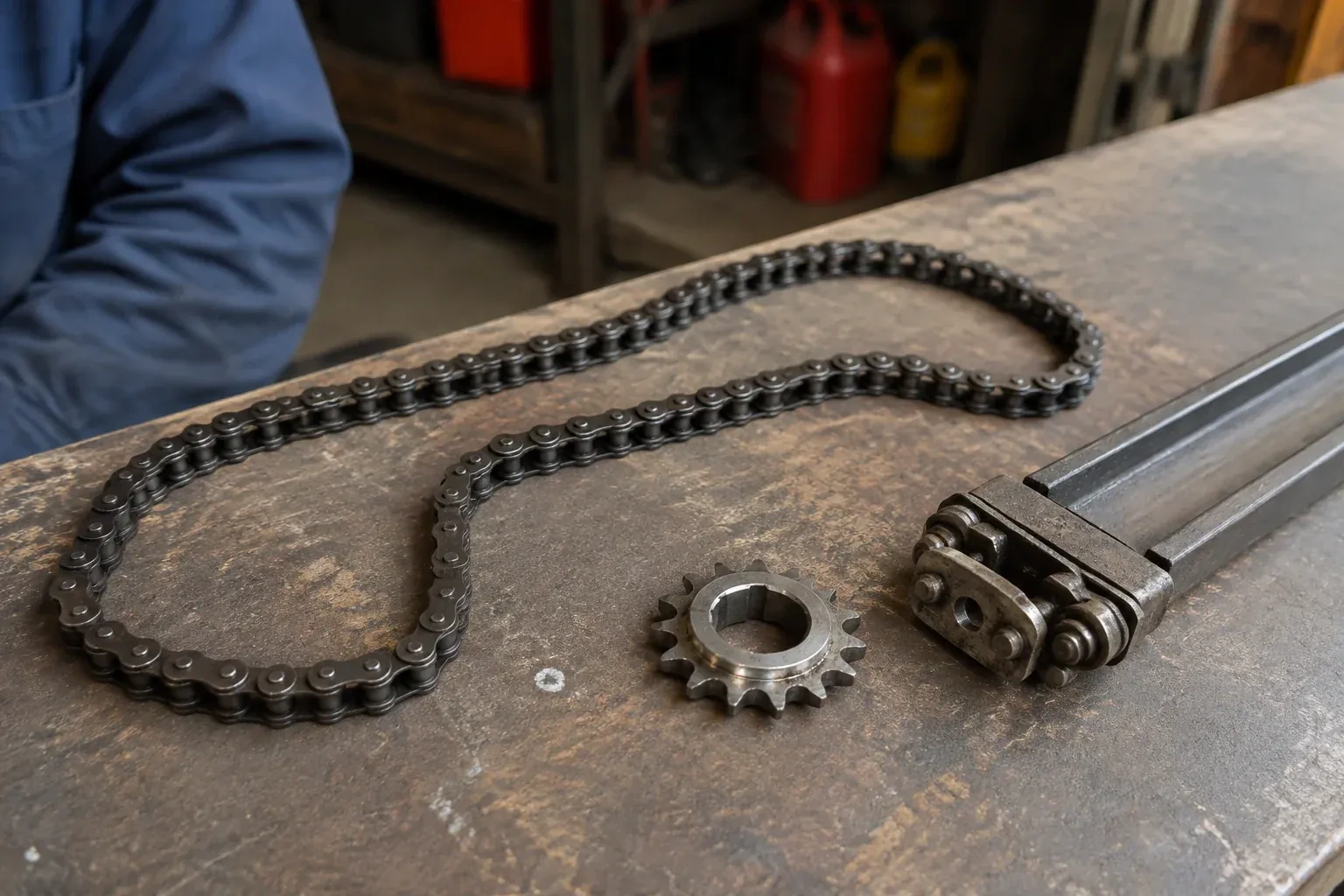
The motor runs, you can hear it working, but the door never moves. When you look up, the sprocket on top of the head is barely turning, and there is a little drift of pale plastic dust on the cover.
There is a new squeal from the front of the rail, up near the header, on every cycle. The belt has started tracking to one side and its edge is fuzzy where it has been rubbing.
The remotes only work from the end of the driveway now, and one of them disappeared with a set of keys last month. Inside the remote are tiny switches instead of a learn button, so excluding the missing one means resetting the switch pattern on every remote and the receiver.
A contractor is coming to work in the garage on Thursday while you are away. Handing over a remote means chasing it back afterwards, and the keypad code is the one your whole family uses.
After a week of lifting the door by hand you pressed the button, hoping it would catch. Instead the motor grinds, the trolley thumps against the end of the rail, and the little lever that should snap back stays stubbornly upright.
Which fix fits?
Since the first cold snap the door has been sluggish.
The door type and rough size, single or double; the opener brand or a photo of its label; what you have noticed, such as noise, shaking, hesitation, slamming or reversing, and whether it is worse in cold weather; whether the door has been struck by anything; and whether the springs are above the door or along the sides. None of this is required, but each detail helps the right parts and tools arrive with the technician.
How long should I allow for the work?
Plan on an hour or two for a straightforward replacement on a standard door, including the inspection and the opener reset. A retainer replacement, a hardened seal that has to come out in pieces, a wood door with a nail-on strip or the addition of a threshold seal each add time. The technician will give you a realistic window once the door has been looked at.
What information helps when I book?
The size of the door and whether it is single or double, where you see daylight or feel drafts, whether the existing seal is a strip on a wood stop or a one-piece moulding, the colour of the trim, whether the wood near the floor feels soft, and whether the garage is attached or heated. Photos of the closed door from inside with the lights off, and of each corner from outside, are very useful.
Can a bent lock bar be straightened?
It is better replaced. Lock bars are spring steel, and once one has been bent by an opener pulling against it, it takes a set and tends to bind in its guide or kink again under load. New bar stock is cut to the door's width so the bar reaches through the track with a margin and pulls fully back when released. Both bars are set to the same throw.
How should I prepare the garage for the visit?
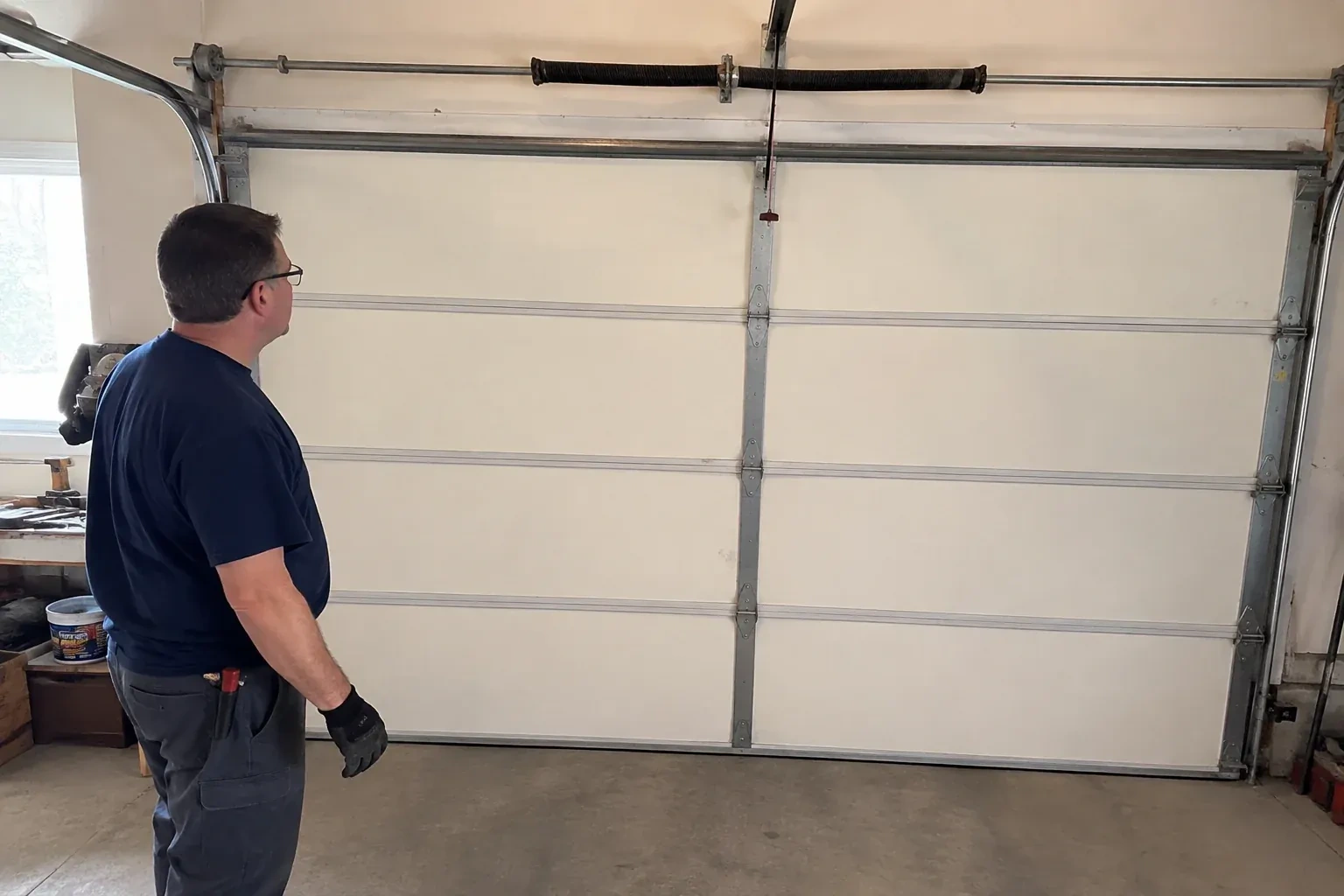
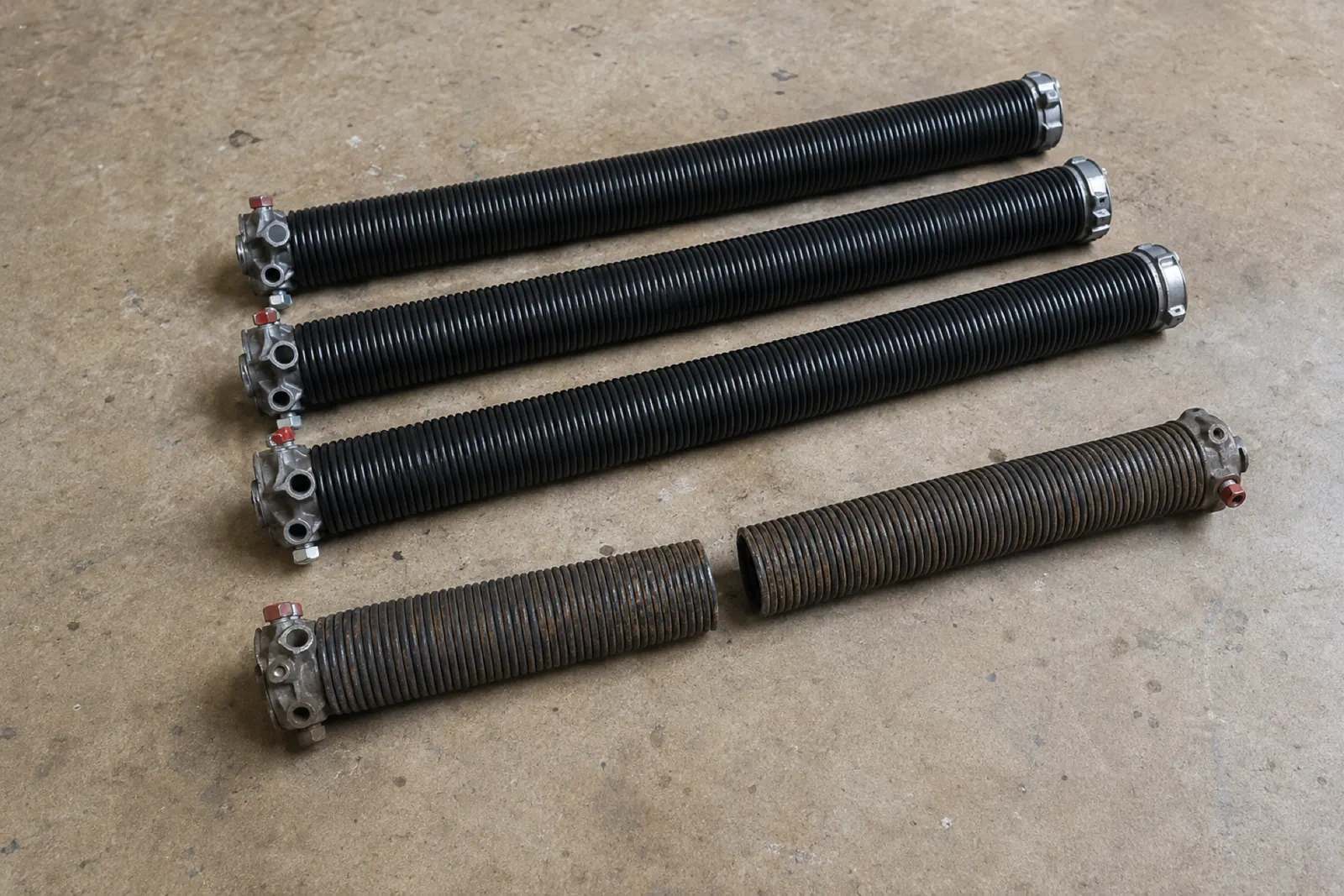
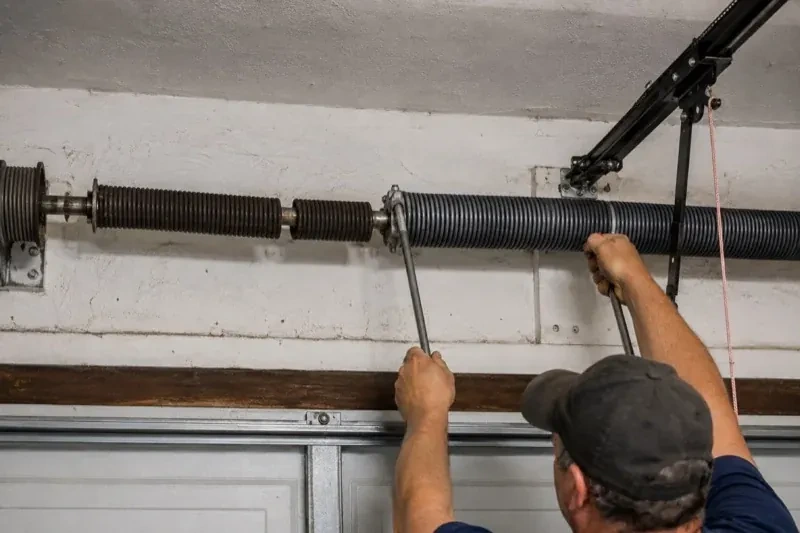
Move the car out if you can and clear the floor near the door and beneath the spring shaft, since the technician will be on a ladder there with winding bars. Take down anything hanging from the tracks or stored on top of the horizontal rails. Leave the door where it is, make sure the wall button and the opener are reachable, and have any spring or opener paperwork handy.
Will the repair happen during the same visit?
When the cause is a common part carried on the truck, yes: capacitors, gear kits, sensor pairs, trolleys, wall controls, remotes and wiring are typical. When the part is specific to an older model and has to be ordered, or when the diagnosis finds a spring or cable problem that needs its own appointment, the door is left safe and the next step is agreed with you before the technician leaves.
Can one remote open two garage doors?
Yes, if the remote has more than one button and both openers accept it. Each button is programmed to one opener, so a two-button remote can run a double garage's two doors, or a door and a gate. Multi-door keypads also exist, running up to three openers from one pad by selecting the door before entering the code. The technician labels which button drives which door.
What panel materials are commonly available?
Sectional doors are commonly made with steel, aluminum, wood or composite construction, with model-specific finishes and insulation options. Each differs in weight, maintenance needs and appearance. The useful comparison considers exposure, desired style, garage use and available product data, then carries the chosen weight into the spring and hardware selection.
What happens if the garage floor is not level?
The survey measures the variation and determines how the bottom section and seal can meet it. A flexible astragal can accommodate modest changes, while a pronounced crown, dip or damaged threshold may call for related floor or threshold work. The door itself is installed level for reliable travel; the sealing approach is selected separately to follow the practical shape of the floor.
What happens to a powered door during a power interruption?
Commercial operators commonly include a manual hoist, hand chain or disconnect arrangement, but the sequence varies by system. Staff are shown the intended changeover and normal manual effort after repair. The door must still move freely and remain balanced; the emergency method is an operating feature, not a substitute for correcting a binding curtain or worn component.
Request a visit
For homeowners in Port Weller, the visit begins with questions rather than tools: when did the door change, what does it sound like, does the wall button behave differently from the remote? Those answers point the technician to the right part, and the assessment that follows confirms it before any price is discussed.