Springs · St. Catharines
Extension Spring Replacement
The opener groans on the way up and the door slams the last foot on the way down, hard enough to rattle the windows.
In plain words
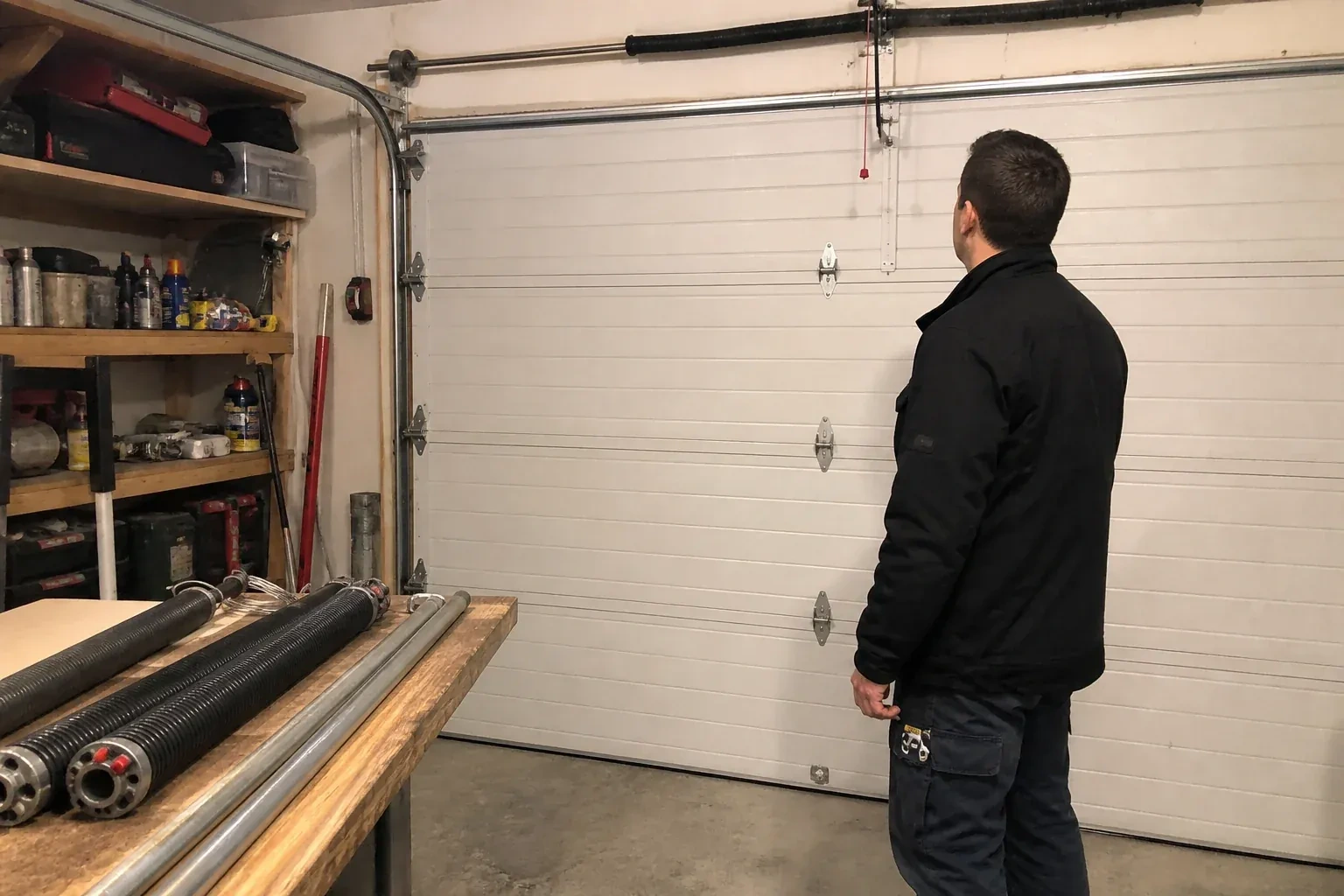
Extension springs are the two long coil springs that run beside the horizontal tracks of a garage door, one on each side. They stretch as the door closes and pull back as it opens, and that pull is what makes a heavy door feel light. Replacement puts a new, matched pair on the door. The technician opens and secures the door so the springs are slack, removes the old set, fits springs rated for the door's actual weight with containment cables through their centres, threads the lift cables over the pulleys, and adjusts both sides until the door balances. The opener is reconnected and tested last.
How the visit goesThe home inspector's report on the house you are buying flags the garage door: extension springs with no safety cable running through them, coils showing rust, and a door that sank when he lifted it partway. The seller has never had it looked at.
Extension Spring Replacement
How the visit goes
Containment cables, present or missing
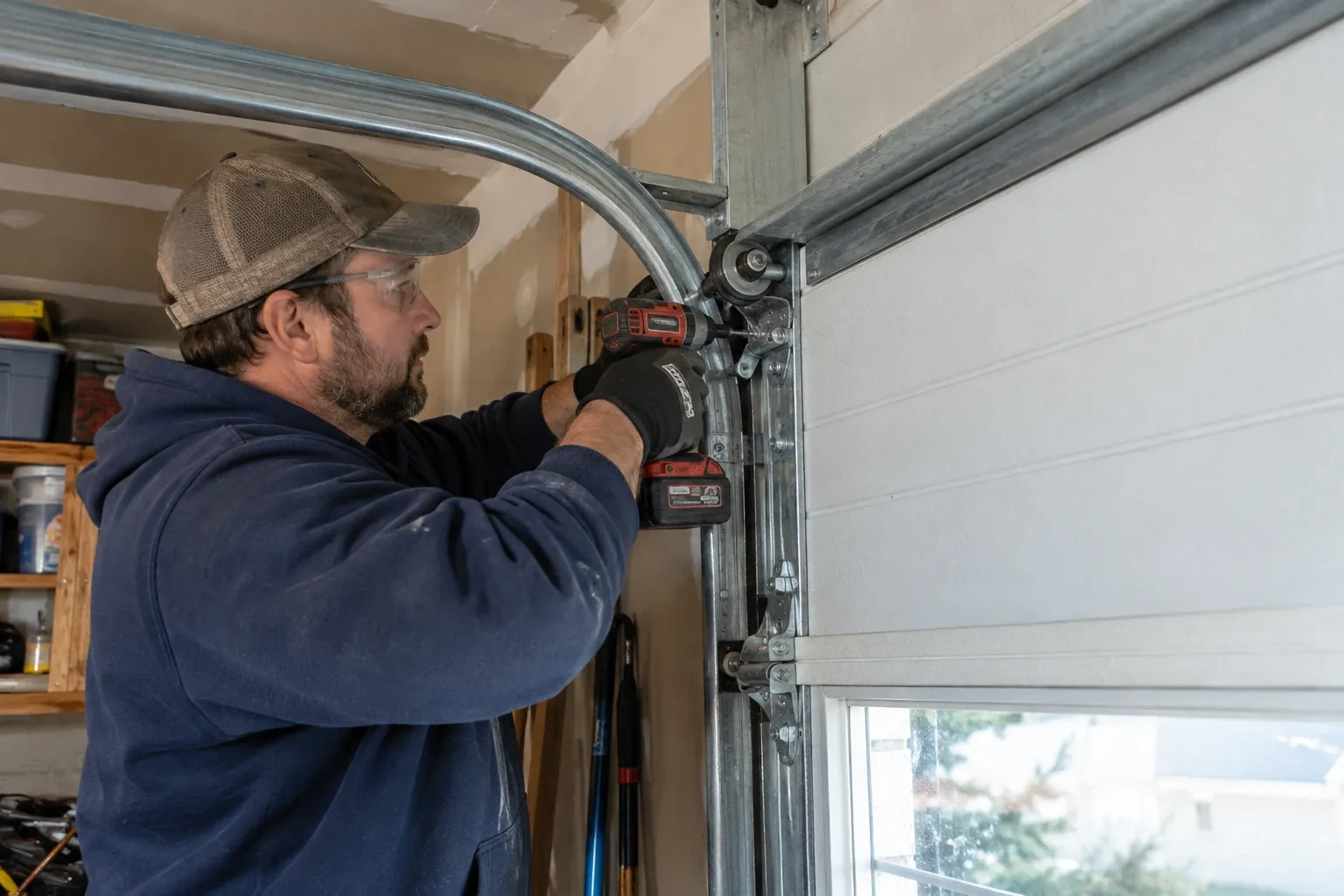
The question the industry's own inspection checklist asks of every extension-spring door is whether each spring has a cable running through its centre, anchored at both ends. The technician checks for it on both sides, then checks its condition: a cable that is frayed, kinked, anchored to a loose screw or simply tied off to the hanger is not doing its job. Doors installed decades ago often have none at all, and doors that had a spring changed by a previous owner sometimes have one side fitted and one forgotten. Fresh containment cables go on with the new springs, and their anchor points are set into solid framing so that a spring which breaks stays on its cable.
Setting both sides to the same hole
The initial tension is set with the door open and clamped, so the technician is adjusting slack springs rather than loaded ones. Each cable's S-hook is placed in a hole on the hanger, or its clip set to a mark, and the two sides are put at the same position. The cables are drawn to the same snugness so that neither corner of the door is being pulled ahead of the other. A level across the top section confirms the door is square in its tracks. Only when both sides read the same do the clamps come off and the door come down for its first balance check.
A monthly look along the springs
Extension springs are easy to inspect because they hang in plain view. Once a month, with the door fully closed so the springs are stretched, stand inside and look along each one from the back hanger to the pulley. The coils should be evenly spaced along the whole length; a section stretched wider than the rest is a spring losing its temper. Then raise the door and look again: with the door open the coils should close up tight, and both springs should hang at the same height. Rust bloom, a pulley that sits crooked, a cable off its groove or a containment cable hanging loose are all worth a call while they are still small.
Extension Spring Replacement
In the van
Bottom brackets and clevis pins
Garage-door spray lubricant
Track clamps or locking pliers
Rear spring hangers and angle iron
Extension springs, matched pair
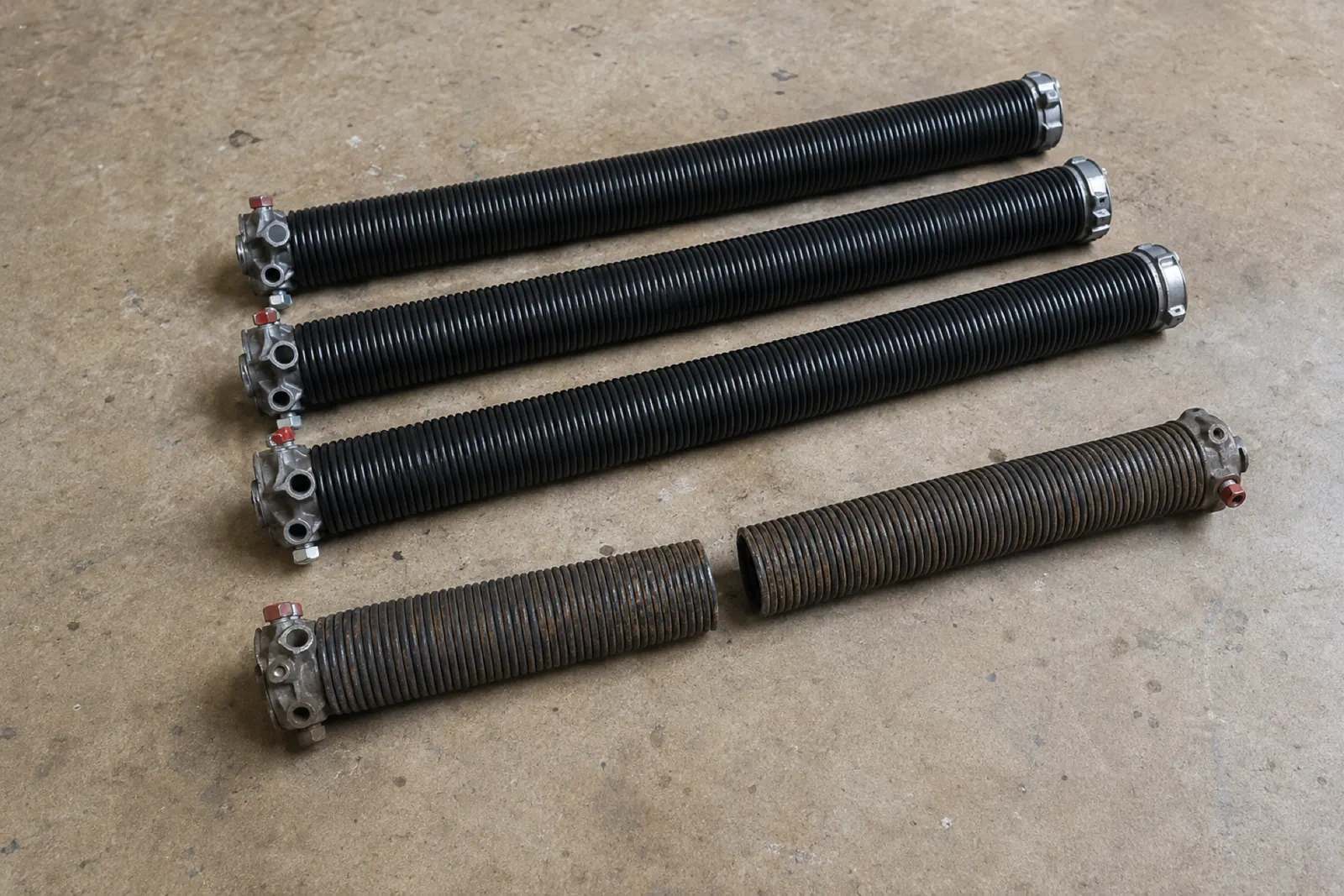
Extension Spring Replacement
What affects the quote
One spring per side or two
Heavier doors sometimes carry a pair of springs on each side rather than one. Four springs, four containment cables and the extra setting time show as their own lines.
Containment cables to add
A door that never had containment cables gets them with the new springs, along with anchor hardware into the framing. It is a small parts line and a worthwhile one.
Pulleys that need renewing
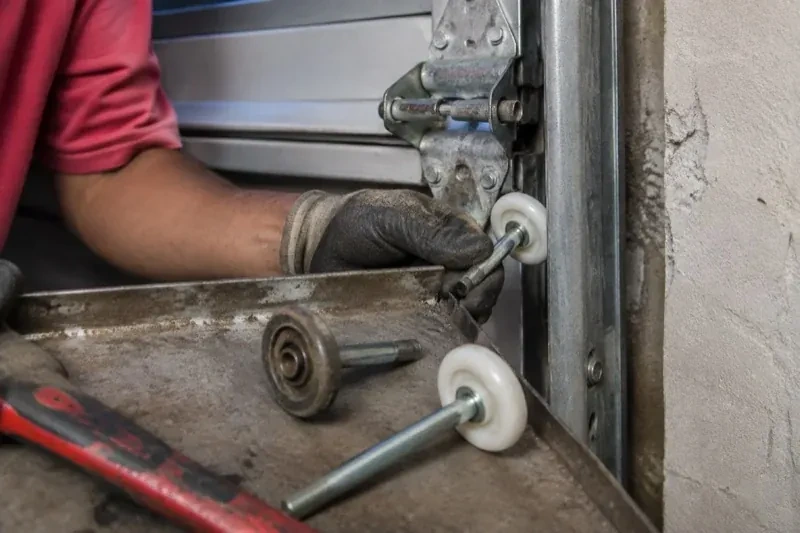
Each side has two pulleys, and a wheel worn to a groove or a bearing that has stiffened is replaced with the springs. The quote names how many and which type.
What to have ready
- Is it a single or a double door, and what is it made of?
- Is a car parked inside that will need to come out first?
- Is there a thin cable running through the middle of each spring?
Extension Spring Replacement: questions
QuestionsWhy does the door slam down the last bit?
A door that drops the final stretch is telling you the springs are no longer holding it. As an extension spring loses its temper it gives less pull near the bottom of travel, where the door needs the most support, so the door falls that last foot. Fresh springs matched to the door's weight bring the door down under control and take that shock off the bottom section and the opener.
What does the paint colour on the end of the spring mean?
Manufacturers dab a colour on the end coil to indicate the spring's weight rating, which is a handy starting point. It is not the final word: a faded or repainted end coil tells you little, and the pair on an older door may have been a near match rather than the right one. The technician treats the colour as a hint and confirms the rating from the door's measured weight and the spring's own dimensions.
How do you know which springs my door needs?
By weight. Extension springs are rated for the weight they lift, so the technician releases the opener and weighs the door on a scale, then matches that figure and the door's height to a spring rating and stretch length. The old springs are measured as a check on wire size, coil diameter and length. Where the two disagree, the scale decides, since doors gain weight from added insulation or panels.
Related services
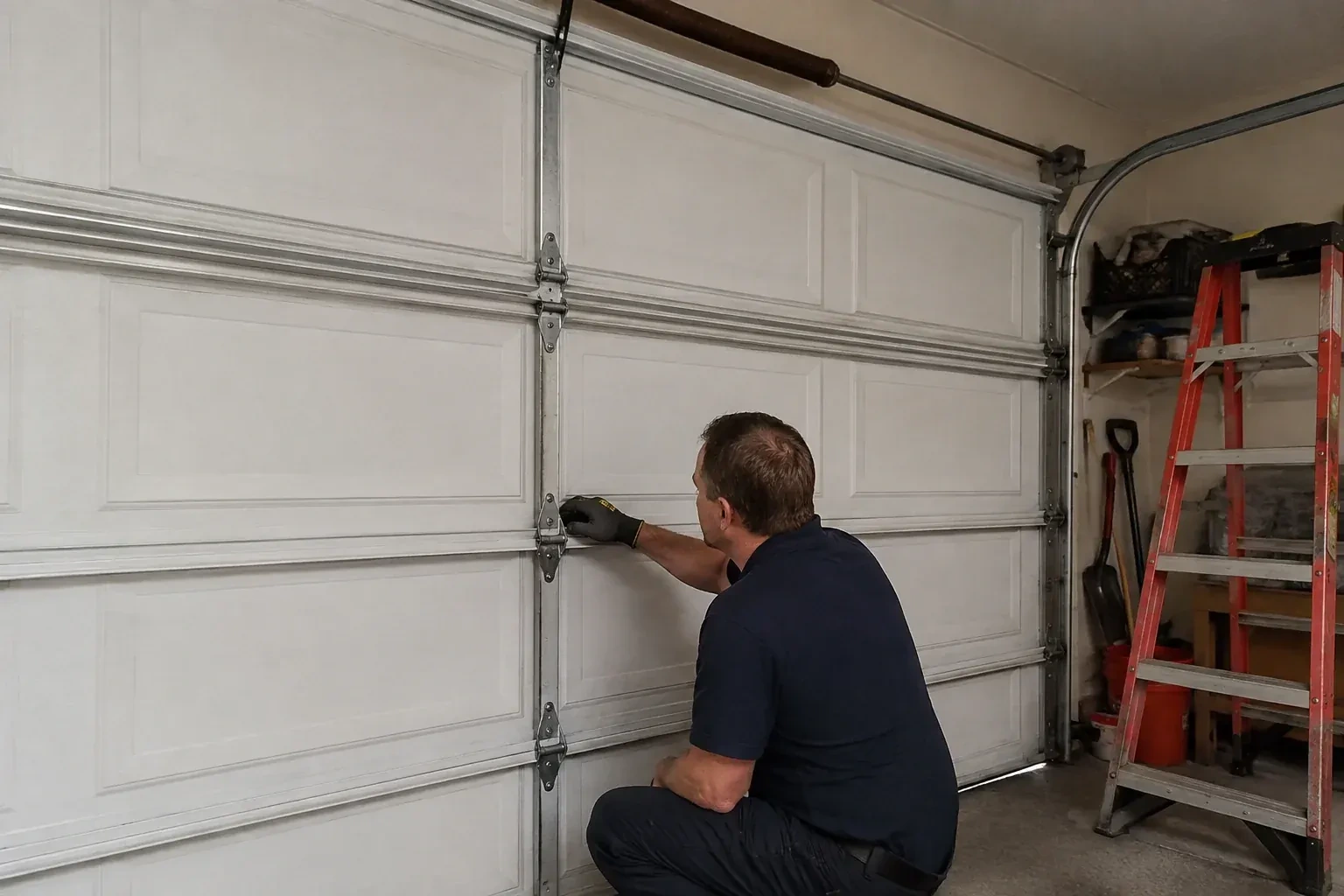
- Garage Door Hinge ReplacementOn the old wood door, one hinge has pulled away from the panel, dragging a screw and a chunk of soft timber with it.
- Garage Door Track Repair or ReplacementYou bought the house with a door that sticks near the top of its travel.
- Garage Door Cable ReplacementStanding inside with the door closed, you notice the cable on the right side near the floor has gone fuzzy.