Springs · St. Catharines
Garage Door Track Repair or Replacement
You bought the house with a door that sticks near the top of its travel.
In plain words
Whether a piece of track is straightened or replaced depends on where and how it is damaged. A shallow dent in the vertical run, away from the curve, can usually be dressed back to profile with track pliers and a block, and a channel that worn rollers have pried open can be squeezed closed. A kink, a crack, a bend in the curved section or steel thinned by rust calls for a new piece of the same profile and radius, because a roller path with a hard spot in it keeps catching. The technician shows you the damage and explains which option suits each piece before the work starts.
How the visit goesThe door climbs crooked, one side clearly ahead of the other. Nothing looks broken, but the two tracks sit different distances from the door, and one leans in toward the opening near the top.
Garage Door Track Repair or Replacement
How the visit goes
Reading the track system
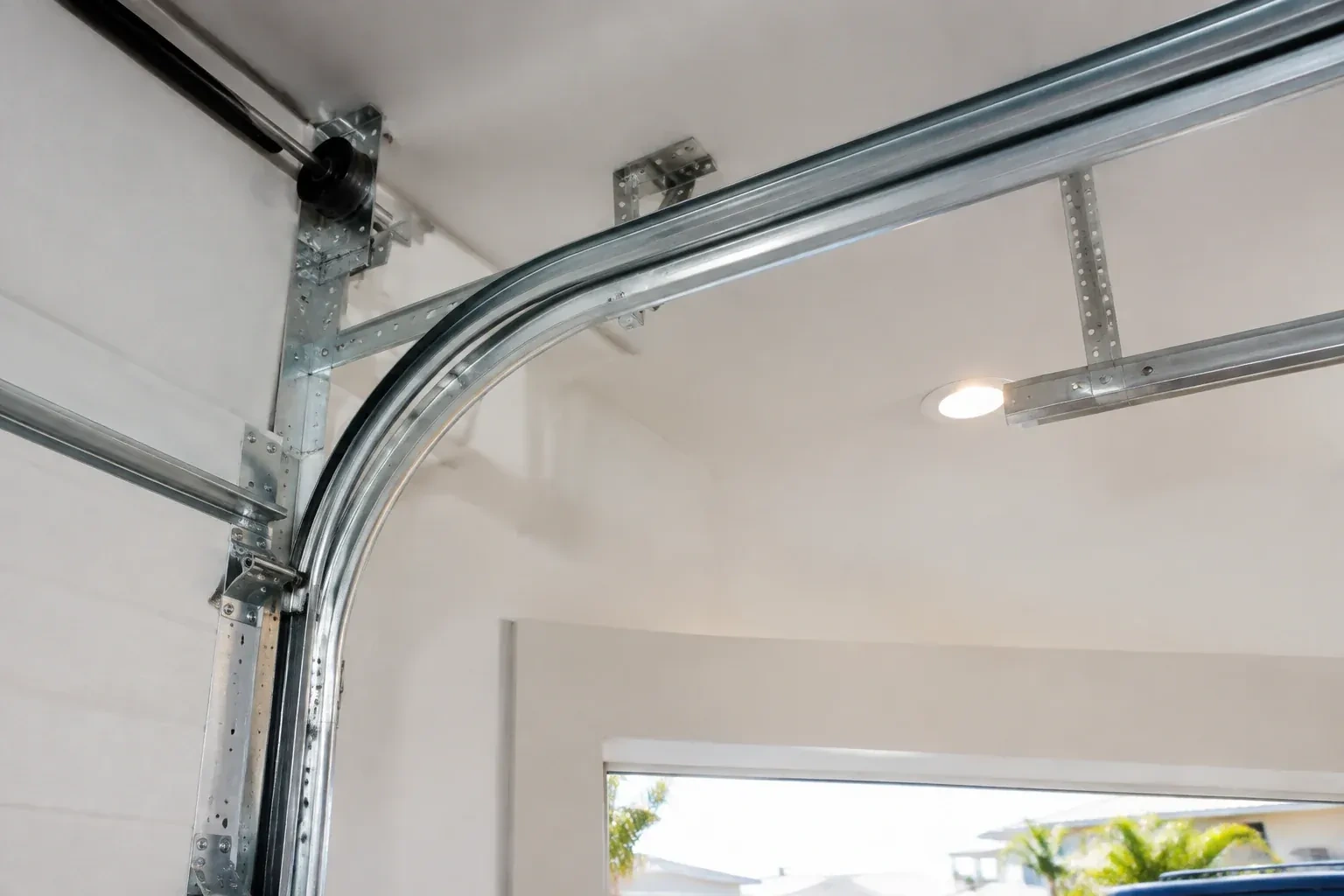
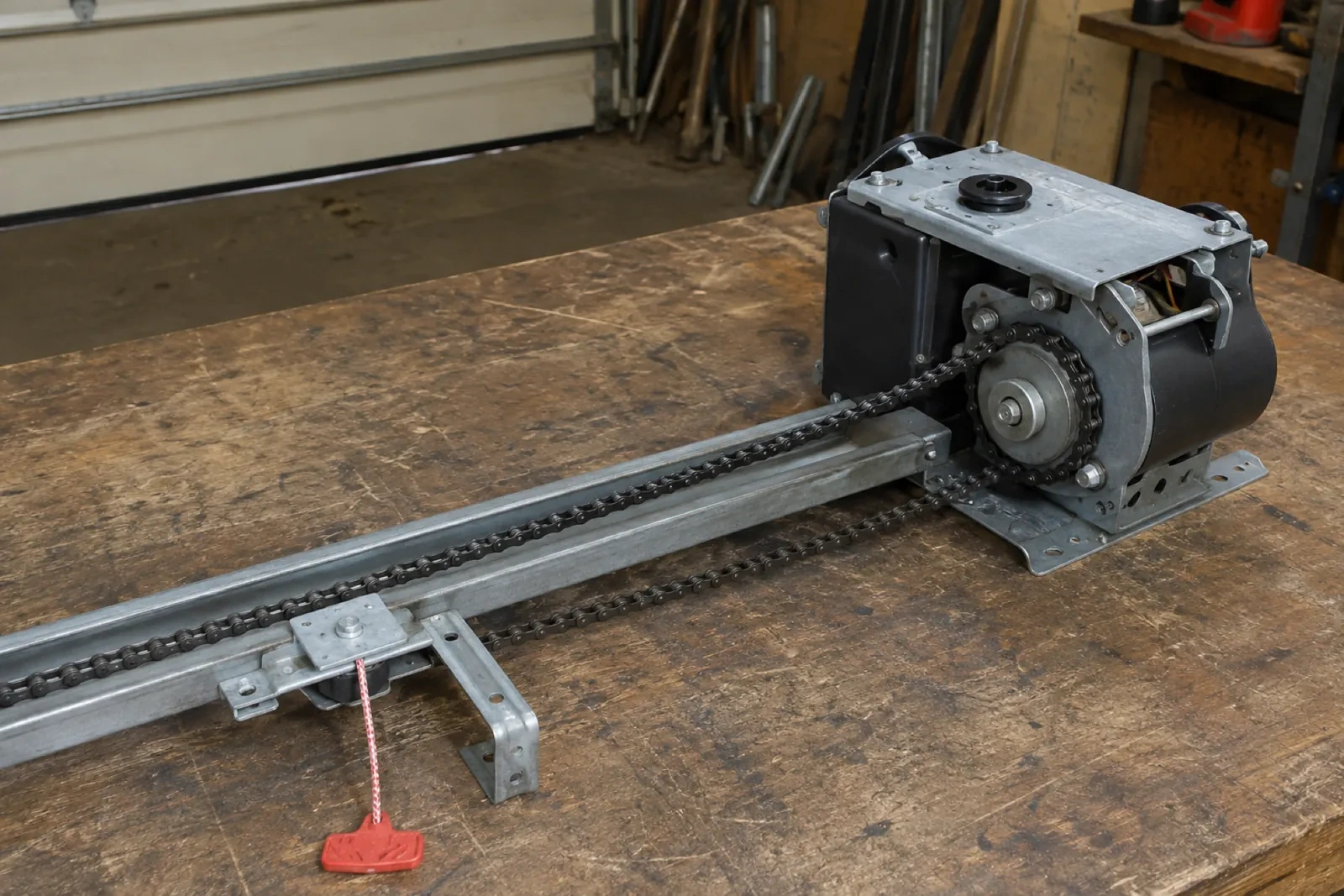
Track comes in families, and the replacement parts have to belong to the same one. The technician notes the profile, two-inch on nearly all residential doors and three-inch on some heavy ones, and the radius of the curve, typically 12 or 15 inches, which sets how much headroom the door uses. The layout is identified as standard lift, low-headroom dual track or high lift, and the vertical run as bracket-mounted or on a continuous angle. The spring type matters too, since a torsion shaft bearing usually rides on the flag bracket at the top of the vertical track. These details decide what is ordered and how the work is sequenced.
Dressing a dent back to profile
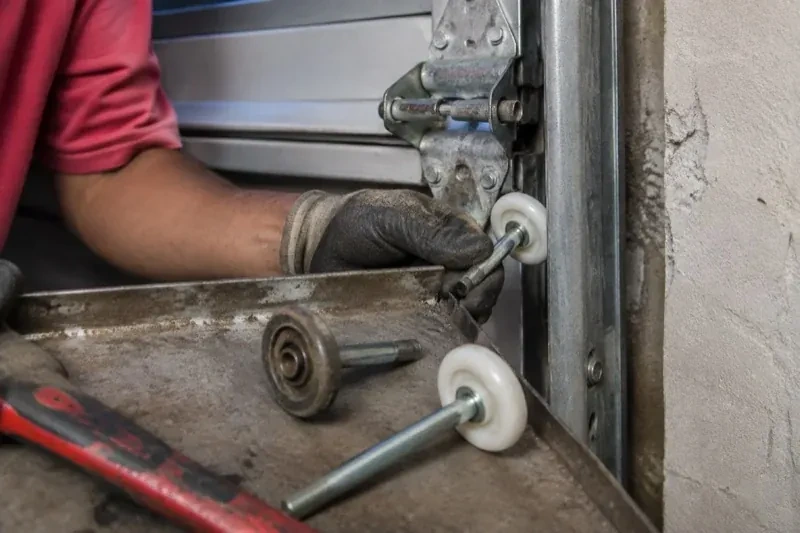
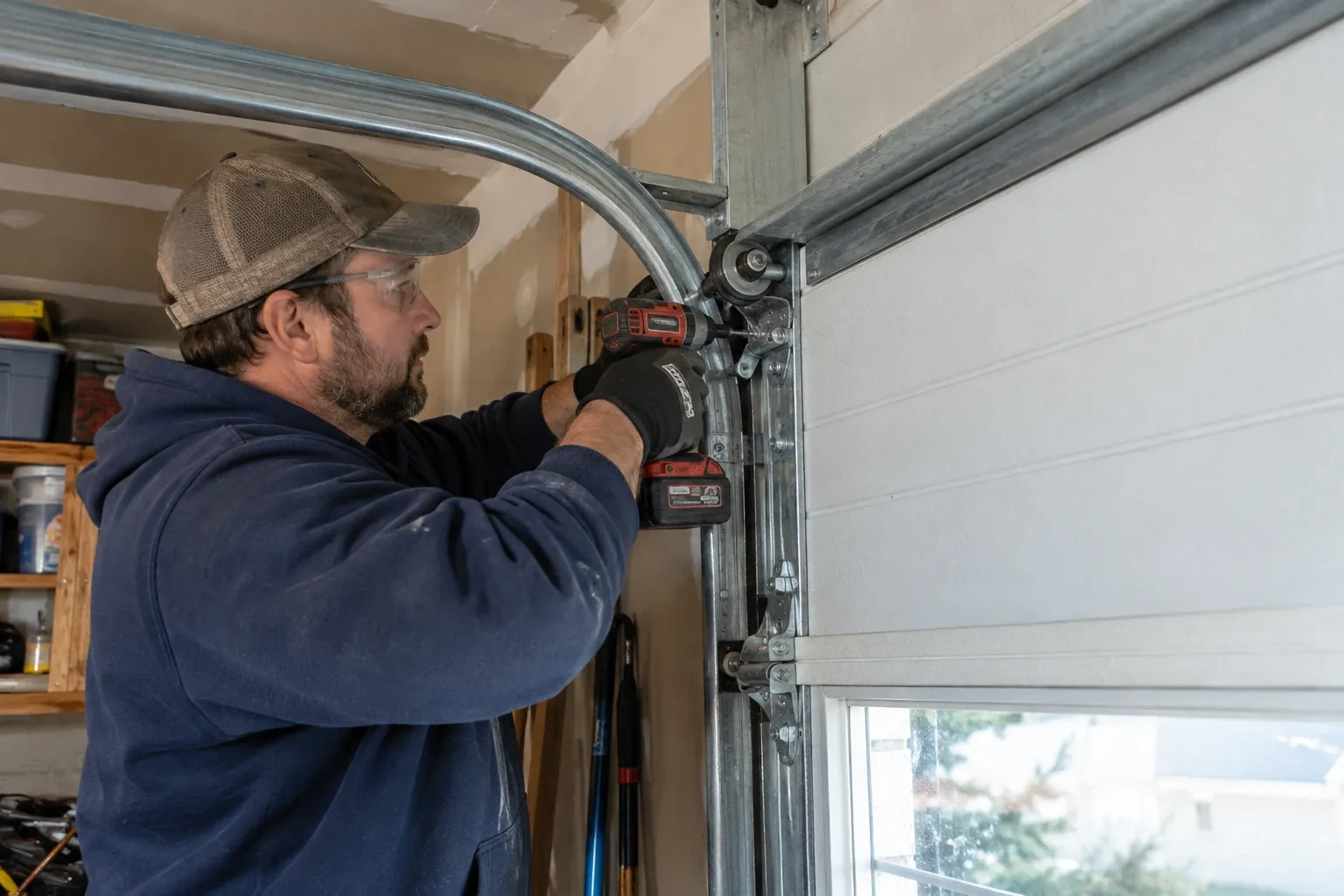
A shallow crease in the vertical run, clear of the curve, is repaired in place. With the door clamped and the nearest roller moved out of the way, the technician works the steel back to shape with track pliers, or with a hardwood block held inside the channel and a dead-blow hammer on the outside, taking small bites rather than one heavy blow so the metal returns without stretching. A spare roller is passed through the repaired length as a gauge: it should run freely with no tight spot and no rattle. If the crease has cracked the steel or left a ridge the roller still feels, the piece is scheduled for replacement instead.
A door that runs the full path without a catch
The change is felt more than seen. The door rises without the bang or hesitation that marked the damaged spot, both sides climb together, and it turns the curve overhead without the top section twisting. Closed, it sits flush against the stop moulding on both jambs with no stripe of daylight, and open, it stays where the opener leaves it instead of drifting back. The opener sounds calmer because it is no longer dragging a door through a pinch point. Lifted by hand with the opener released, the door moves lightly and holds at waist height, which tells you the track and springs are working together again.
Garage Door Track Repair or Replacement
In the van
Jamb lumber and construction screws
Winding bars and track clamps
Horizontal track with curve
Jamb brackets or continuous angle
Vertical track, two-inch or three-inch
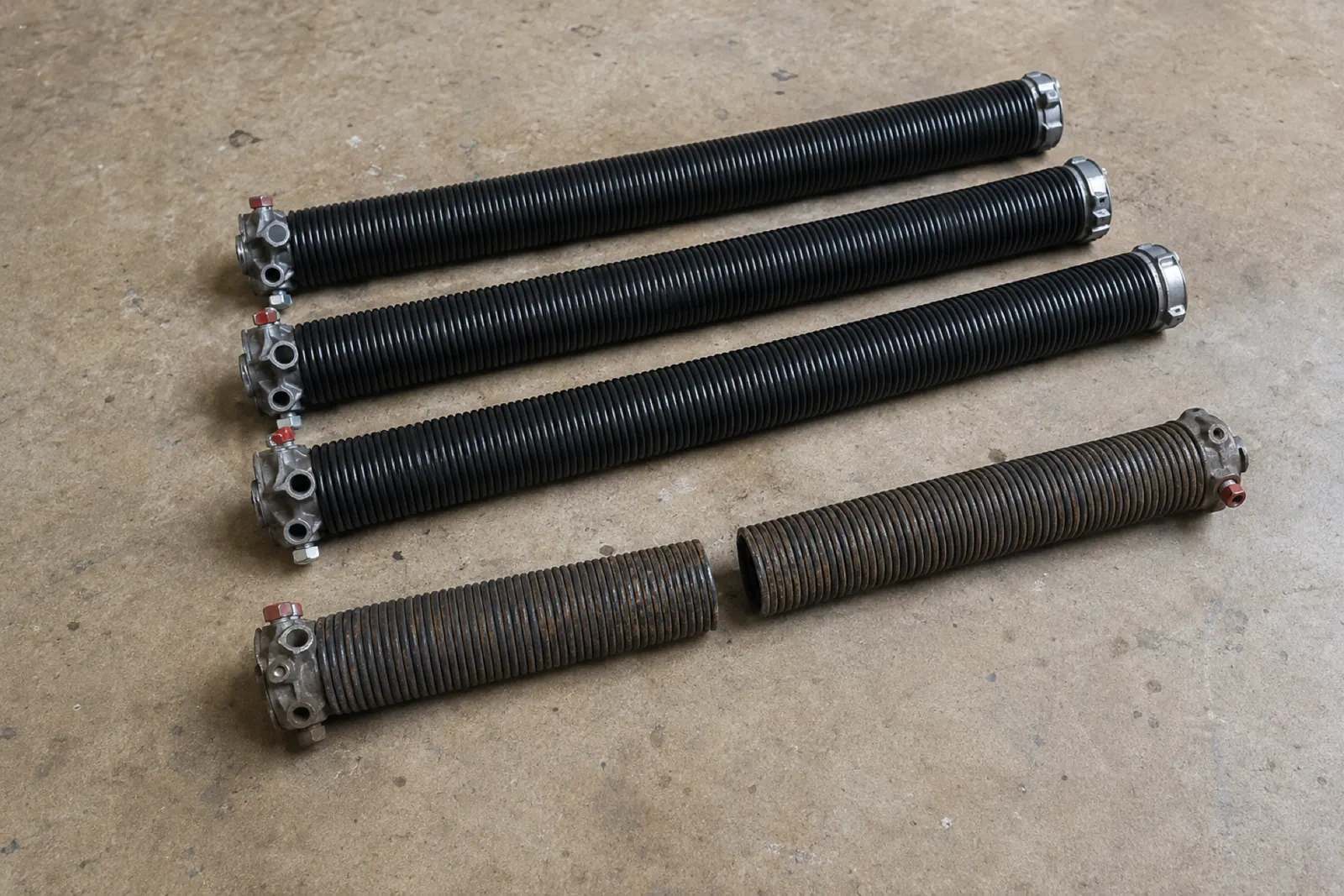
Garage Door Track Repair or Replacement
What affects the quote
Condition of the jamb wood
Where the jamb is soft or split at the floor, sistering or replacing the lower length is carpentry added to the track work, and the lumber and fasteners are listed on their own line.
Door size and weight
A tall or double door has longer runs of track and heavier loads on the brackets, and a heavy insulated or wood door may call for heavier-gauge track and more substantial hangers.
Ceiling hangers and what they are fixed to
A hanger that has bent or pulled from a joist is replaced, and a run that was only fixed into drywall gets angle reaching to solid framing. Each hanger corrected is named in the quote.
What to have ready
- Does the door rub the frame or catch at the same spot every time?
- Can you see a bracket standing away from the wood or screws backing out?
- Do you know what caused it, such as a car, a ladder or stored items?
Garage Door Track Repair or Replacement: questions
QuestionsCan a bent garage door track be straightened, or does it need replacing?
Both happen, and the damage decides. A shallow dent in the vertical run away from the curve is usually dressed back to shape with track pliers or a block, and a channel that has spread can be squeezed closed. A kink, a crack, a bend in the curved piece or steel thinned by rust is replaced with a matching section, because a hard spot in the roller path keeps catching however carefully it is worked.
Should the track be lubricated?
It depends on the door, and manufacturers disagree, which surprises many people. Some want the track kept clean and dry, since lubricant there can collect grit and let the wheels skid instead of roll, wearing the roller and the track edge; others specify lubricant at the track bend. The moving parts, roller bearings, hinge pins and springs, get their own lubricant either way, in the type the manual specifies, with a few cycles of the door to spread it.
Can a low-headroom or high-lift layout be fitted to my existing door?
Often, yes, and it is a track job with a spring job attached. Low-headroom dual track lets a door open under a low ceiling or a beam, while high-lift track carries the door further up the wall to clear a car lift or storage. Each changes the horizontal run, the curve, the top fixtures and usually the cable drums and spring turns. The technician measures headroom, sideroom and backroom first and confirms the door suits the change.
Related services
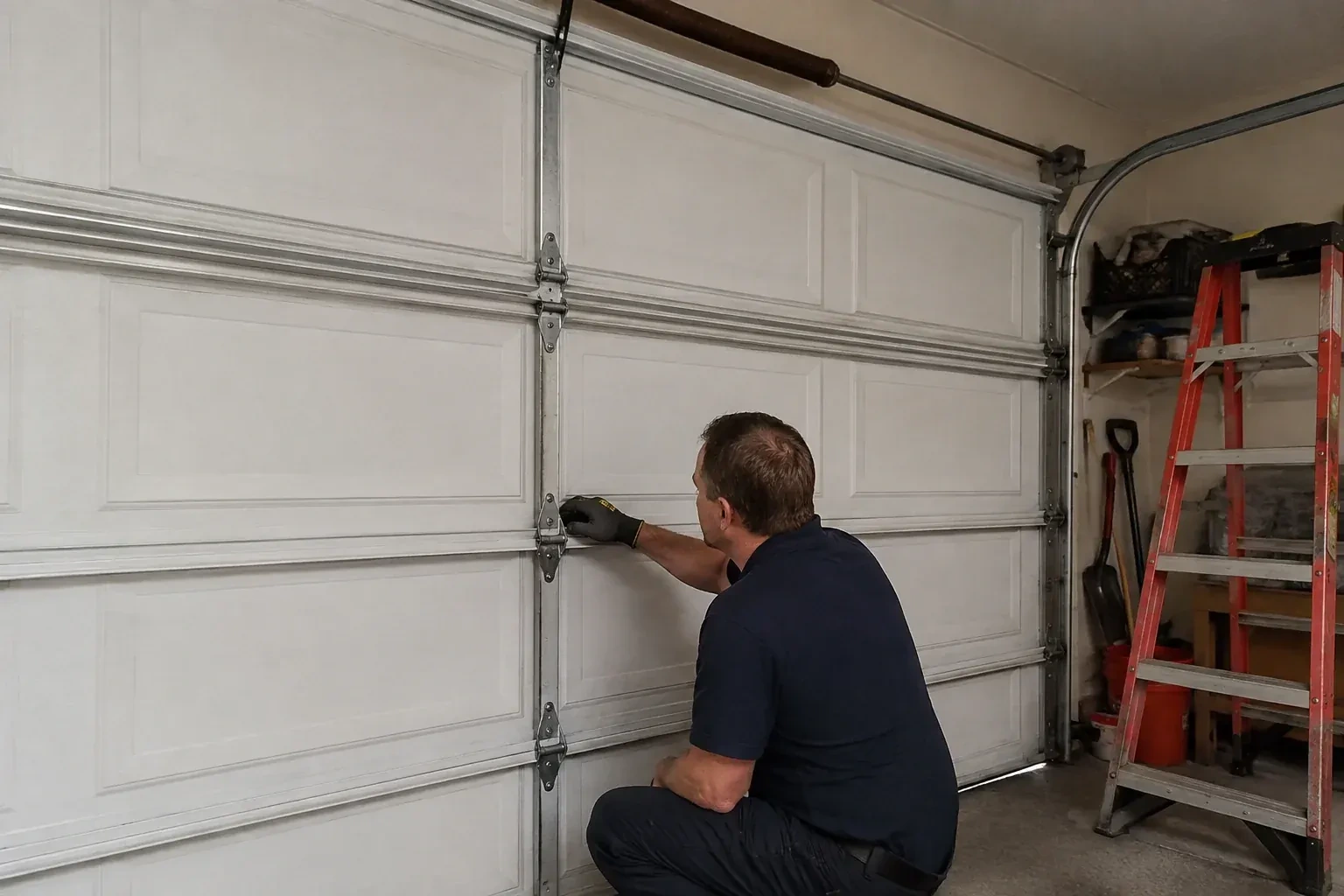
- Garage Door Hinge ReplacementOn the old wood door, one hinge has pulled away from the panel, dragging a screw and a chunk of soft timber with it.
- Garage Door Cable ReplacementStanding inside with the door closed, you notice the cable on the right side near the floor has gone fuzzy.
- Torsion Spring ReplacementAfter pulling the red release cord, you tried lifting the door yourself and it would barely leave the floor.