Openers · St. Catharines
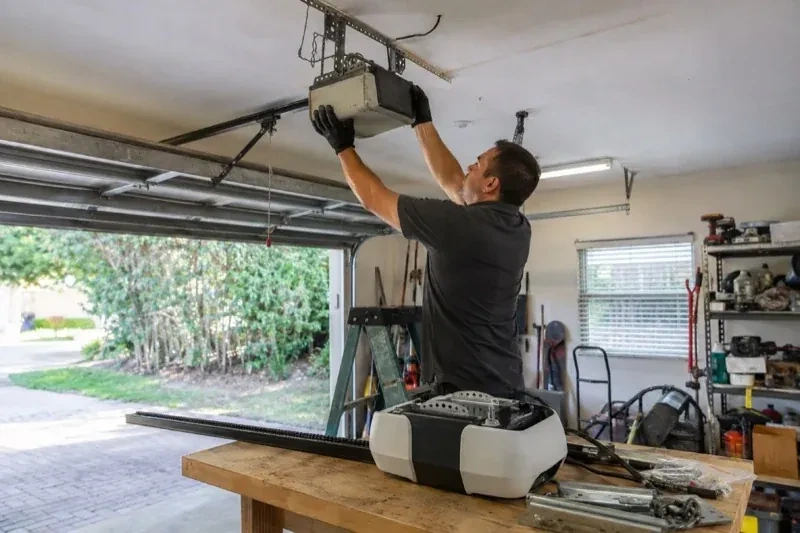
Garage Door Opener Replacement
The remotes only work from the end of the driveway now, and one of them disappeared with a set of keys last month.
In plain words
Winter is hard on an old opener and a good reason to renew one. Cold thickens grease in a worn chain drive, a tired motor stalls on a door whose seal has stuck to the slab, and an ice storm that cuts the power leaves the door dead when you least want to be outside. A current operator handles all three better: it is rated for detached-garage temperatures, its force limit reverses off a frozen seal instead of straining, and a backup battery runs it through an outage. The technician fits it, tunes it for the cold and shows you the manual release for the rare day it is needed.
How the visit goesDuring the ice storm the power was off for two days. You came home in the dark, found the door dead, and had to climb out of the car to pull the red cord in the cold. A door that keeps working through an outage is now on the list.
Garage Door Opener Replacement
How the visit goes
Reading the old opener
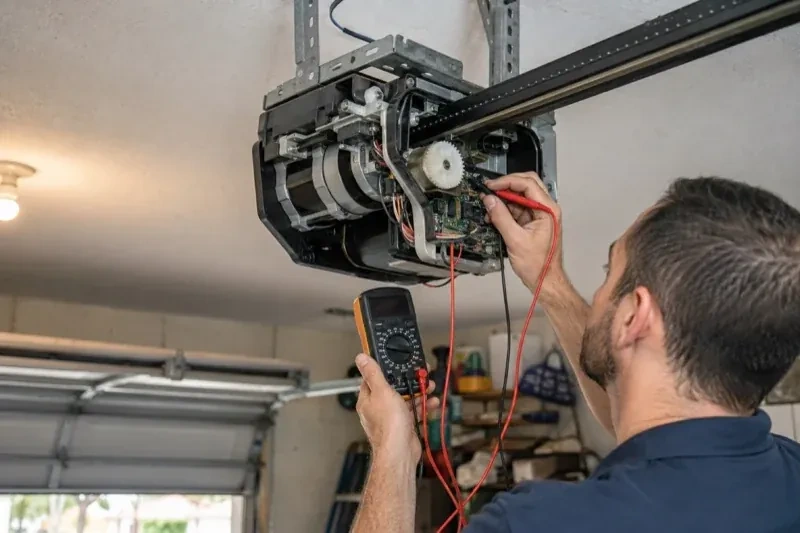
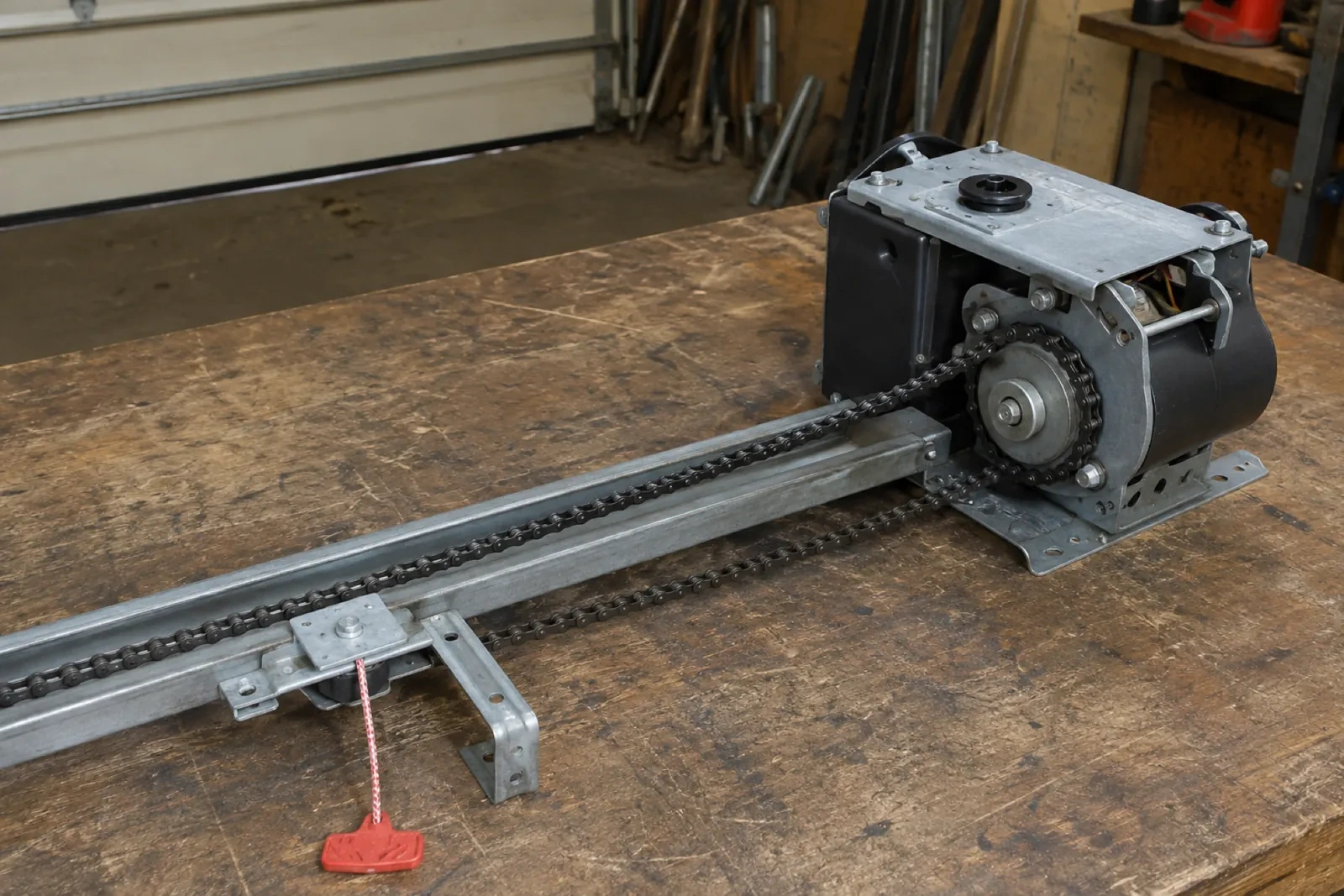
The existing unit has a story to tell. Its label gives the make, model and year, which says whether it predates photo-eye sensors and rolling-code remotes. The technician checks for oil leaking from the gearbox, plastic shavings from a stripped gear, scorching on the board, a bent rail or a worn trolley, and whether the travel limits have been fighting the door. This confirms the replacement is the right path and shows what, if anything, can be kept: the low-voltage wiring to the wall console is often reusable, while sensors and controls are matched to the new brand and generally come with the unit.
Proving the safety reversal
Two tests are performed while you watch, before the job is called finished. A 2x4 is laid flat under the centre of the door and the door is closed from the wall console; on touching the wood it must stop and return to fully open. Then the door is closed again while an object is waved through the photo-eye beam, and again it must reverse. The red release cord is checked to hang no higher than about 1.8 m so it stays reachable while clearing a vehicle roof. The door's manual slide lock is disabled or removed so it can never be thrown while the operator is connected. Any adjustment is made and the tests are repeated.
Getting the door through winter
A modern operator runs at the smallest force that moves the door, so on a bitter morning when the bottom seal has frozen to the slab it will reverse rather than tear the seal or strain the top section. The right response is to free the seal, by breaking the ice along the threshold or warming it, then press the button again. Keep snow and slush cleared from the threshold, put a silicone wipe on the seal before the cold sets in, and expect the door to sound a little different at minus twenty. An operator chosen for a detached garage is rated for those temperatures, and the seasonal lubricant it was given keeps the hardware moving.
Garage Door Opener Replacement
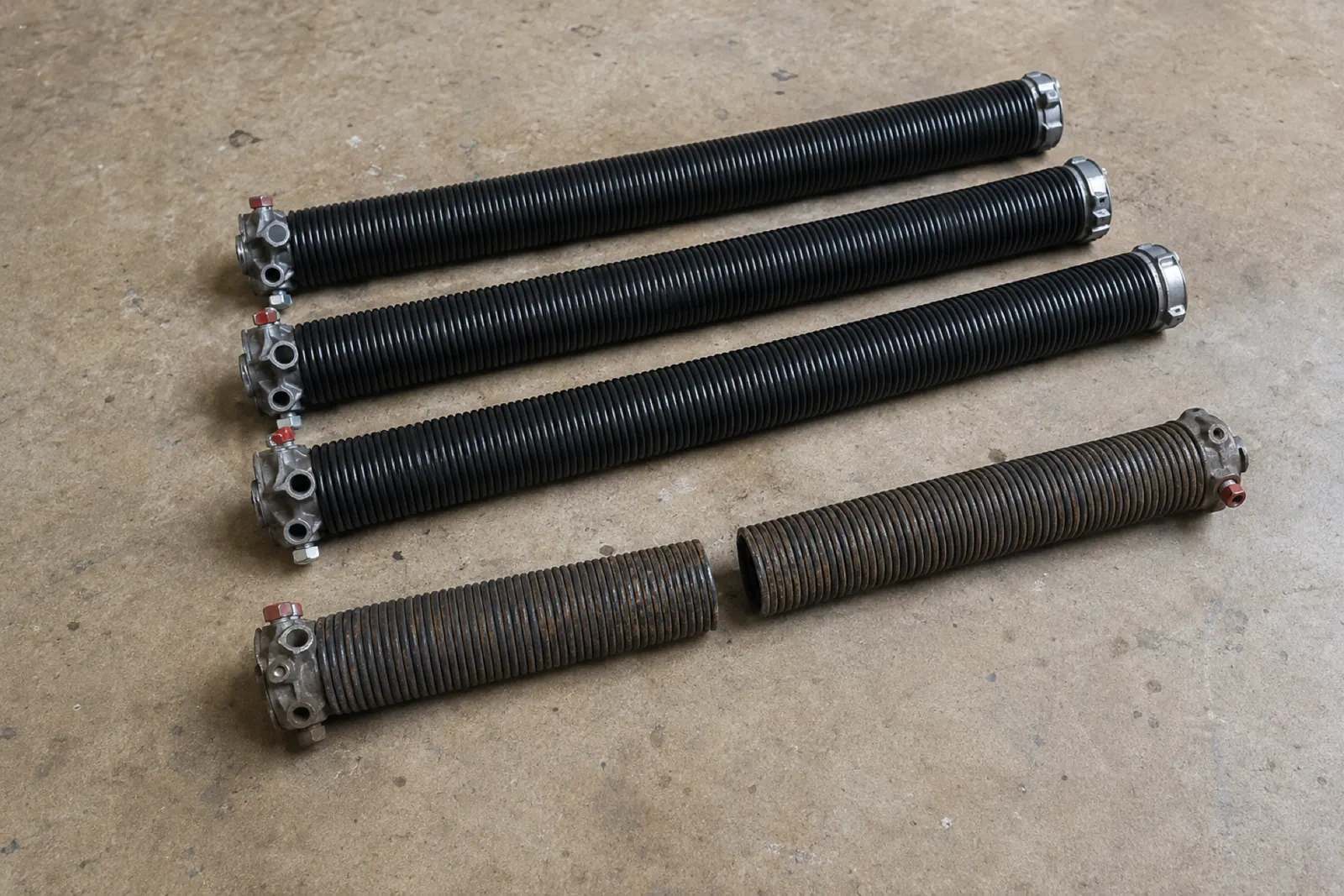
In the van
Header bracket and lag screws
Top-section reinforcement strut
Low-voltage bell wire and staples
Wall control console
Rail sections and trolley
Garage Door Opener Replacement
What affects the quote
Remotes, keypad and vehicle programming
How many handheld remotes you want, whether a keypad goes outside the door, and whether an older vehicle's built-in buttons need a repeater are counted separately, so a household with four drivers sees a different total from one with one.
Working around what is in the garage
A vehicle lift, a storage loft, ductwork or shelving where the rail will run, or a garage that cannot be emptied before the visit, adds handling time that the technician accounts for after seeing the space.
Wall-mount accessories
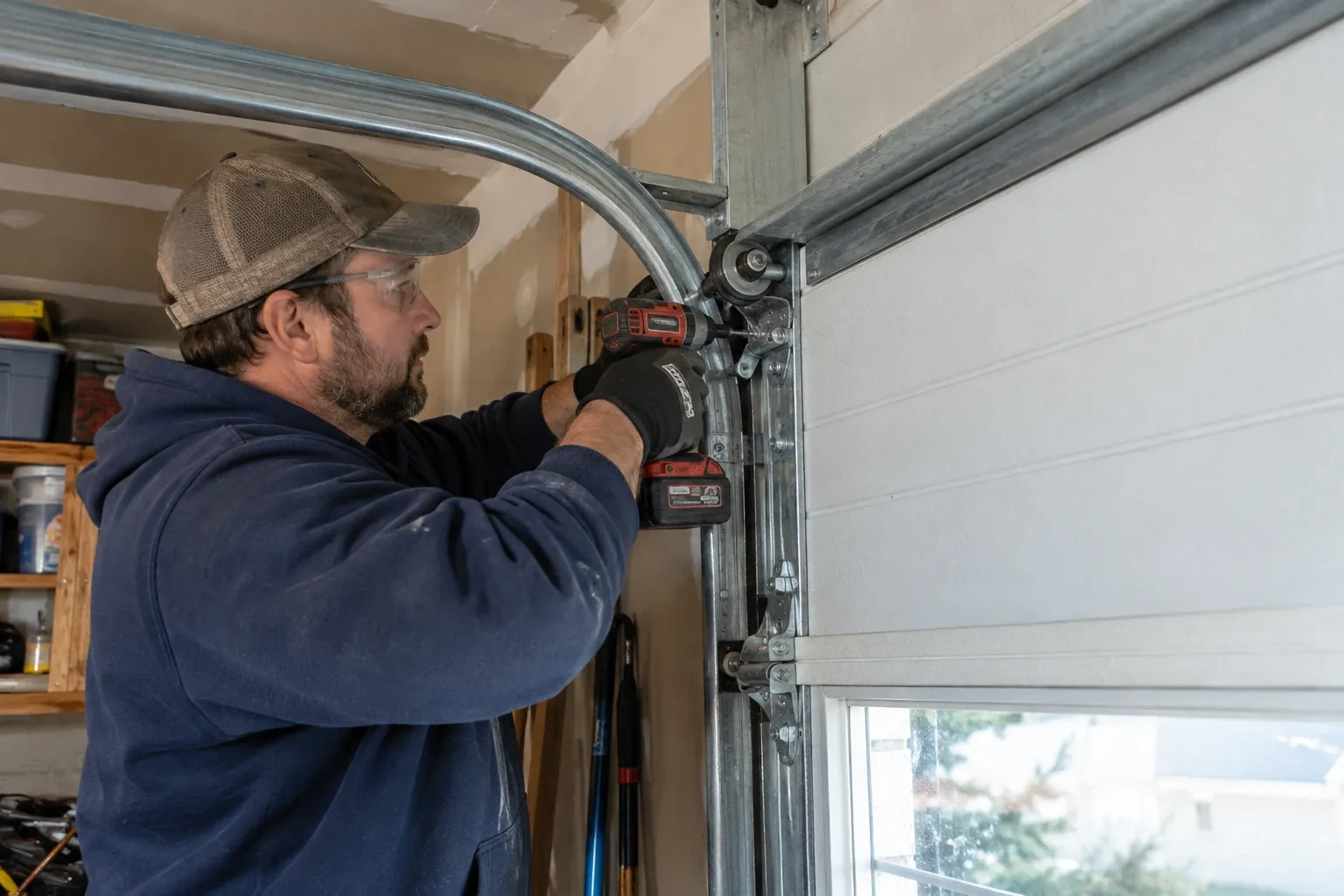
A wall-mount operator is installed with a cable tension monitor and a powered track lock, and sometimes a separate light kit, since the unit itself hangs no lamp over the garage.
What to have ready
- Is there a grounded receptacle in the ceiling near the opener, or is it running from an extension cord?
- Is the door steel, wood or aluminum, and is it insulated?
- Is there a bedroom or living space above or beside the garage?
Garage Door Opener Replacement: questions
QuestionsCan the new opener use my old rail?
The rail, trolley and drive are designed as one system with the head unit, so a new operator comes with its own rail matched to its motor and drive type. Reusing an old rail would mix parts that were never meant to run together. The old rail, head and hangers come down and are recycled, and a fresh rail is assembled to suit your door's height.
My old photo eyes still work. Can they stay?
Sensors and head unit are made for each other; a board reads its own maker's sensors, often a particular generation of them, so the pair in the box is what goes on the wall and the old ones come down with the old opener. The new pair sits low at each side of the doorway, roughly a hand's width above the concrete, and the technician confirms their indicator lights are steady before the door is tested against the beam.
Chain or belt: which should I choose?
Both move the same doors, so the choice is about sound and setting. Chain is the sturdy, simple workhorse and a fine fit for a detached garage or a workshop where a little noise is nobody's concern. Belt is the pick when a bedroom, nursery or office shares a wall or floor with the garage, because it starts and stops softly and hums rather than rattles. If the ceiling is crowded, a wall-mounted unit beside the spring shaft removes the rail altogether.
Related services
- Chain-Drive Opener RepairThe motor runs, you can hear it working, but the door never moves.
- Belt-Drive Opener RepairThere is a new squeal from the front of the rail, up near the header, on every cycle.
- Photo-Eye Sensor Alignment or ReplacementYou press the remote, the door drops a few centimetres, then climbs straight back to the top while the opener light blinks.