Garage Doors in Ryderville, OntarioHeavy door.Steady hands.
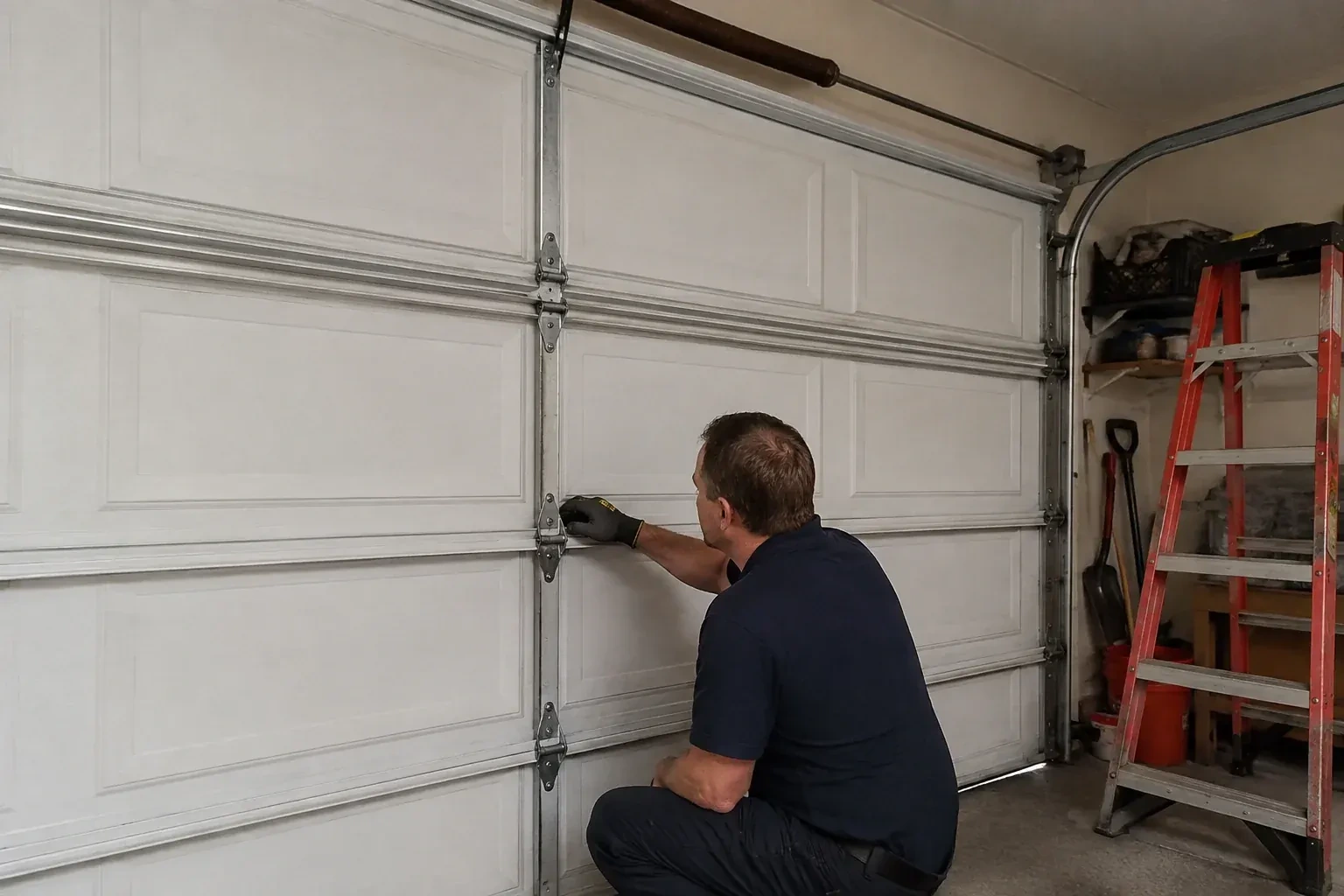
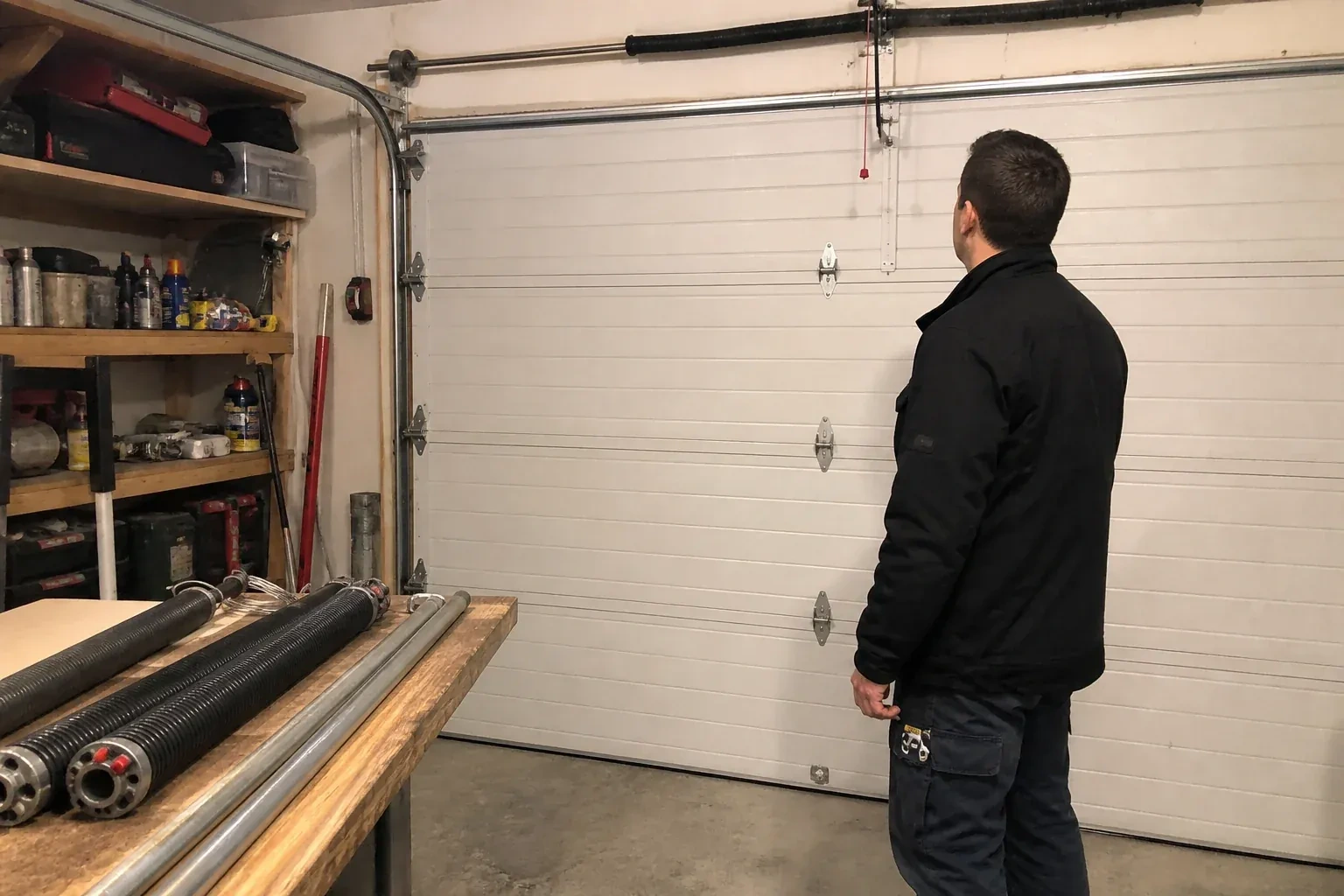
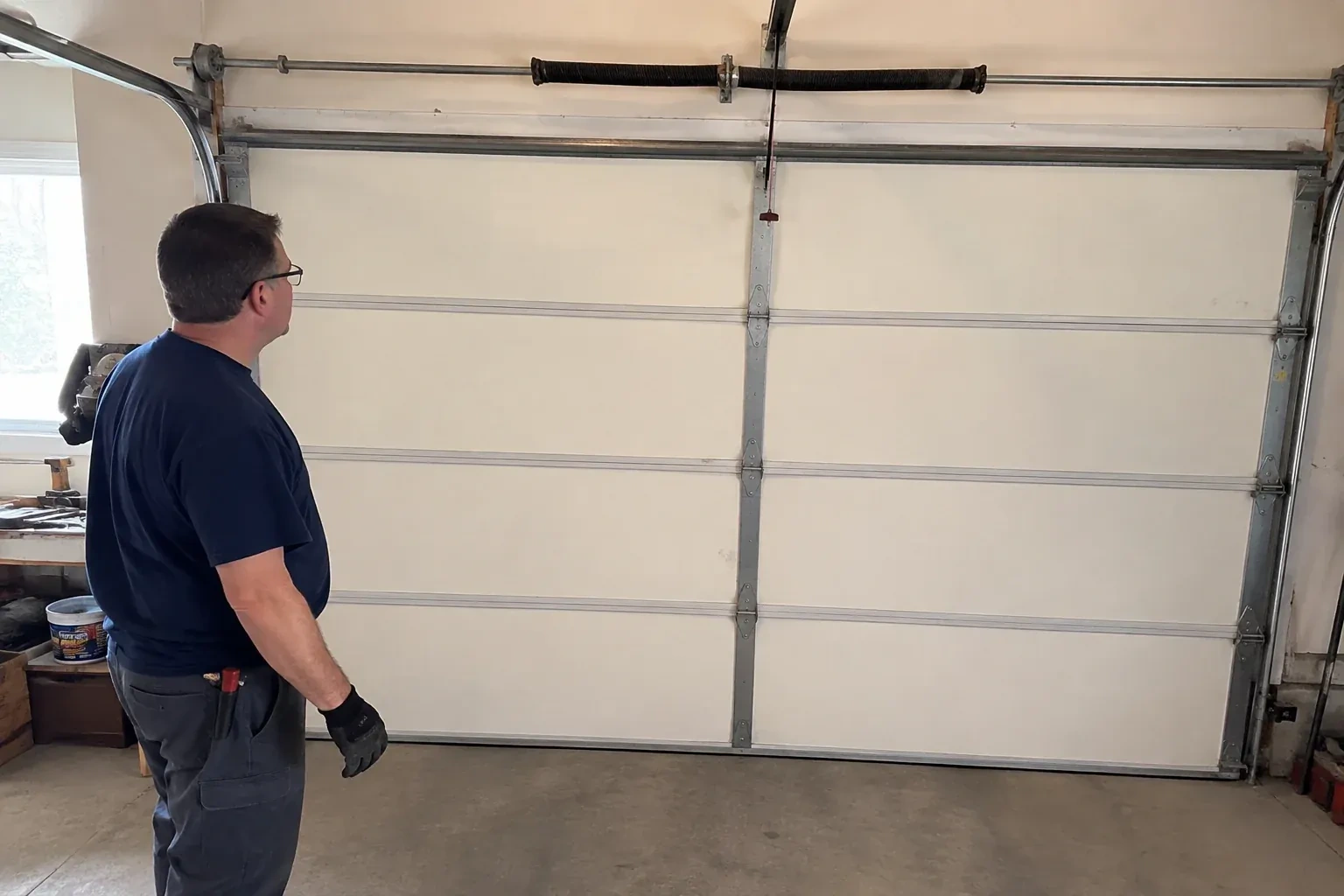
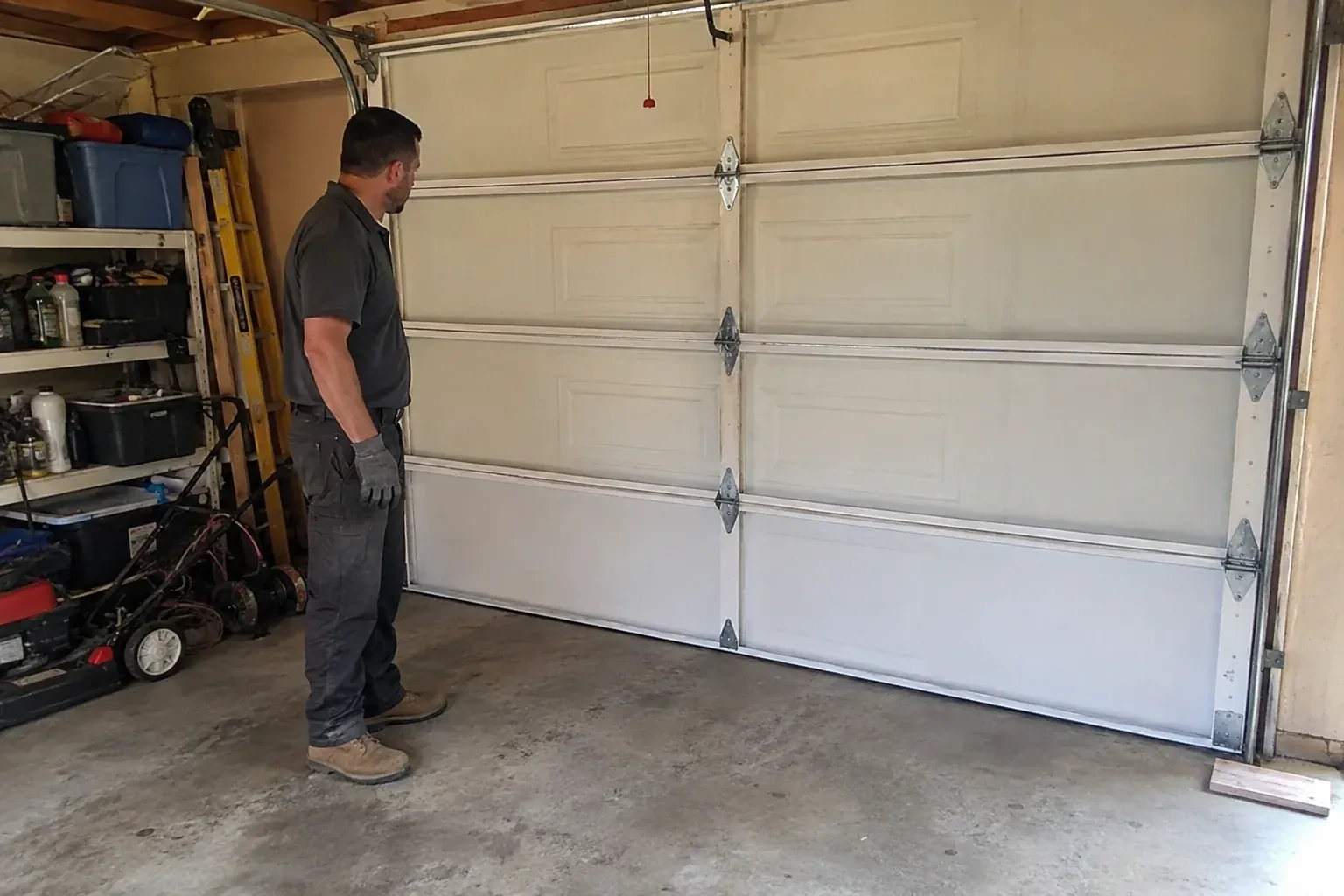
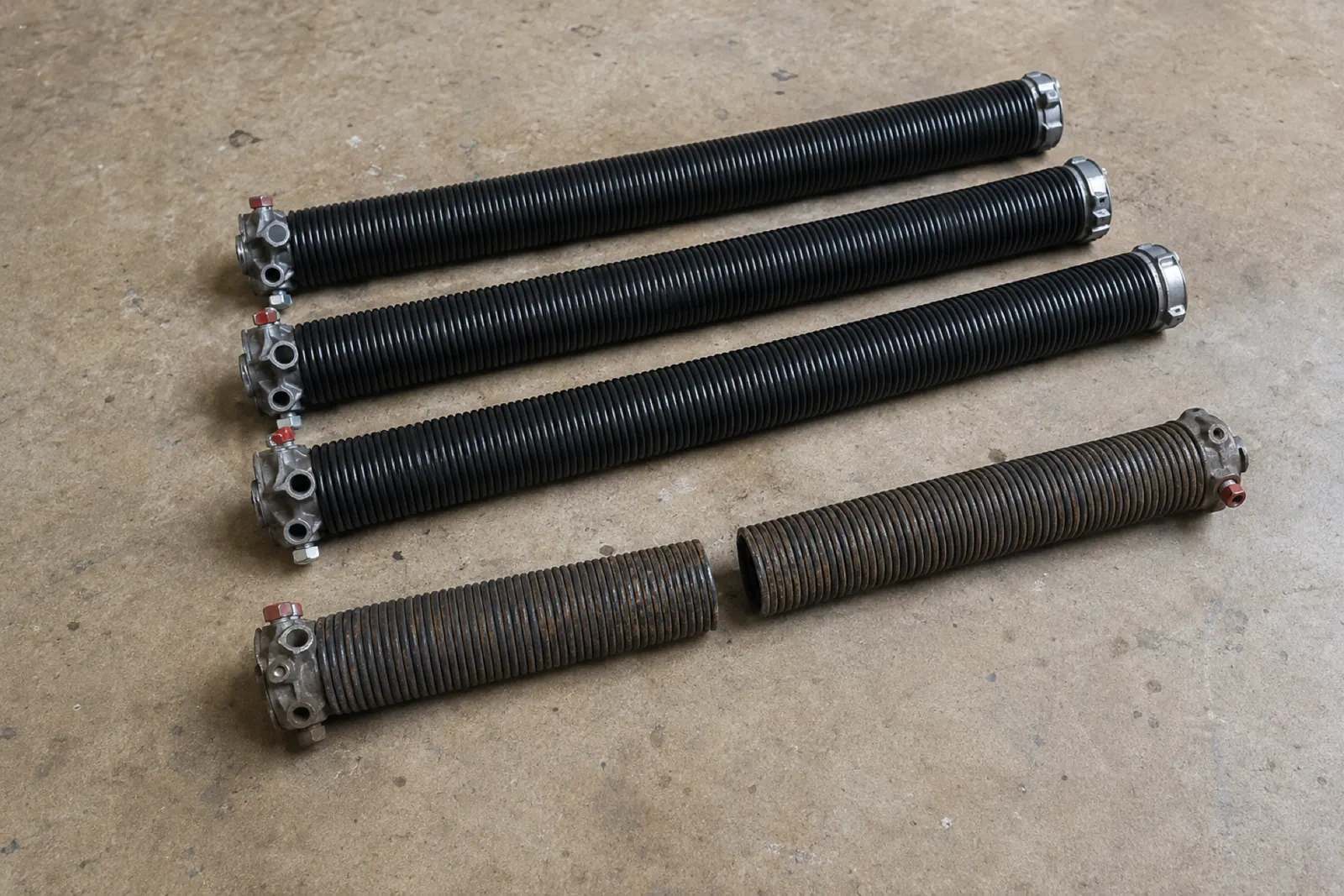
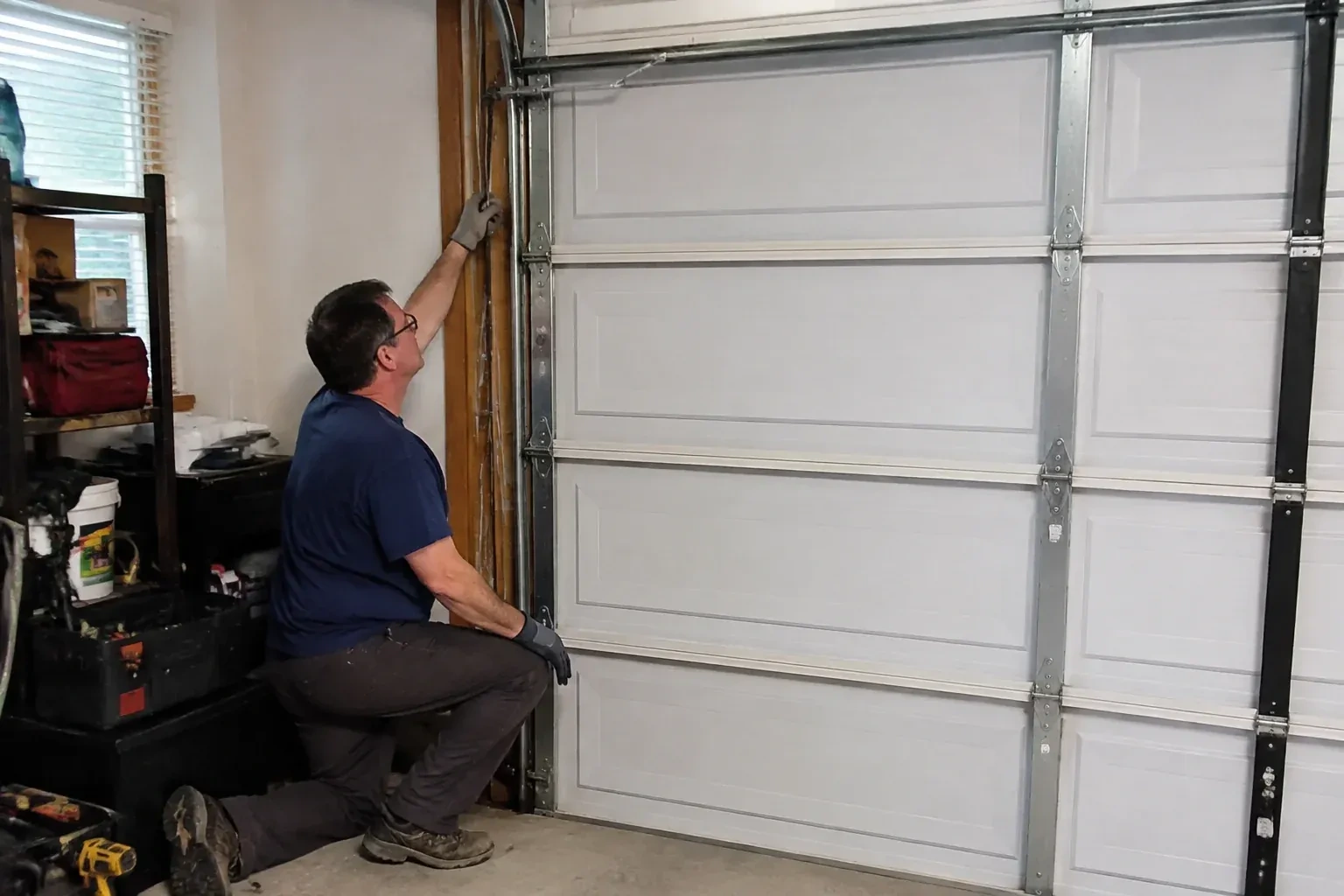
A residential garage door can weigh as much as two grown adults, and the springs above it are wound to carry exactly that load. Our technicians in Ryderville work with winding bars, clamps and stands, secure the door before touching tension, and run it through full cycles before they call the job finished.
A residential garage door can weigh as much as two grown adults, and the springs above it are wound to carry exactly that load. Our technicians in Ryderville work with winding bars, clamps and stands, secure the door before touching tension, and run it through full cycles before they call the job finished.
Explained before, tested after.
We work in Ryderville the way a good tradesman works on his own house: replace parts in matched pairs so wear stays even, use the spring size the door actually needs rather than the closest one on the shelf, and tidy the garage before leaving. Small habits like these are why doors stay fixed.
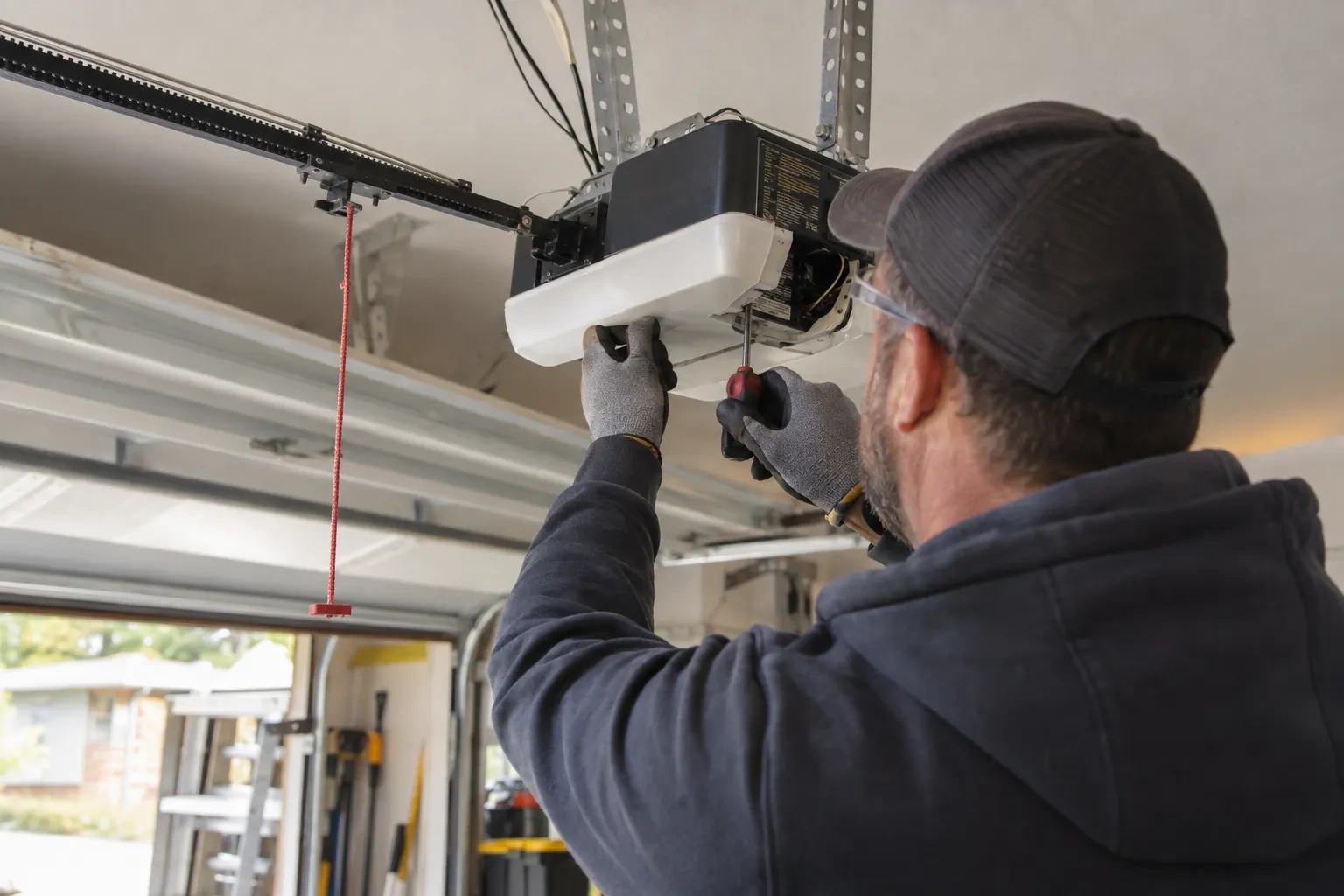
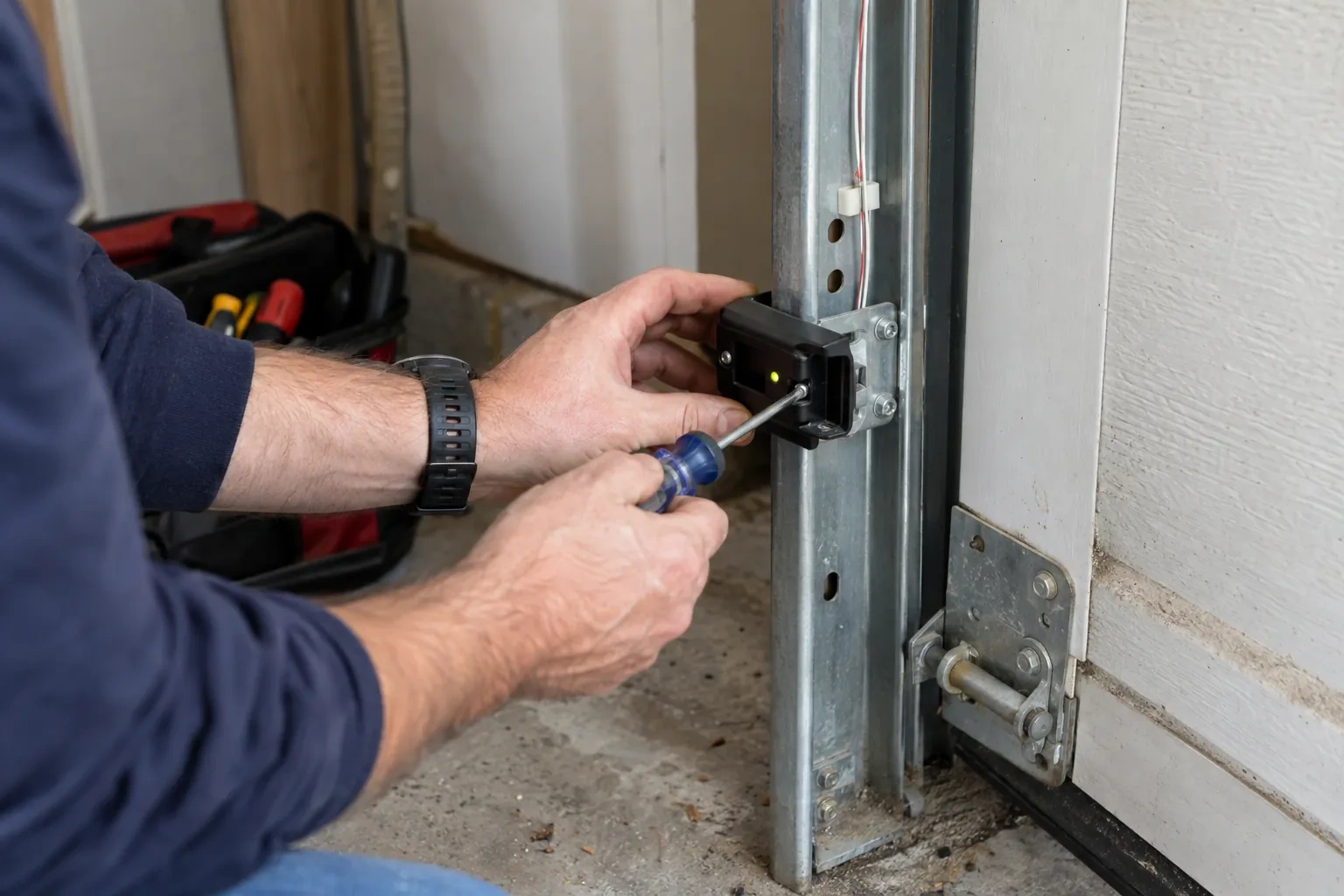
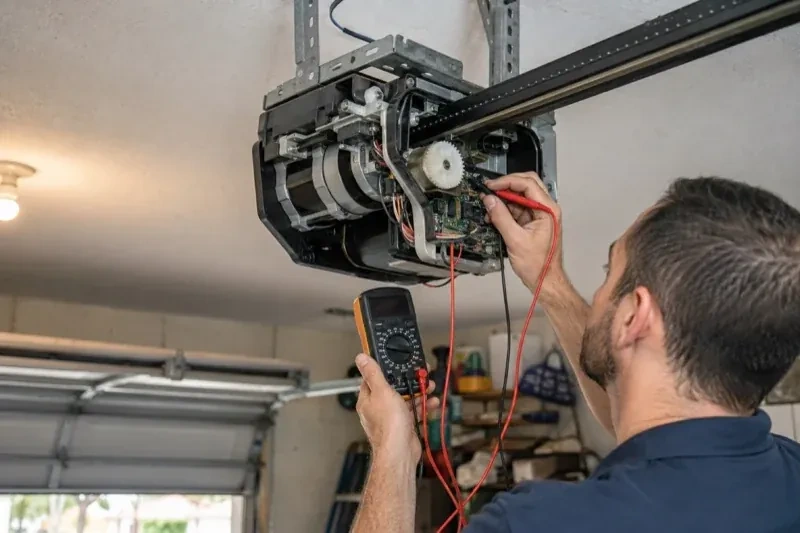
Homeowners across Ryderville call us when the remote stops answering, the keypad forgets its code or the opener hums without lifting. We work through the system in order, from power to logic board to travel limits to sensors, and explain each part as we go. New openers are installed and fully set up, with every remote and keypad working before the technician leaves.
30years in business
24/7open every day
Real explanations. Every recommendation comes with the reason behind it, in words that make sense to someone who has never opened an opener.
Care in your space. We work around bikes, tools and vehicles carefully, protect what needs protecting, and leave the garage clean.
No pushing. You hear the choices once, clearly. Whether to go ahead, wait or take a different route is yours to decide.
Owners of older homes in Ryderville often need work on extension springs, wood doors and early openers, while newer homes tend to need torsion springs, belt-drive openers and insulated steel panels. We service both generations of door, and the pages below explain what applies to yours.
About 71% of homes in St. Catharines were built in 1980 or earlier, according to the 2021 Census.
Older homes
Wiring in an older garage may be a single outlet on the ceiling shared with the light, so a new opener is chosen with that in mind, and a battery backup covers the door during a power cut. The technician looks at the outlet before recommending a unit.
Single-detached houses make up about 56% of homes in St. Catharines (2021 Census).
Mixed housing brings mixed garage use: workshops and storage in the detached homes, everyday parking and a tight squeeze in the attached ones. Sealed rollers and protected sensors suit the busy workshop door; a quiet opener and a well-balanced door suit the townhouse.
Adjusting spring tension is fine work. A quarter turn changes how the door rests at halfway, and the aim is a door that stays where it is left. We adjust, test by hand, and adjust again until it does.
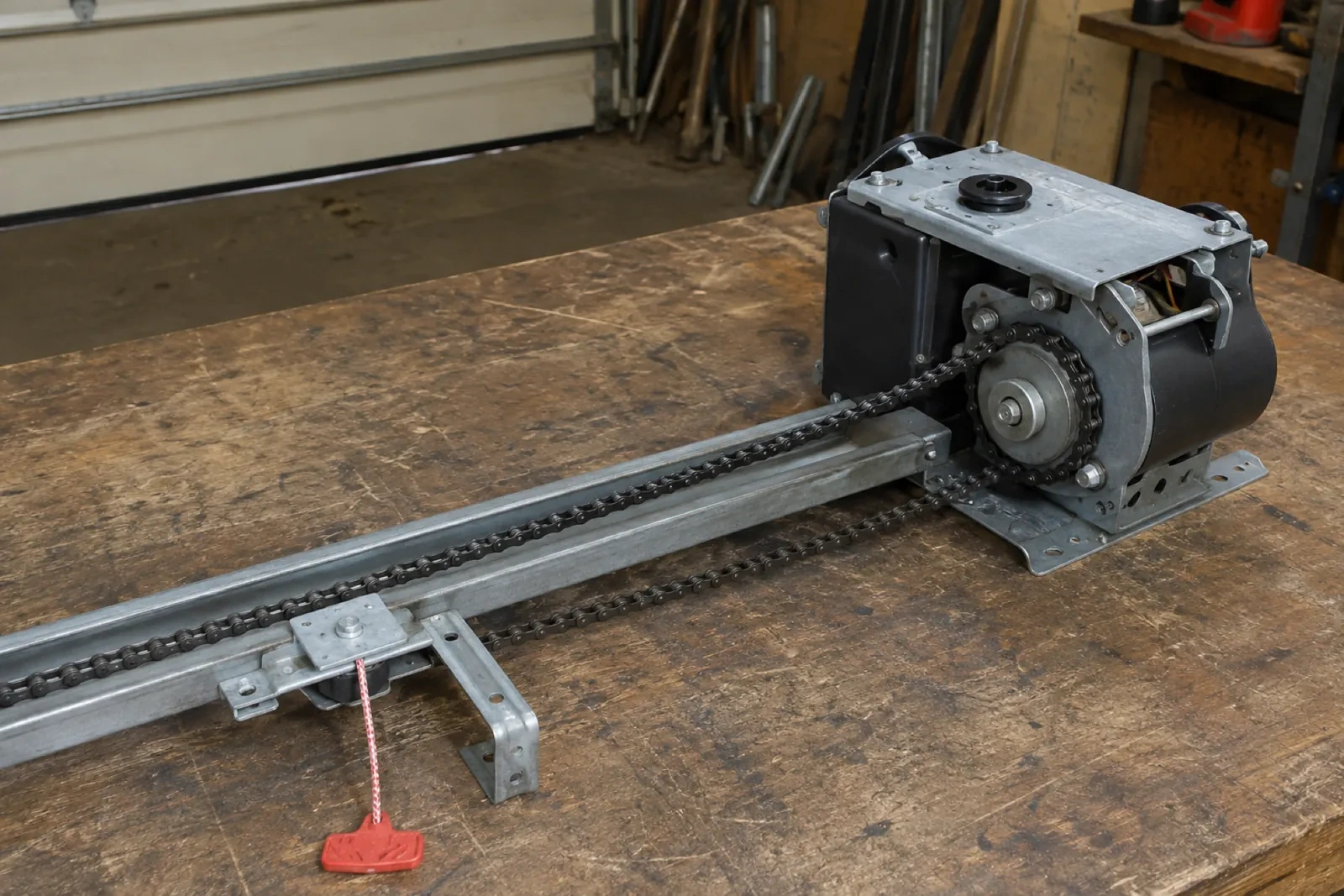
The motor runs, you can hear it working, but the door never moves. When you look up, the sprocket on top of the head is barely turning, and there is a little drift of pale plastic dust on the cover.
There is a new squeal from the front of the rail, up near the header, on every cycle. The belt has started tracking to one side and its edge is fuzzy where it has been rubbing.
The remotes only work from the end of the driveway now, and one of them disappeared with a set of keys last month. Inside the remote are tiny switches instead of a learn button, so excluding the missing one means resetting the switch pattern on every remote and the receiver.
A contractor is coming to work in the garage on Thursday while you are away. Handing over a remote means chasing it back afterwards, and the keypad code is the one your whole family uses.
After a week of lifting the door by hand you pressed the button, hoping it would catch. Instead the motor grinds, the trolley thumps against the end of the rail, and the little lever that should snap back stays stubbornly upright.
Which fix fits?
On bright afternoons the door goes down a metre, stops, and climbs back up while the light on the opener blinks.
WhyHinges are the joints of a sectional garage door.
The home inspector's report on the house you are buying flags the garage door: extension springs with no safety cable running through them, coils showing rust, and a door that sank when he lifted it partway.
WhyThis conversion is a measured redesign of an existing sectional-door system.
How a visit goes
Describe the property, the hardware and what has changed, and the visit starts from what you have seen.
01
We listen first
You describe what the door did and when it started. A stuck door, a bang, a remote that stopped: every detail helps us arrive with the right parts.
02
We check the whole door
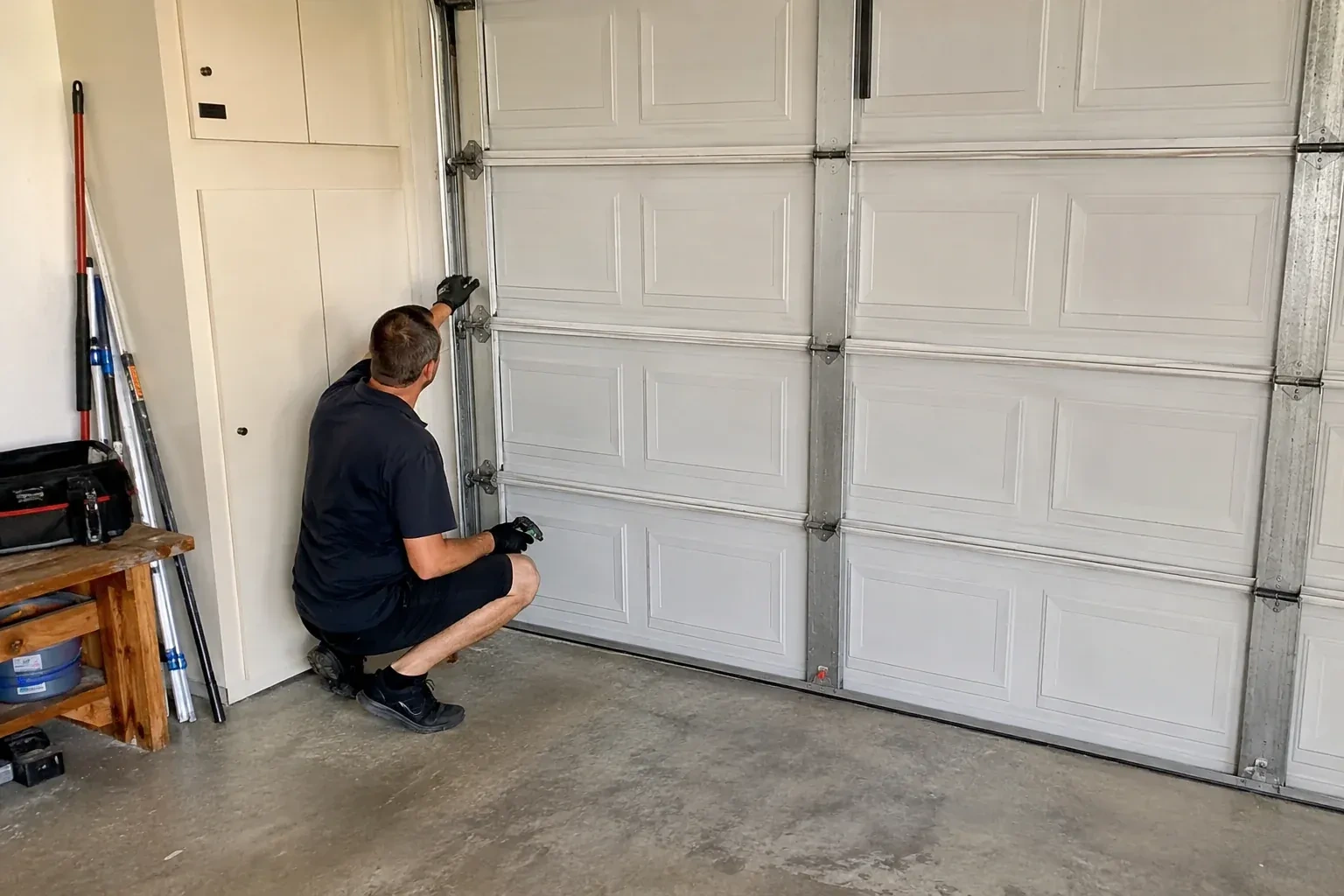
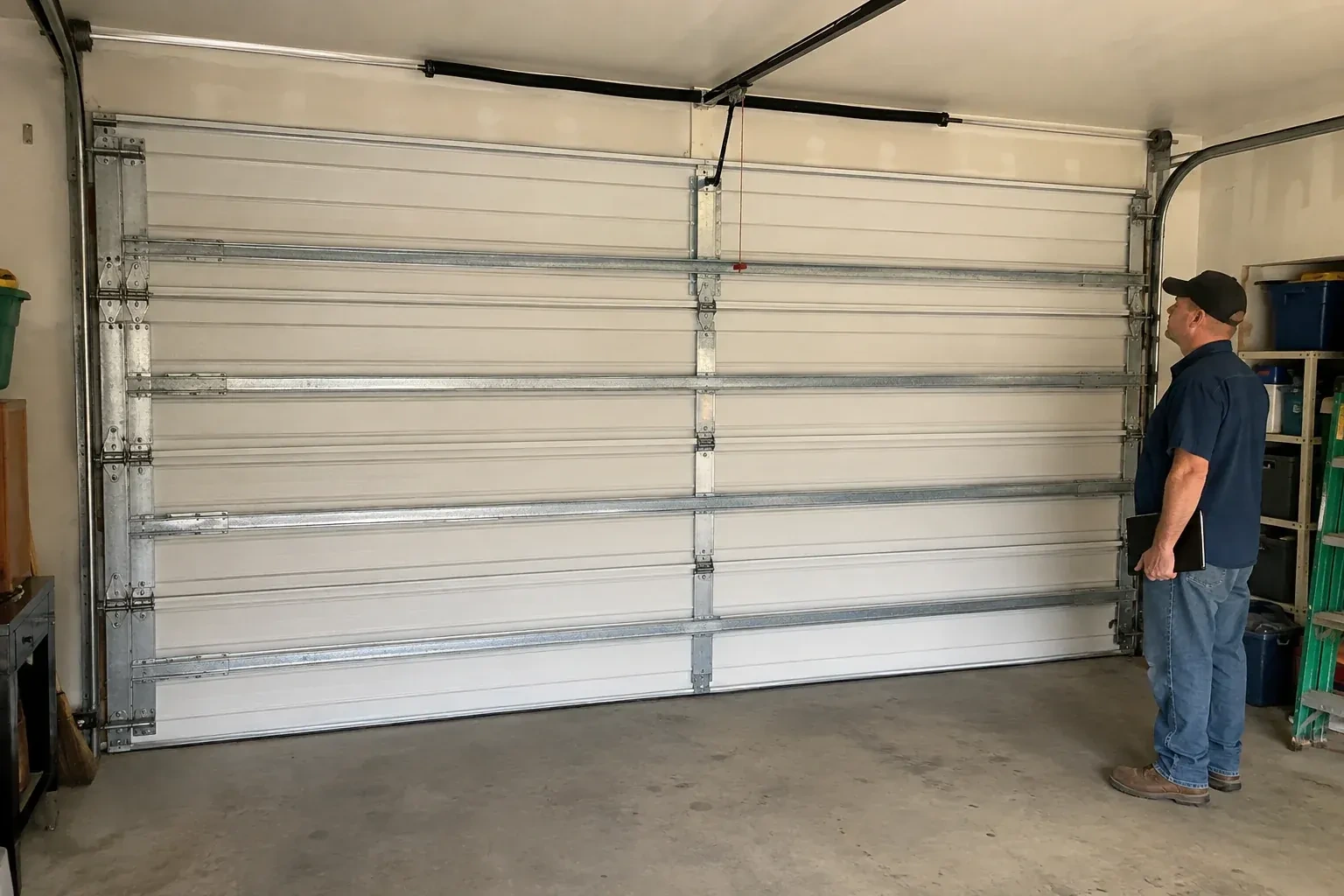
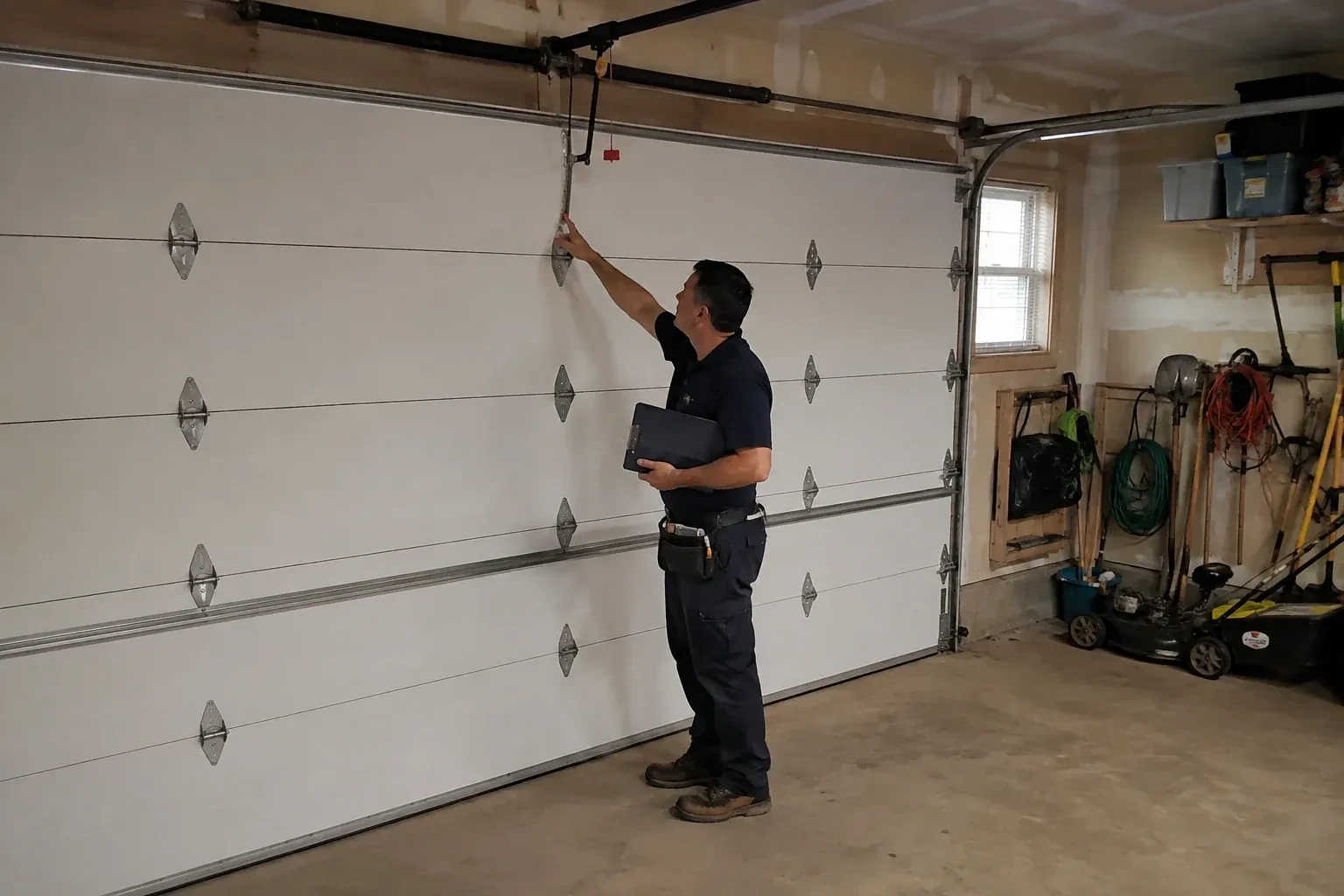
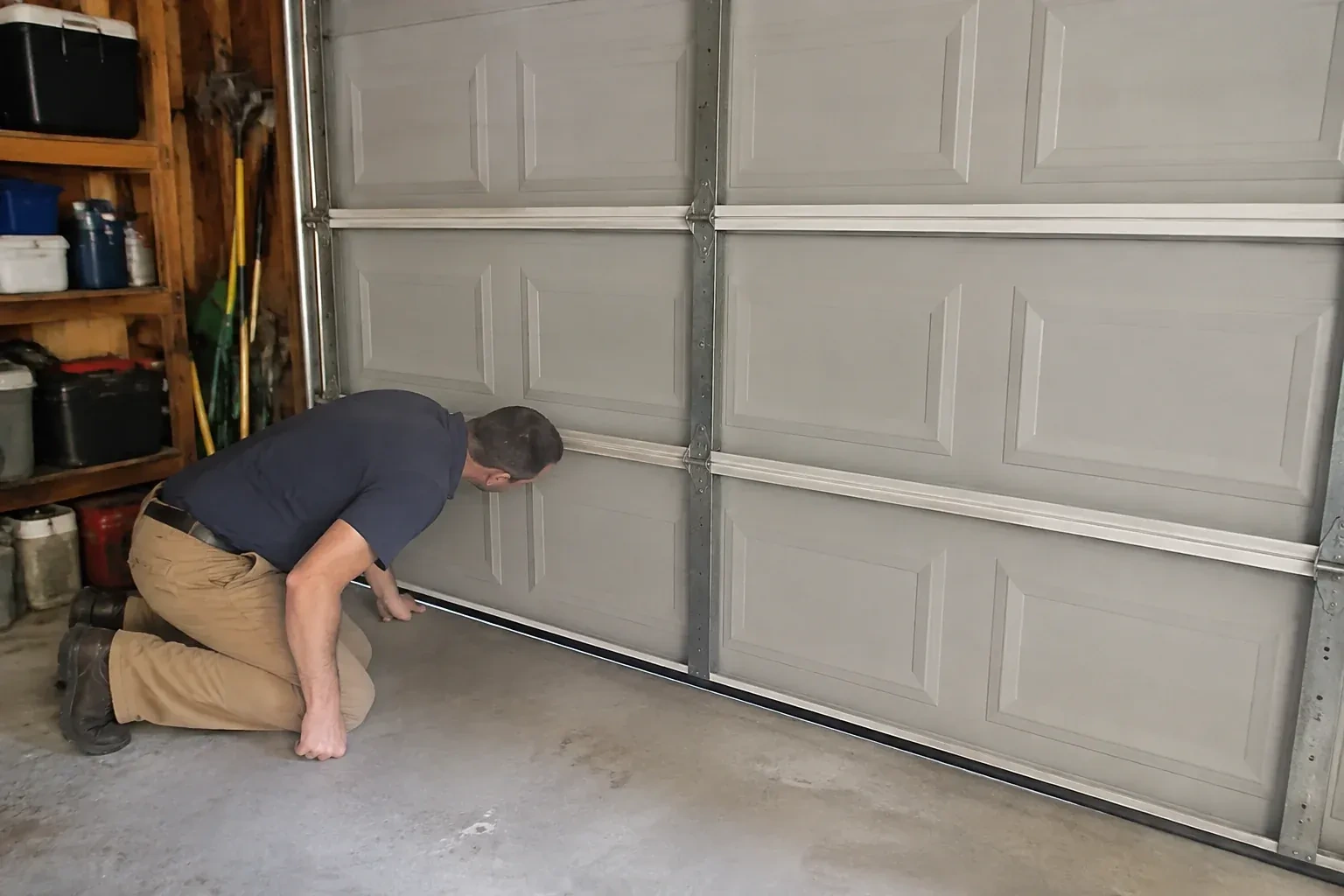
Before touching anything, the technician runs the door, watches the travel, tests balance by hand and looks at springs, cables, rollers and sensors.
03
We explain, then work
You hear what we found and what the choices are before any repair begins. Then the work is done carefully and tested through full cycles.
An entrance. Not an afterthought.
1/10Garage Door Safety Inspection
On bright afternoons the door goes down a metre, stops, and climbs back up while the light on the opener blinks. After dark it closes perfectly. Nothing has changed except the weather.
Every time the door goes up there is a sharp pop from the same spot, about a metre off the floor, and the whole door gives a little shudder. Come back down and it happens again at exactly the same place.
The home inspector's report on the house you are buying flags the garage door: extension springs with no safety cable running through them, coils showing rust, and a door that sank when he lifted it partway. The seller has never had it looked at.
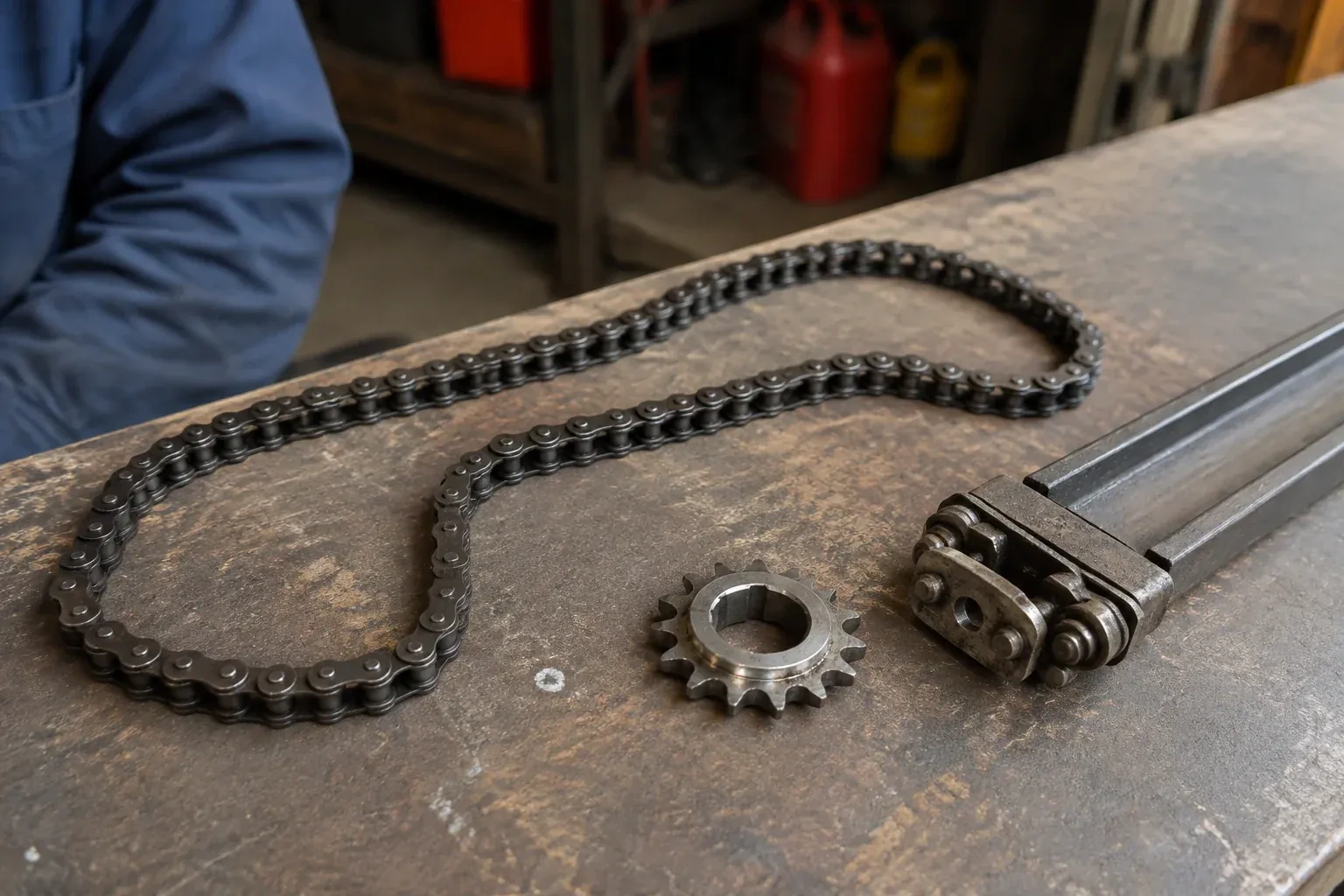
The chain in the detached garage went orange with rust over the winter, the links are stiff, and the opener strains and groans to pull the door up. By afternoon, once the garage warms, it behaves almost normally.
It is the coldest morning of the year. A week of slush and road salt has crusted over the outside release lock, the key will not seat, and the opener inside is silent after the overnight outage. The car sits behind a door that will not move.
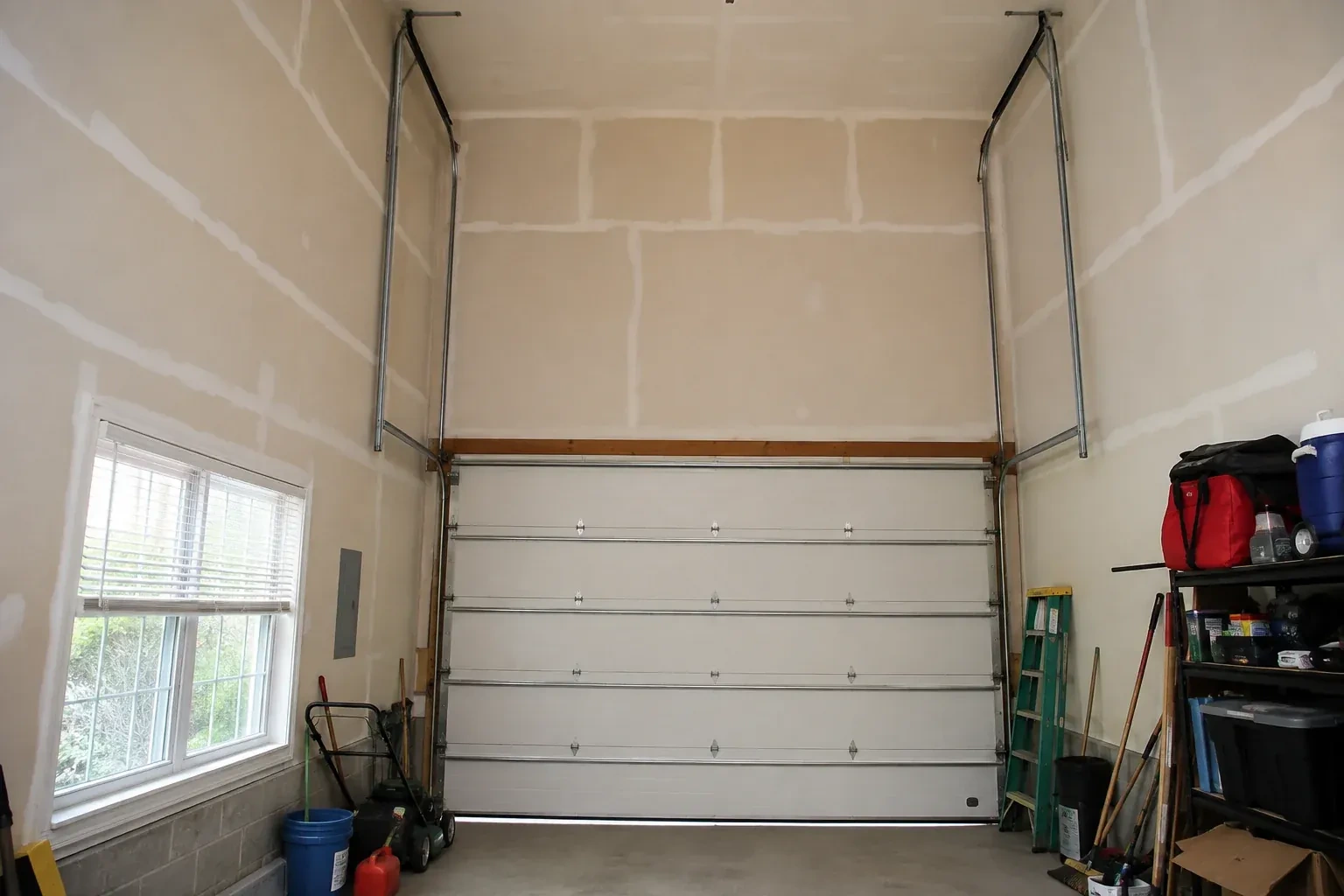
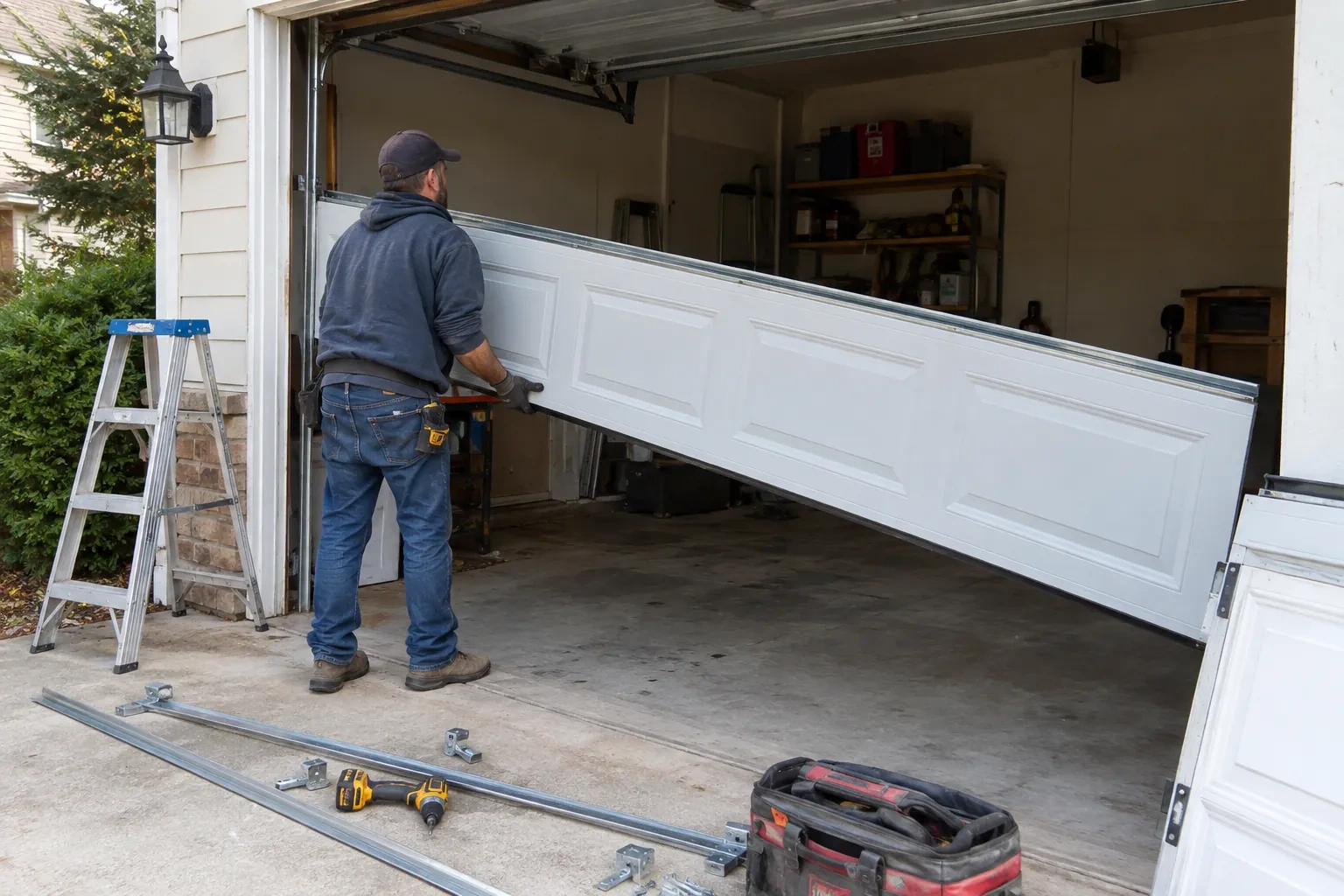
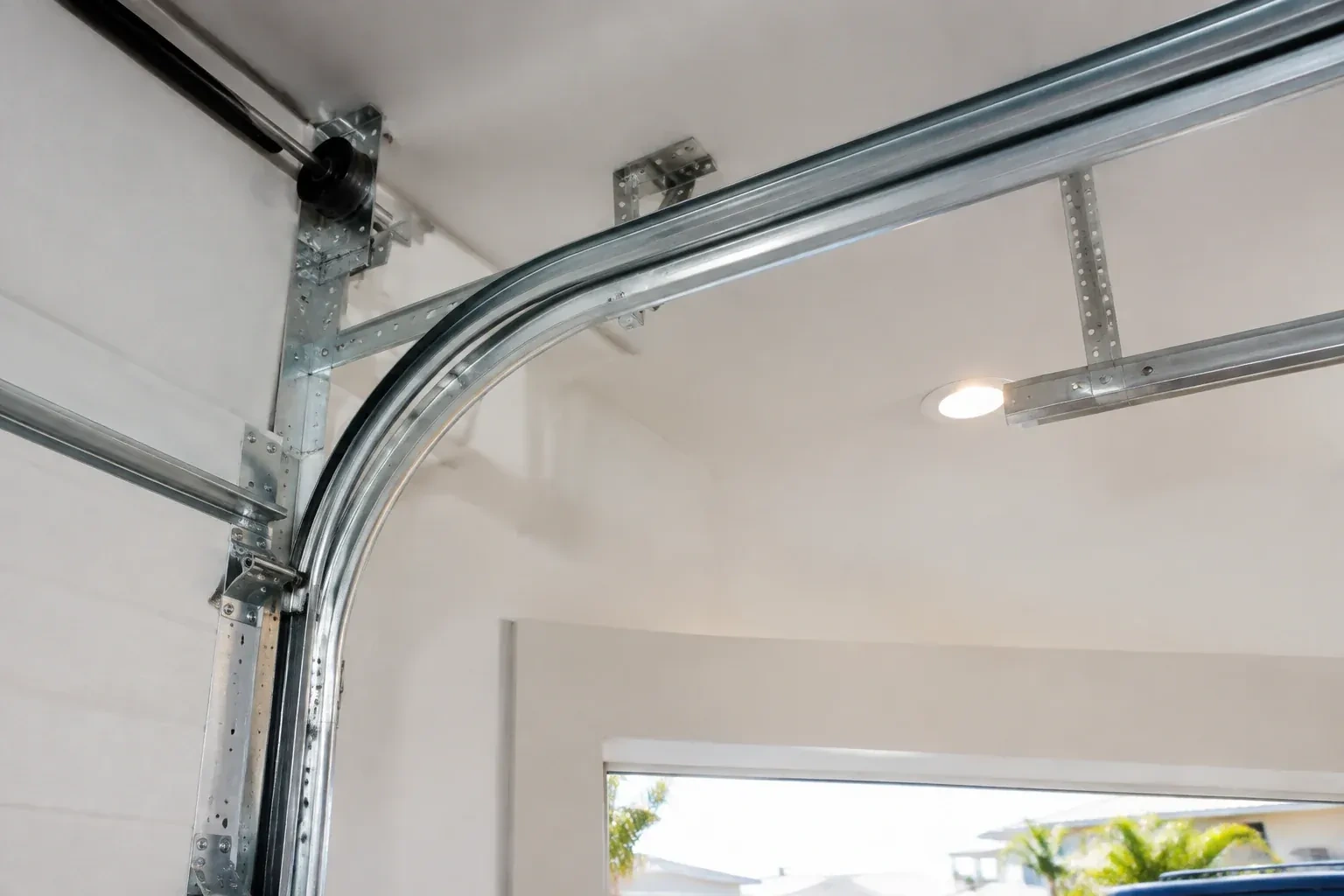
The existing door opens on old tracks that crowd storage near the ceiling. A replacement needs careful measurements for headroom, backroom and opener clearance before the new sections can travel properly.
New windows would improve the door's appearance, but they also change the section layout and reinforcement pattern. You need a wind-rated configuration designed with the chosen glazing instead of treating the windows as a later addition.
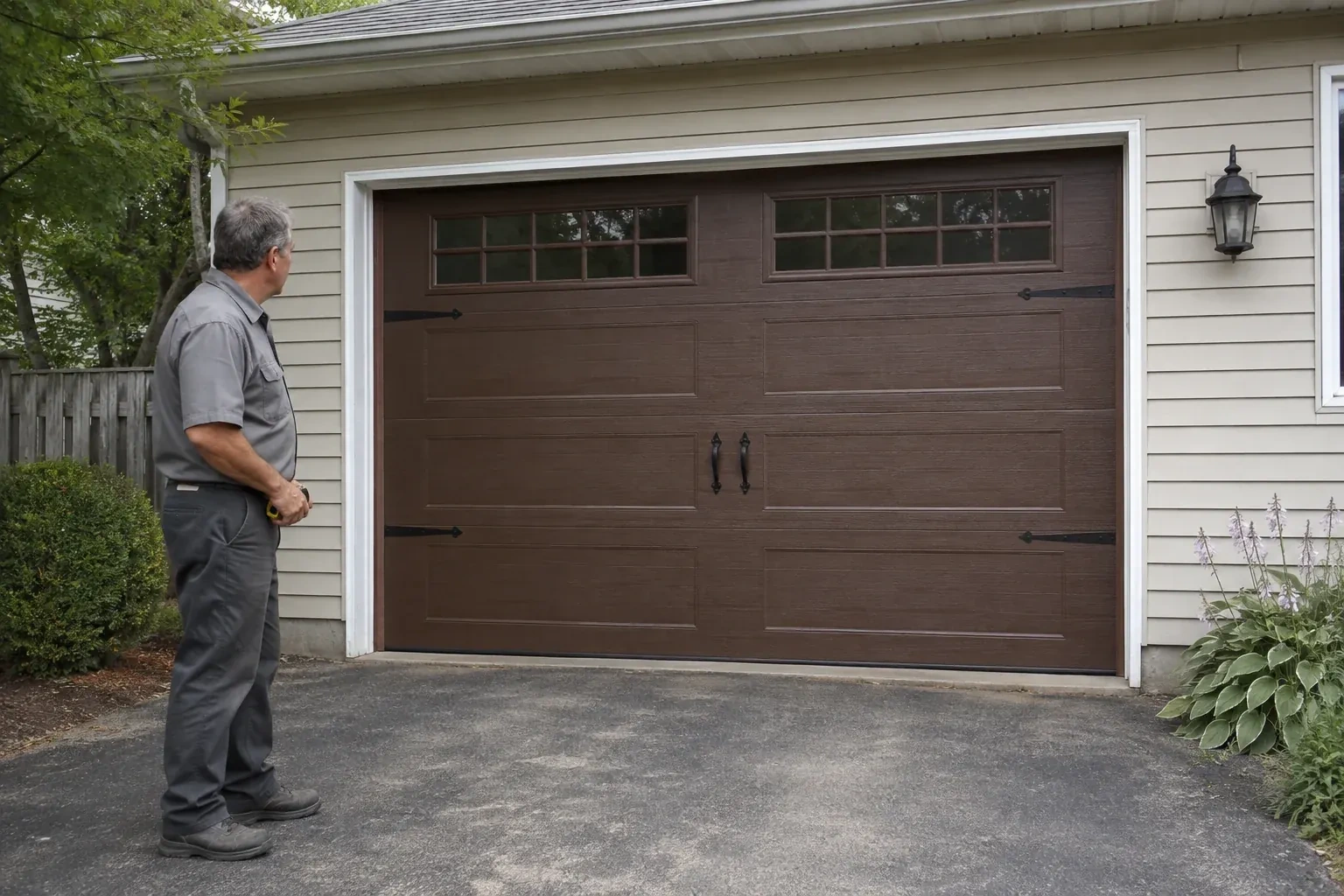
The garage feels dim whenever the overhead door is closed. You want a row of well-positioned windows that introduces daylight, protects privacy and fits naturally into a carriage-inspired panel layout.
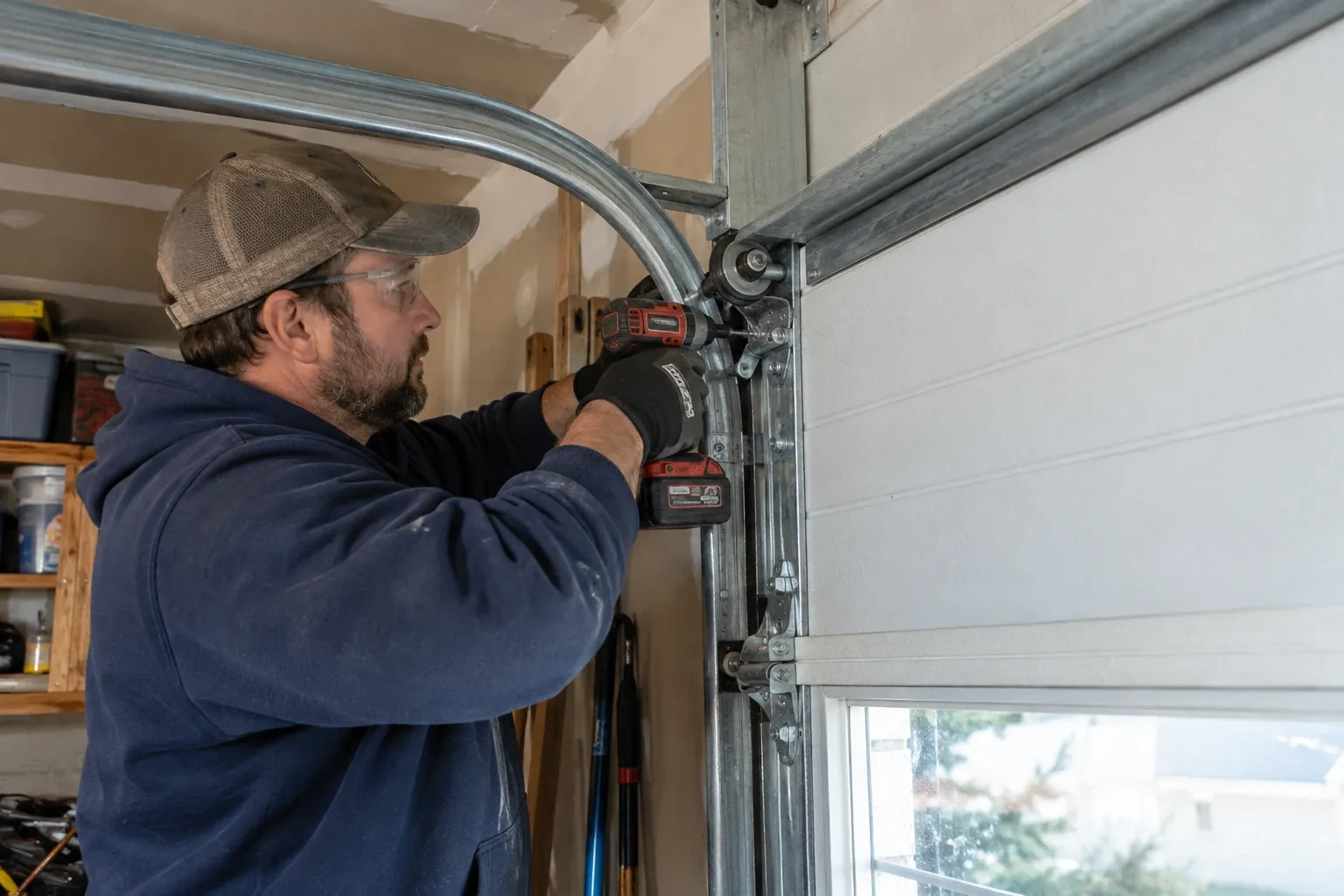
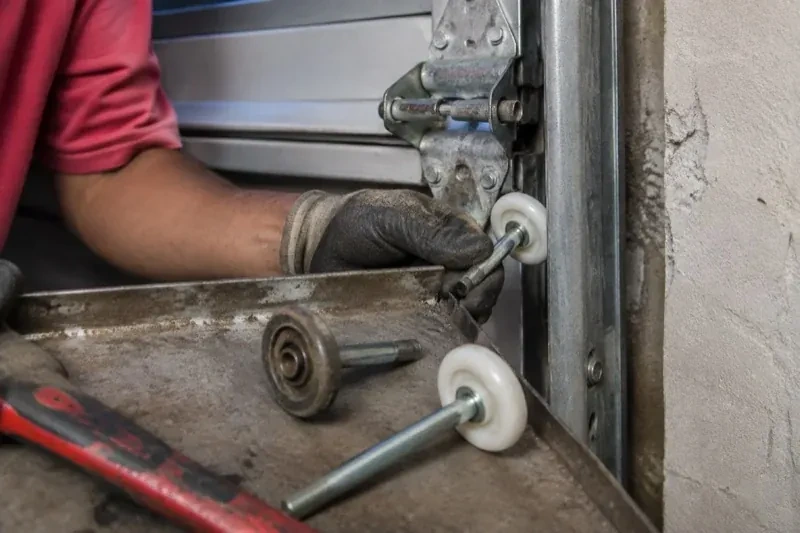
Each opening cycle brings a metallic knock followed by a shudder through the horizontal track. The sound grows near the curve, where a worn roller and loose hinge allow the section to shift under load.
Your new vehicle lift fits the floor plan, but the open garage door crosses the space above it. The ceiling is high enough; the standard track simply turns too soon and leaves the panels hanging over the raised vehicle.
It is a look and a record first. Small maintenance items such as lubrication, cleaning and aligning the photo eyes and tightening fasteners can be done on the spot if you wish. Anything involving spring tension, cables, drums, worn rollers or damaged sections is written up with a clear explanation and quoted as its own job, so you decide with the full picture in front of you.
Can I tighten loose hinge screws myself?
Yes, hinge screws are a homeowner task. Disconnect the opener, leave the door closed, and snug each hinge screw with a socket wrench without forcing it, since overtightening strips the hole. Leave the bottom brackets alone; they anchor the cables and are under spring tension. If a screw spins freely or a hinge is cracked, stop there and have it looked at, because a stripped hole needs a fresh anchor rather than more turns.
What does the paint colour on the end of the spring mean?
Manufacturers dab a colour on the end coil to indicate the spring's weight rating, which is a handy starting point. It is not the final word: a faded or repainted end coil tells you little, and the pair on an older door may have been a near match rather than the right one. The technician treats the colour as a hint and confirms the rating from the door's measured weight and the spring's own dimensions.
Should I use the slide lock on the door with a chain drive?
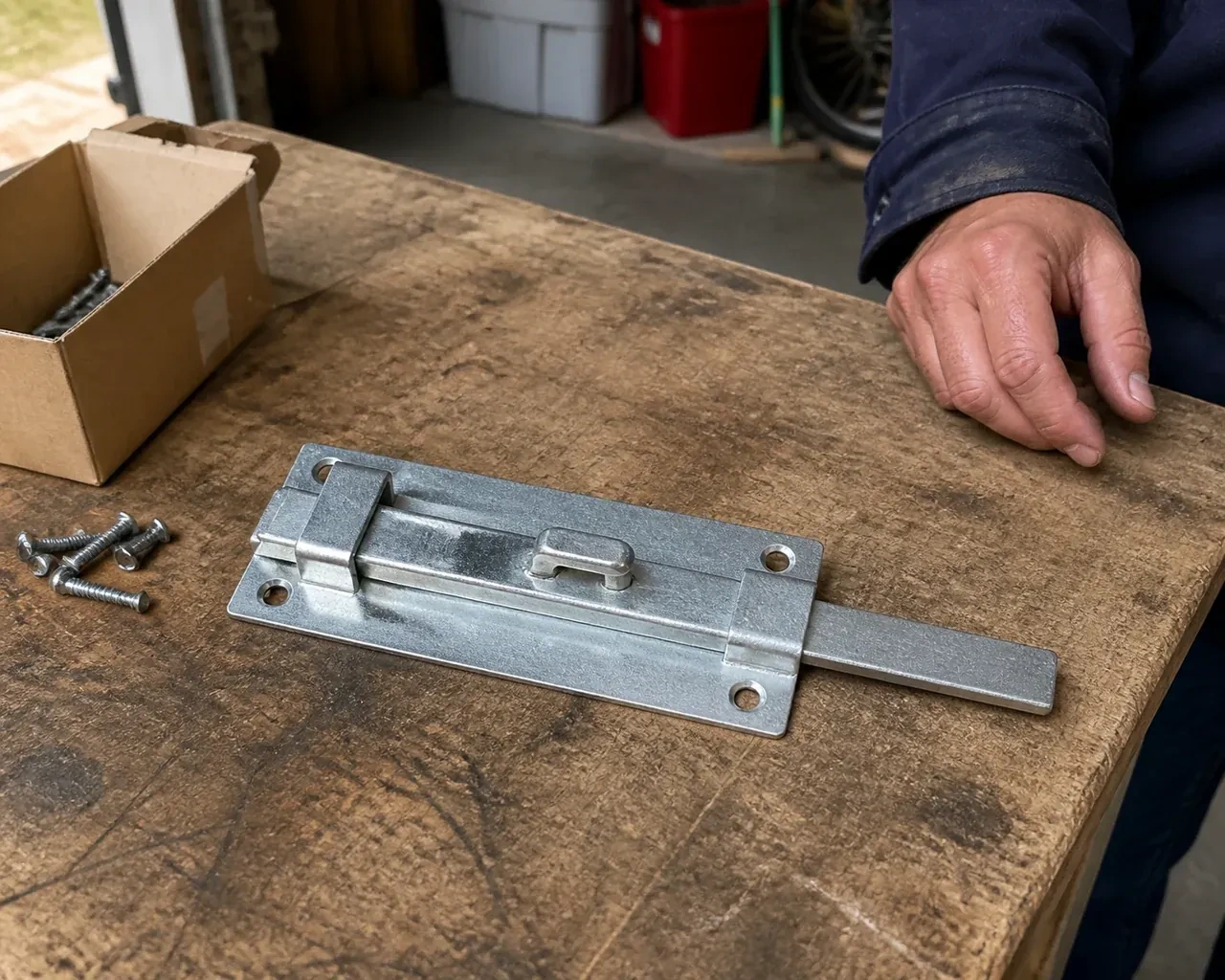
No. The manual slide lock on the door is disabled or removed once an operator is connected, and the technician checks that during the repair. A motor pulling against a locked door strains the chain, strips the drive gear and can bend the top section of the door. If you want the door secured against remotes, the lock button on the wall control switches them off, and a track lock designed to work with an operator does the rest.
Should I test the release regularly?
Once a month is the industry rhythm for the door and opener, and the release fits into it. With the door closed, pull the handle, raise the door by hand to about halfway, feel that it moves freely and holds, then lower it and reconnect. It takes a minute and tells you two things: the release works and the door is balanced. Follow with the 2x4 and beam reversal checks so the whole system is proven together.
How is the opening measured before ordering?
The installer records finished width and height at multiple points, then checks the floor, jambs and header for level, plumb and useful attachment surfaces. Sideroom, headroom and backroom are measured to nearby obstructions. Beams, pipes, lights, storage racks and opener equipment are included because the door sections and tracks need a clear path from closed to fully open.
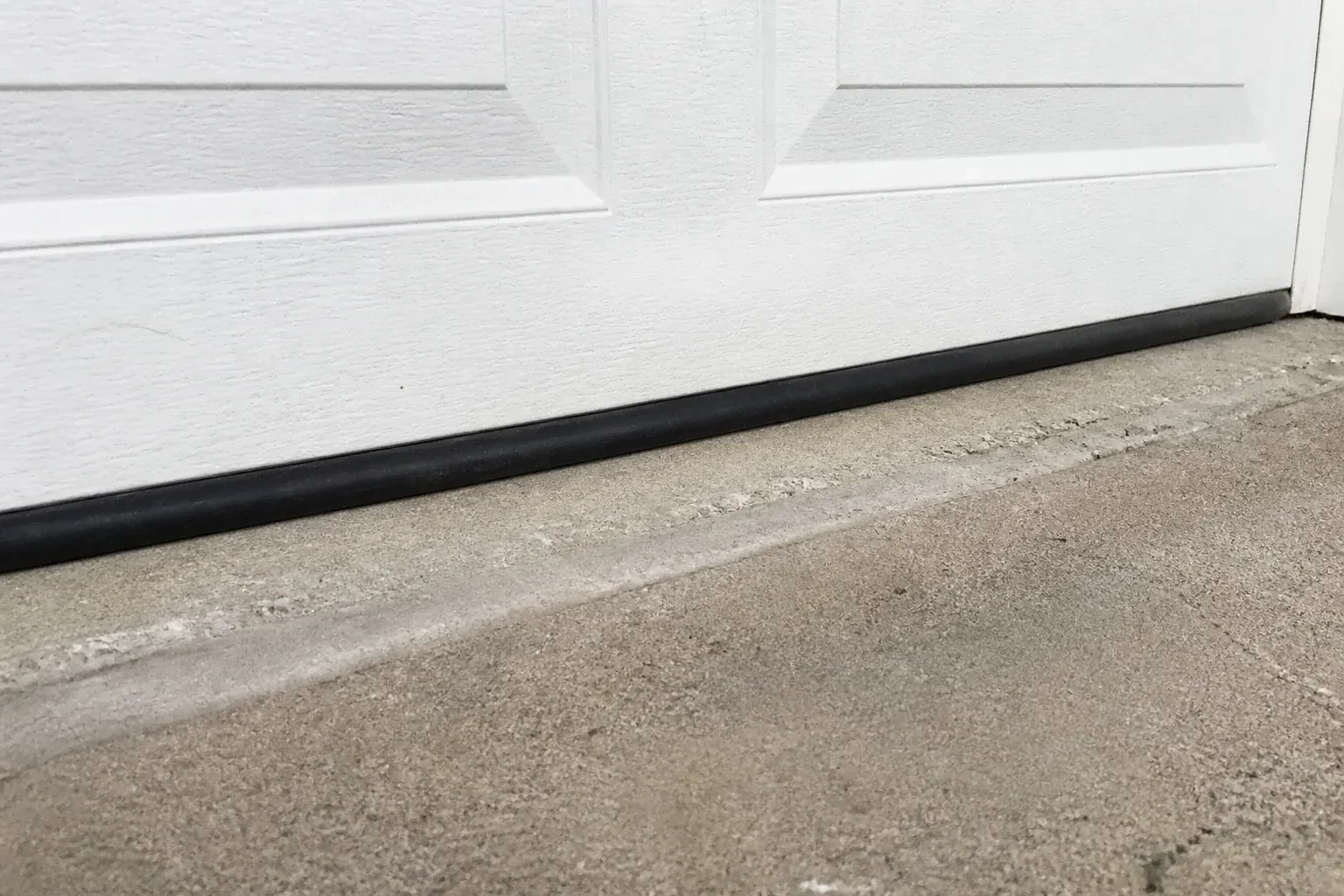
How do insulation and weather seals fit into the project?
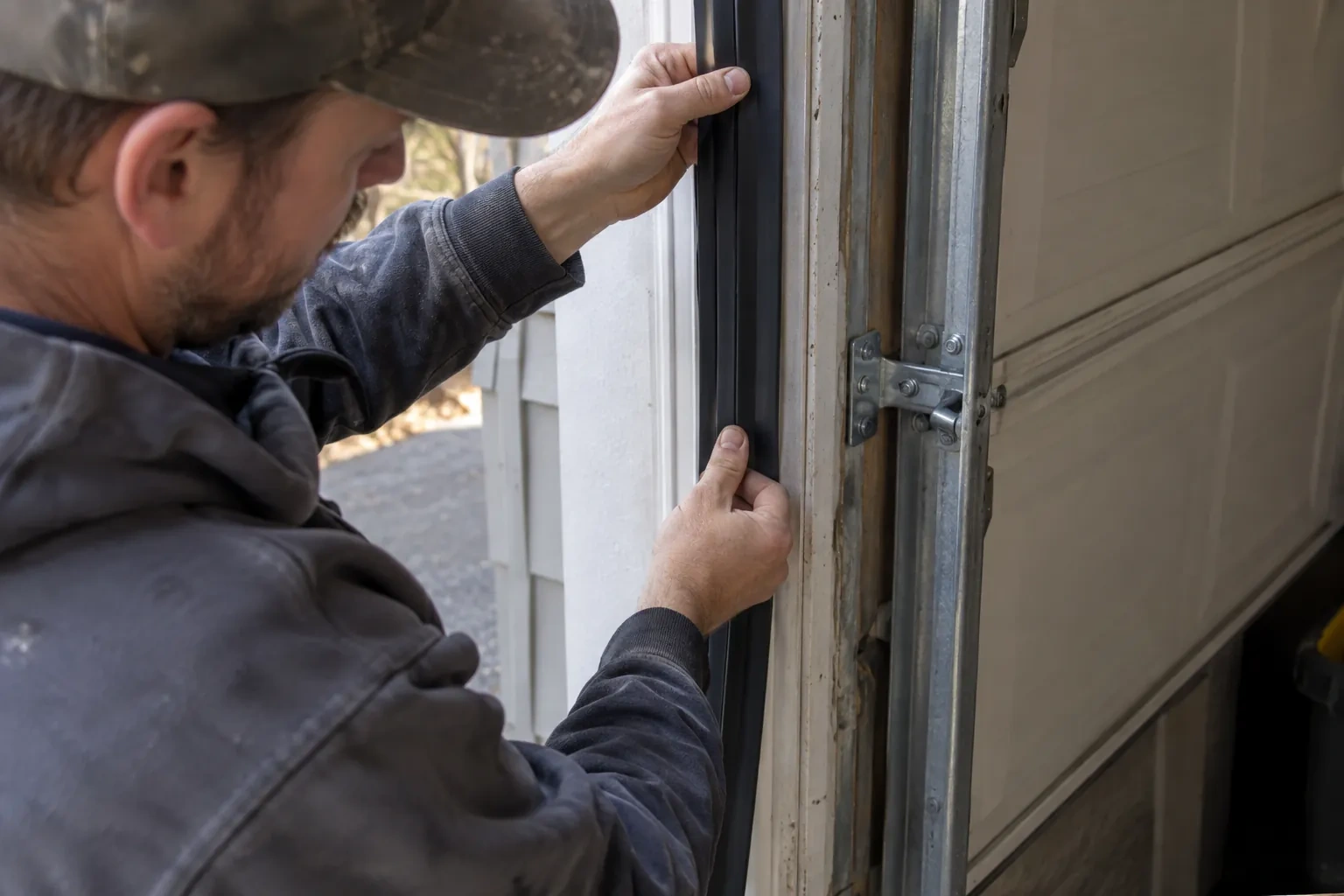
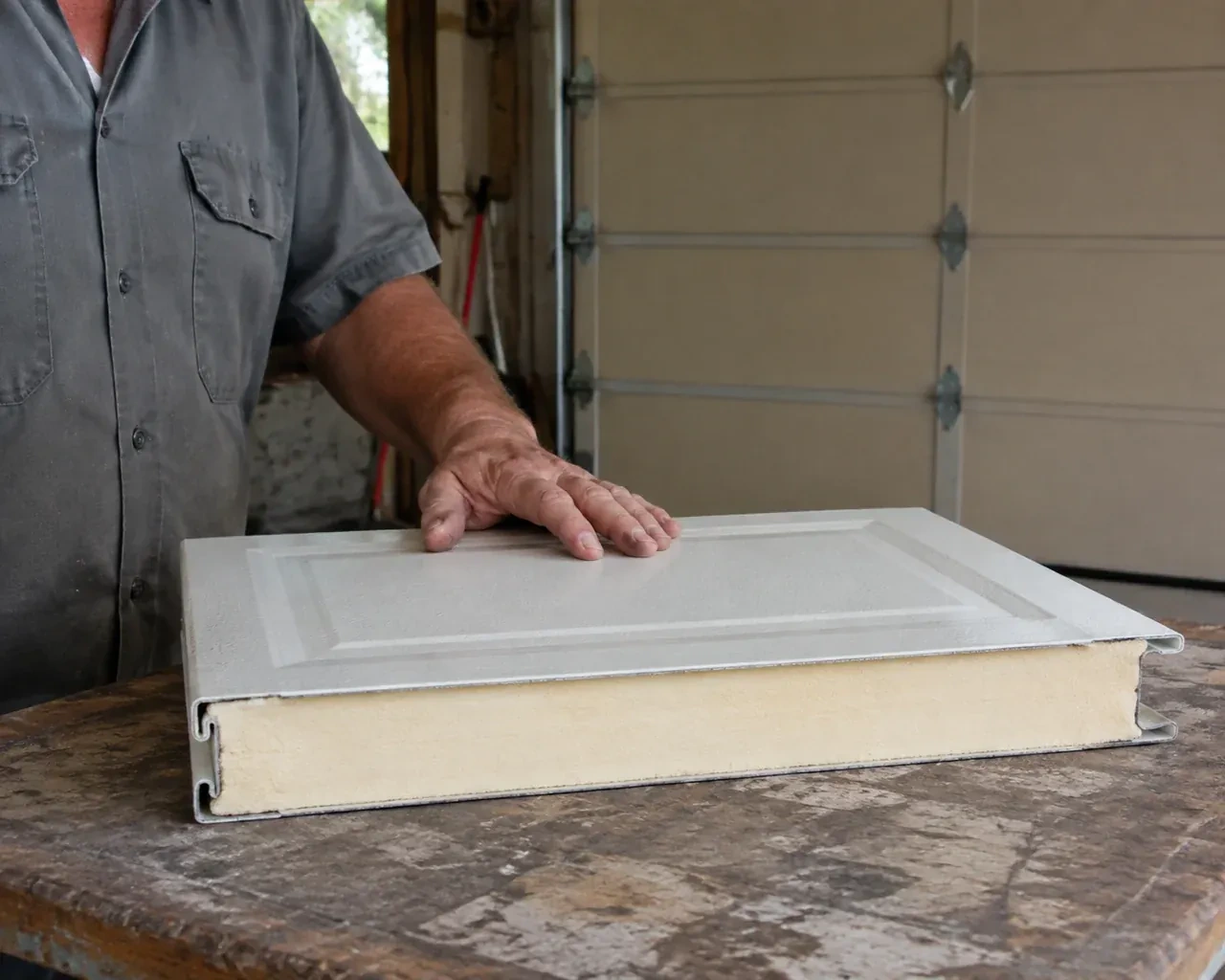
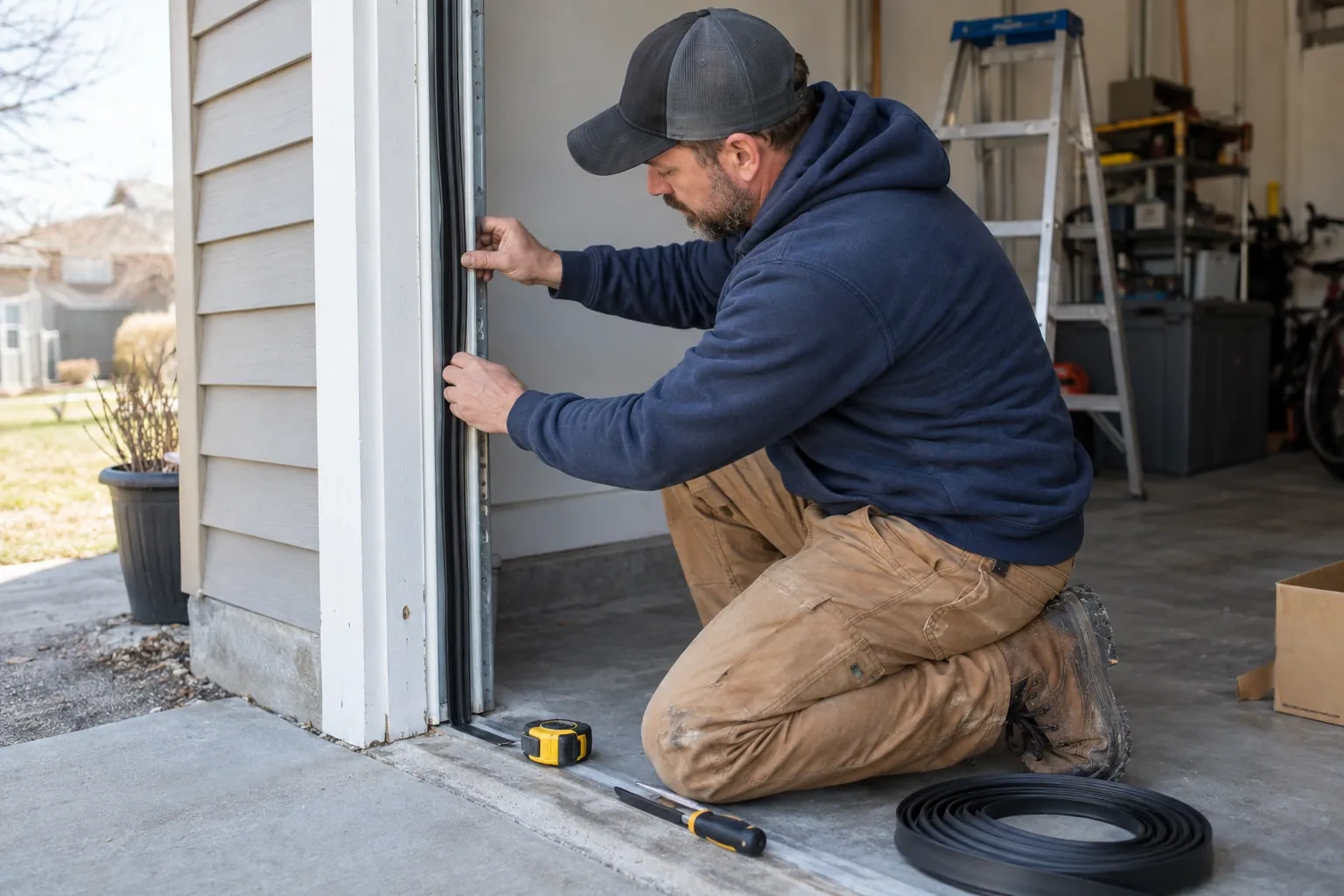
Insulated section construction can add stiffness, comfort, and weight, while perimeter seals limit drafts and ordinary moisture entry around the closed door. These choices are coordinated with the wind-rated configuration rather than selected separately. Bottom seal contact, side weatherstrip, and top seal alignment are checked during handover so the reinforced assembly also closes neatly for daily use.
What happens if the garage floor is not level?
The survey measures the variation and determines how the bottom section and seal can meet it. A flexible astragal can accommodate modest changes, while a pronounced crown, dip or damaged threshold may call for related floor or threshold work. The door itself is installed level for reliable travel; the sealing approach is selected separately to follow the practical shape of the floor.
What makes a sectional door different from a rolling door?
A sectional door is built from horizontal panels joined by hinges. Rollers guide those sections through vertical, curved and sometimes horizontal track. A rolling door uses narrow slats that coil around a barrel above the opening. Because the constructions differ, sectional repair centres on panels, hinges, rollers, tracks, lift cables and counterbalance components matched to that system.
Is structural work always included in the conversion?
Door hardware needs suitable attachment points, but framing changes are defined separately when required. The assessment records jambs, header, ceiling support and back-hang locations, then identifies any condition needing input from the responsible building professional or another trade. A clear proposal distinguishes door-system installation from structural, electrical and finish work so responsibilities are easy to coordinate.
Request a visit
We work in Ryderville the way a good tradesman works on his own house: replace parts in matched pairs so wear stays even, use the spring size the door actually needs rather than the closest one on the shelf, and tidy the garage before leaving. Small habits like these are why doors stay fixed.