New Doors · Grantham
Commercial Rolling Door Repair in Grantham
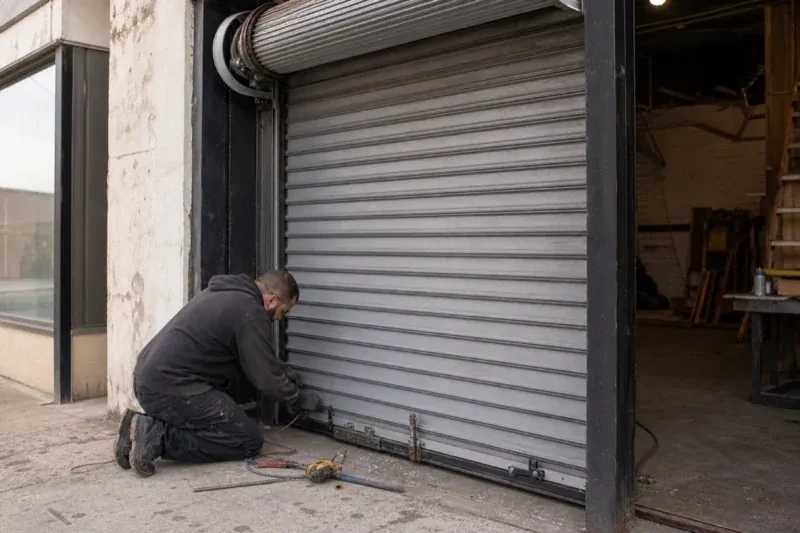
A lift truck clipped the lower curtain during unloading.
In plain words
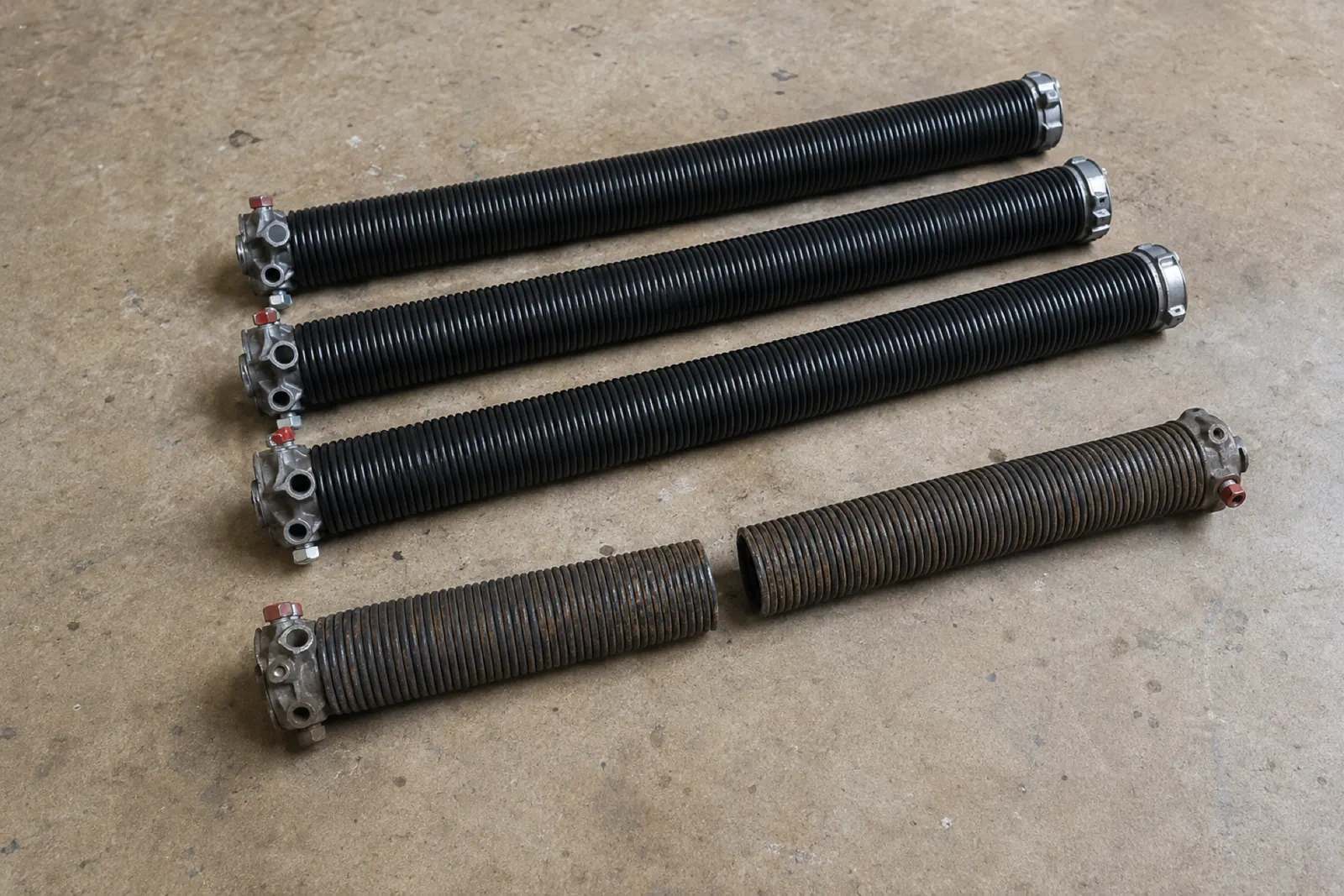
A rolling door that has become unusually heavy or starts to drift is asking for a counterbalance assessment. The barrel assembly commonly contains springs that offset curtain weight, and those parts hold substantial tension even while the door is stationary. The technician secures the curtain, examines brackets, bearings and drive components, then evaluates balance under controlled conditions. Adjustment uses purpose-made winding tools and the identified door instructions. Once the mechanical setting is correct, manual effort is checked across the full travel and any powered operator is tested without asking it to compensate for a poorly balanced door.
How the visit goesCold-weather moisture has frozen the bottom seal to the sill, and salty grit has collected along the guide entrances. The door chatters during its first cycle and leaves a visible gap after it reaches the closed limit.
Commercial Rolling Door Repair
How the visit goes
Start with the operating story
The first clues come from the people who use the opening. The technician asks whether the change appeared after an impact, power interruption, cold night or gradual increase in noise; where the curtain stops; which control was used; and how many cycles the door normally sees. Staff can also point out a lock that sticks, a manual chain that has become heavy or a sensor that needs repeated cleaning. That history narrows the inspection before any cycling begins and distinguishes a one-time obstruction from wear that has been developing across the whole assembly.
Secure the curtain and stored energy
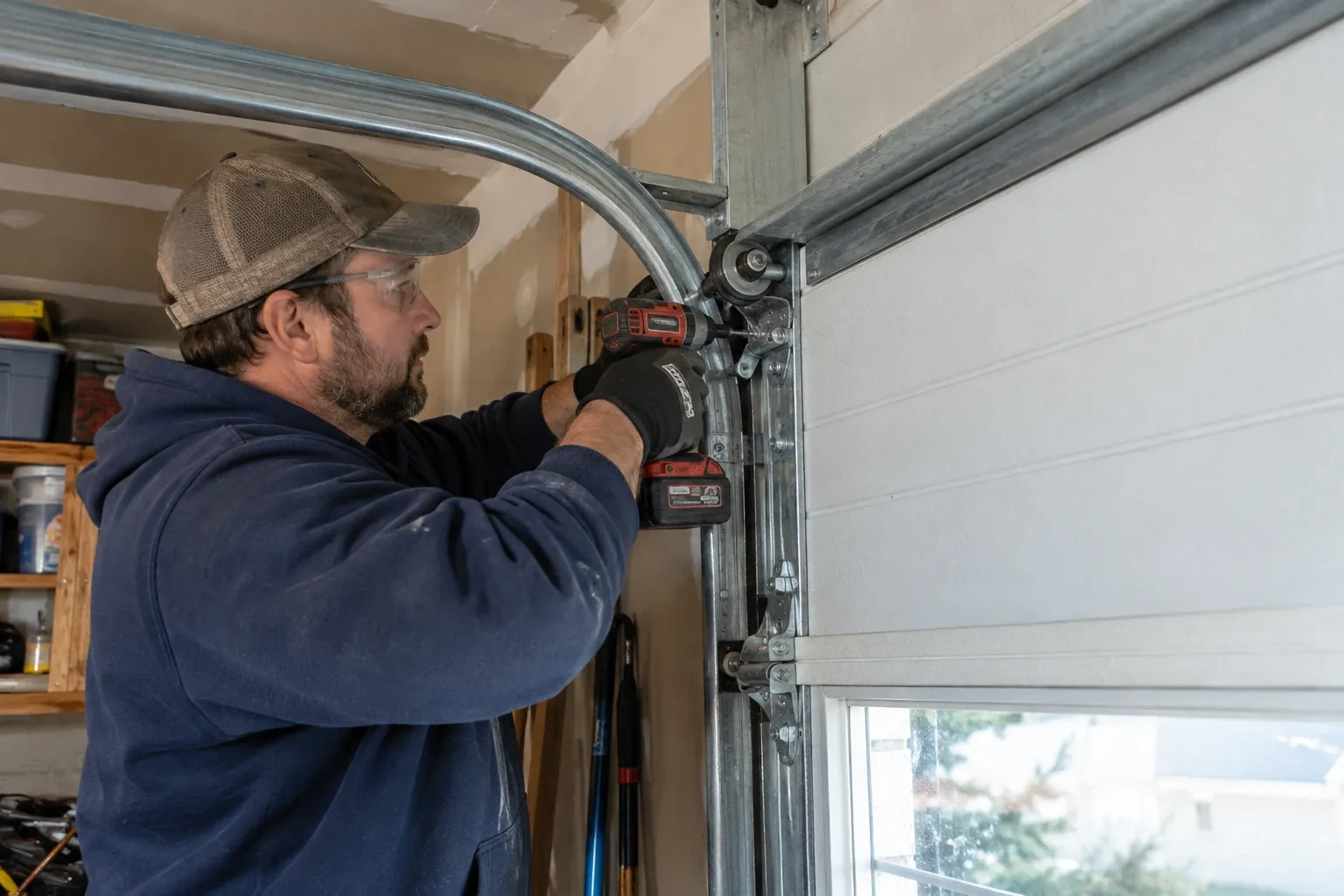
Repair starts by establishing a stable mechanical state. Power is isolated under the site's procedure, the operating controls are kept from use, and the work zone remains controlled. Depending on position and construction, the curtain is lowered, clamped, blocked or supported with suitable lifting equipment before a guide, bracket or drive part is loosened. Manual chains are secured and counterbalance components are treated as energised. This setup gives the technician control over weight and movement, allowing later adjustments to be deliberate. It also protects nearby stock and equipment while the opening is temporarily out of normal service.
Controls with clear, separate functions
The handover distinguishes the wall station, key control, access input, photoelectric protection, sensing edge and any vehicle-detection accessory. Each device is demonstrated according to its role, and staff see the applicable response during a controlled test. Sensor lenses remain visible and clean, cables stay protected, and stored materials are kept outside the beam path. Private access codes are retained by the facility rather than written in a service record. With the functions separated clearly, a blocked beam can be handled as a housekeeping clue while an unusual operator response can be reported with useful detail.
Commercial Rolling Door Repair
In the van
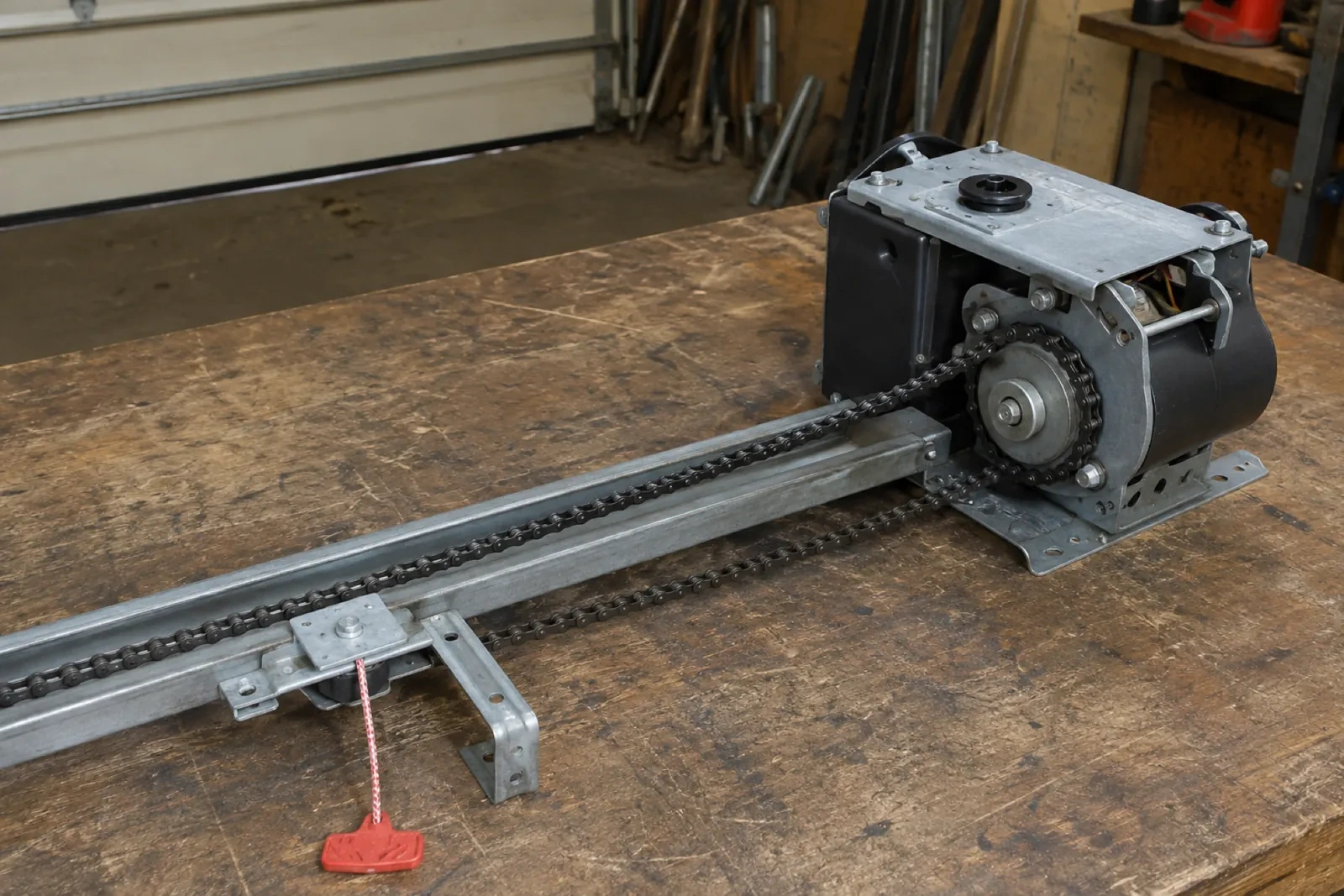
Roller chain and sprockets
Operator brake and limits
Windlocks and curtain fasteners
Photoelectric sensors
Guides and bellmouths
Commercial Rolling Door Repair
What affects the quote
Powered operator repairs
Brake, motor, reduction, sprocket, roller chain, limits and internal controls are assessed separately. The operator's identity and compatibility with the balanced door guide part selection.
Testing and documentation
Normal cycles, manual operation, protective responses, fire-door procedures and facility records vary by assembly. The proposal can name the demonstrations, measurements and written results included at handover.
Manual drive components
Direct push-up operation, a hand-chain hoist or another manual drive has its own chain, wheel, reduction and keeper parts. Wear and accessibility determine the tasks included.
What to have ready
- Can both sides of the opening be cleared for work?
- Is the curtain fully open, closed or stopped between limits?
- Is the door push-up, hand-chain or motor operated?
Commercial Rolling Door Repair: questions
QuestionsWhy is there a grinding or clattering sound near the hood?
Noise at the head can come from worn barrel bearings, loose brackets, misaligned drive chain or sprockets, shifting slats, an uneven coil or hardware contacting the hood. The pattern matters: once per revolution suggests something different from continuous guide scrape. Controlled observation locates the source before a specific part is selected.
What happens to a powered door during a power interruption?
Commercial operators commonly include a manual hoist, hand chain or disconnect arrangement, but the sequence varies by system. Staff are shown the intended changeover and normal manual effort after repair. The door must still move freely and remain balanced; the emergency method is an operating feature, not a substitute for correcting a binding curtain or worn component.
How often should a commercial rolling door be inspected?
Follow the door and operator manufacturers' intervals, adjusted for cycle count, exposure, impacts and facility conditions. Industry guidance supports periodic technician inspection at least annually for rolling doors, while a labelled fire door also follows the applicable fire-safety inspection and testing requirements. Visible facility checks between visits help identify changes early.
Related services
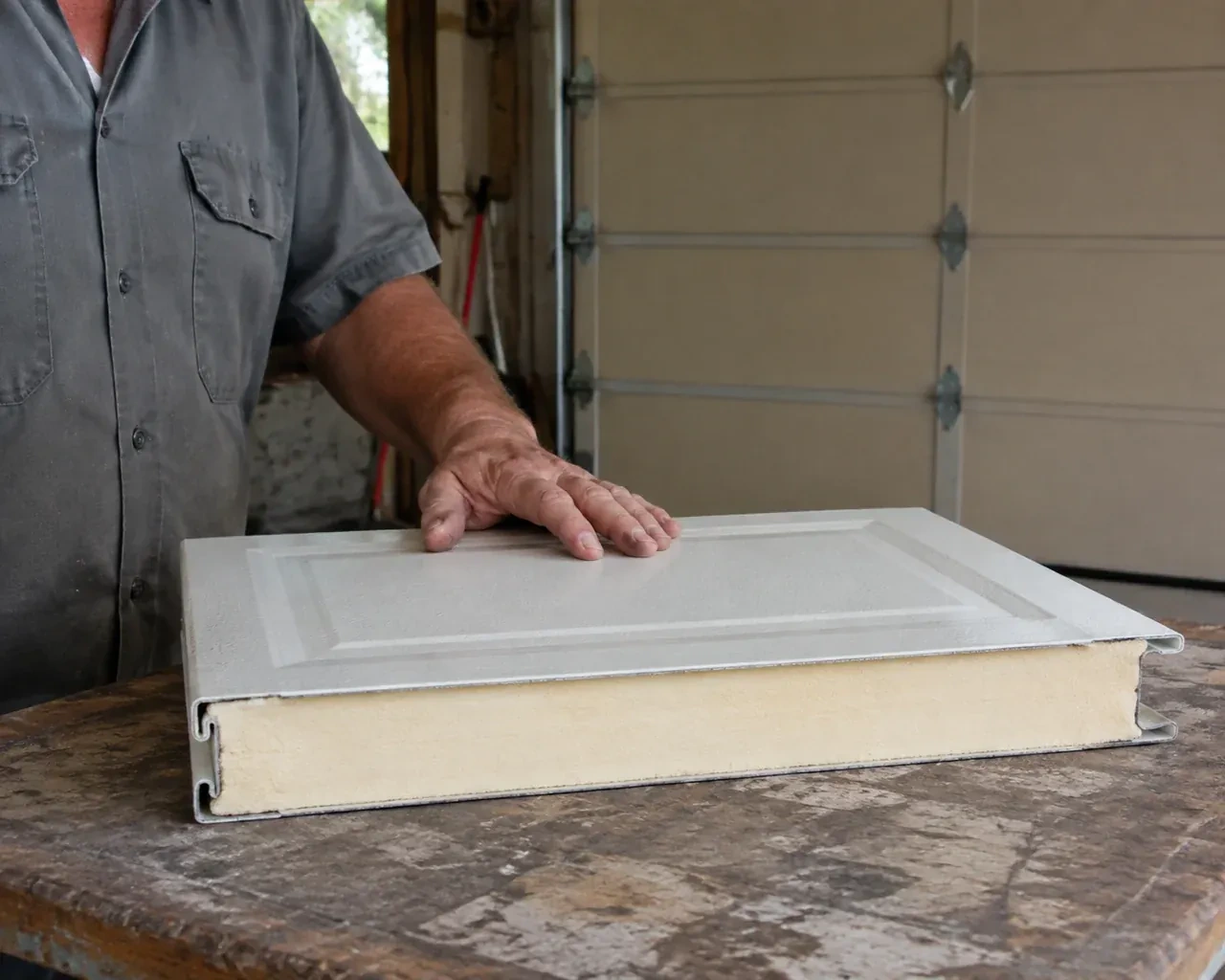
- Insulated Steel Garage Door InstallationThe opener strains as the heavy older door starts upward, and manual movement feels uneven.
- Wind-Rated Garage Door ReplacementThe property faces open fields, leaving the garage frontage more exposed than neighbouring homes sheltered by trees and buildings.
- Carriage-House Garage Door InstallationCold air is noticeable around the current door, especially near the floor and section joints.