Springs · Ryderville
Extension Spring Replacement in Ryderville
The opener groans on the way up and the door slams the last foot on the way down, hard enough to rattle the windows.
In plain words
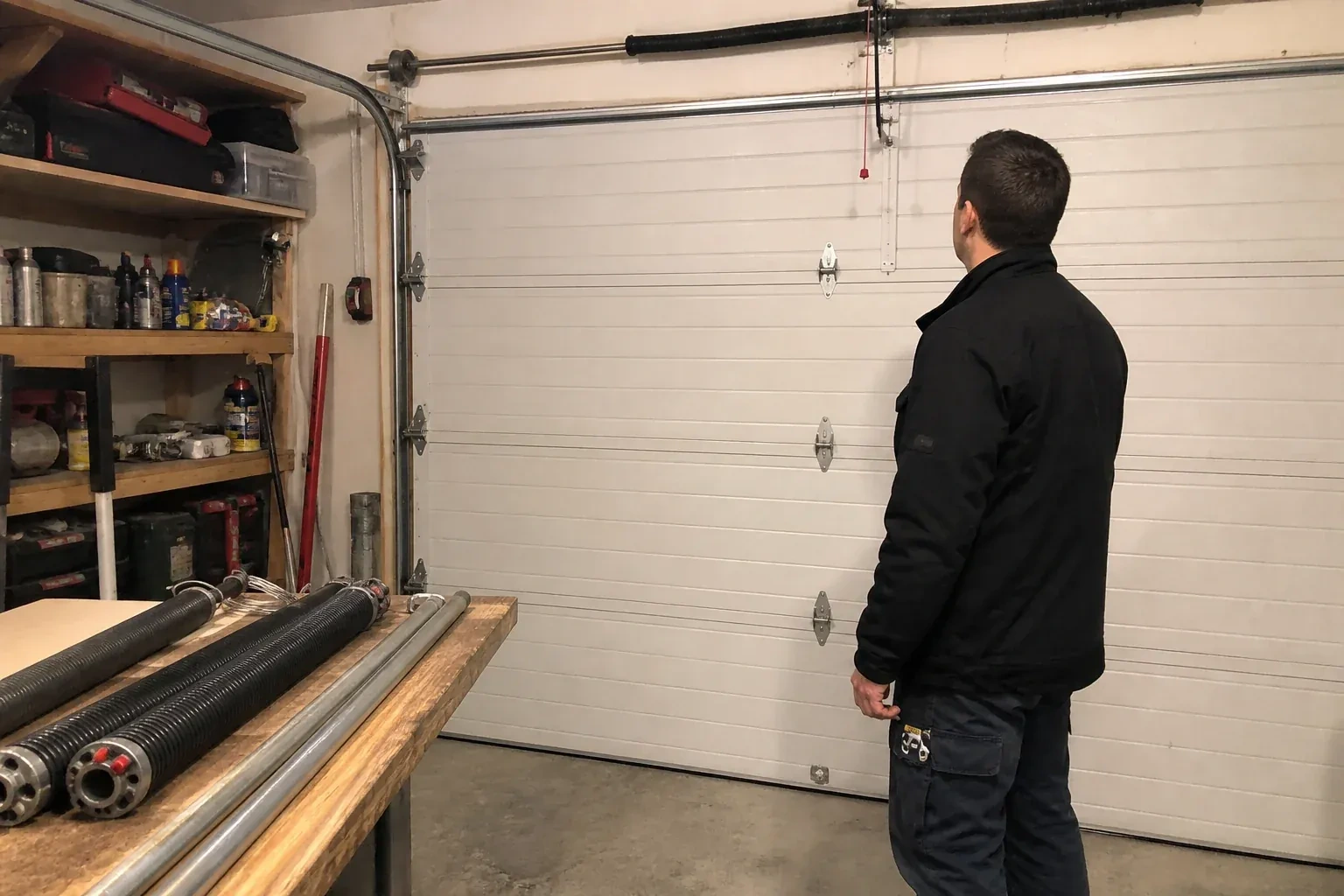
A spring visit follows a fixed order, so you know what to expect. The technician releases the opener, raises the door fully and clamps it, because an extension spring is at its slackest with the door open. Then both springs, the pulleys, cables, hangers and containment cables are inspected and the door is weighed. Old springs come off, new ones go on with containment cables threaded through, cables are routed over the pulleys and both sides are hooked at the same setting. The clamps come off, the door is balanced by hand, and only then is the opener reconnected, adjusted and put through its reversal tests.
How the visit goesThe home inspector's report on the house you are buying flags the garage door: extension springs with no safety cable running through them, coils showing rust, and a door that sank when he lifted it partway. The seller has never had it looked at.
Extension Spring Replacement
How the visit goes
Securing the door with the springs slack
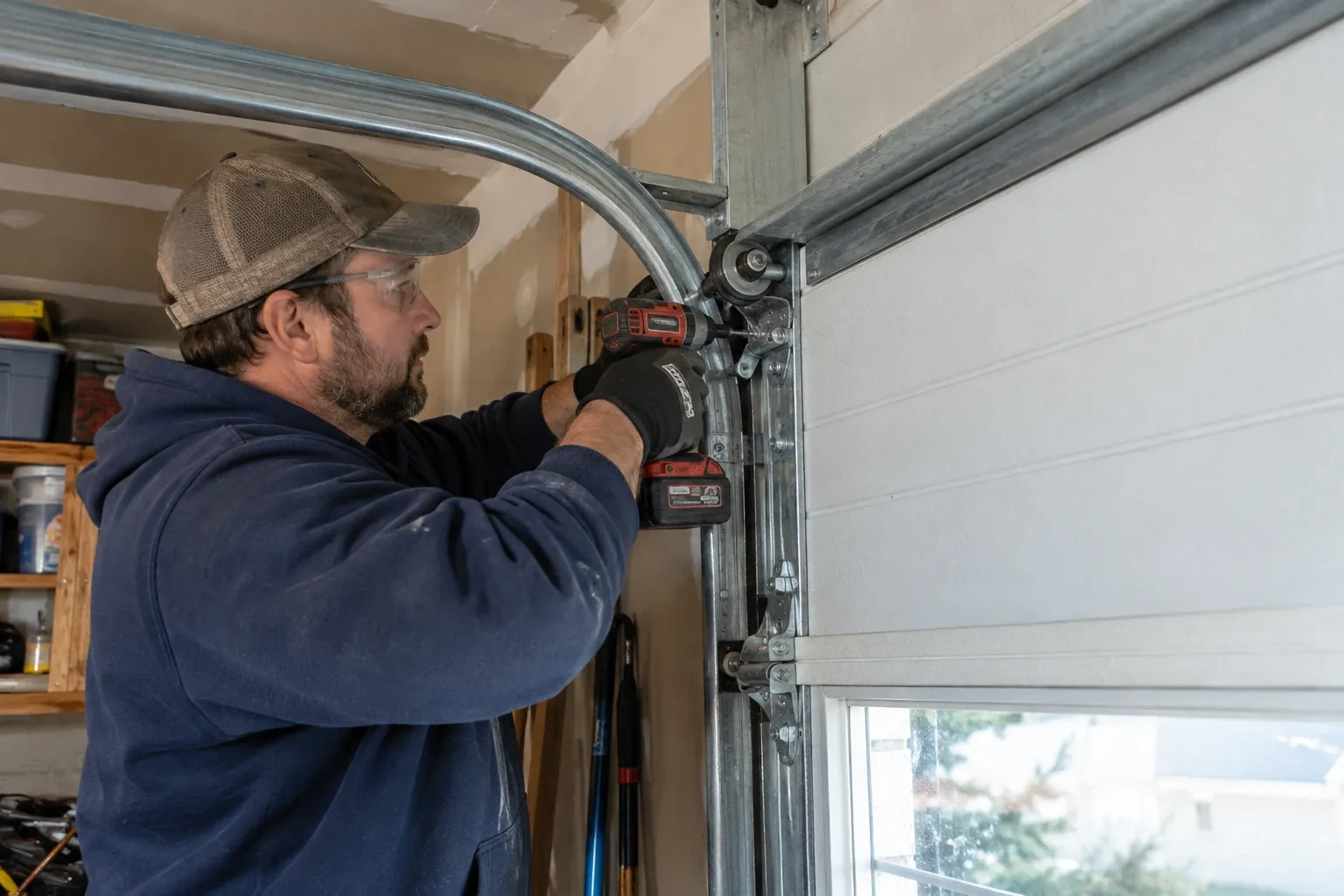
An extension spring is stretched tight when the door is closed and nearly relaxed when the door is fully open, so the first move is to get the door up. The technician pulls the opener's release, raises the door by hand if it will go, and clamps both vertical tracks below the bottom rollers so the door cannot come down. If a broken spring has left the door stuck partway, it is lifted and supported with the weight taken on clamps and props before anything else is handled. With the door held open, the springs, pulleys and hooks can be examined and removed like ordinary hardware, which is the whole reason the sequence begins this way.
Taking the old springs down
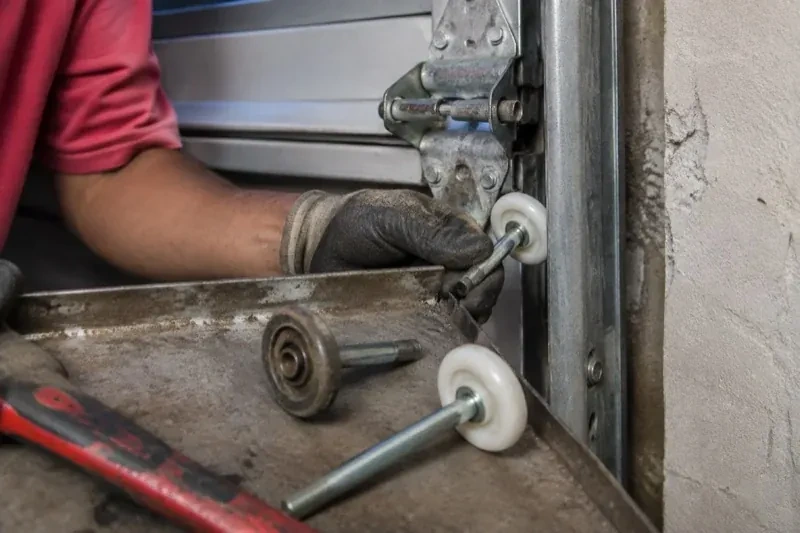
With the door open and clamped, each old spring is nearly slack, and removal is straightforward. The technician unhooks the lift cable from its S-hook or clip at the front, which lets the spring's pulley end drop free, then lifts the rear loop off the hanger. The old containment cable is unclipped from its anchors and pulled out of the coil. On a door with a broken spring, the two halves are gathered and the containment cable, if there was one, is inspected for the marks of having done its job. Everything that comes down is laid out on the floor so the old spring can be measured against its replacement and you can see the wear.
Lubrication that keeps the new set turning
Twice a year, in spring and before winter, a can of garage-door lubricant does most of the maintenance the springs need. Spray a light coat along each extension spring, working from the hanger to the pulley; it slows rust in a damp garage and quiets the coils. Put a drop on each pulley axle and on the bolts through the pulley forks, then on the hinge pins and roller stems. Leave the tracks dry and wipe them clean, since grease there collects grit and stops rollers rolling. Heavy grease and general-purpose oil are avoided on the springs because they hold moisture against the wire. Run the door a few times afterwards to spread the film.
Extension Spring Replacement
In the van
Bottom brackets and clevis pins
Garage-door spray lubricant
Track clamps or locking pliers
Rear spring hangers and angle iron
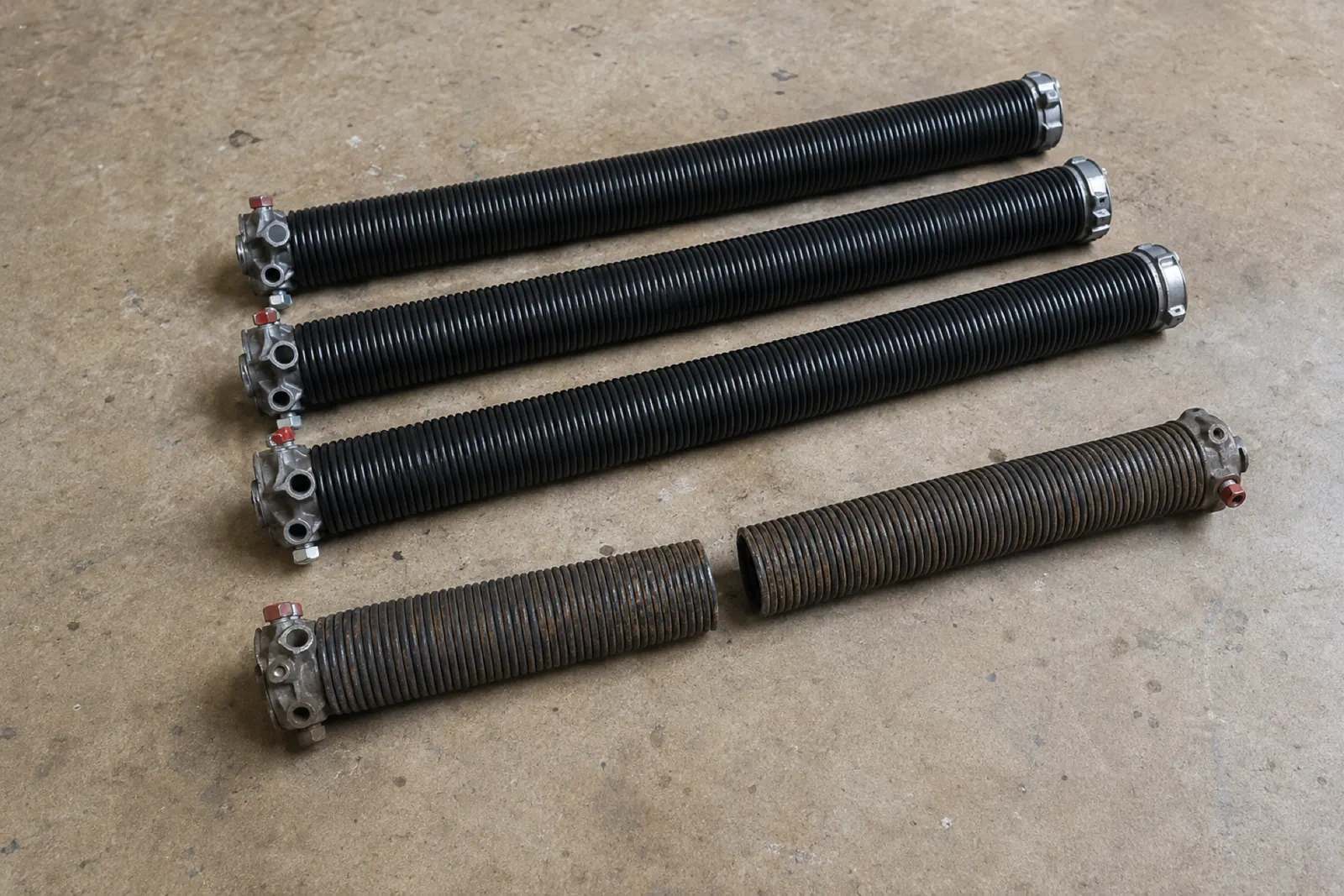
Extension springs, matched pair
Extension Spring Replacement
What affects the quote
Weight added since the door went in
Insulation panels, windows or a wood overlay fitted after the original springs mean a heavier rating than the old pair. The door is weighed and the quote reflects the door as it is now.
Getting the van to the garage
A detached garage down a shared laneway, a rural property or a building with the bay behind a gate takes more time to reach and set up in, and the quote allows for that.
How the door is sitting
A door resting closed with one spring gone is straightforward. A door stuck partway, twisted in its tracks or with a cable wrapped around a pulley has to be supported and straightened first.
What to have ready
- Is the door closed, fully open, or stuck partway?
- Does one corner of the door hang lower than the other?
- Is a spring broken in two, hanging loose, or just looking stretched?
Extension Spring Replacement: questions
QuestionsWhy does the door slam down the last bit?
A door that drops the final stretch is telling you the springs are no longer holding it. As an extension spring loses its temper it gives less pull near the bottom of travel, where the door needs the most support, so the door falls that last foot. Fresh springs matched to the door's weight bring the door down under control and take that shock off the bottom section and the opener.
What does the paint colour on the end of the spring mean?
Manufacturers dab a colour on the end coil to indicate the spring's weight rating, which is a handy starting point. It is not the final word: a faded or repainted end coil tells you little, and the pair on an older door may have been a near match rather than the right one. The technician treats the colour as a hint and confirms the rating from the door's measured weight and the spring's own dimensions.
How do you know which springs my door needs?
By weight. Extension springs are rated for the weight they lift, so the technician releases the opener and weighs the door on a scale, then matches that figure and the door's height to a spring rating and stretch length. The old springs are measured as a check on wire size, coil diameter and length. Where the two disagree, the scale decides, since doors gain weight from added insulation or panels.
Related services
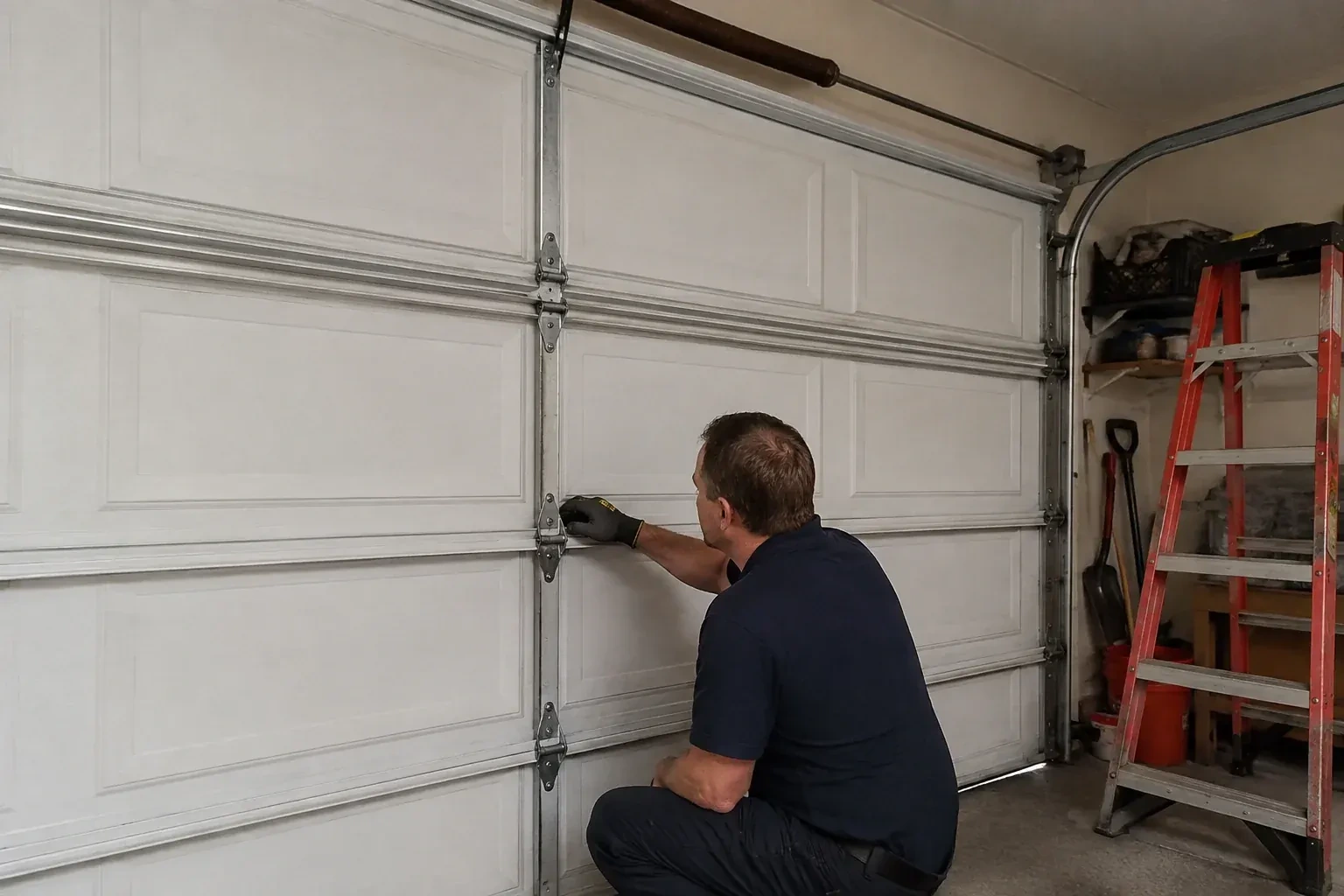
- Garage Door Hinge ReplacementOn the old wood door, one hinge has pulled away from the panel, dragging a screw and a chunk of soft timber with it.
- Garage Door Track Repair or ReplacementYou bought the house with a door that sticks near the top of its travel.
- Garage Door Cable ReplacementStanding inside with the door closed, you notice the cable on the right side near the floor has gone fuzzy.