New Doors · St. Catharines
High-Lift Garage Door Conversion in St. Catharines
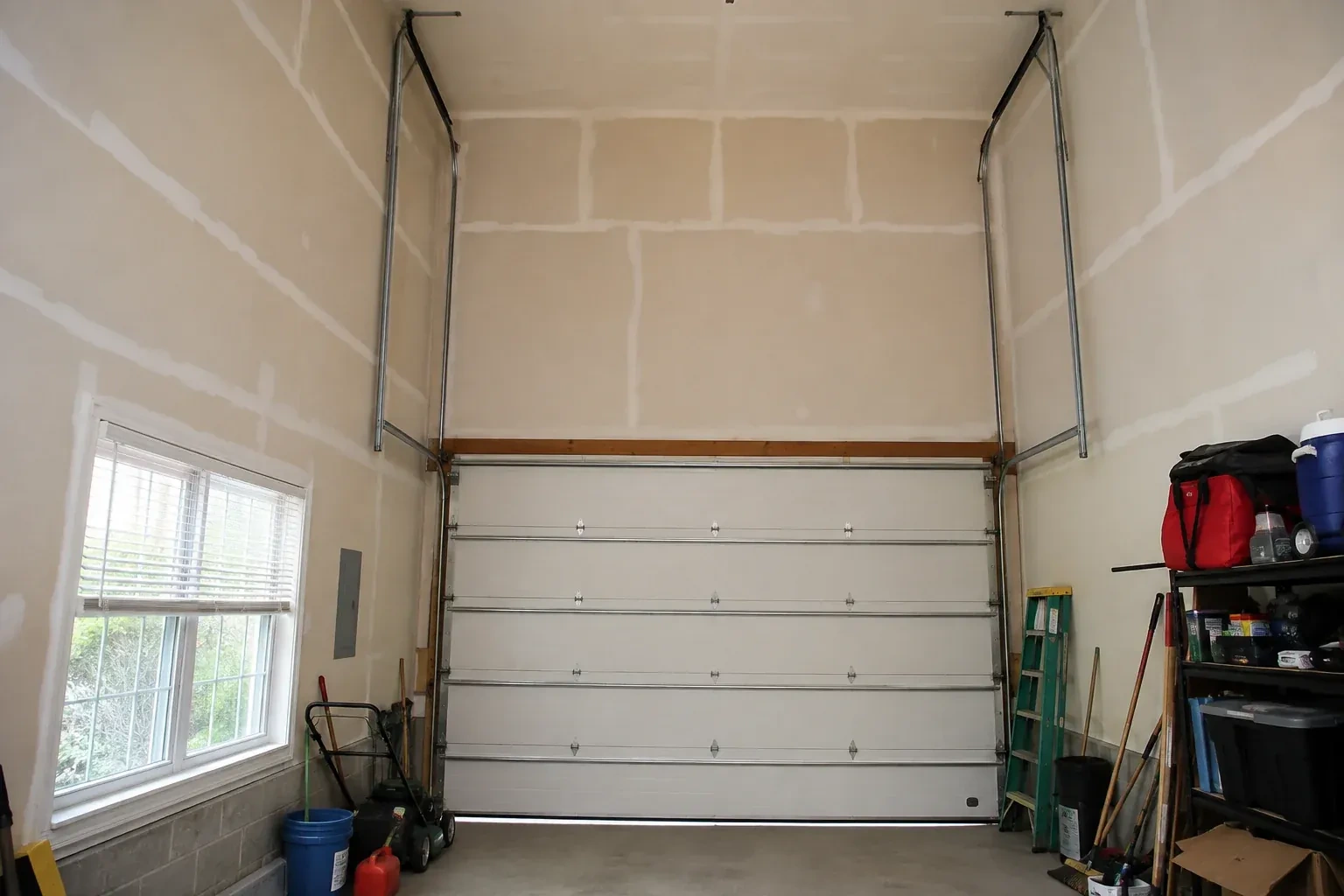
Storage racks were planned near the ceiling, but the existing tracks and centre-mounted opener divide the only practical zone.
In plain words
A high-lift project can often retain sound door sections while changing the hardware that guides and balances them. Their condition, reinforcement, hinges and rollers are inspected first, because the door still has to travel smoothly through a steeper path. New track geometry is paired with drums that manage the changing cable radius, cables of suitable length and torsion springs chosen for the actual door. This selective approach focuses the conversion on the components affected by the new movement while keeping compatible material in service.
How the visit goesYou want to keep the sectional door, but its standard track layout conflicts with a renovation above the parking bay. There is visible room over the opening for the door to climb before it needs to turn inward.
High-Lift Garage Door Conversion
How the visit goes
Review the counterbalance as a system
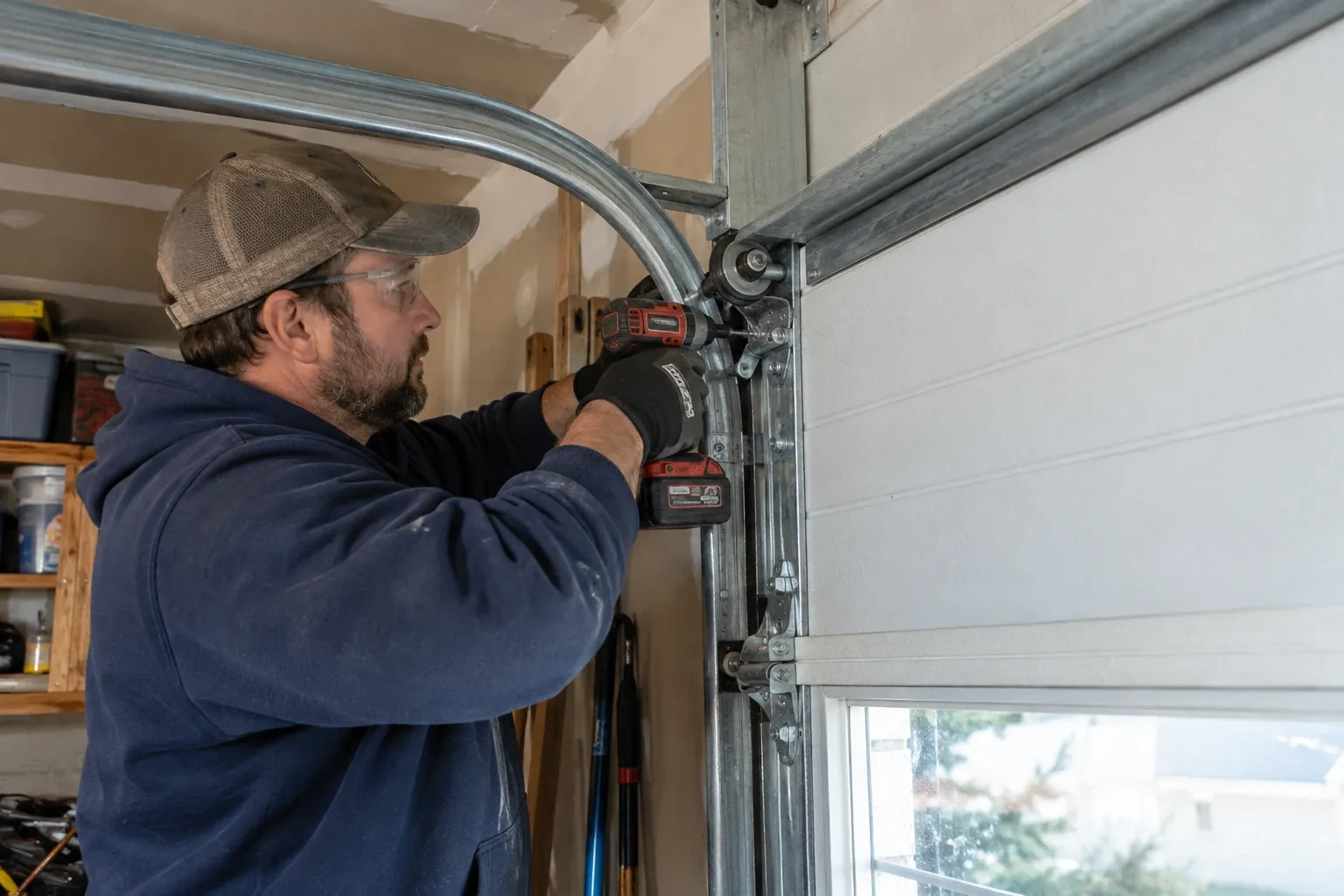
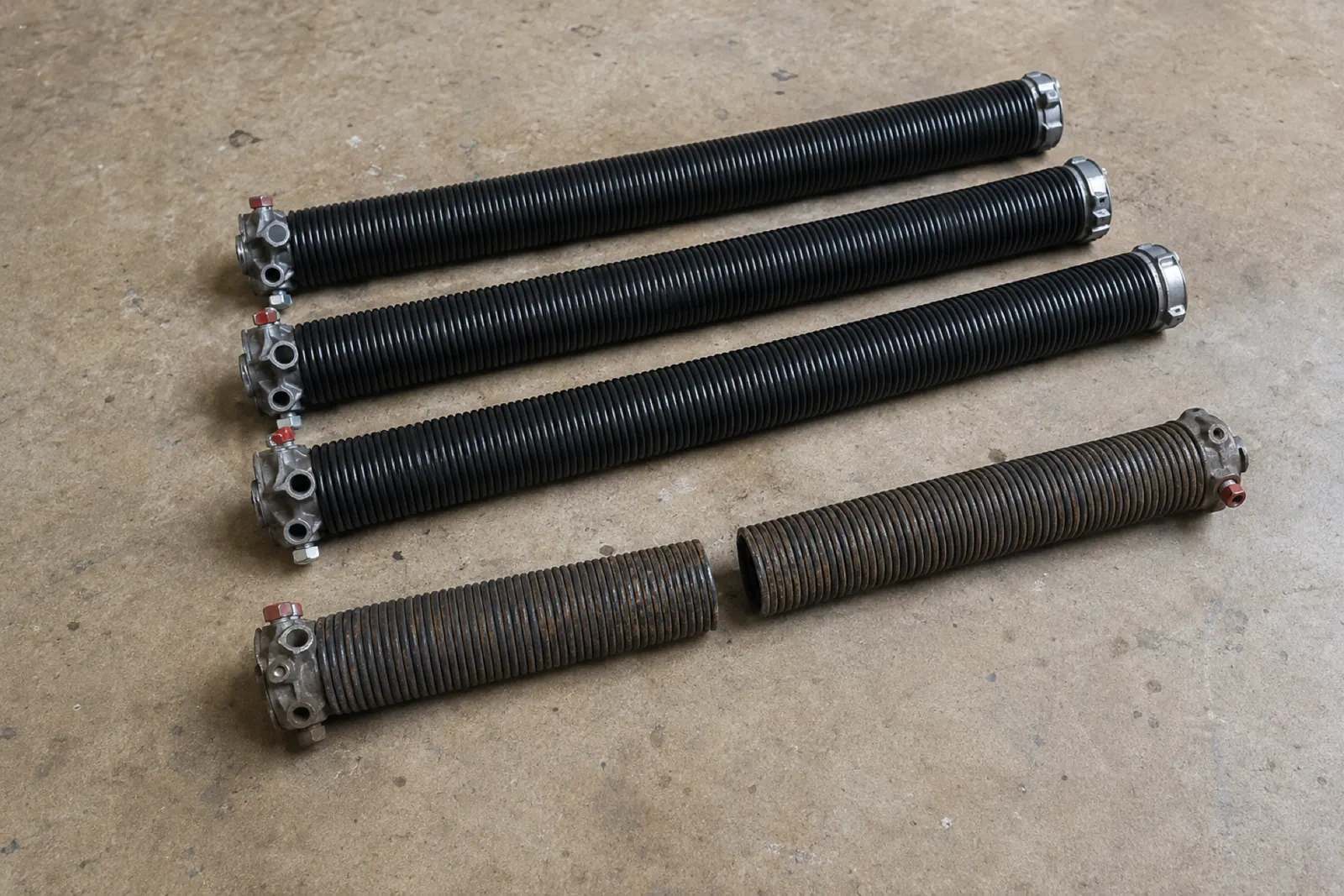
The existing springs are not judged by appearance alone. Door weight, added vertical travel, drum geometry, cable path, shaft length and desired cycle characteristics all shape the new counterbalance specification. The technician records spring tags where present, shaft diameter, bearing locations, drum type and cable condition, then uses the proposed layout to calculate the replacement set. This system review is what lets the door feel controlled from floor to open position, even though the panels now follow a substantially different route.
Match drums and cables to the new travel
High-lift drums have a contoured cable surface that manages changing leverage as the door climbs. The selected drums are installed on the shaft with new lift cables of the specified length and construction. Each cable is routed from its bottom attachment, seated correctly in the drum grooves and set evenly with its partner. Technicians rotate the system under controlled conditions to observe how both sides wind. Proper drum and cable coordination keeps the door level and maintains useful tension throughout the vertical and curved portions of travel.
A balanced door you can understand
You receive a demonstration of powered operation and the intended manual-release function. With the operator disengaged under the proper conditions, the converted door should feel controlled rather than depending on the motor to overcome its weight. The technician explains what normal movement sounds and looks like, including even cables and a level bottom edge. Knowing that baseline makes future changes easier to notice. The opener is then re-engaged, and its limits and applicable protective functions are shown during a complete closing and opening cycle.
High-Lift Garage Door Conversion
In the van
Track and flag brackets
Horizontal track assemblies
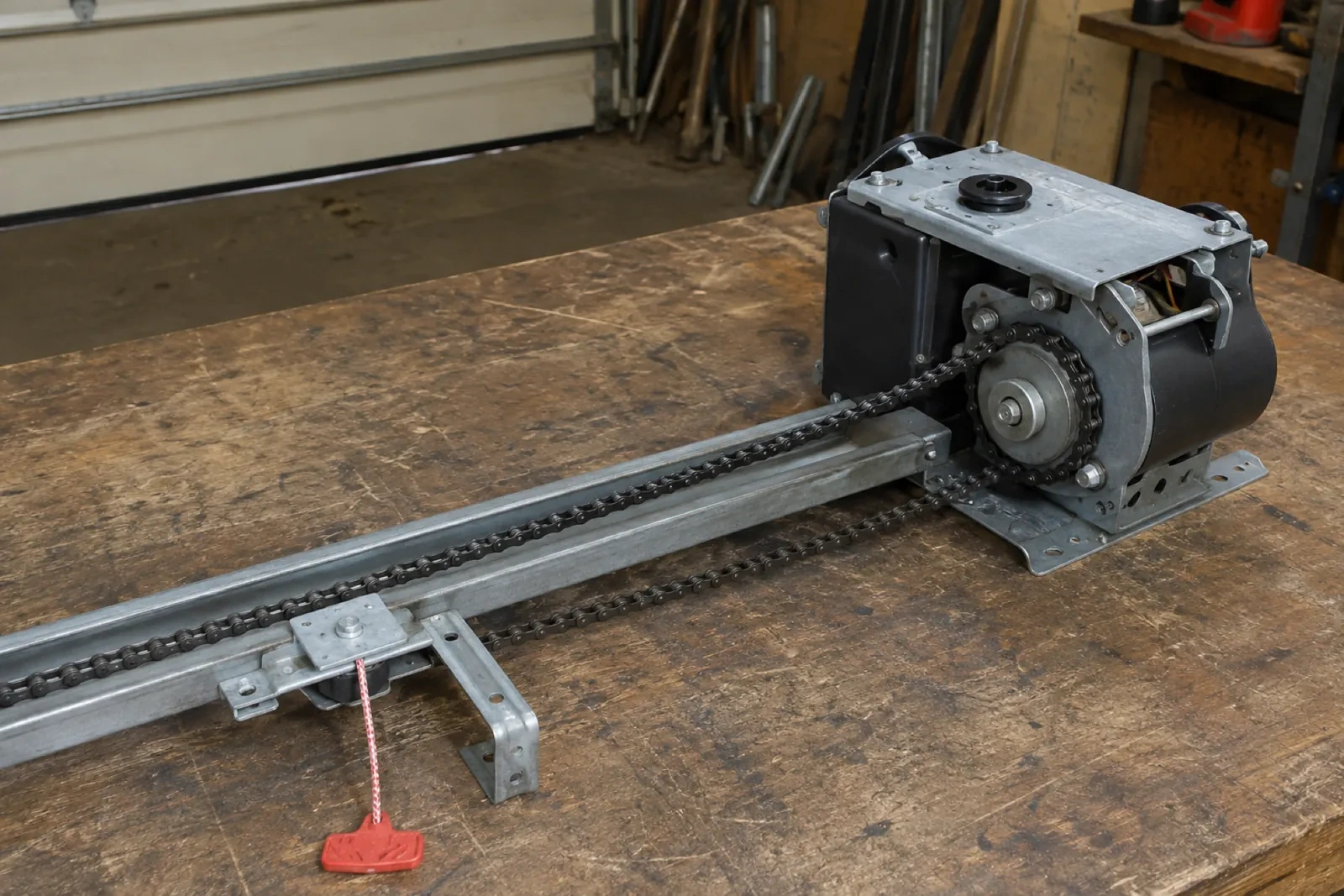
Compatible operator hardware
Transition track sections
Matched lift cables
High-Lift Garage Door Conversion
What affects the quote
Required open-door clearance
The target space above a raised vehicle, lift or work area determines how much additional vertical travel the design must create and which layouts are worth evaluating.
Available headroom and backroom
Wall height above the header and clear ceiling depth shape the feasible high-lift dimension, transition location and final horizontal storage run.
Door and equipment preparation
Removing shelves, ceiling finishes or other items from the planned track and service envelope adds coordination when the bay is not ready for installation.
What to have ready
- What are the garage door opening width and height?
- Are there beams, ducts, pipes, lights or attic access above the bay?
- What door material, insulation and window configuration is installed?
High-Lift Garage Door Conversion: questions
QuestionsWhat records should I receive after the work?
Keep a record of the high-lift dimension, final open-door clearance, track arrangement, drums, cables, spring specification, shaft parts and operator configuration. Component labels, manuals, layout notes and completed test results are also useful. These details help future service and allow other garage projects to respect the door's movement, attachment and access requirements.
Is structural work always included in the conversion?
Door hardware needs suitable attachment points, but framing changes are defined separately when required. The assessment records jambs, header, ceiling support and back-hang locations, then identifies any condition needing input from the responsible building professional or another trade. A clear proposal distinguishes door-system installation from structural, electrical and finish work so responsibilities are easy to coordinate.
Why is manual balance checked before powered operation?
The operator is intended to move a properly counterbalanced door, not compensate for an unsuitable spring or drum setup. Manual checks show how the door behaves without motor force and help technicians refine spring adjustment for the finished geometry. Once movement is controlled and consistent, powered commissioning can focus on limits, controls and protective devices rather than masking a mechanical issue.
Related services
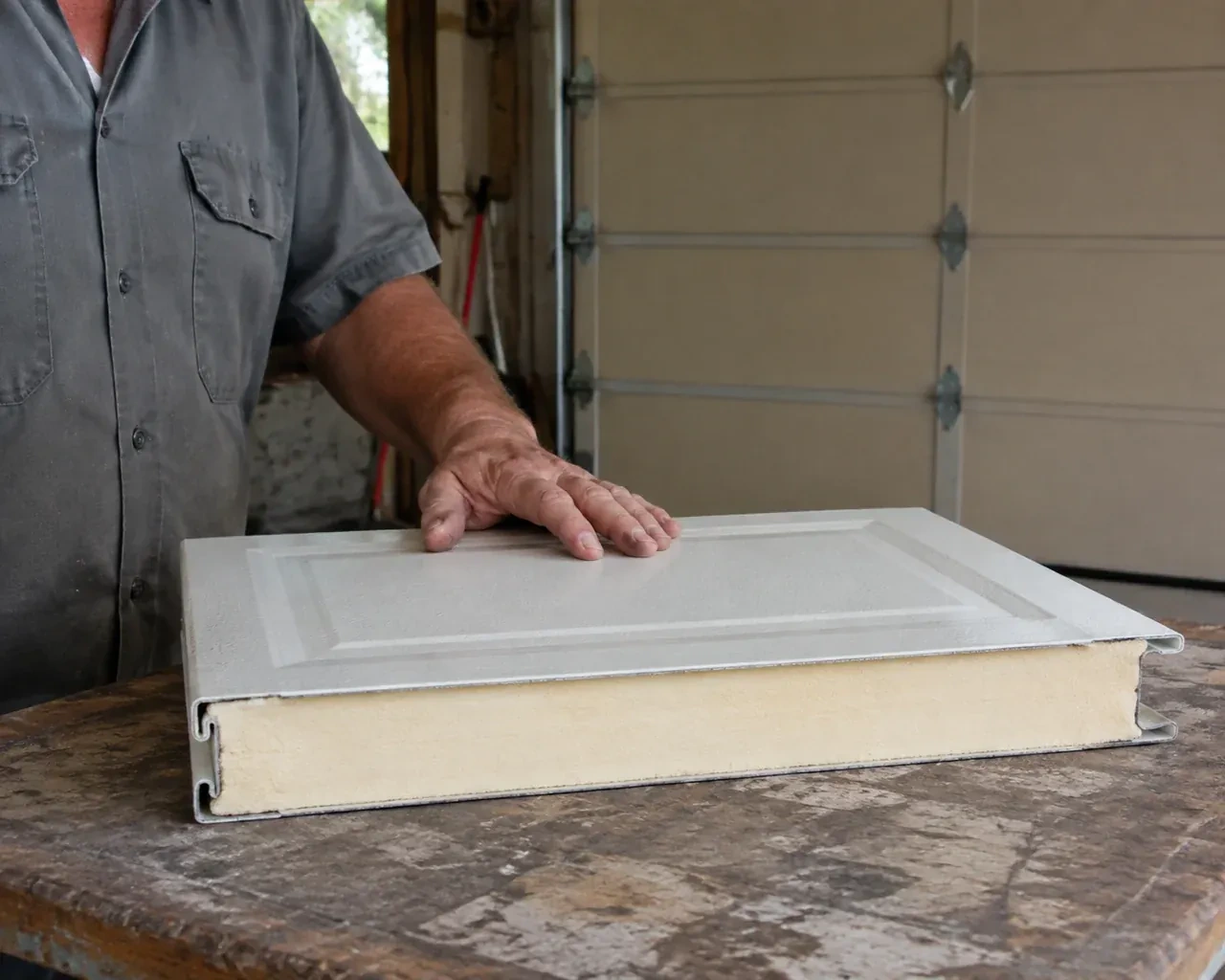
- Insulated Steel Garage Door InstallationThe opener strains as the heavy older door starts upward, and manual movement feels uneven.
- Wind-Rated Garage Door ReplacementThe property faces open fields, leaving the garage frontage more exposed than neighbouring homes sheltered by trees and buildings.
- Carriage-House Garage Door InstallationCold air is noticeable around the current door, especially near the floor and section joints.