Springs · St. Catharines
Garage Door Cable Replacement in St. Catharines
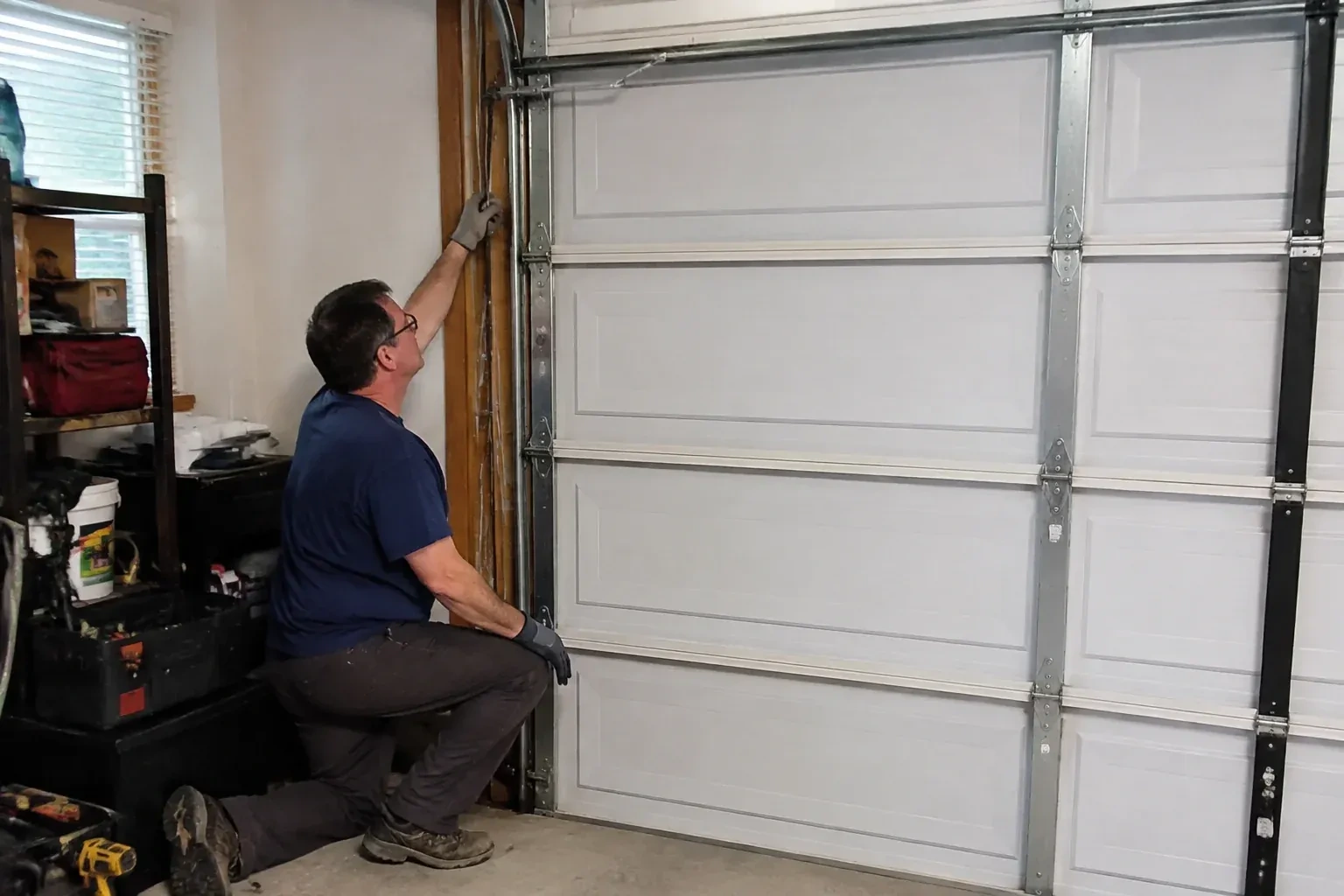
Standing inside with the door closed, you notice the cable on the right side near the floor has gone fuzzy.
In plain words
A cable visit runs in a set order. First the opener is disconnected and the door clamped so nothing can move. Then the counterbalance is unloaded so the drums, cables and bottom brackets can be handled calmly. The old cables come off, the drums and brackets are inspected, and new cables of the correct specification go on. Both sides are tensioned evenly until the door sits level, then the springs are wound back to the turns the door height calls for. Finally the door is balanced by hand, the opener reconnected and its travel and reversing checked. You are shown the finished door working before the technician leaves.
How the visit goesYour older door has springs along the tracks, and one cable has slipped off its pulley and dangles slack. The door lifts crooked and needs a shoulder to close, when it used to glide.
Garage Door Cable Replacement
How the visit goes
Why the last cable failed
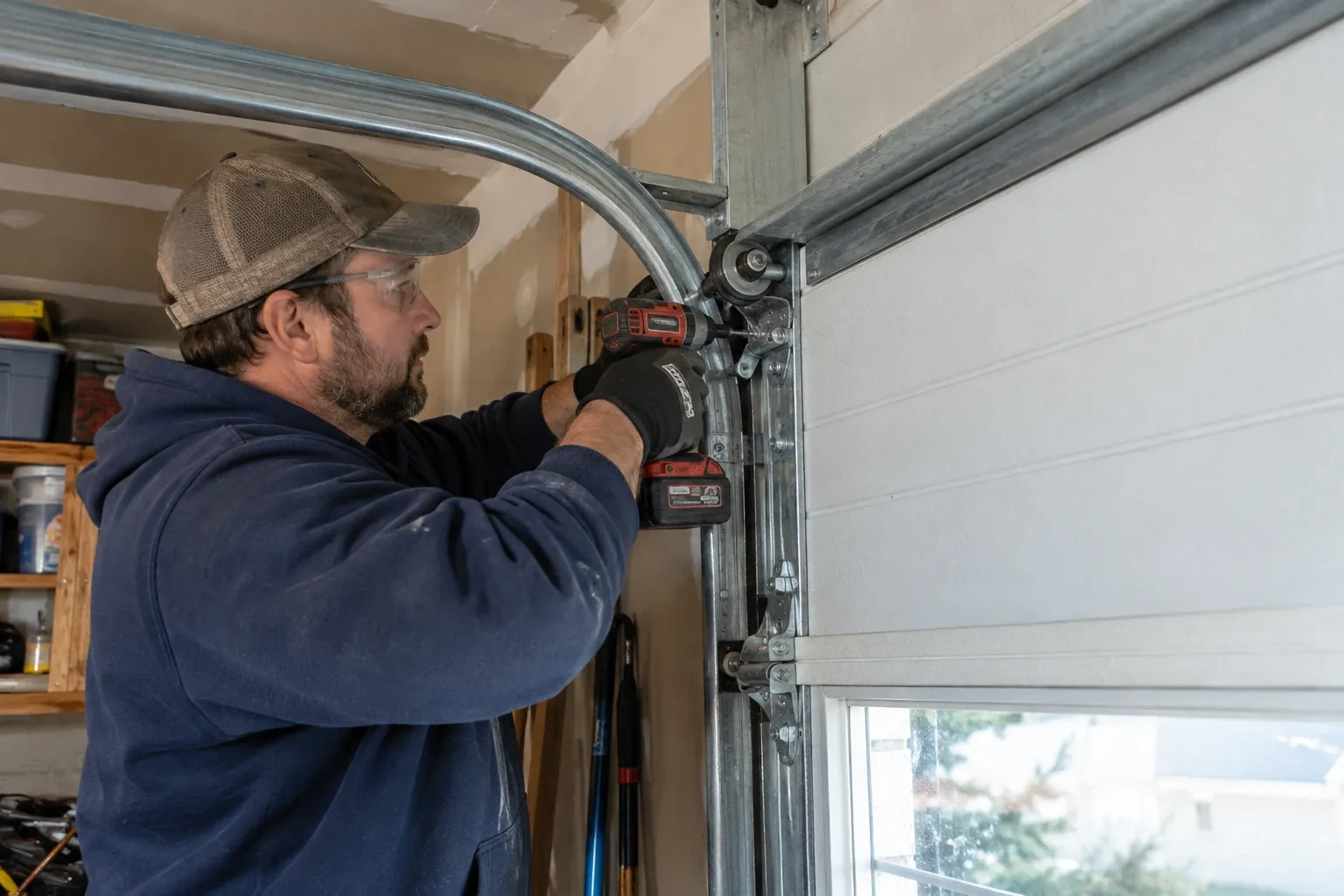
A new cable fitted onto the same problem does not last, so the technician wants the cause. Frayed wires along the length point to rubbing against a bent track or a rough drum. Rust at the loop points to slush at the floor. A cable that jumped its drum usually follows the door closing on something, a spring that has lost tension, or a drum that slipped. A snapped cable on a door that was level beforehand often means age and corrosion rather than misalignment. You will be asked what happened before the failure, because a shovel in the opening or a bump from the car is a fact only you can supply.
Taking the tension off the springs
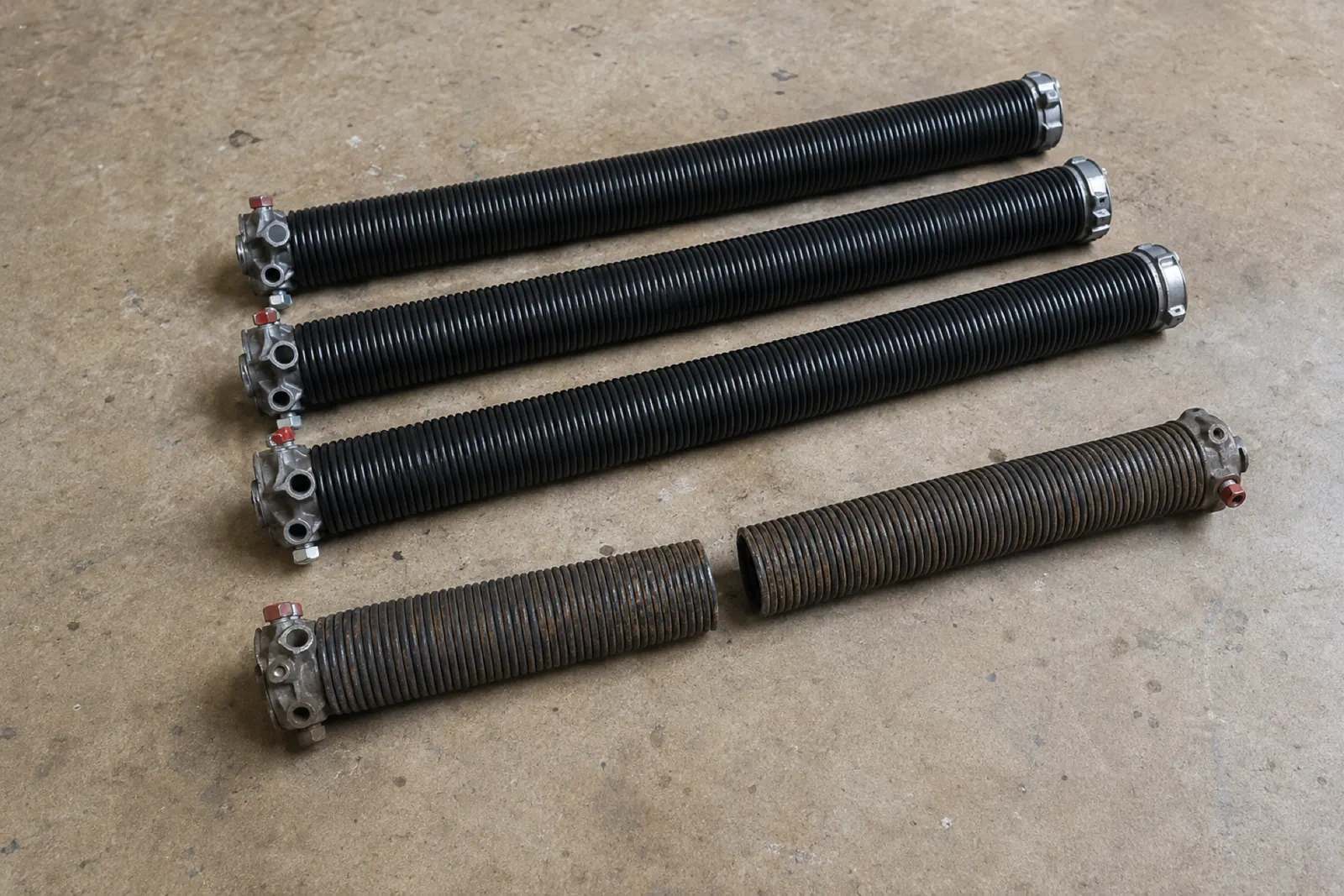
With the door clamped and the opener disconnected, the technician unloads the torsion springs. Two solid winding bars sized to the cone holes are used in turn: one holds the cone while the set screws are loosened, then the spring is let down a quarter turn at a time, bar over bar, until the coil is relaxed and the shaft turns freely. Every turn released is counted, because the same number goes back on later. On an extension door the technician instead raises the door fully and clamps it, which lets the springs hang slack. Once the tension is off, cables, drums and brackets can be handled like any other hardware.
Checking the balance yourself, safely
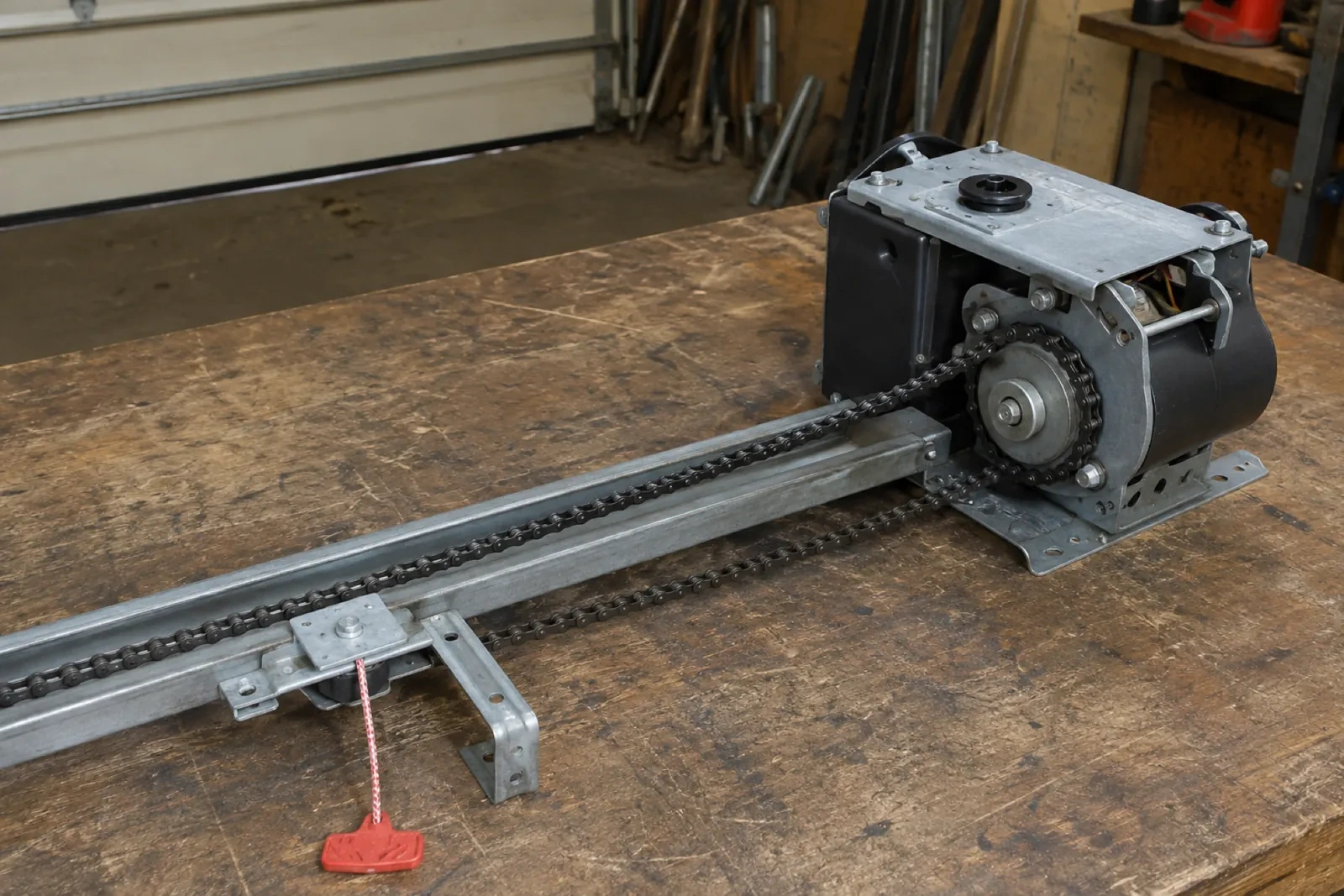
You can confirm the door is still balanced any time without touching a spring or cable. With the door closed, pull the opener's release cord so the trolley disconnects, then lift the door by its handle or a safe gripping point to about waist height and let go gently. A balanced door should not lift or fall far on its own; a little slow drift is normal, and what calls for a technician is rapid movement, a heavy feel, binding in the track, or a result outside the manufacturer's balance instructions, not drift alone. Reconnect the opener as the manual describes, usually by running it once. Doing this each season catches wear early and keeps the opener working lightly.
Garage Door Cable Replacement
In the van
Torsion springs and winding cones
Containment cables
Track clamps or locking pliers
Drum set screws
Cable drums, matched pair
Garage Door Cable Replacement
What affects the quote
Corrosion and seized fasteners
Set screws and bracket bolts that have rusted solid take time to free or cut, and badly corroded hardware is replaced rather than reused, which shows in the parts list.
Extension-spring pulleys and containment cables
On an extension door, pulleys with grooved wheels or seized bearings are replaced with the cable, and a containment cable is added where one is missing. Each is a small parts line.
Torsion or extension system
A torsion door with drums and an extension door with pulleys are different jobs with different parts, and the counterbalance type is the first thing that shapes the quote.
What to have ready
- Can you see a cable hanging loose, frayed, or wound around the shaft?
- Is there a car inside that you need out before the visit?
- Is there rust on the cables or brackets near the floor?
Garage Door Cable Replacement: questions
QuestionsHow do I tell a cable problem from a spring problem?
Look above the door with it closed. A torsion spring that has broken shows a clear gap in the coil, and both cables usually go slack together because nothing is turning the shaft. A cable problem tends to show on one side only: a frayed length, a coil of loose cable, or one corner sitting higher. Either way the technician inspects both, since a weak spring is a common reason a cable fails.
What makes a cable fray?
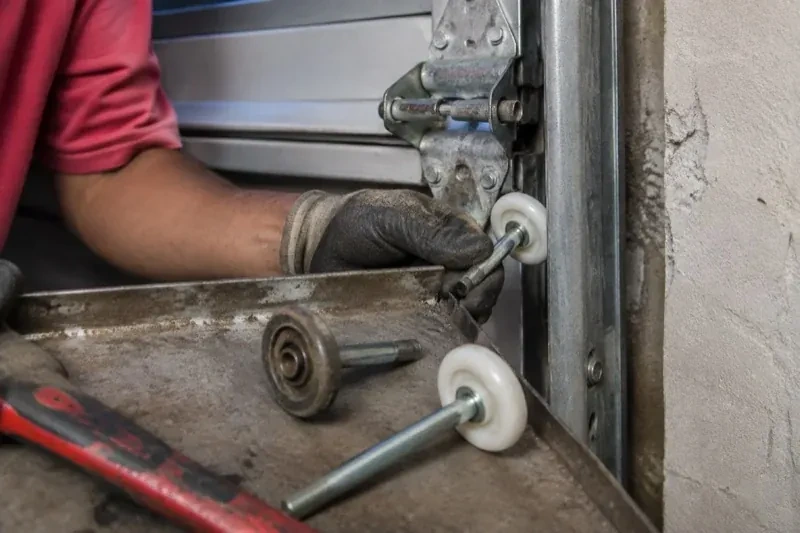
Fraying is individual wires breaking, and it comes from two things: bending fatigue where the cable wraps the drum or pulley, and rubbing where it touches something it should not, such as a bent track edge, a rough drum groove, a seized pulley or a bracket sitting crooked after a bump. Corrosion speeds both. The technician looks for the rough edge so the new cable does not meet it.
Why is the door sitting crooked in the opening?
Each corner of the door is held by its own cable. When one cable stretches, slips its drum or breaks, that corner loses its lift and drops while the other stays up, so the door tips and usually wedges against the track. Setting both cables to the same length and tension is part of every cable replacement, and it is what brings the door back level.
Related services
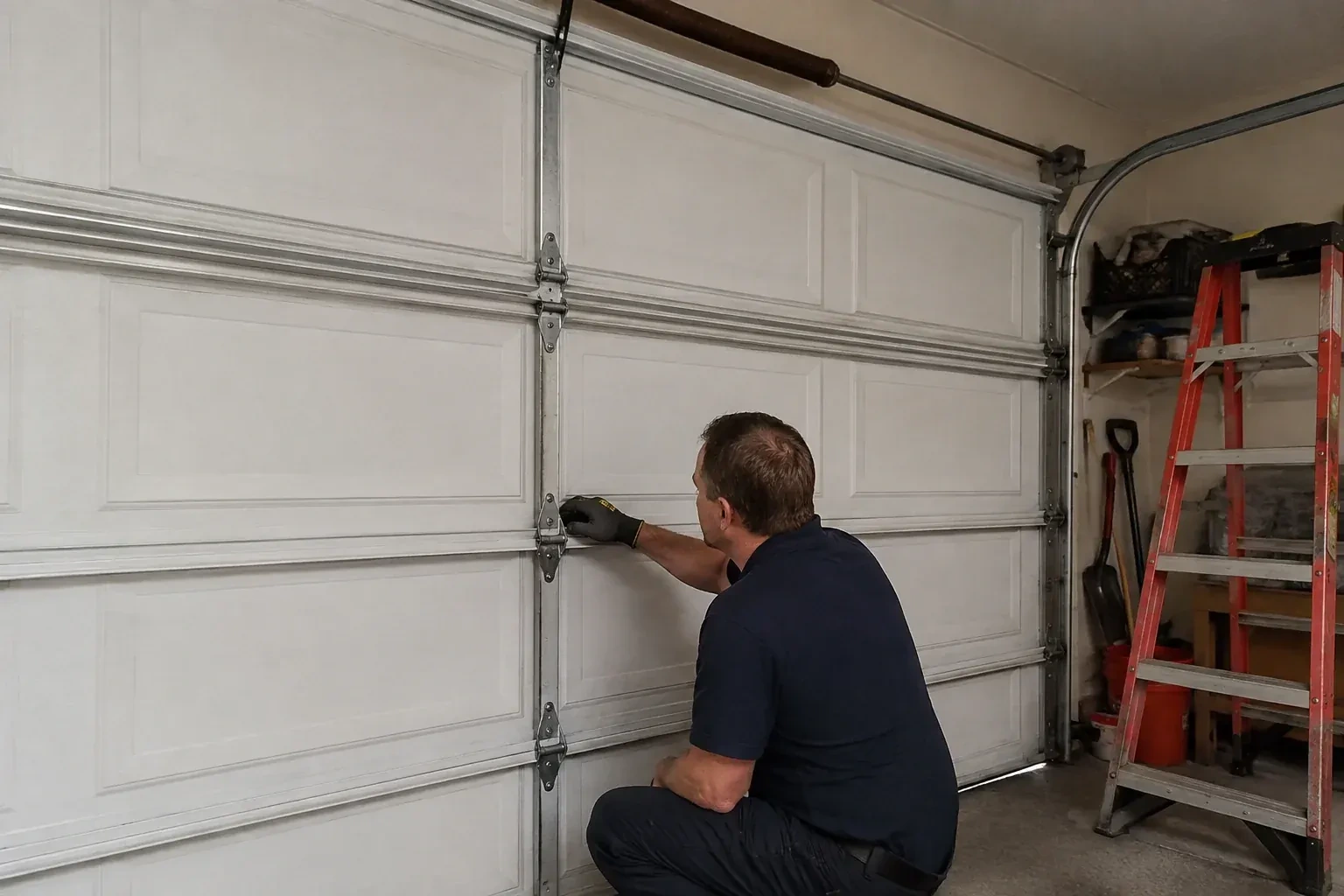
- Garage Door Hinge ReplacementOn the old wood door, one hinge has pulled away from the panel, dragging a screw and a chunk of soft timber with it.
- Garage Door Track Repair or ReplacementYou bought the house with a door that sticks near the top of its travel.
- Torsion Spring ReplacementAfter pulling the red release cord, you tried lifting the door yourself and it would barely leave the floor.