New Doors · Carlton Park
Commercial Sectional Door Repair in Carlton Park
Cold weather has exposed a widening gap below the closed door.
In plain words
Impact repair is more than flattening a dented panel. The damaged section may have transferred force into an end stile, hinge, roller carrier, vertical track or jamb attachment. The repair therefore follows the load path from the contact point into the supporting hardware. A replacement section or reinforcement is matched to the door construction, track spacing is restored, and every affected connection is tightened or renewed. Final cycling confirms that the repaired door follows the curve cleanly and seats evenly at the opening.
How the visit goesThe operator runs and the drive chain moves, yet the sectional door hesitates near the floor. It feels unusually heavy during manual operation, pointing to a counterbalance problem rather than a simple control-station fault.
Commercial Sectional Door Repair
How the visit goes
Checking balance before the operator
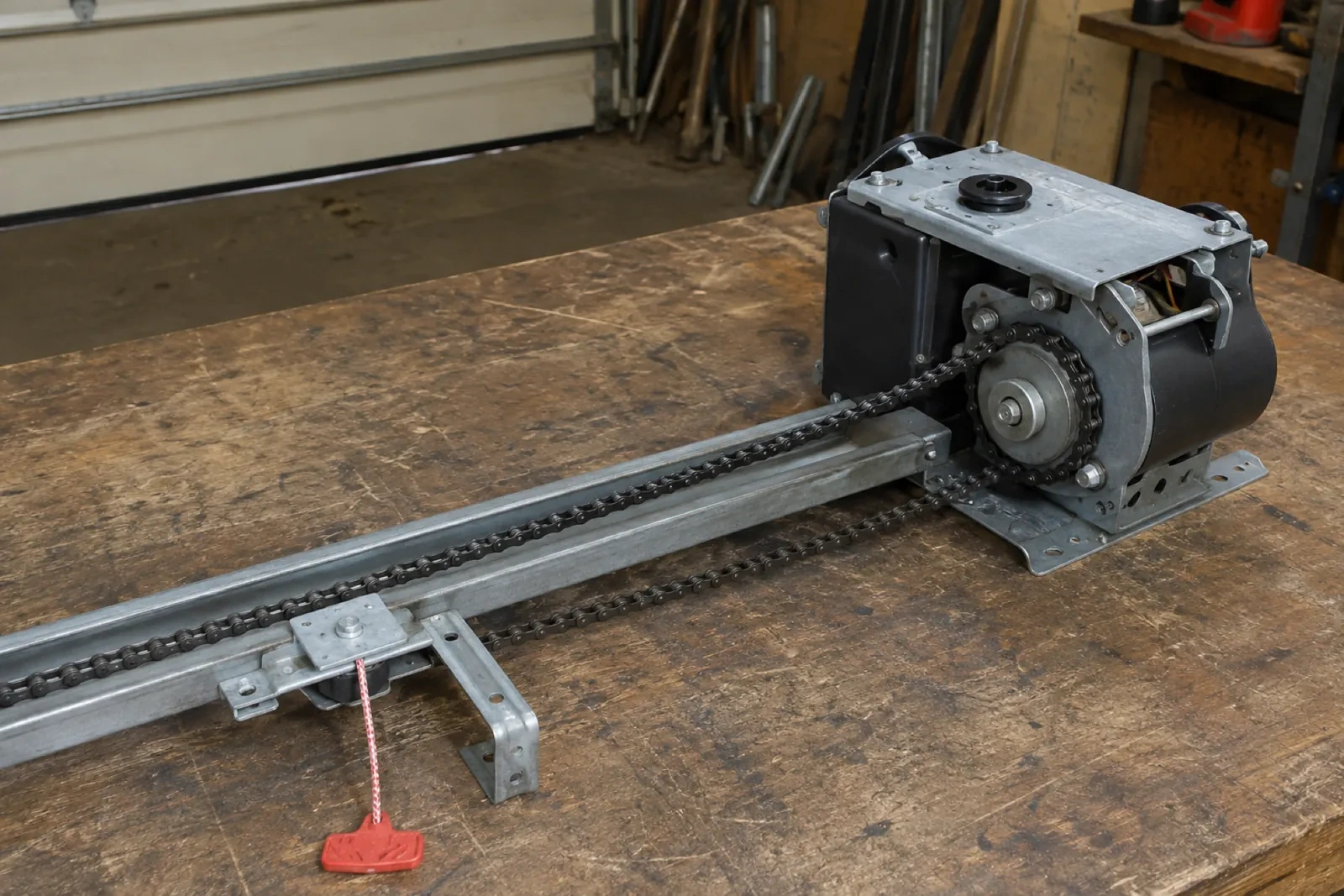
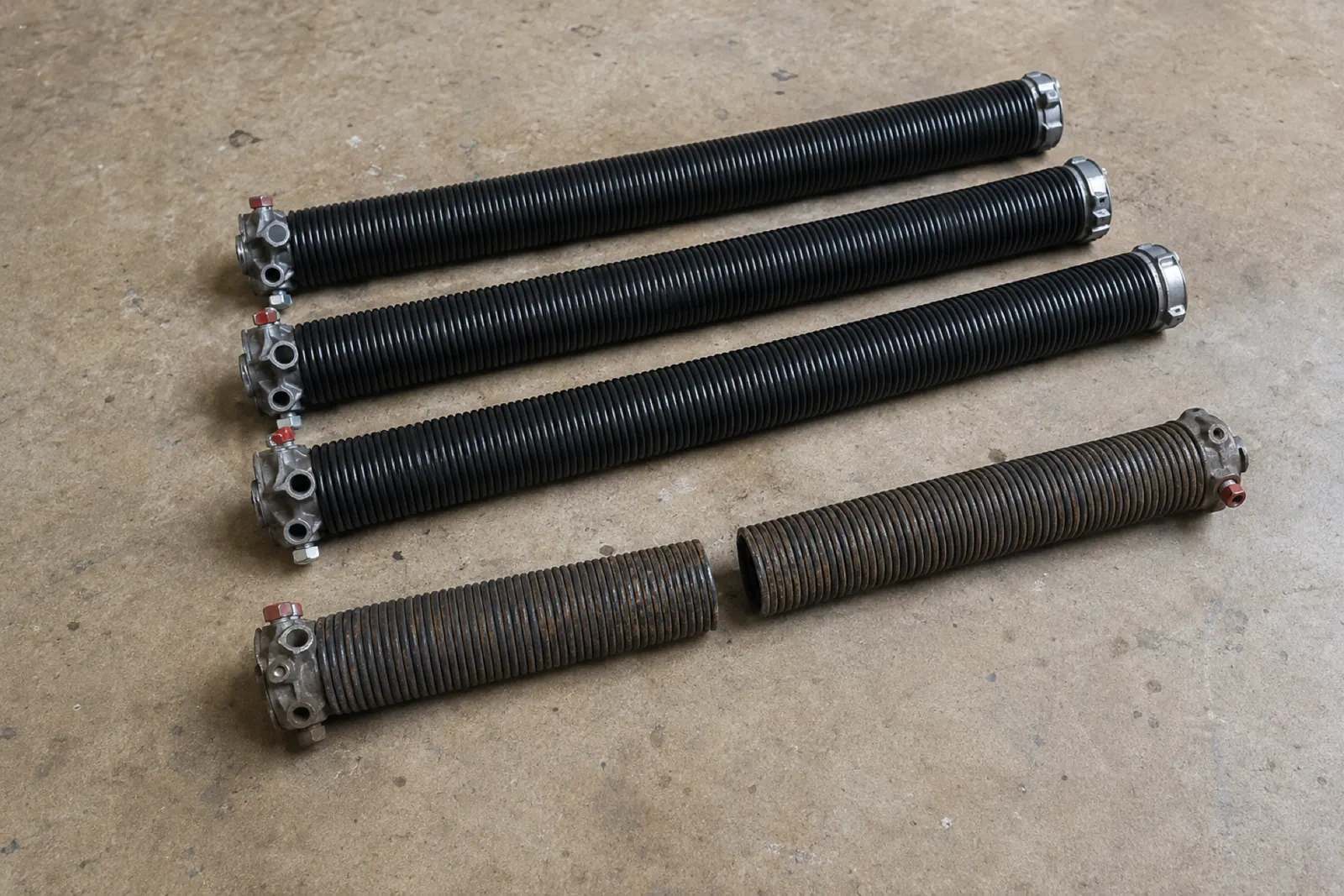
When the motor hums, stalls or strains, the door itself is assessed before settings are changed. With the system safely placed for manual evaluation, the technician checks whether the door moves freely and remains controlled through its range. Spring condition, cable wraps, rollers, track obstructions and any active lock are reviewed. Only after the mechanical load is understood does attention move to the drive chain, sprockets, clutch or brake, travel limits and controls. This sequence separates an operator issue from resistance created elsewhere in the assembly.
Replacing an impact-damaged section
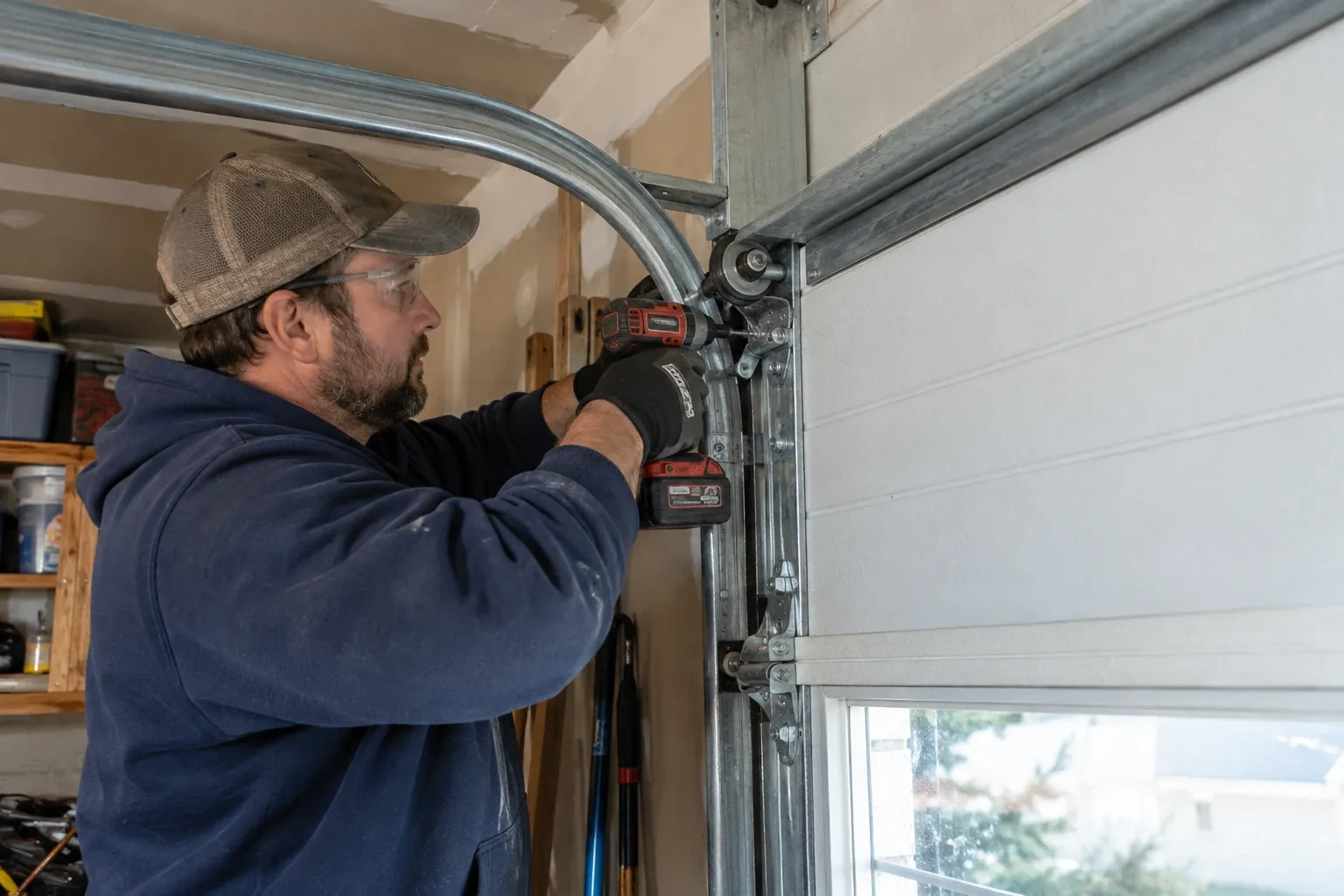
The affected section is supported while hinges, rollers and connected hardware are transferred or renewed. The replacement is matched for thickness, construction, profile and required reinforcement so it fits the neighbouring sections and carries the same hardware pattern. Bent end stiles or struts are addressed as part of the section assembly. Rollers are returned to the correct hinge positions, section joints are aligned and fasteners are set securely. Track clearance is then checked through the curve so the new panel travels without rubbing or opening gaps.
Level movement through the opening
After cable, spring or track work, the door should rise with its bottom edge level and move without a side lag. Facility staff can watch the first few routine cycles from a clear position and note whether both cables remain neatly seated on their drums. A new tilt, rubbing sound or loose strand is useful information to report before the opening sees heavier traffic. Keeping pallets and vehicles outside the marked travel zone also protects the restored alignment and gives operators a clear view of the complete door path.
Commercial Sectional Door Repair
In the van
Photoelectric sensors and sensing edges
Commercial door sections
Vertical and horizontal track
Reinforcement struts
Track brackets and back hangs
Commercial Sectional Door Repair
What affects the quote
Parts identification and compatibility
Clear model data and current component markings simplify matching; altered assemblies or unavailable profiles may require additional measurement and an engineered compatible approach.
Section construction and finish
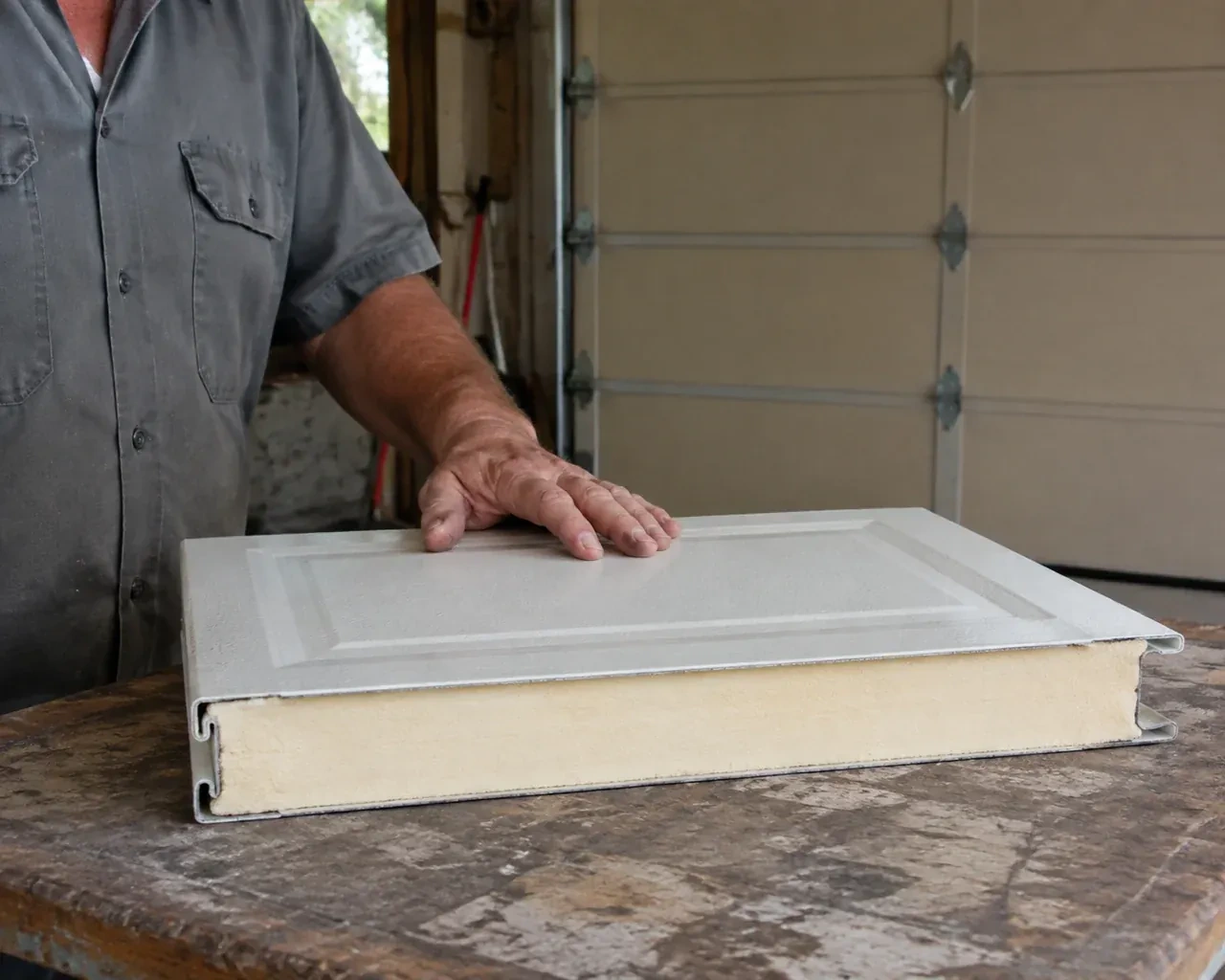
Steel, aluminum, insulated sandwich and full-vision sections have different profiles, reinforcement, glazing and hardware patterns that affect matching and replacement scope.
Lift and track configuration
Standard, low-headroom, high-lift and vertical-lift arrangements use different track geometry, drums, cables and access methods, so the installed configuration shapes labour and parts.
What to have ready
- Is the track standard, high-lift or vertical-lift?
- Is the door closed, open or stopped between positions?
- Does the door rise level on both sides?
Commercial Sectional Door Repair: questions
QuestionsDoes fire-rated status affect sectional door repair?
It can. If the opening is part of a required fire separation, its label, approved assembly, release equipment and building fire-safety documentation shape what components and procedures are appropriate. Share any door labels or inspection records before work begins. The repair can then preserve the intended closure function and align with the property's applicable fire-safety responsibilities.
What makes a sectional door different from a rolling door?
A sectional door is built from horizontal panels joined by hinges. Rollers guide those sections through vertical, curved and sometimes horizontal track. A rolling door uses narrow slats that coil around a barrel above the opening. Because the constructions differ, sectional repair centres on panels, hinges, rollers, tracks, lift cables and counterbalance components matched to that system.
Why are the hinges numbered along the sides?
Numbered end hinges position each roller progressively farther from the panel as the sections rise. That changing offset lets the stacked door follow the track curve while maintaining its shape. Installing a hinge in the wrong position can alter alignment and clearance. Centre hinges have a different role: they connect sections across the width without carrying track rollers.
Related services
- Insulated Steel Garage Door InstallationThe opener strains as the heavy older door starts upward, and manual movement feels uneven.
- Wind-Rated Garage Door ReplacementThe property faces open fields, leaving the garage frontage more exposed than neighbouring homes sheltered by trees and buildings.
- Carriage-House Garage Door InstallationCold air is noticeable around the current door, especially near the floor and section joints.