Openers · Henley
Belt-Drive Opener Repair in Henley
There is a new squeal from the front of the rail, up near the header, on every cycle.
In plain words
After a belt has been off the sprocket, the operator can end up out of phase: the motor thinks the door is somewhere the trolley is not. The symptom is a door that stops short at the top or the bottom no matter how the limits are adjusted, or a trolley that bangs into its stop bolt. The correction is part of every belt repair. With the belt lifted off the sprocket, the operator is run until the sprocket settles at its closed position; the belt is refitted with the trolley at the closed end; then travel and force are relearned so motor and trolley agree again.
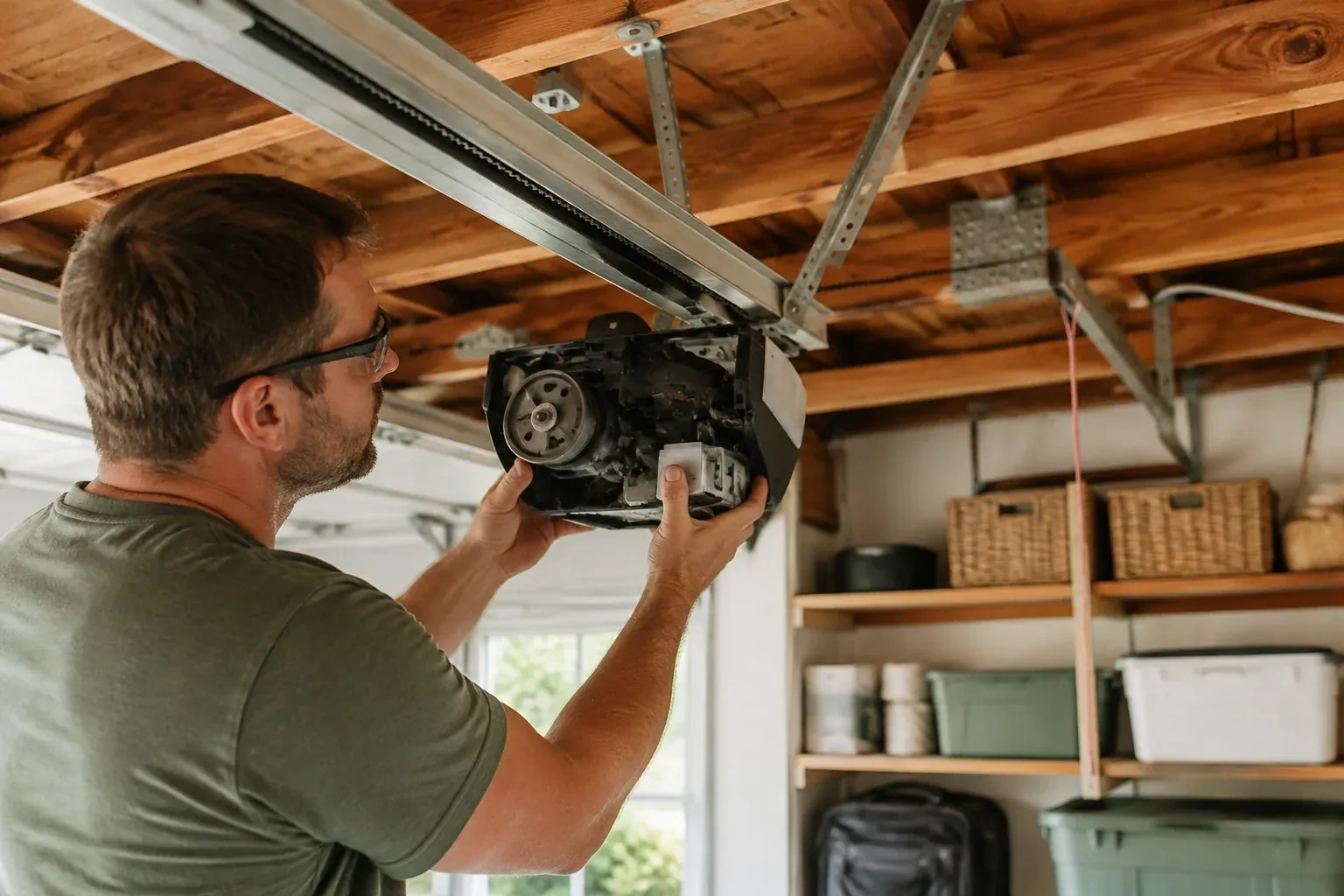
How the visit goesThe belt looks fine from a distance, but up close the rubber has cracked across the back in dozens of places and, in one spot, you can see the steel cords showing through.
Belt-Drive Opener Repair
How the visit goes
Reading the belt from end to end
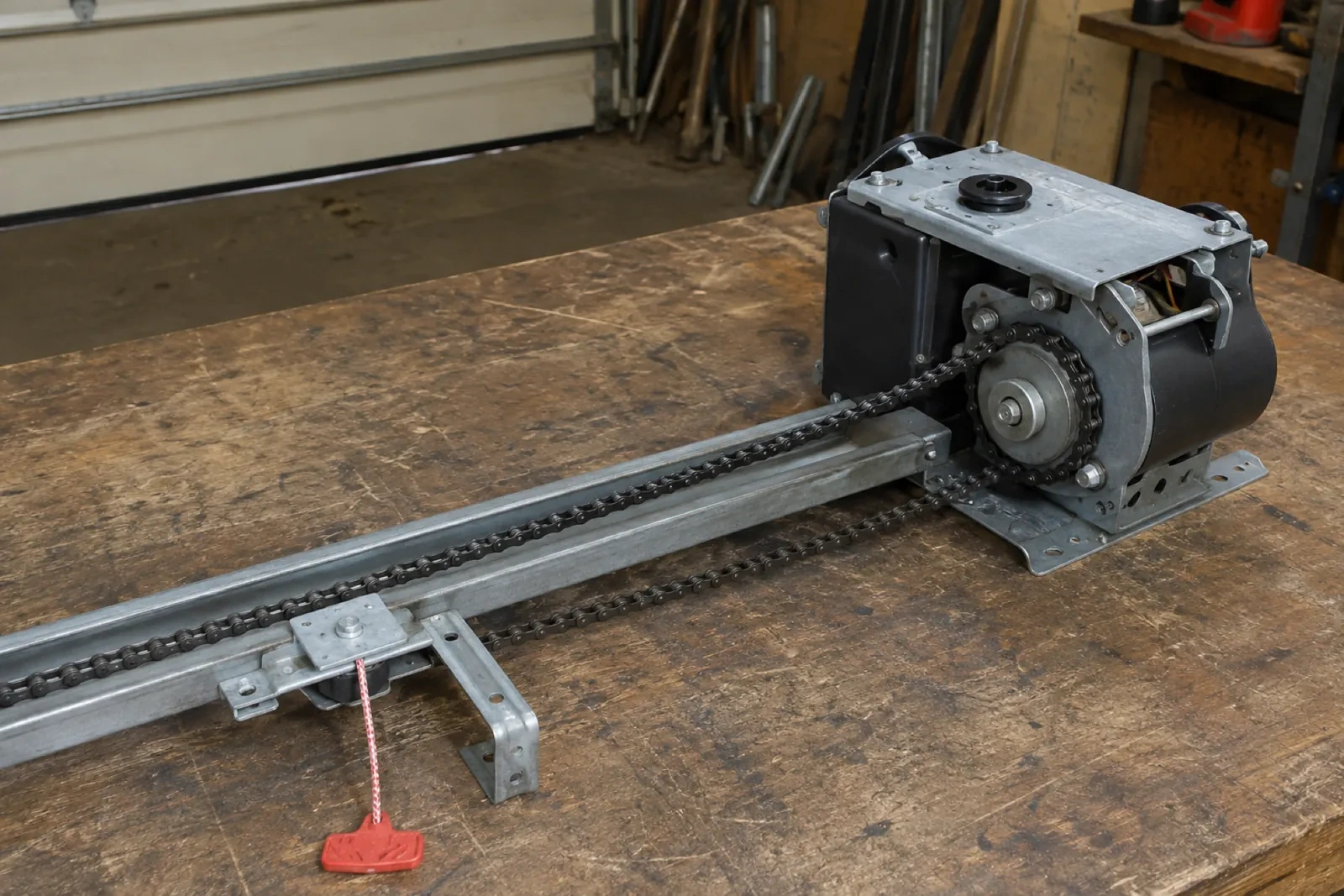
With the trolley run to one end of the rail and then the other, the whole length of the belt passes under the technician's eye and fingers, on the top run and the return. What they are looking for is specific: cracks across the back of the rubber, a glazed shine that says the belt has been slipping, an edge gone fuzzy from rubbing, a stretch where the teeth are flattened or torn away, cords showing through, and the state of the clip or link where the belt meets the trolley. Each of these points to a different cause as well as a different repair, and where the wear sits along the belt says a lot about which.
Putting motor and trolley back in step
Any time the belt has been off the sprocket, the operator's sense of where the door is can drift from where the trolley actually sits, so this step is done before the door is reconnected. The technician lifts the belt clear of the sprocket, runs the operator until the sprocket turns to its closed position and stops on its own, then slides the trolley to the closed end of the rail and refits the belt. Motor and trolley now agree. On operators with a mechanical limit assembly, the middle contact is adjusted instead. Without this step, the door stops short at one end no matter how the travel limits are turned.
Keeping the belt dry and the door lubricated
The belt asks for almost nothing, and the one thing it asks is to be left dry. Never spray it or grease it; oil softens the rubber and grit sticks to the teeth. What does want lubricant is the door: hinges, rollers and springs, once a year with a garage-door lubricant, ideally in autumn before the first frost. The rail can be wiped clean with a dry cloth if dust builds up where the trolley runs. Keep the belt clear of anything hung from the ceiling, since a bicycle hook or a storage rack pressing on the rail is a common reason a belt starts to fray along one edge.
Belt-Drive Opener Repair
In the van
Inner and outer trolley
Light grease for the drive gear
Belt tension spring and square nut
Rail hanger straps and fasteners
Garage-door lubricant for hinges and rollers
Belt-Drive Opener Repair
What affects the quote
Belt length and type
A belt for an 8 ft door rail is longer than one for a 7 ft rail, and belts differ by maker and tooth pitch, so the part named on the quote follows the operator's model.
Door size and weight
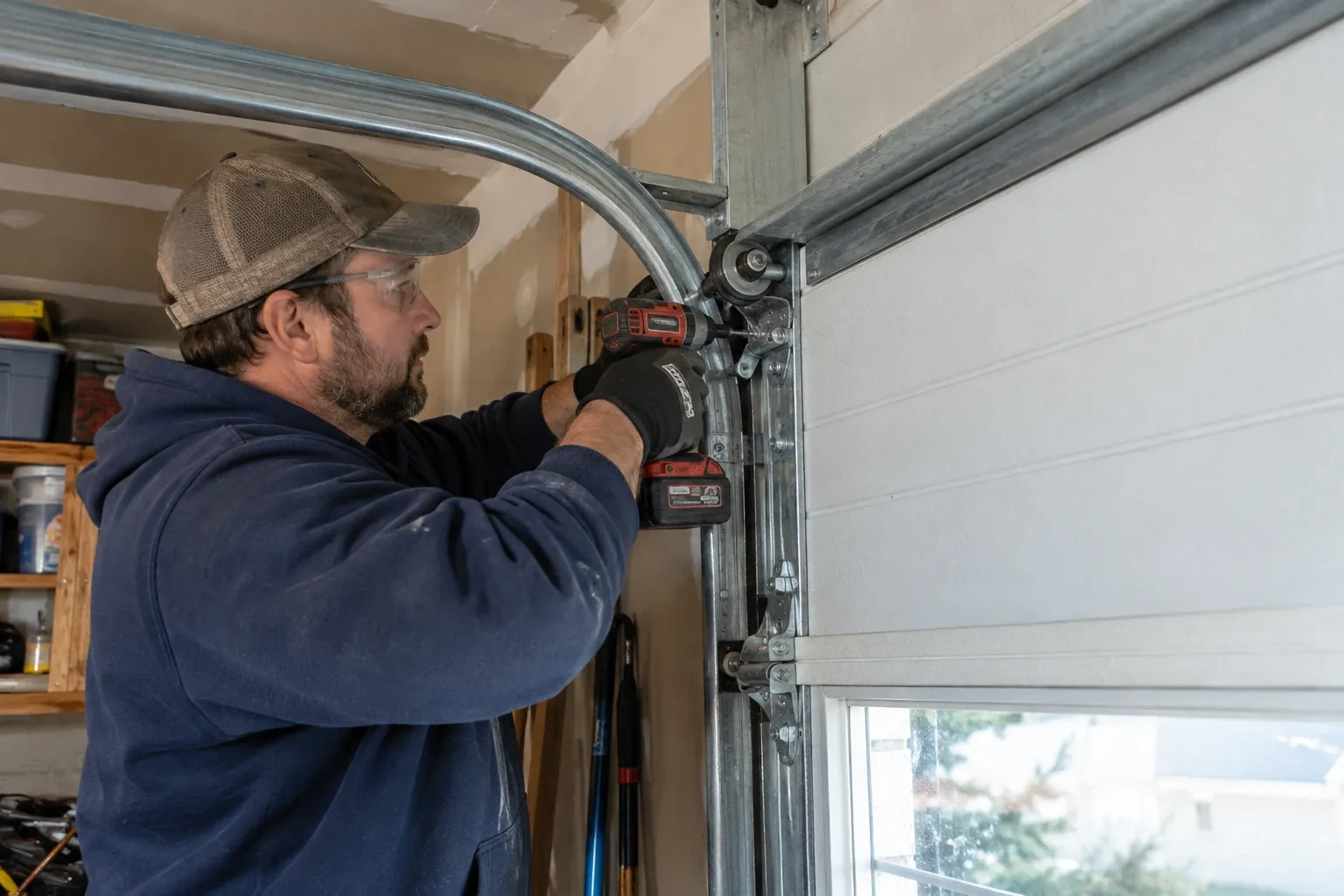
A wide double door or a heavy insulated one asks more of the belt and trolley, and the inspection may point to a suitably rated opener or a top-section strut for that door, alongside the belt matched to the rail and sprocket.
How far the technician drives
A garage on the edge of town and one down a long rural road take different time to reach, and that trip is a line of the quote.
What to have ready
- Does the door lift easily by hand and stay put halfway with the opener released?
- Is anything hung from the ceiling or rail, such as a bicycle hook or storage rack?
- When did the trouble start, and did it follow a power cut or a pulled red cord?
Belt-Drive Opener Repair: questions
QuestionsHow long does a belt-drive repair take?
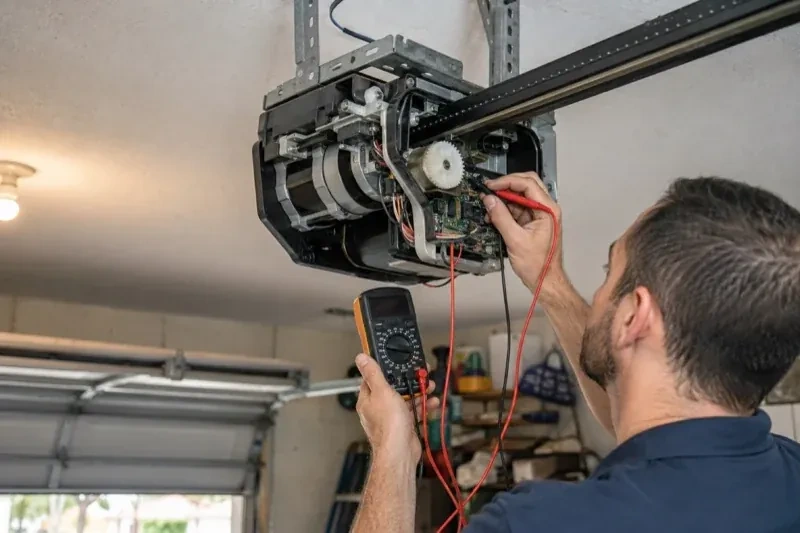
A tension adjustment with the safety tests is a short visit. Replacing the belt, trolley or idler pulley, then phasing the motor, relearning limits and running the reversal tests, is usually an hour or two. A gear-and-sprocket kit at the motor head takes longer because the head unit is opened. If the balance test turns up spring work, that is agreed as a separate job with its own time.
What is the idler pulley and why does it squeal?
It is the wheel at the header end of the rail that the belt wraps around on its return. It spins on a small bearing, and when that bearing dries or fails the pulley squeals on every cycle and can let the belt wander to one side and fray. Replacing the pulley is a modest job done with the belt slack, followed by re-tensioning.
The motor runs but the door stays still. What has happened?
Something between the motor and the door has let go. On a belt drive the usual suspects are a broken clip where the belt joins the trolley, a belt that has jumped off the sprocket or idler pulley, a trolley that failed to re-engage after the red cord was pulled, or a stripped drive gear inside the motor head, which leaves plastic shavings on the housing. Each is a specific repair.
Related services
- Chain-Drive Opener RepairThe motor runs, you can hear it working, but the door never moves.
- Garage Door Opener ReplacementThe remotes only work from the end of the driveway now, and one of them disappeared with a set of keys last month.
- Photo-Eye Sensor Alignment or ReplacementYou press the remote, the door drops a few centimetres, then climbs straight back to the top while the opener light blinks.