Openers · Mississauga Beach
Belt-Drive Opener Repair in Mississauga Beach
There is a new squeal from the front of the rail, up near the header, on every cycle.
In plain words
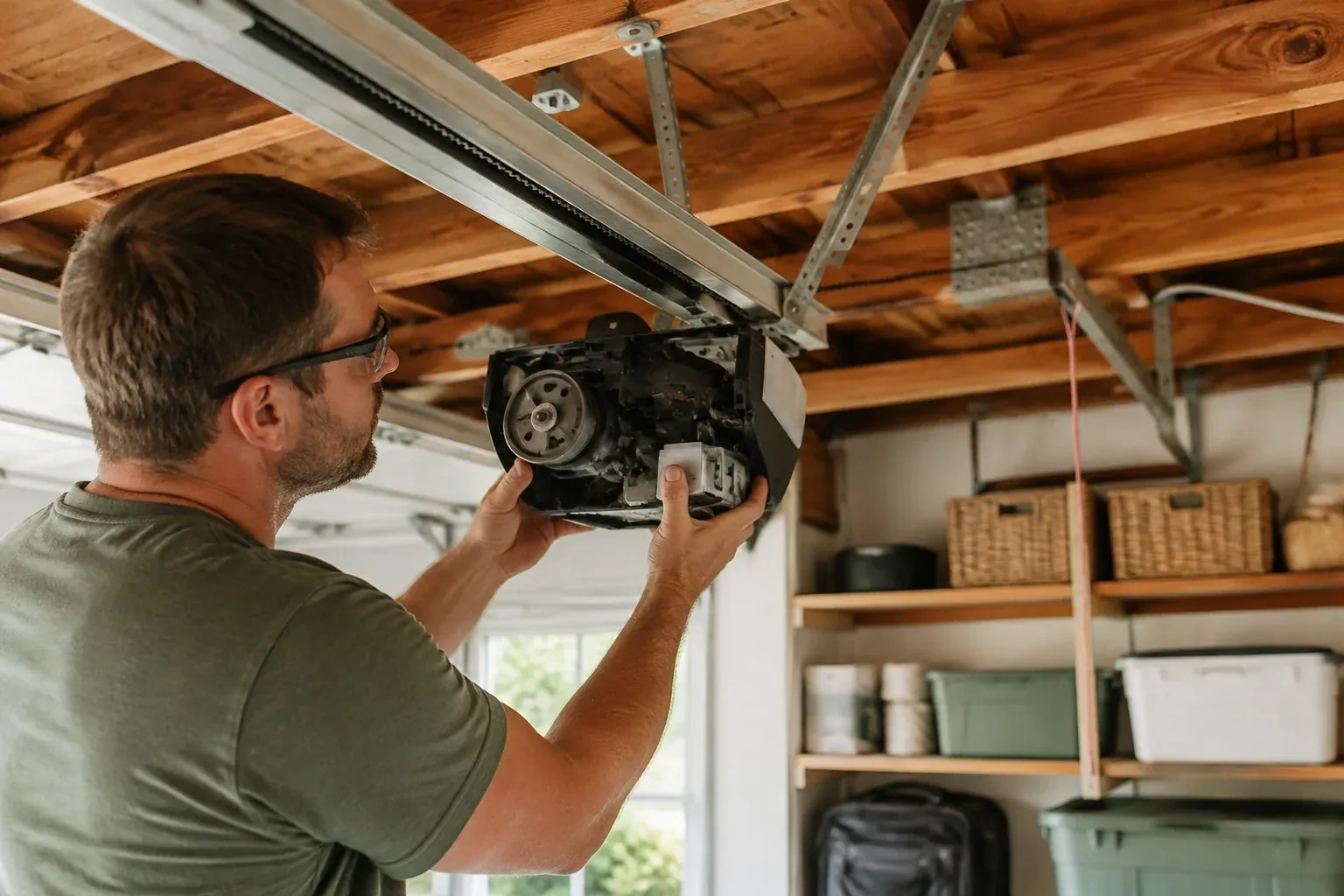
The most common belt-drive repair is the simplest: the belt has stretched over thousands of cycles and hangs slack under the rail. On its way up it slaps the rail and skips a tooth or two on the sprocket. Tension lives at the trolley, where a threaded shaft, a spring and a square nut set how much the belt is pulled taut. The technician sets that spring to the maker's stated length, confirms a little give at mid-span, then runs the door and listens. If the belt has stretched past what the adjuster allows, or the rubber has aged, a new belt goes in instead.
How the visit goesAfter the power came back you pulled the red cord to get the car out. Since reconnecting, the door stops short of the floor, and no amount of turning the limit adjustment brings it the rest of the way down.
Belt-Drive Opener Repair
How the visit goes
How tight is tight enough
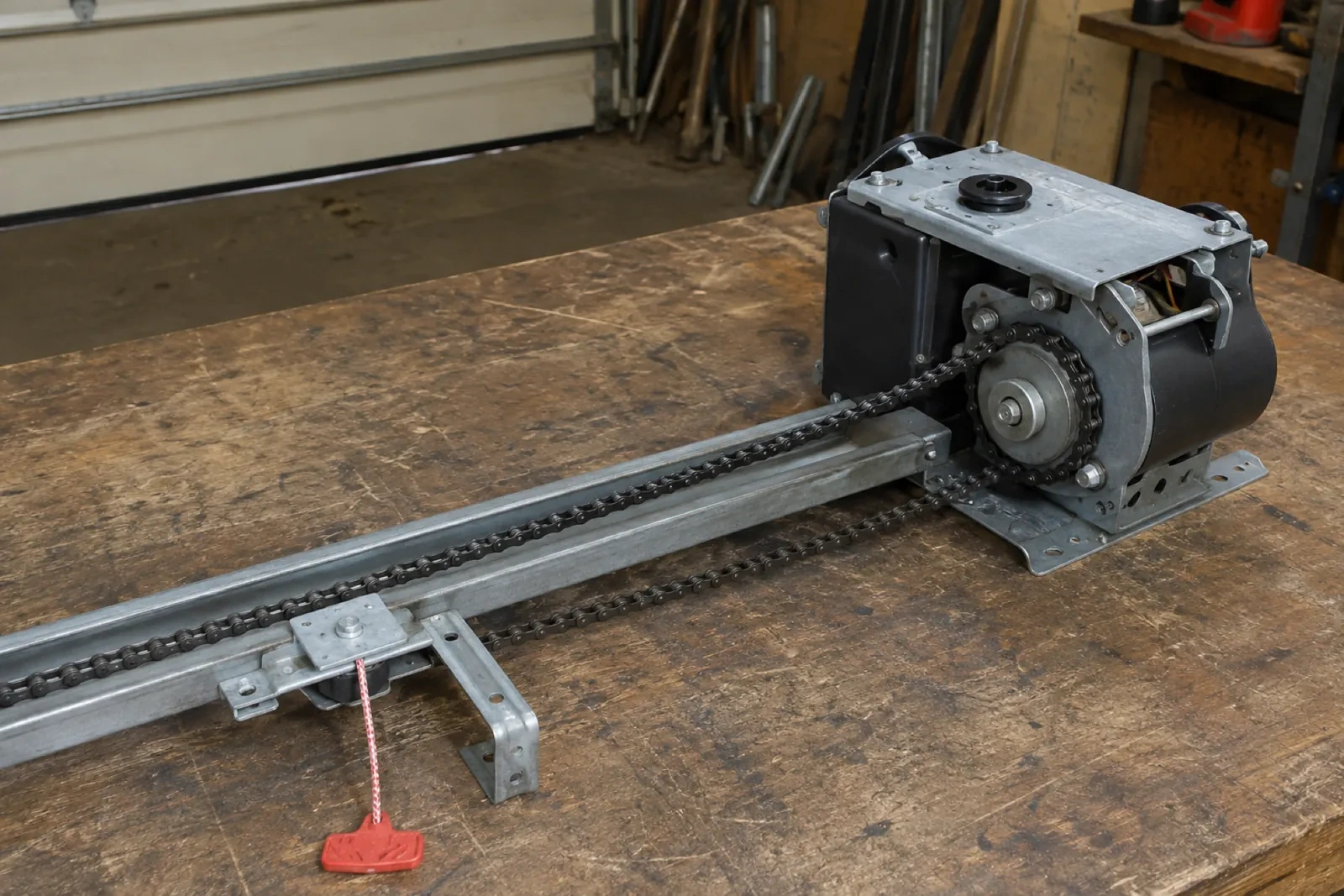
Belt tension is measured, not guessed. At the inner trolley a threaded shaft carries a coil spring and a square nut; turning the nut draws the belt tighter and compresses the spring, and the maker states the spring length that means the belt is right, roughly the width of a thumb. The technician checks that length, presses the belt at mid-span for a little give, and watches it run. A belt hanging below the rail is loose and will skip teeth. A belt pulled drum-tight makes sprocket noise, loads the motor bearings and wears the idler pulley. Both are corrected on the spot, and an adjuster wound to its end tells the technician the belt has stretched past saving.
Idler pulley and the front of the rail
A squeal or a belt tracking to one side leads to the idler pulley at the header end of the rail. With the belt slack, the pulley's axle bolt is removed, the worn pulley and its bearing come out of the rail end, and a new pulley goes in on a clean axle. The technician spins it by hand for smoothness, sights the rail to be sure the pulley sits square, and re-tensions the belt. Where the rail itself was bent or a hanger had let it sag, the rail is straightened or re-hung level before the belt is run. The belt edge that was fraying is inspected; if the cords are exposed, the belt is replaced too.
The hush is back
What you notice first is the sound, or the lack of it. A belt drive in good order starts softly, hums along the rail and eases to a stop, and after the repair it should sound the way it did the week it was installed. The clack of a loose belt, the squeal of a dry pulley and the growl of a stripped gear are gone because their causes are gone, not masked. Listen for that baseline over the next few weeks; a new noise arriving is the earliest warning you will get, and a belt drive tends to announce trouble months before it stops. A short call at that stage is a small adjustment.
Belt-Drive Opener Repair
In the van
Inner and outer trolley
Light grease for the drive gear
Belt tension spring and square nut
Rail hanger straps and fasteners
Garage-door lubricant for hinges and rollers
Belt-Drive Opener Repair
What affects the quote
Age and model of the operator
Parts for a current model are on the van. An older or less common operator may need a belt or trolley ordered to fit, which changes timing and sometimes the part.
Sensors and controls needing attention
Photo eyes out of alignment or too high, a wall control below the recommended height or a release handle out of reach are corrected during the visit and listed separately.
Gear and sprocket kit
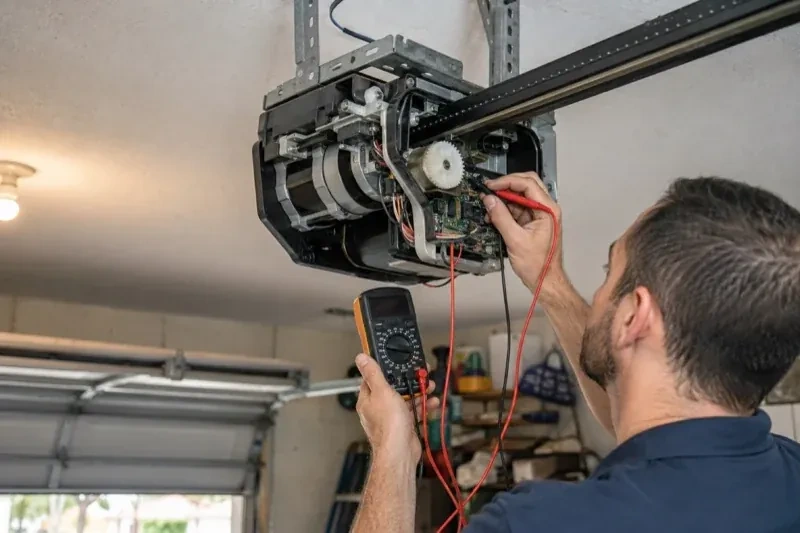
Shavings on the motor head mean the drive gear is stripping. Replacing the gear-and-sprocket set means opening the head unit, which is more time and a more substantial part than belt work alone.
What to have ready
- Can you send a photograph along the rail showing the belt, and one of the label?
- What is the belt doing: sagging, slapping, clicking, frayed, or hanging loose?
- Is the garage heated and attached to the house, or a cold detached one?
Belt-Drive Opener Repair: questions
QuestionsHow long does a belt-drive repair take?
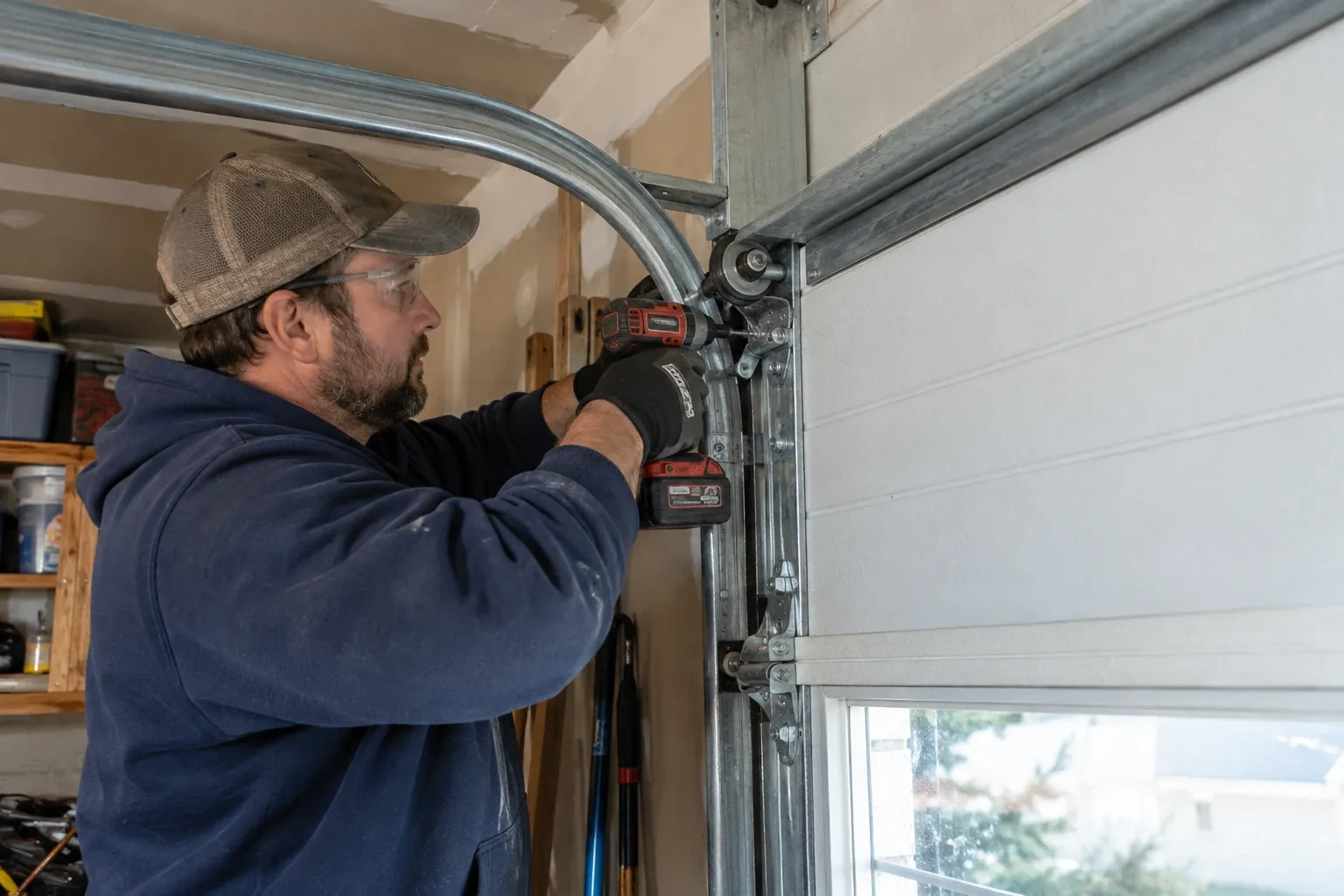
A tension adjustment with the safety tests is a short visit. Replacing the belt, trolley or idler pulley, then phasing the motor, relearning limits and running the reversal tests, is usually an hour or two. A gear-and-sprocket kit at the motor head takes longer because the head unit is opened. If the balance test turns up spring work, that is agreed as a separate job with its own time.
What is the idler pulley and why does it squeal?
It is the wheel at the header end of the rail that the belt wraps around on its return. It spins on a small bearing, and when that bearing dries or fails the pulley squeals on every cycle and can let the belt wander to one side and fray. Replacing the pulley is a modest job done with the belt slack, followed by re-tensioning.
The motor runs but the door stays still. What has happened?
Something between the motor and the door has let go. On a belt drive the usual suspects are a broken clip where the belt joins the trolley, a belt that has jumped off the sprocket or idler pulley, a trolley that failed to re-engage after the red cord was pulled, or a stripped drive gear inside the motor head, which leaves plastic shavings on the housing. Each is a specific repair.
Related services
- Chain-Drive Opener RepairThe motor runs, you can hear it working, but the door never moves.
- Garage Door Opener ReplacementThe remotes only work from the end of the driveway now, and one of them disappeared with a set of keys last month.
- Photo-Eye Sensor Alignment or ReplacementYou press the remote, the door drops a few centimetres, then climbs straight back to the top while the opener light blinks.