Springs · Henley
Extension Spring Replacement in Henley
The opener groans on the way up and the door slams the last foot on the way down, hard enough to rattle the windows.
In plain words
Extension springs are common on the detached garages behind older houses, where a low ceiling left no room for a torsion shaft, and those garages are rarely heated. Damp summers, hard frosts and salt carried in on the car pit the spring wire over the years, and a fatigued spring most often lets go on a cold morning when the steel is stiffest. Replacement fits a new pair rated for the door, renews the pulleys and cables that have rusted alongside them, adds containment cables where the original installation never had any, and leaves a door that lifts easily by hand when the power is out.
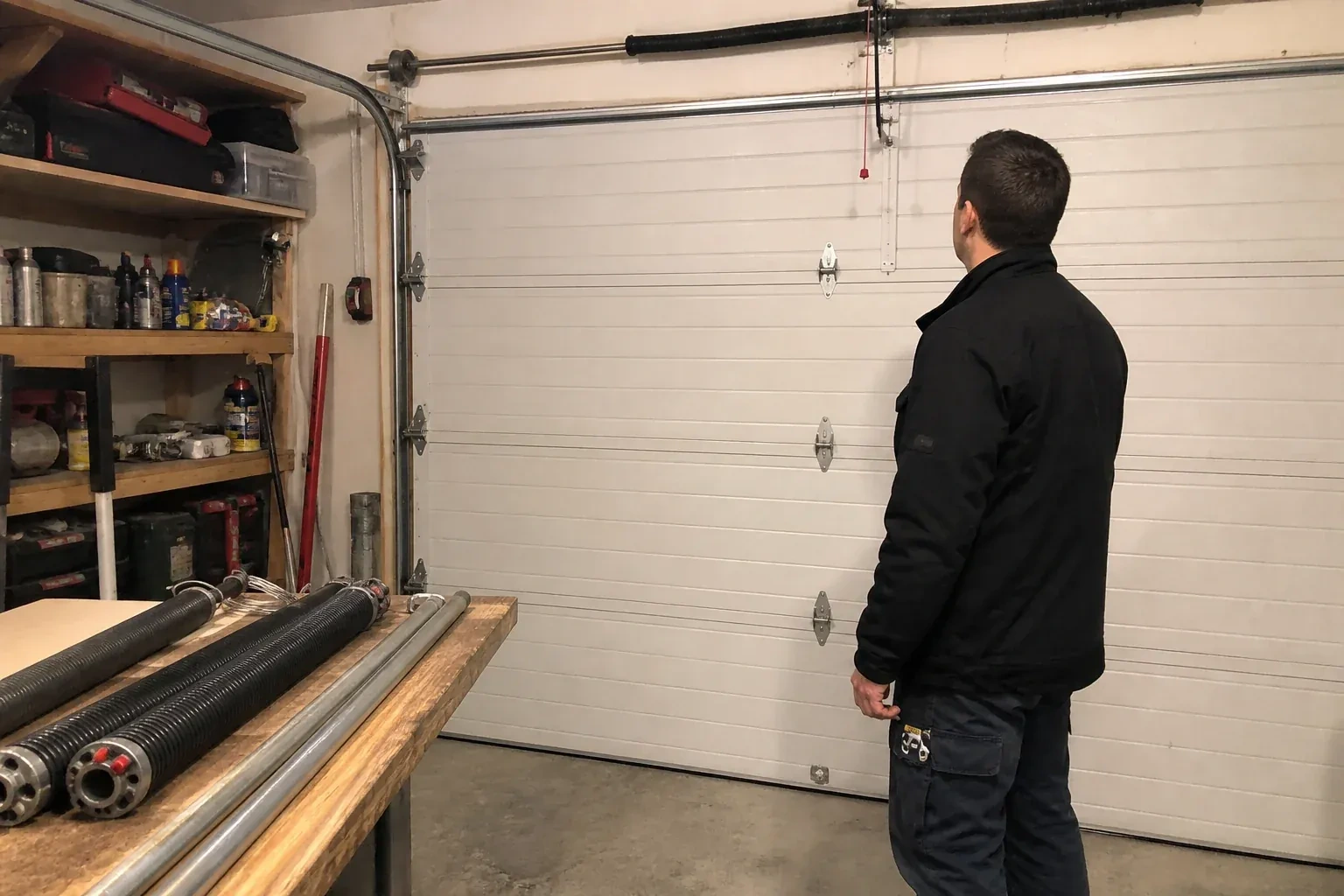
How the visit goesThe door climbs with the left corner ahead of the right, then twists as it turns into the ceiling track. Looking up, the spring on the right side is stretched longer than its partner, with daylight showing between the coils.
Extension Spring Replacement
How the visit goes
Weighing the door
Extension springs are chosen by the weight they are built to lift, so the door is weighed rather than guessed at. With the opener released and the springs disconnected or slack, the technician lowers the door onto a scale set on the floor under the bottom section and reads the figure. That number, together with the door's height, sets the spring rating and stretch length. The old springs are measured as a cross-check, but the scale wins if the two disagree, because a door can gain weight from new panels, insulation or a cladding added since the springs went on.
Balancing the door by hand
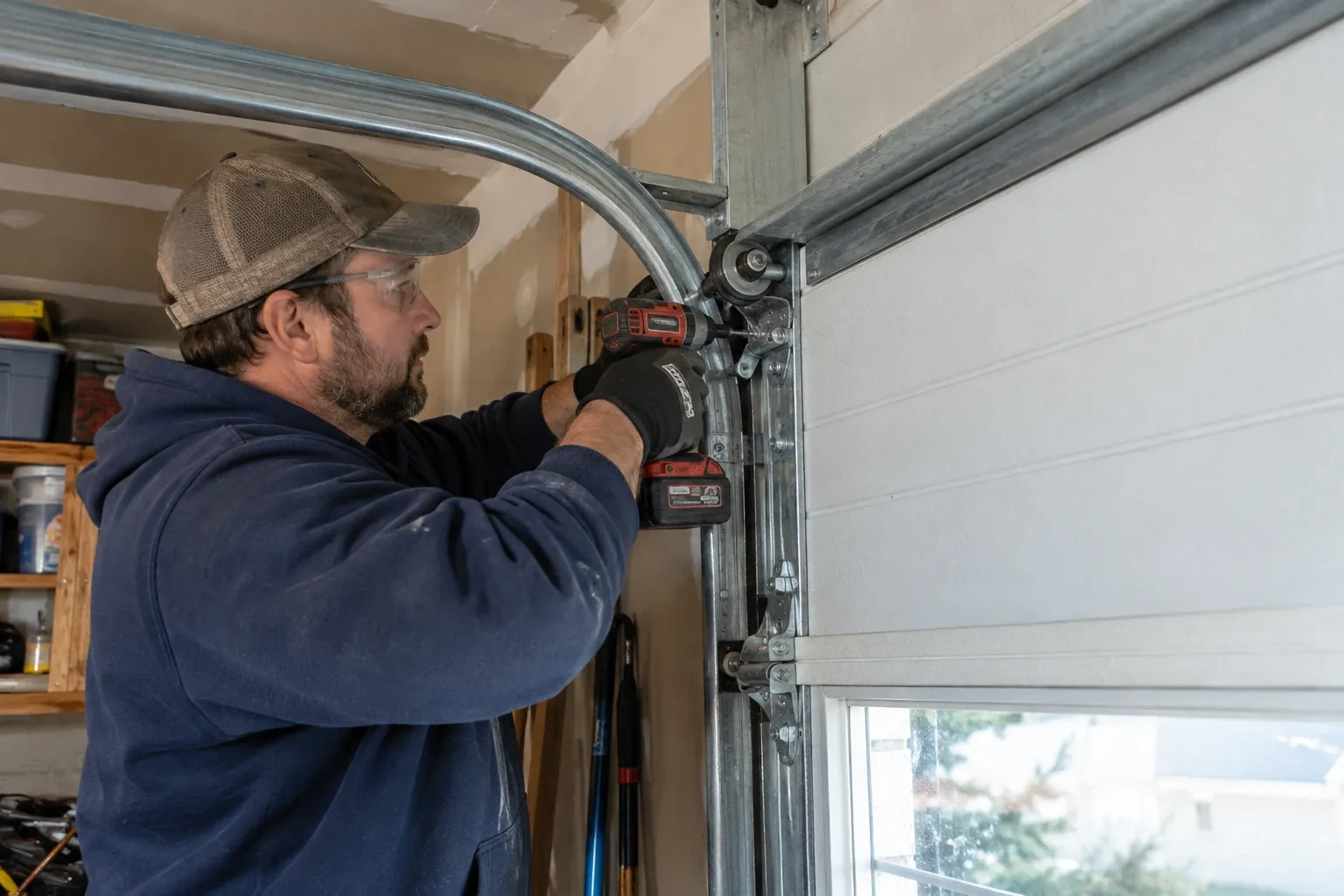
Balance is judged with the opener still disconnected. The technician lowers the door to the floor, then lifts it: it should rise with modest effort, stay put when let go at about waist height, sit steady when fully open, and come down under control rather than dropping. If it sinks, both springs need a little more stretch and each S-hook is moved one hole to take up cable; if it climbs on its own, one hole the other way. Adjustments are always made in pairs, with the door open and clamped again each time, so the two springs stay equal. Two or three rounds usually settle it.
A door that lifts as it was designed to
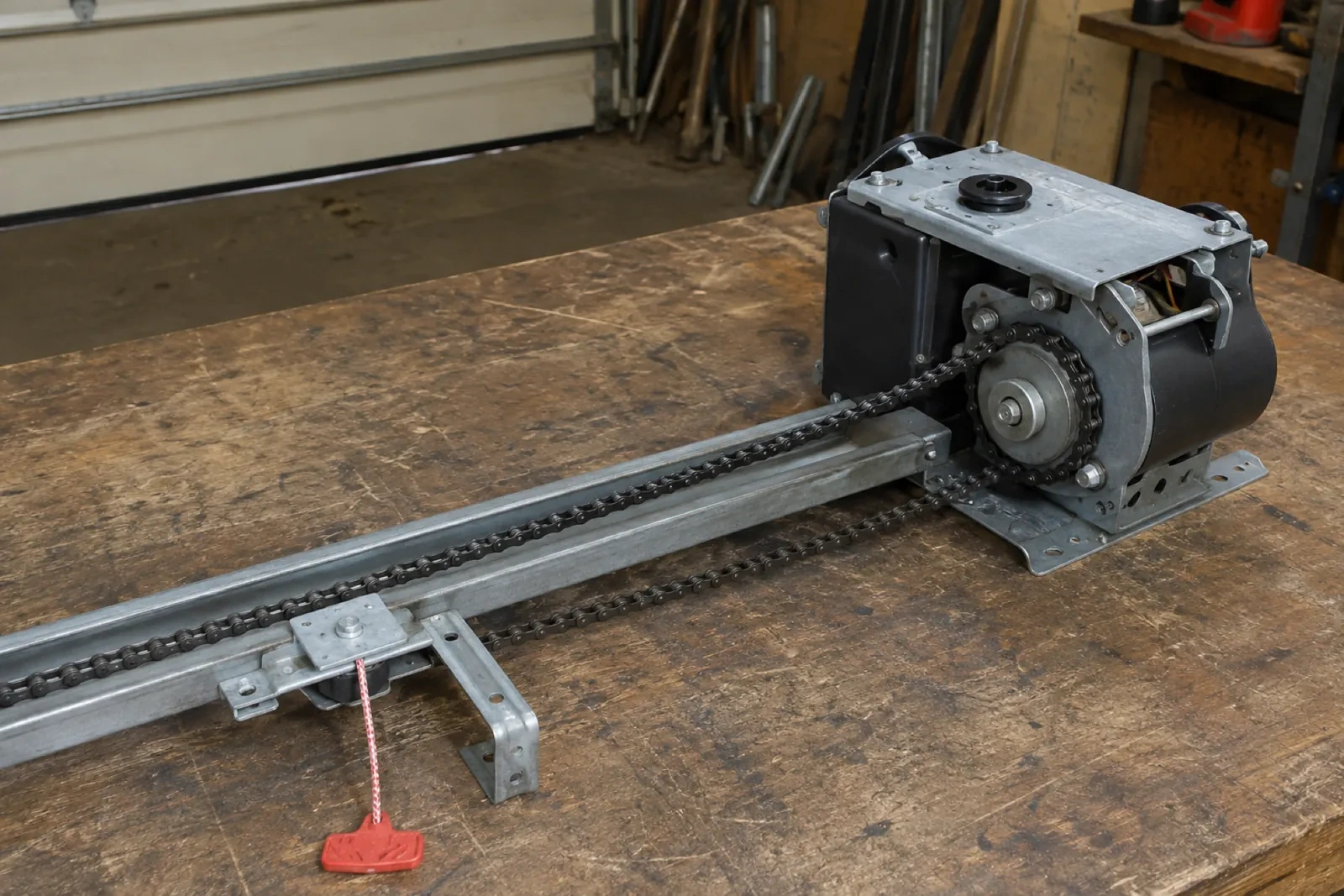
The difference is felt the first time you pull the release cord and lift the door yourself. It rises with one hand, pauses where you leave it, and comes down at the speed you lower it rather than dropping the last stretch. Under power, the opener runs without the strain in its note that had crept in as the old springs tired, and the door reaches the floor evenly along the seal. Both springs now stretch to the same length as the door closes, both pulleys turn without a squeal, and the cables lie in their grooves. A door in this condition puts little wear on the opener, which is good news for the motor.
Extension Spring Replacement
In the van
Bottom brackets and clevis pins
Garage-door spray lubricant
Track clamps or locking pliers
Rear spring hangers and angle iron
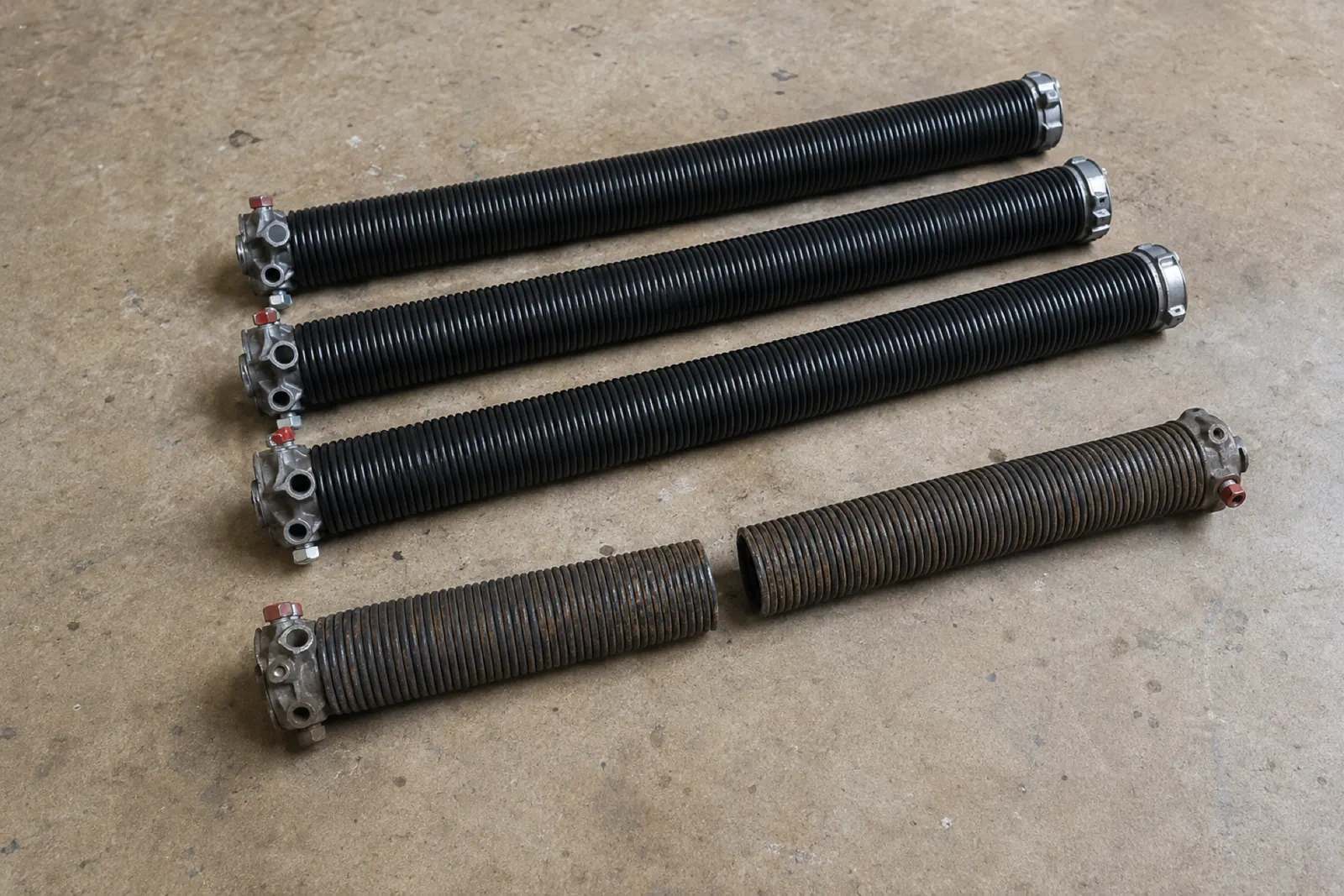
Extension springs, matched pair
Extension Spring Replacement
What affects the quote
Time of the call
An evening, weekend or holiday visit costs the same amount as a weekday daytime appointment for an extension-spring replacement. The technician confirms the exact figure once the springs, cables and door weight have been checked on site.
Rollers, hinges and bottom brackets found worn
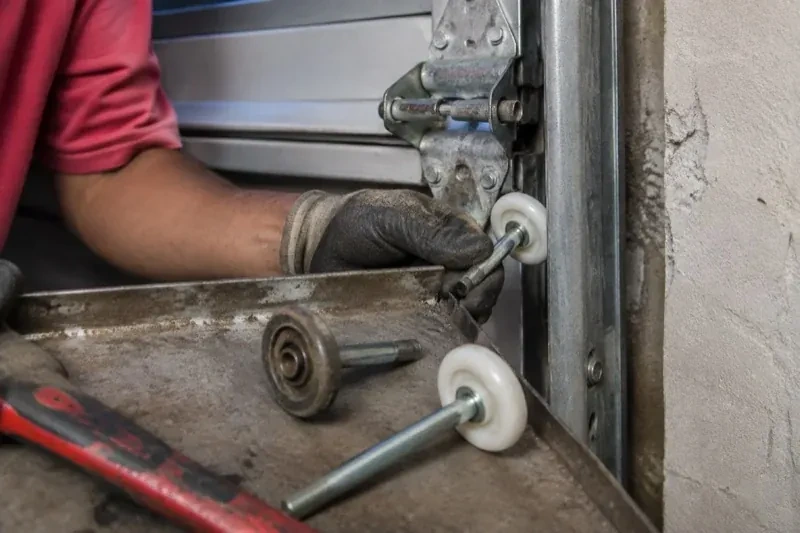
Cracked roller wheels, split hinges or a bottom bracket rusted at the cable pin are pointed out during the inspection and offered as optional items, since the door is already open and secured.
Weight added since the door went in
Insulation panels, windows or a wood overlay fitted after the original springs mean a heavier rating than the old pair. The door is weighed and the quote reflects the door as it is now.
What to have ready
- Is the door closed, fully open, or stuck partway?
- Is it a single or a double door, and what is it made of?
- Do you know how old the springs are or when they were last changed?
Extension Spring Replacement: questions
QuestionsWhy does the door slam down the last bit?
A door that drops the final stretch is telling you the springs are no longer holding it. As an extension spring loses its temper it gives less pull near the bottom of travel, where the door needs the most support, so the door falls that last foot. Fresh springs matched to the door's weight bring the door down under control and take that shock off the bottom section and the opener.
What does the paint colour on the end of the spring mean?
Manufacturers dab a colour on the end coil to indicate the spring's weight rating, which is a handy starting point. It is not the final word: a faded or repainted end coil tells you little, and the pair on an older door may have been a near match rather than the right one. The technician treats the colour as a hint and confirms the rating from the door's measured weight and the spring's own dimensions.
How do you know which springs my door needs?
By weight. Extension springs are rated for the weight they lift, so the technician releases the opener and weighs the door on a scale, then matches that figure and the door's height to a spring rating and stretch length. The old springs are measured as a check on wire size, coil diameter and length. Where the two disagree, the scale decides, since doors gain weight from added insulation or panels.
Related services
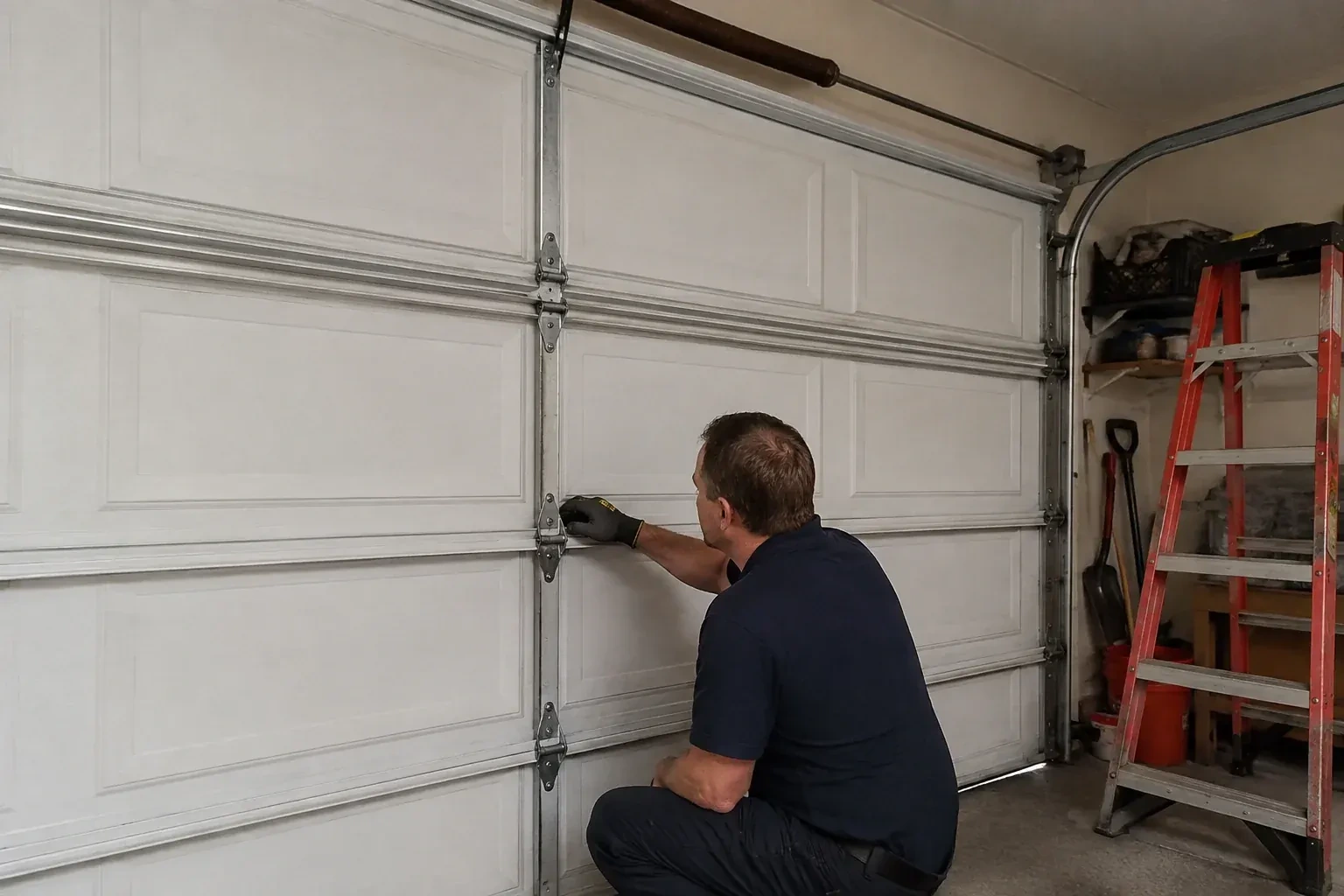
- Garage Door Hinge ReplacementOn the old wood door, one hinge has pulled away from the panel, dragging a screw and a chunk of soft timber with it.
- Garage Door Track Repair or ReplacementYou bought the house with a door that sticks near the top of its travel.
- Garage Door Cable ReplacementStanding inside with the door closed, you notice the cable on the right side near the floor has gone fuzzy.