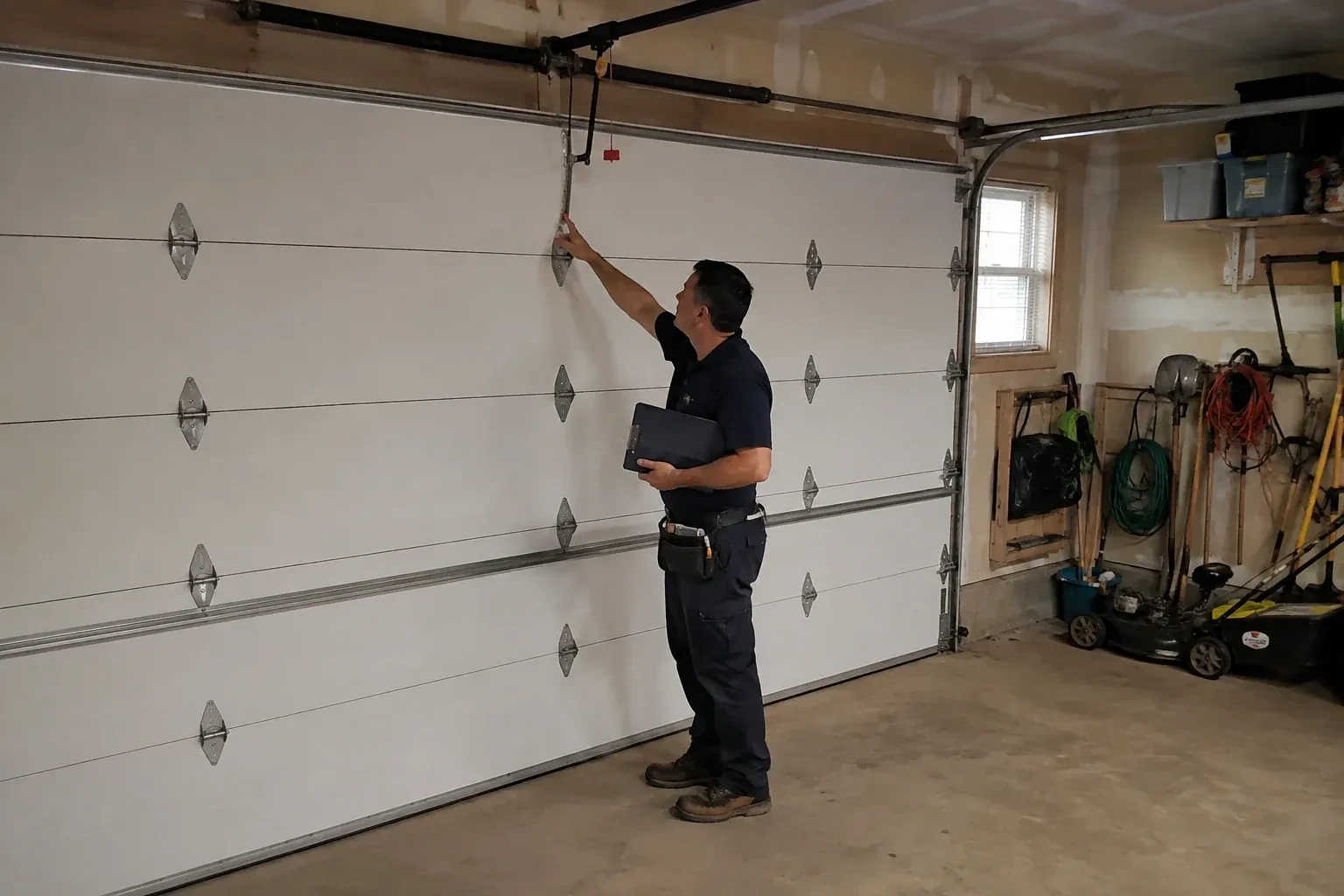
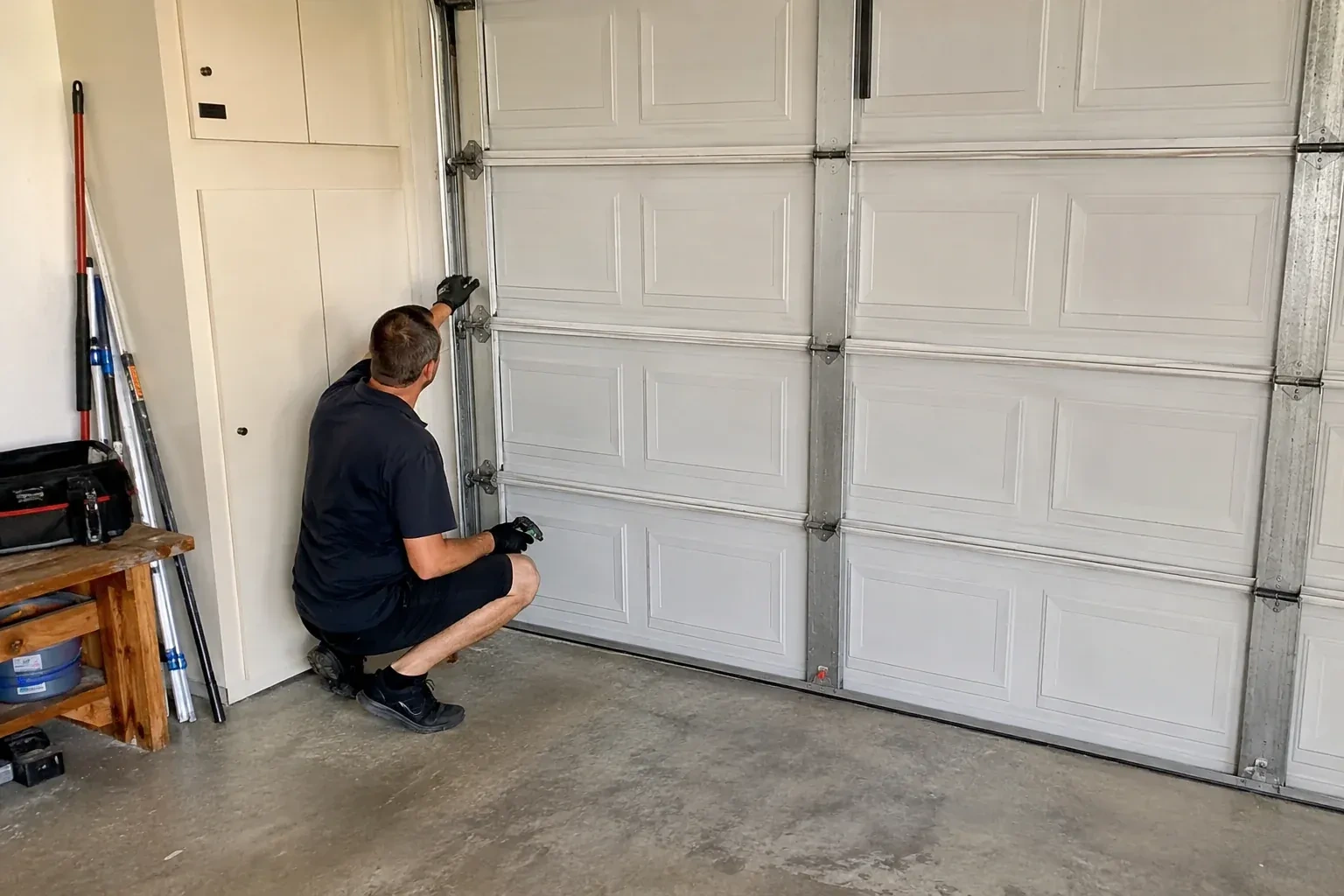
Repairs · Henley
Garage Door Tune-Up in Henley
On windy nights the door rattles in its frame, there is a line of daylight along one side, and the bottom seal has gone hard and flat.
In plain words
Garage doors here live through a wide swing of seasons, and a tune-up before winter pays for itself in smooth mornings. Cold thickens tired lubricant and stiffens steel, so a door that ran fine in September can groan in January. Rubber seals go hard, meltwater freezes the bottom seal to the slab, and road salt works on the lower hardware. The fall visit replaces old lubricant with a low-temperature product, treats the seals with silicone and checks the threshold, since a door frozen to the slab should be freed and dried rather than forced by the opener.
How the visit goesTwice this week the door started closing, stopped a metre from the floor and reopened on its own. One of the little sensor lights near the floor blinks instead of glowing steady, and the wall button has to be held to close it.
Garage Door Tune-Up
How the visit goes
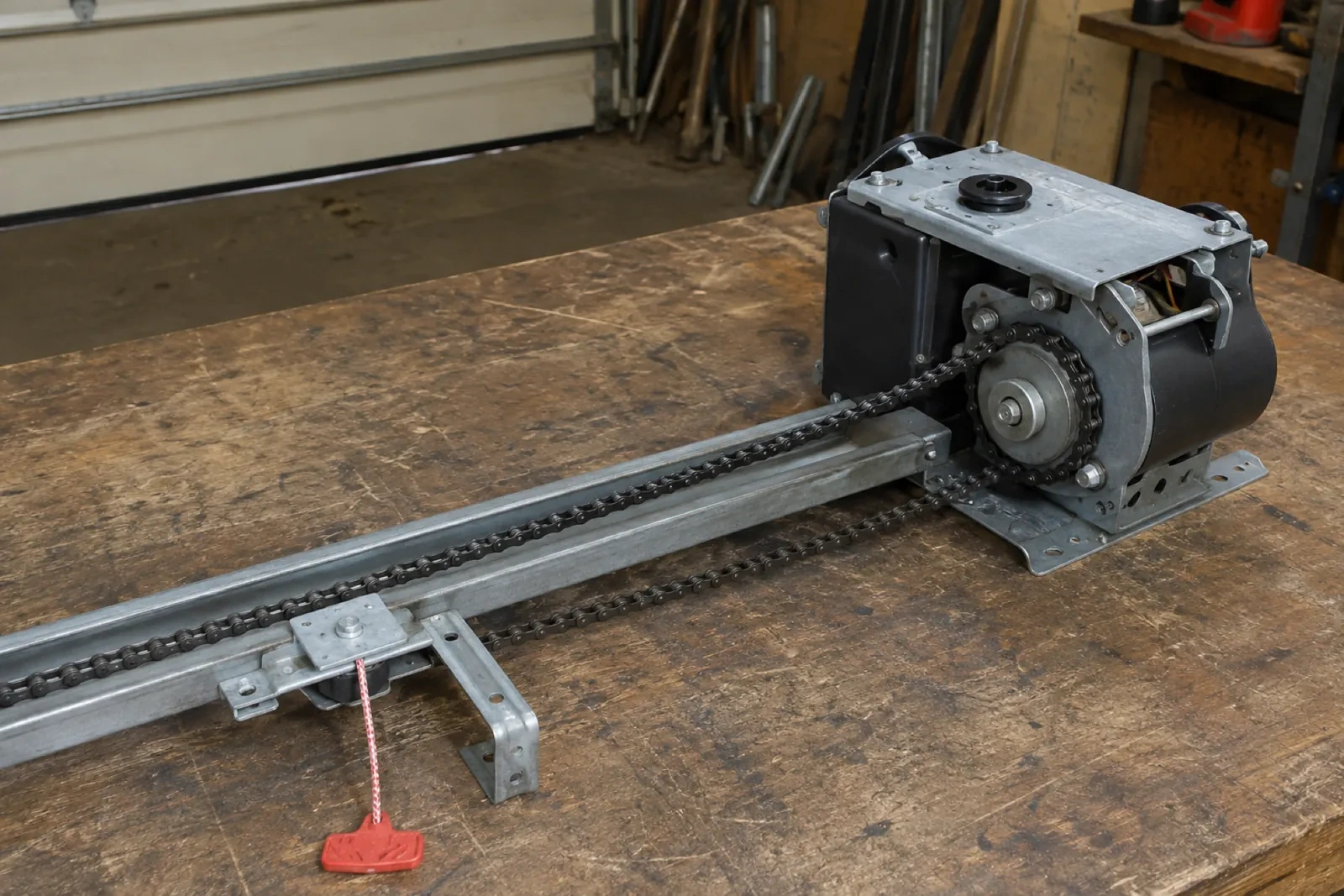
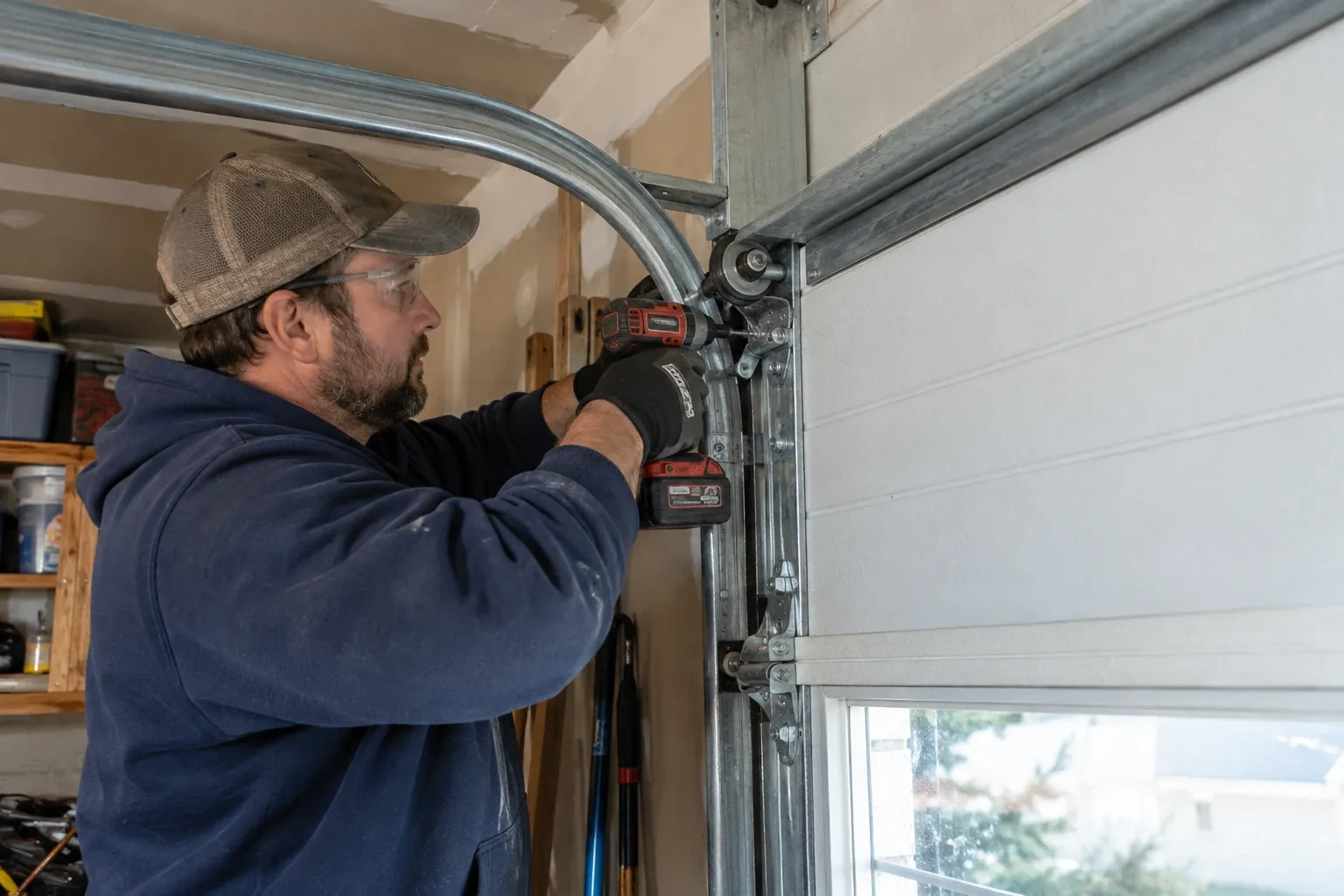
The opener's connections and safety devices
The opener is inspected as part of the door system, not as a separate appliance. The technician checks that the rail is firmly attached at the header and the ceiling hangers, that the chain or belt has the right sag, that the trolley and door arm are not worn or bent, and that the arm sits at the angle the manufacturer intends when the door is closed. Photo-eyes are located and their height measured, since the beam belongs no higher than about 15 centimetres off the floor. Indicator lights are read: steady means aligned, blinking means the pair are not seeing each other. The wall control and the red manual release are confirmed present and reachable.
Tightening what the door shook loose
A garage door moves hundreds of kilograms of steel through a curve twice a day, and the vibration works on every screw. The technician goes back along the list made during inspection and tightens hinge screws, track bolts, bracket lags and the fasteners at the opener header and rail. Stripped screws are replaced with the next size, and missing ones are filled. Track brackets are snugged with the roller-to-track gap preserved so nothing binds. The bottom brackets and anything anchored to the springs are deliberately left alone, since they hold the door's weight under tension; if one of those is loose it becomes a separate job with the tension safely released first.
A door you hear less and trust more
The most noticeable change is the sound. With the hinge pins and roller bearings lubricated and the loose hardware tightened, the squeal and the rattle that woke the household are gone or reduced to a low hum of rollers in a clean track. The door starts without the shudder and lands on the floor with a soft contact instead of a slam. Because the technician ran the same cycle before and after the work, you can hear the difference for yourself before they leave, and the sounds that remain, if any, are explained: what they are, which part they come from and whether that part is worth replacing now or watching for a season.
Garage Door Tune-Up
In the van
Replacement steel or nylon rollers
Socket set and drivers
Lag screws for brackets and header
Locking pliers or C-clamps
Replacement hinges
Garage Door Tune-Up
What affects the quote
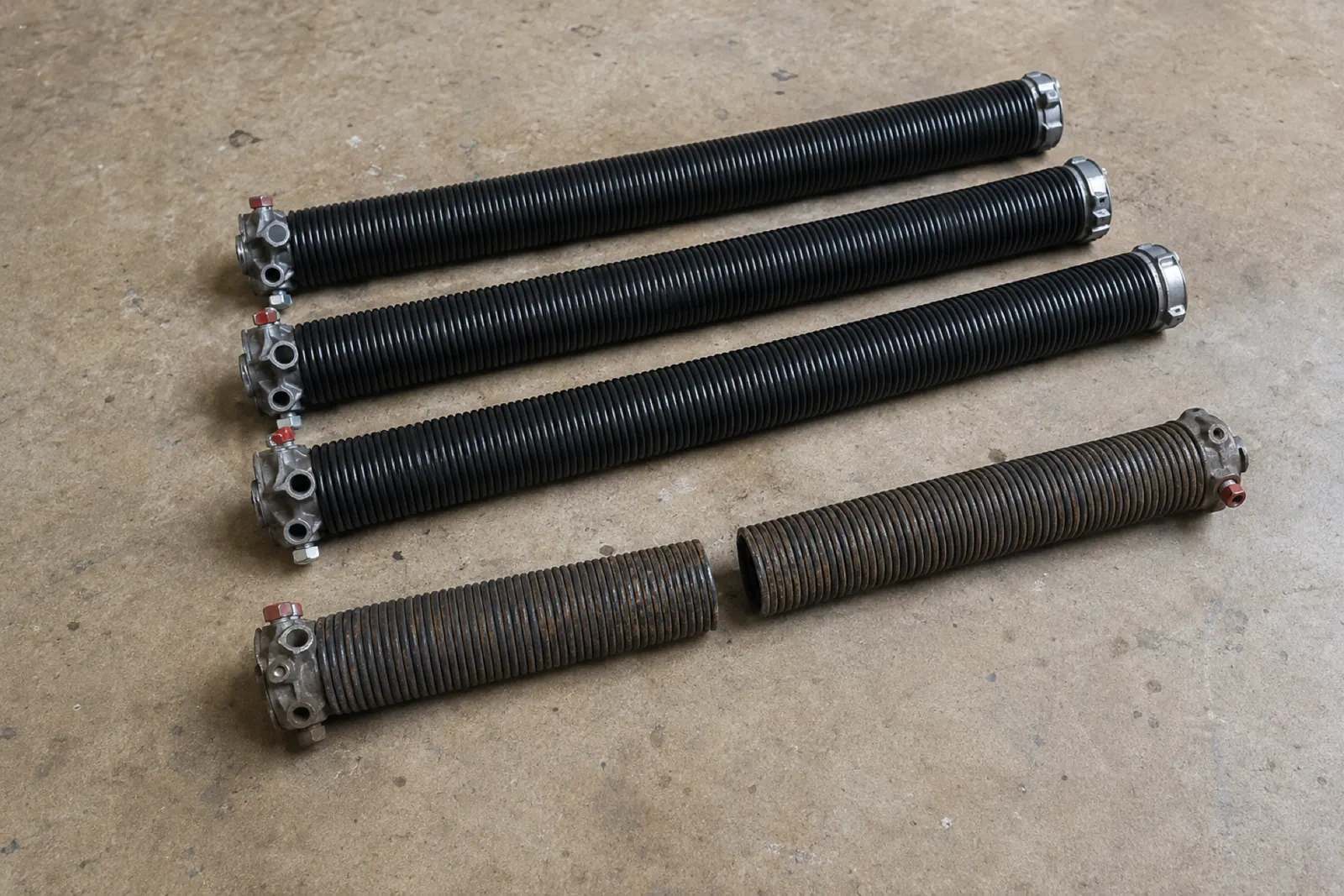
Torsion or extension springs
Torsion springs above the header and extension springs beside the tracks are inspected differently, and extension systems have pulleys and safety cables that add items to the checklist.
Type of opener
Chain, belt, screw and wall-mounted jackshaft openers each have their own tension checks and lubrication points, and older units take longer to set for travel and force than newer ones.
Age of the door and opener
Older hardware may need fasteners in sizes no longer standard, and an opener without photo-eyes prompts a conversation about entrapment protection that is quoted separately from the tune-up.
What to have ready
- Can you lift the door by hand with the opener disconnected, and does it stay up?
- Has the door been struck by a vehicle or damaged in a storm?
- What have you noticed: noise, shaking, hesitation, slamming, or reversing on its own?
Garage Door Tune-Up: questions
QuestionsWhat is the balance test and why does it matter so much?
With the door closed, the opener is disconnected using the red release handle and the door is lifted by hand. A balanced door rises with modest effort, stays fully open and holds still about a metre off the floor. The springs are meant to carry nearly all the weight so the opener only guides the door. A heavy or sinking door means the opener is lifting weight it was not built to lift, wearing its gear and making the reversal system less reliable.
What information helps when I book?
The door type and rough size, single or double; the opener brand or a photo of its label; what you have noticed, such as noise, shaking, hesitation, slamming or reversing, and whether it is worse in cold weather; whether the door has been struck by anything; and whether the springs are above the door or along the sides. None of this is required, but each detail helps the right parts and tools arrive with the technician.
Which lubricant is right for a garage door?
A silicone-based or white lithium garage door lubricant, sold for the purpose. Penetrating oils and general sprays are thin, attract dust and are gone in weeks; heavy grease traps grit. For the rubber bottom seal and weatherstrip, use only a silicone spray, since petroleum products attack rubber and make it brittle. Nylon rollers with sealed bearings need no lubricant, while ones with an exposed bearing can need a touch where their own maker calls for it. A small amount on each point, worked in by moving the door, is enough.
Related services
- Off-Track Garage Door ResetA delivery van backed into the shop's overhead door this afternoon.
- Garage Door Panel ReplacementA stray ball went through one of the window panes in the top section.
- Garage Door Bottom Seal ReplacementThe gap under the door is a finger wide at one end and nothing at the other.