Repairs · Mississauga Beach
Garage Door Tune-Up in Mississauga Beach
On windy nights the door rattles in its frame, there is a line of daylight along one side, and the bottom seal has gone hard and flat.
In plain words
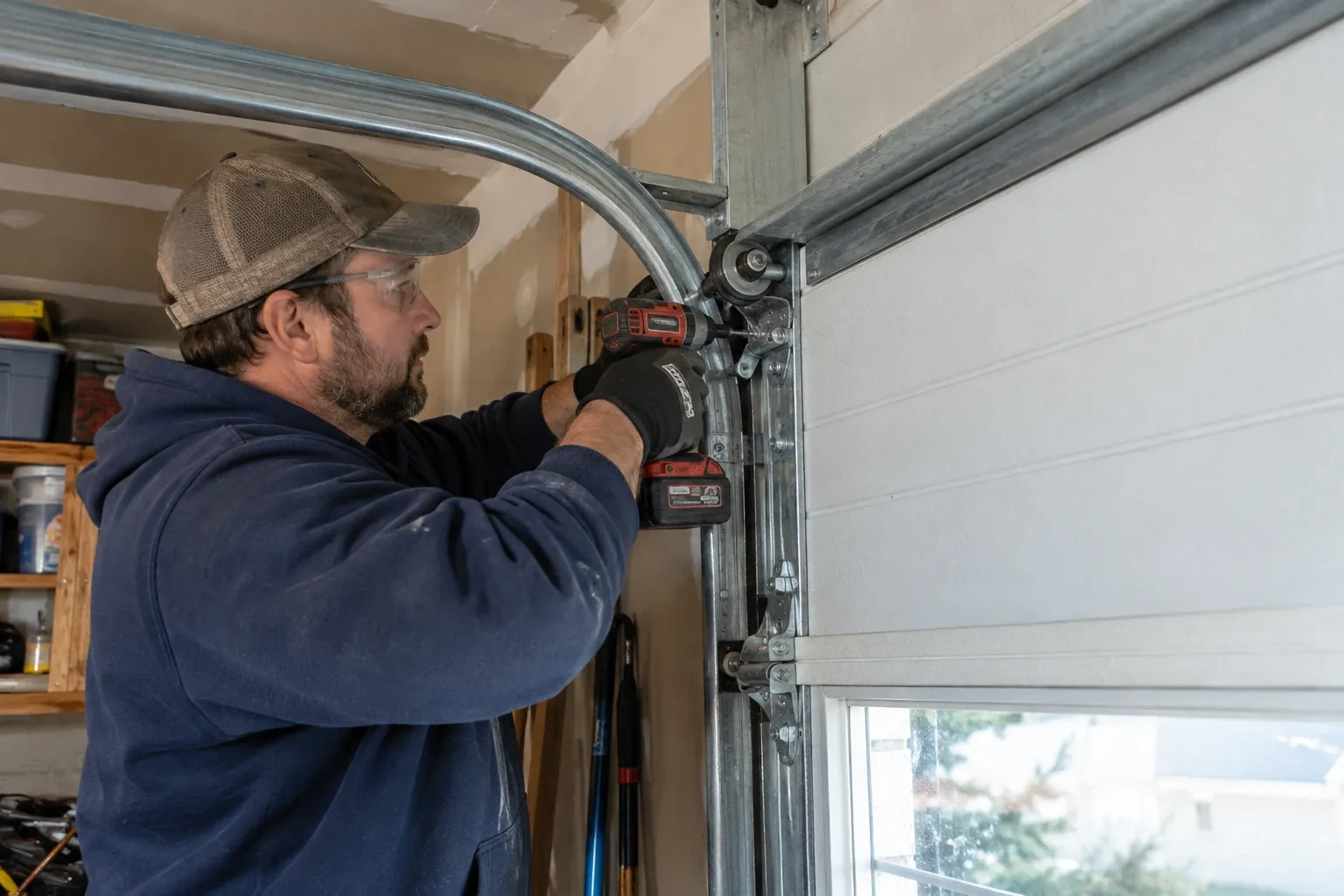
Most of a tune-up's noise reduction comes from lubrication, and its value comes from putting the lubricant where it belongs. Hinge pins, steel roller bearings, spring coils, the bearing plates at the torsion shaft ends and the lock all get a silicone- or lithium-based garage door lubricant. The tracks do not; a coated track collects grit and makes rollers slide rather than roll. Nylon tires stay dry too, though an exposed nylon-roller bearing gets a touch where its maker calls for it. Rubber seals get a silicone spray and never a petroleum product. Done this way, the door runs quieter and the parts last longer.
How the visit goesSince the first cold snap the door has been sluggish. It climbs slowly, hesitates near the top and the opener motor sounds strained. On the coldest mornings it opens a hand's width, thinks about it, and comes back down.
Garage Door Tune-Up
How the visit goes
Feeling the balance by hand
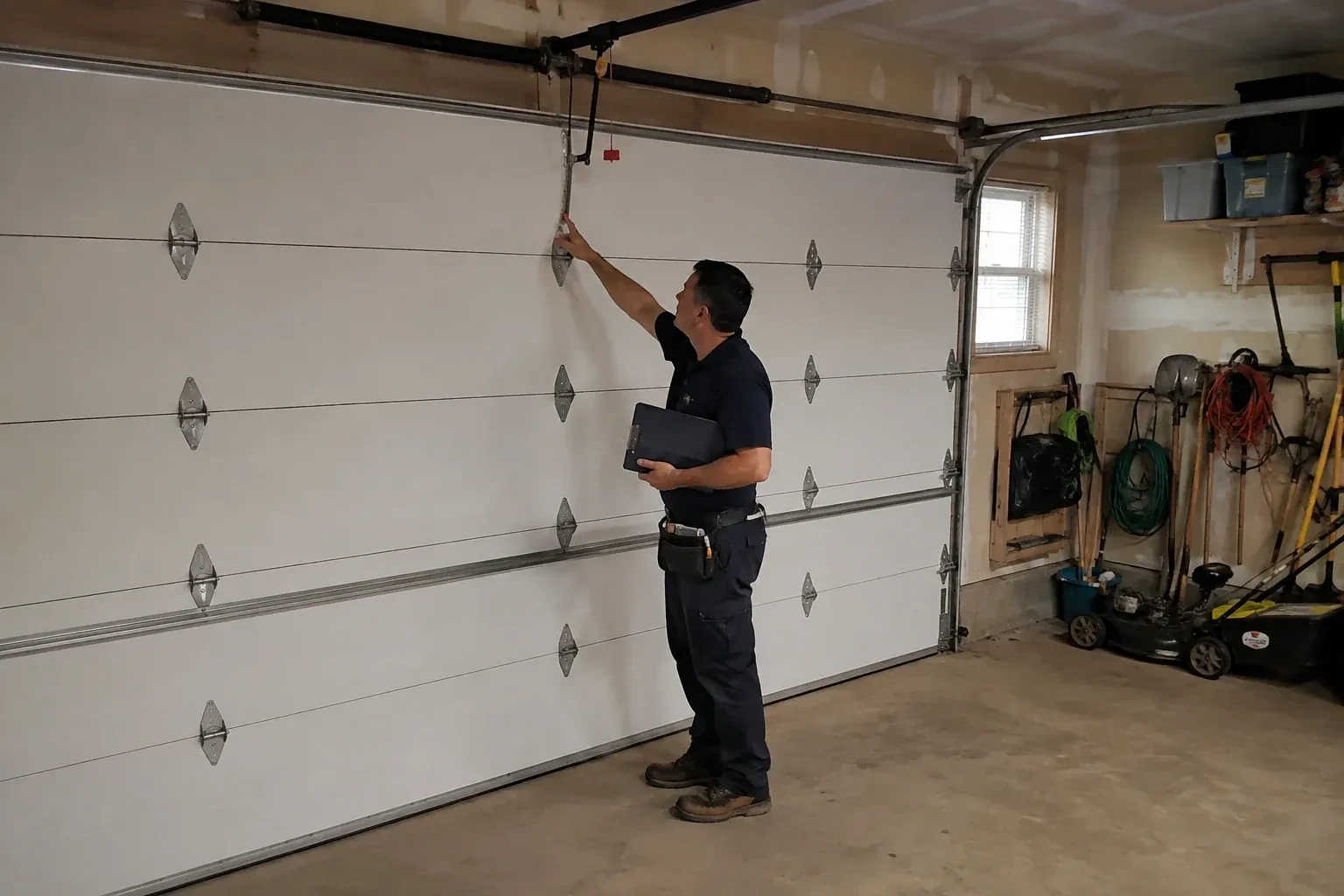
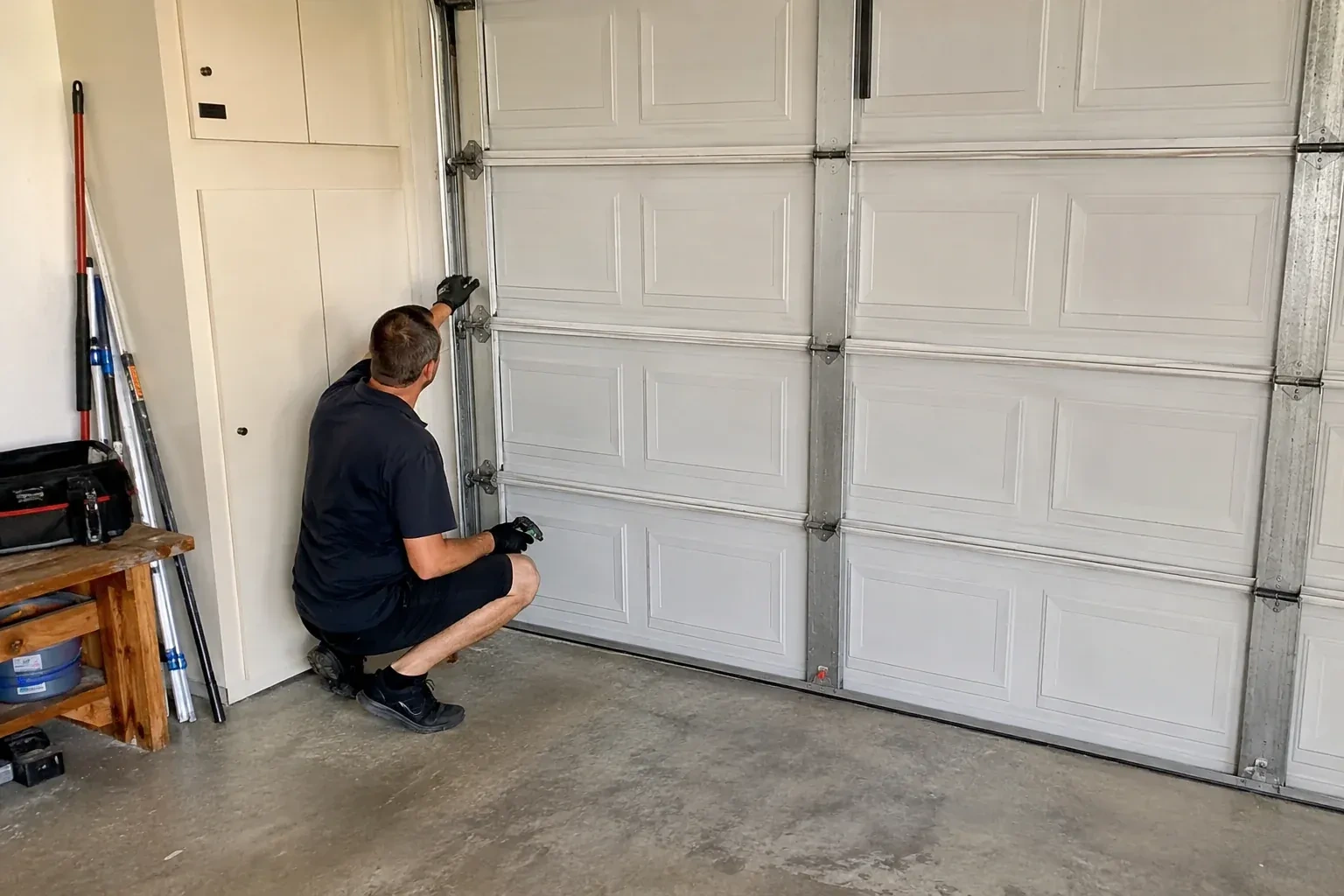
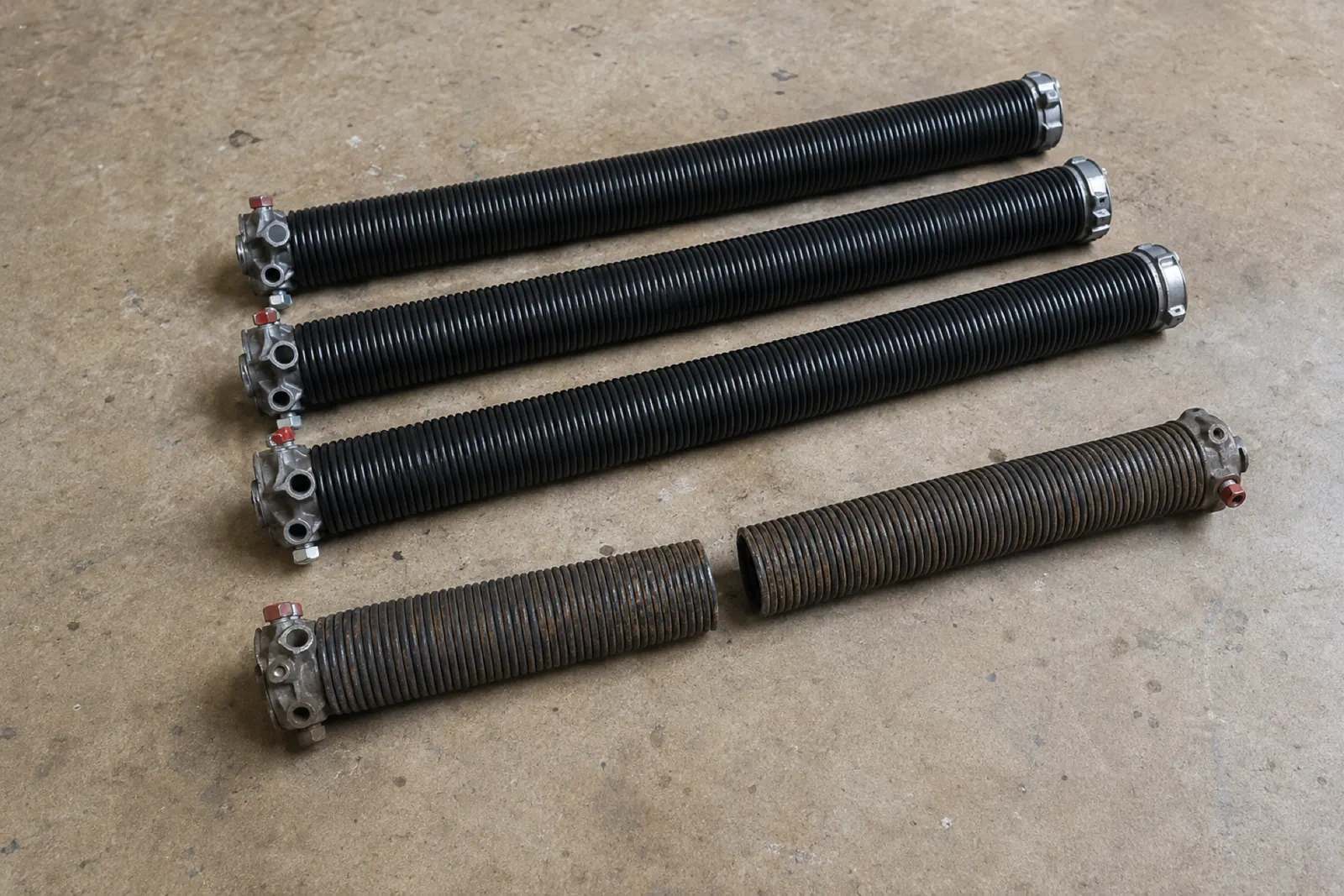
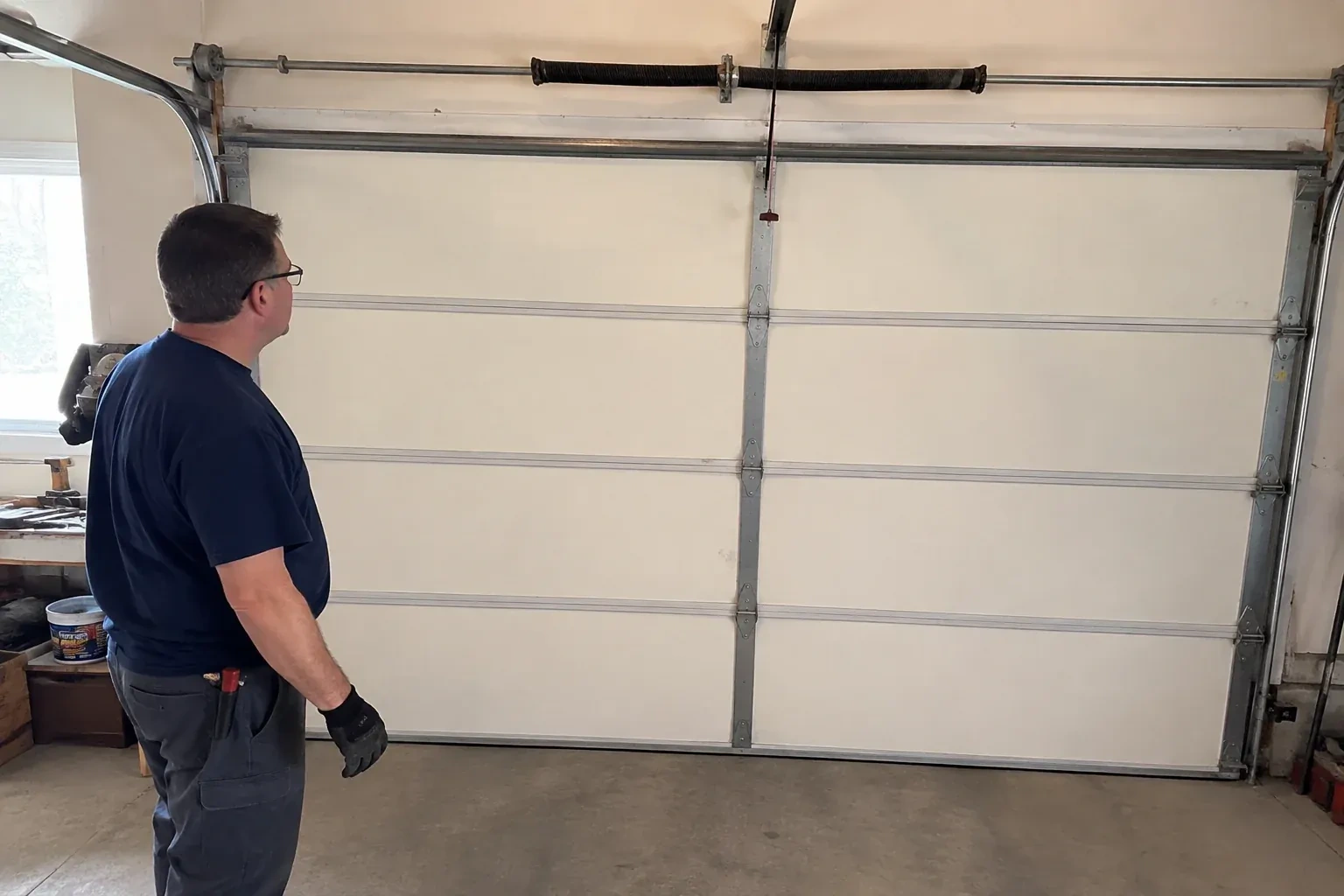
The door is disconnected from the opener with the red release handle, and the technician lifts it by hand, gripping only the handles or a safe edge. A properly balanced door rises with modest effort, stays fully open on its own and holds still when left about a metre off the floor. A door that sinks back down, or that takes real strength to raise, has springs that have lost tension and an opener that has been carrying weight it was not designed for. This check takes a minute and decides more than any other: it tells the technician whether the tune-up can proceed as maintenance or whether spring work needs to be quoted first.
Chain, belt, rail and trolley
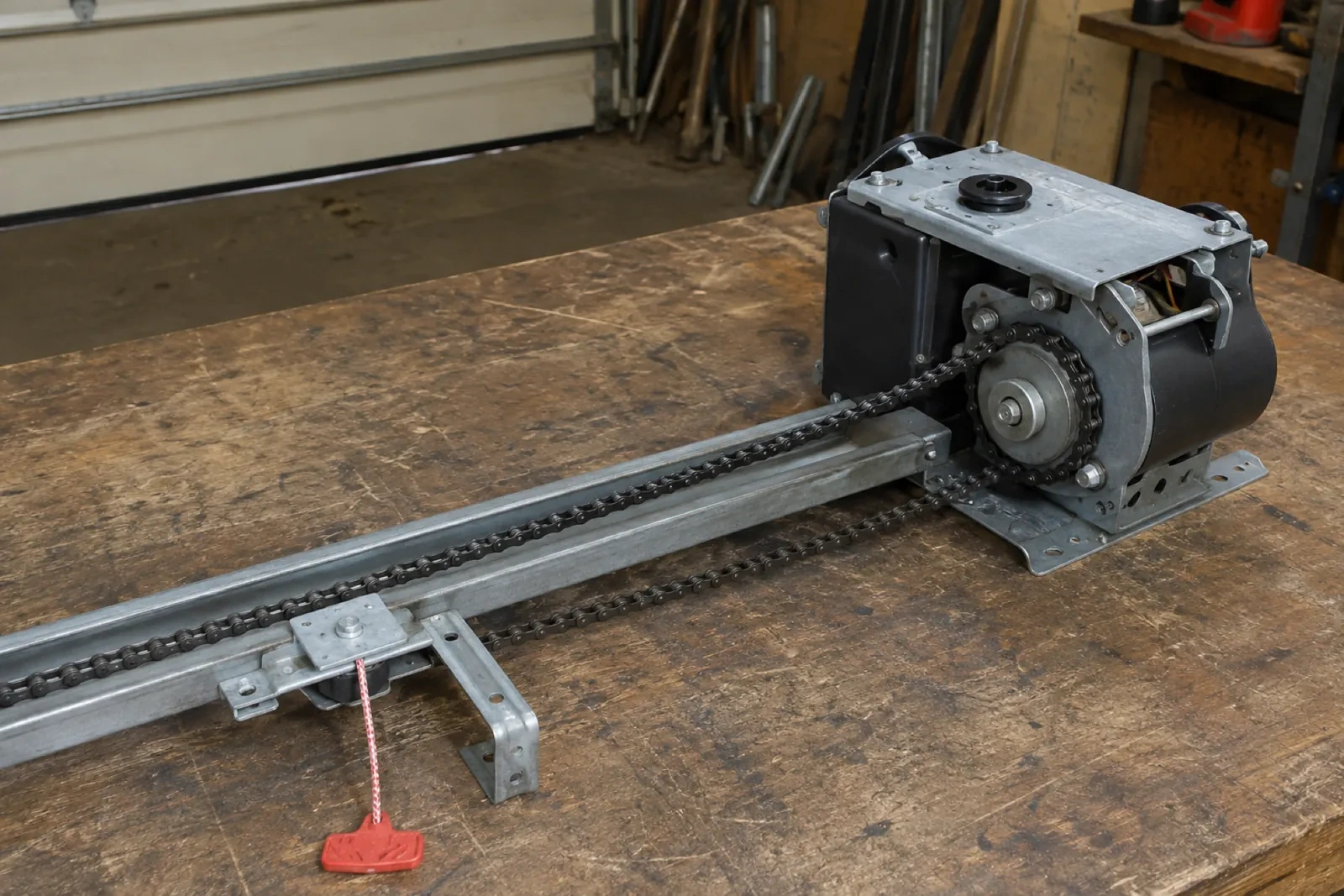
On a chain-drive opener the technician sets the chain so it neither sags onto the rail nor pulls taut, following the maker's measurement at the midpoint, and lubricates the chain and rail only where that maker calls for it. A belt drive is checked for tension, cracking and fraying. The trolley is inspected for wear where it rides the rail, the release lever is worked to confirm it disengages and re-engages cleanly, and the door arm is checked for straightness and secure pins at both ends. Rail hangers are tightened so the whole assembly stops shaking when the door starts and stops. This quiets the ceiling and takes strain off the motor's drive gear.
Care between visits
A tuned door stays tuned longer with a little attention from you. Every few months, put a small amount of the same silicone- or lithium-based garage door lubricant on the hinge pins and roller bearings and work the door a few times. Wipe the tracks clean and leave them dry. Keep the photo-eye lenses clear of dust and cobwebs, and keep bins and bicycles from leaning on their brackets. Rinse the door and the lower hardware after winter and treat the seals with silicone spray. Listen once a month as the door runs; a new sound is easier to address early. Anything to do with springs, cables or bottom brackets is left for the technician.
Garage Door Tune-Up
In the van
Replacement steel or nylon rollers
Socket set and drivers
Lag screws for brackets and header
Locking pliers or C-clamps
Replacement hinges
Garage Door Tune-Up
What affects the quote
Upgrades you choose on the day
Quieter nylon rollers, a new bottom seal profile, a keypad or a battery backup for the opener are options some customers add while the technician is there, each priced as a separate line.
Condition of rollers and hinges
Worn rollers or a cracked hinge found during inspection can be replaced on the spot if you choose, and each replaced part is listed as its own line on the quote.
Type of opener
Chain, belt, screw and wall-mounted jackshaft openers each have their own tension checks and lubrication points, and older units take longer to set for travel and force than newer ones.
What to have ready
- Can you lift the door by hand with the opener disconnected, and does it stay up?
- What have you noticed: noise, shaking, hesitation, slamming, or reversing on its own?
- Where in the door's travel does the problem happen?
Garage Door Tune-Up: questions
QuestionsWhat is the balance test and why does it matter so much?
With the door closed, the opener is disconnected using the red release handle and the door is lifted by hand. A balanced door rises with modest effort, stays fully open and holds still about a metre off the floor. The springs are meant to carry nearly all the weight so the opener only guides the door. A heavy or sinking door means the opener is lifting weight it was not built to lift, wearing its gear and making the reversal system less reliable.
What information helps when I book?
The door type and rough size, single or double; the opener brand or a photo of its label; what you have noticed, such as noise, shaking, hesitation, slamming or reversing, and whether it is worse in cold weather; whether the door has been struck by anything; and whether the springs are above the door or along the sides. None of this is required, but each detail helps the right parts and tools arrive with the technician.
Which lubricant is right for a garage door?
A silicone-based or white lithium garage door lubricant, sold for the purpose. Penetrating oils and general sprays are thin, attract dust and are gone in weeks; heavy grease traps grit. For the rubber bottom seal and weatherstrip, use only a silicone spray, since petroleum products attack rubber and make it brittle. Nylon rollers with sealed bearings need no lubricant, while ones with an exposed bearing can need a touch where their own maker calls for it. A small amount on each point, worked in by moving the door, is enough.
Related services
- Off-Track Garage Door ResetA delivery van backed into the shop's overhead door this afternoon.
- Garage Door Panel ReplacementA stray ball went through one of the window panes in the top section.
- Garage Door Bottom Seal ReplacementThe gap under the door is a finger wide at one end and nothing at the other.