Repairs · Niagara-on-the-Lake
Garage Door Bottom Seal Replacement in Niagara-on-the-Lake
The gap under the door is a finger wide at one end and nothing at the other.
In plain words
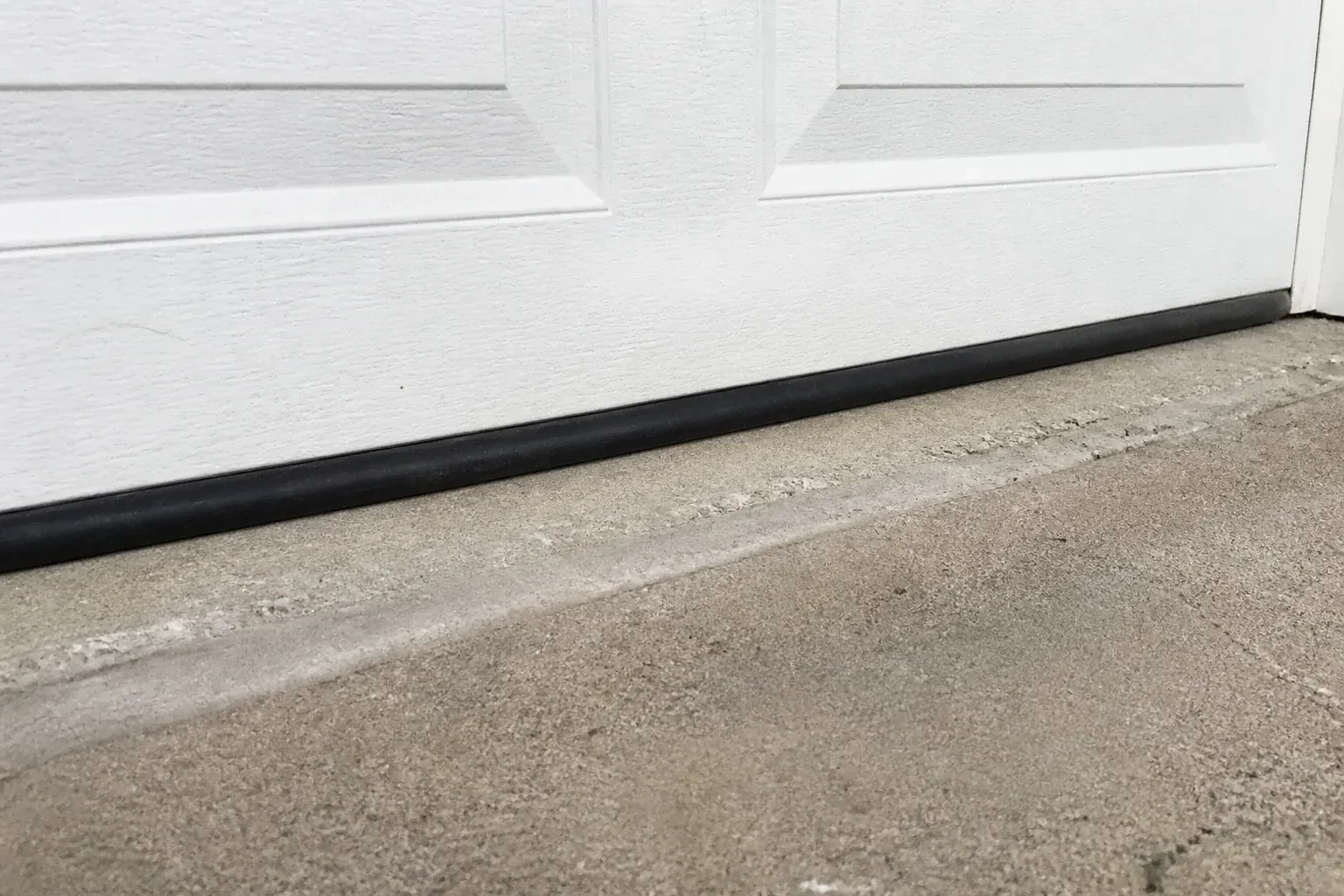
Bottom seals come in a handful of profiles, and the retainer on your door decides which one fits. A T-style seal has T-shaped edges that slide into a single or double channel; a bead seal has rounded edges for the bead channels found on many older steel doors; a bulb or U-style seal is a larger tube that compresses further and suits rough or dished floors. The technician measures the channel spacing and the door width, then picks the profile, height and material to match. A correctly matched seal slides home, stays put through thousands of cycles and closes evenly along its whole length.
How the visit goesWith the door closed and the lights off, a bright line of daylight runs along the floor from one side to the other. Leaves and grit have blown in under it and gathered in a neat drift against the back wall.
Garage Door Bottom Seal Replacement
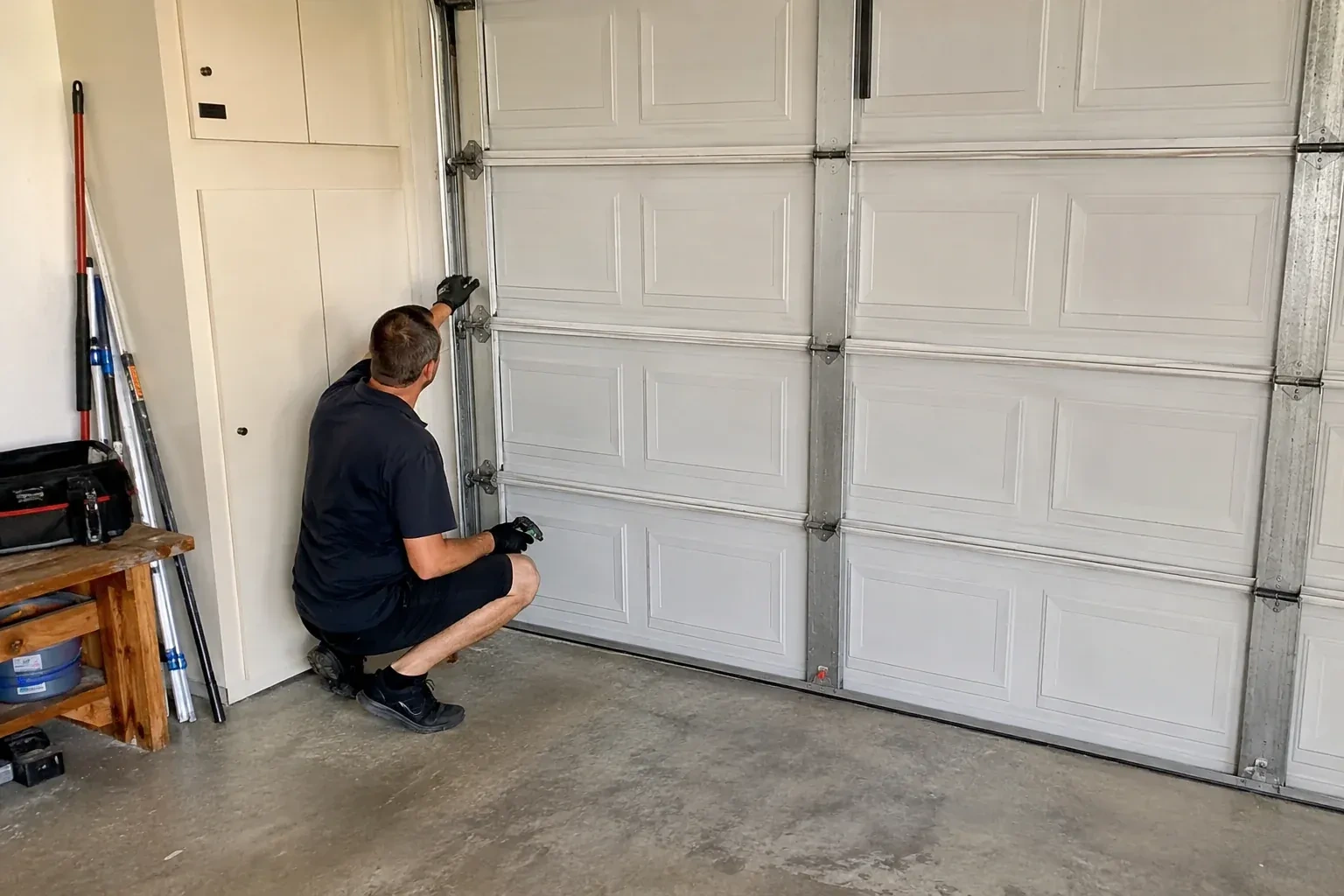
How the visit goes
The floor and the threshold
The concrete under the door is half of the seal. The technician looks at the slope of the driveway toward the opening, the condition of the slab edge where the seal lands, cracks, spalled patches and any step between the slab and the apron. A garage floor that has heaved or settled over the decades is common, and the shape it has taken decides whether a standard seal, a taller bulb profile or a threshold seal glued to the floor gives the most even contact. Where water arrives from outside, the path it takes is noted so the seal and any threshold are placed to meet it.
Fitting a new retainer where needed
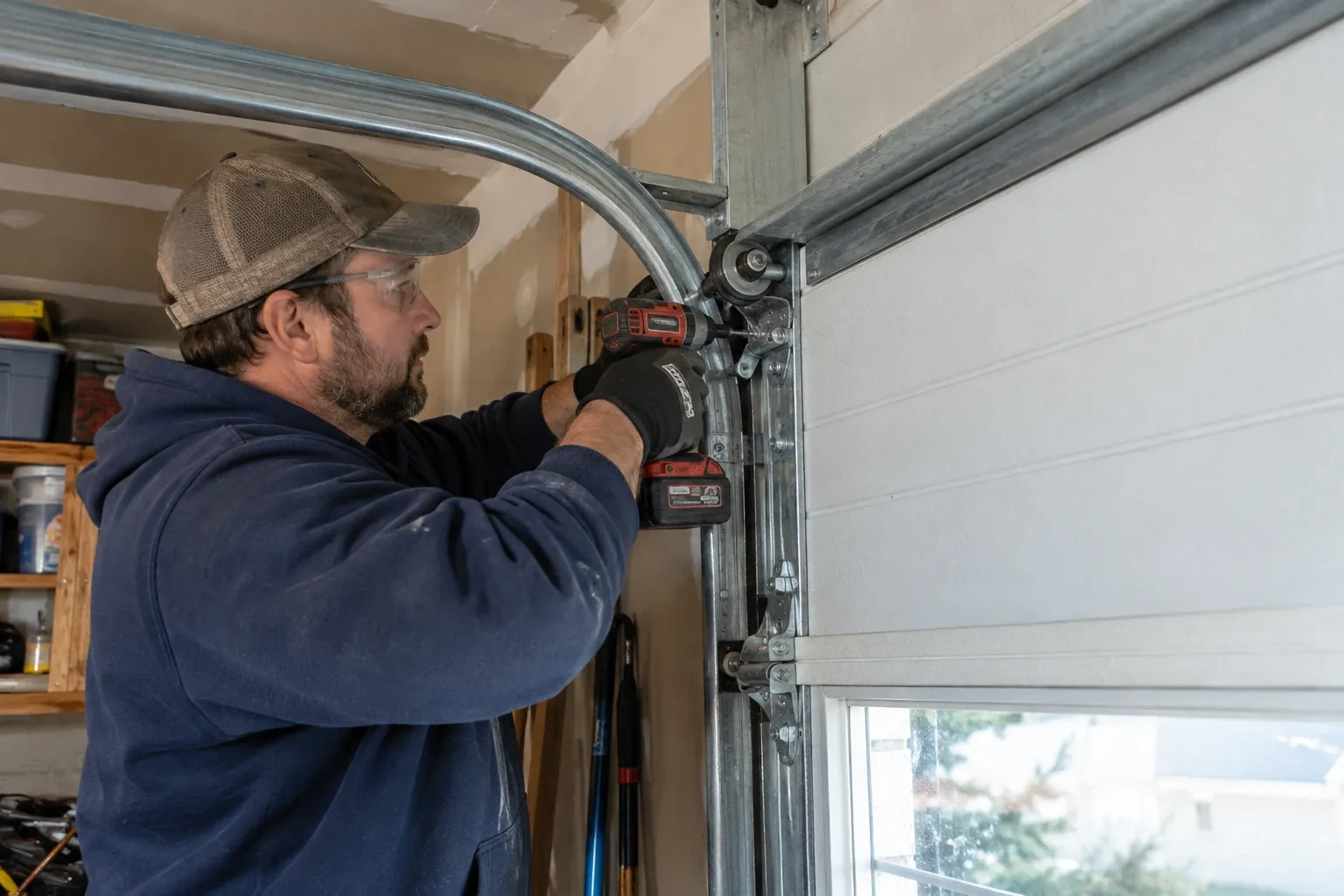
If the inspection found a retainer that is bent, corroded or spread open, it is replaced before the seal goes in. The old extrusion is unscrewed or its rivets drilled out, the bottom rail is cleaned and any rust treated, and a new aluminum retainer is fixed straight along the rail with fresh self-drilling screws, checked with a straightedge so the channels run true. Fastener heads are sealed against meltwater. On a door whose channel was moulded into a plastic bottom cap, a screw-on retainer is fitted over the rail so a standard seal can be used from now on.
Keeping the new seal from freezing down
The habit that does the most for a bottom seal in a cold climate is a wipe of silicone spray along the seal face each autumn and again mid-winter. It leaves a film that meltwater struggles to bond to, so the strip lifts off the slab cleanly on a frosty morning. Avoid petroleum-based sprays, which soften vinyl. If the door does freeze to the floor, leave the remote alone: free the seal by hand with gentle warmth from a hair dryer or by working a plastic scraper along the line, then run the door. A minute of patience keeps the new seal whole.
Garage Door Bottom Seal Replacement
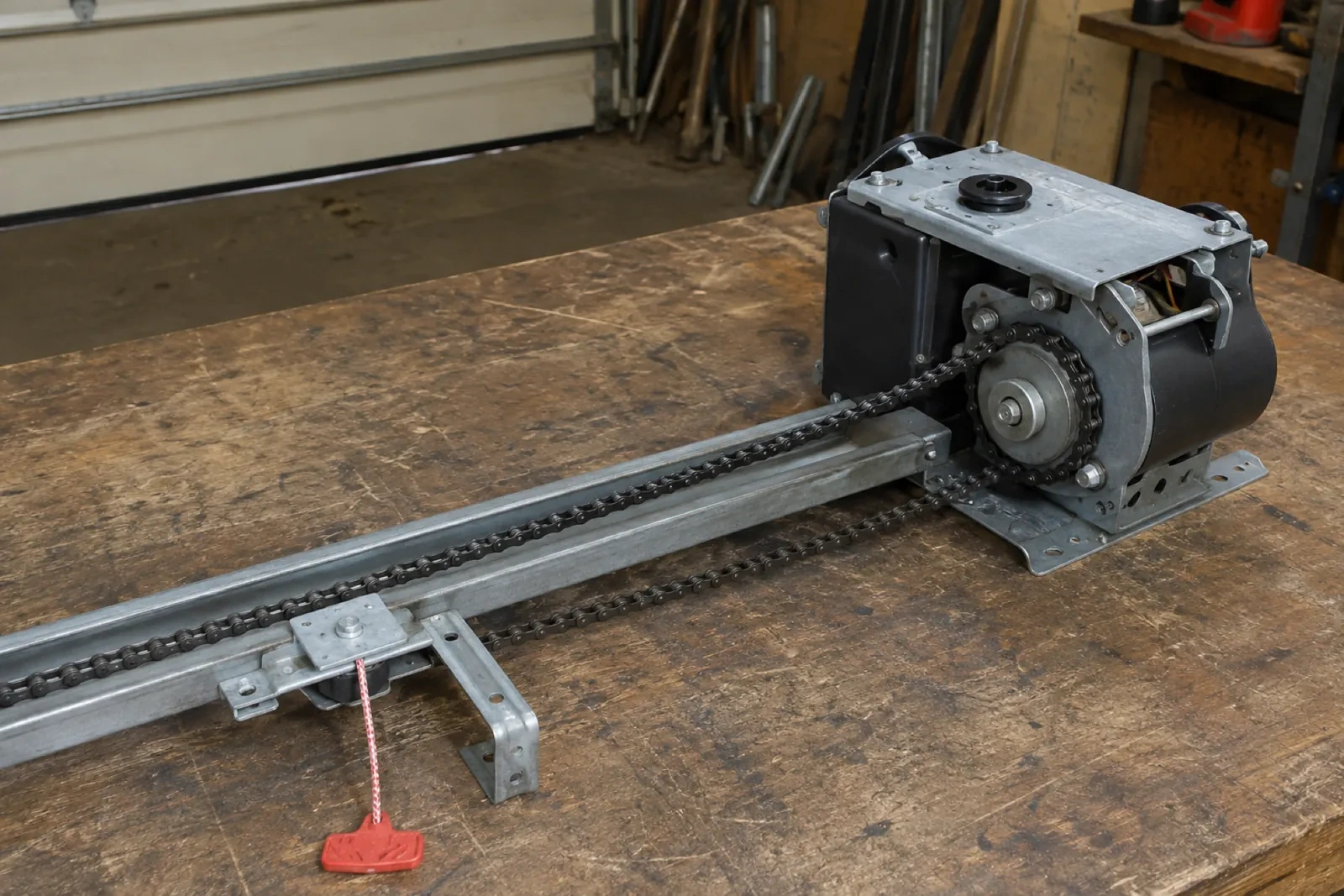
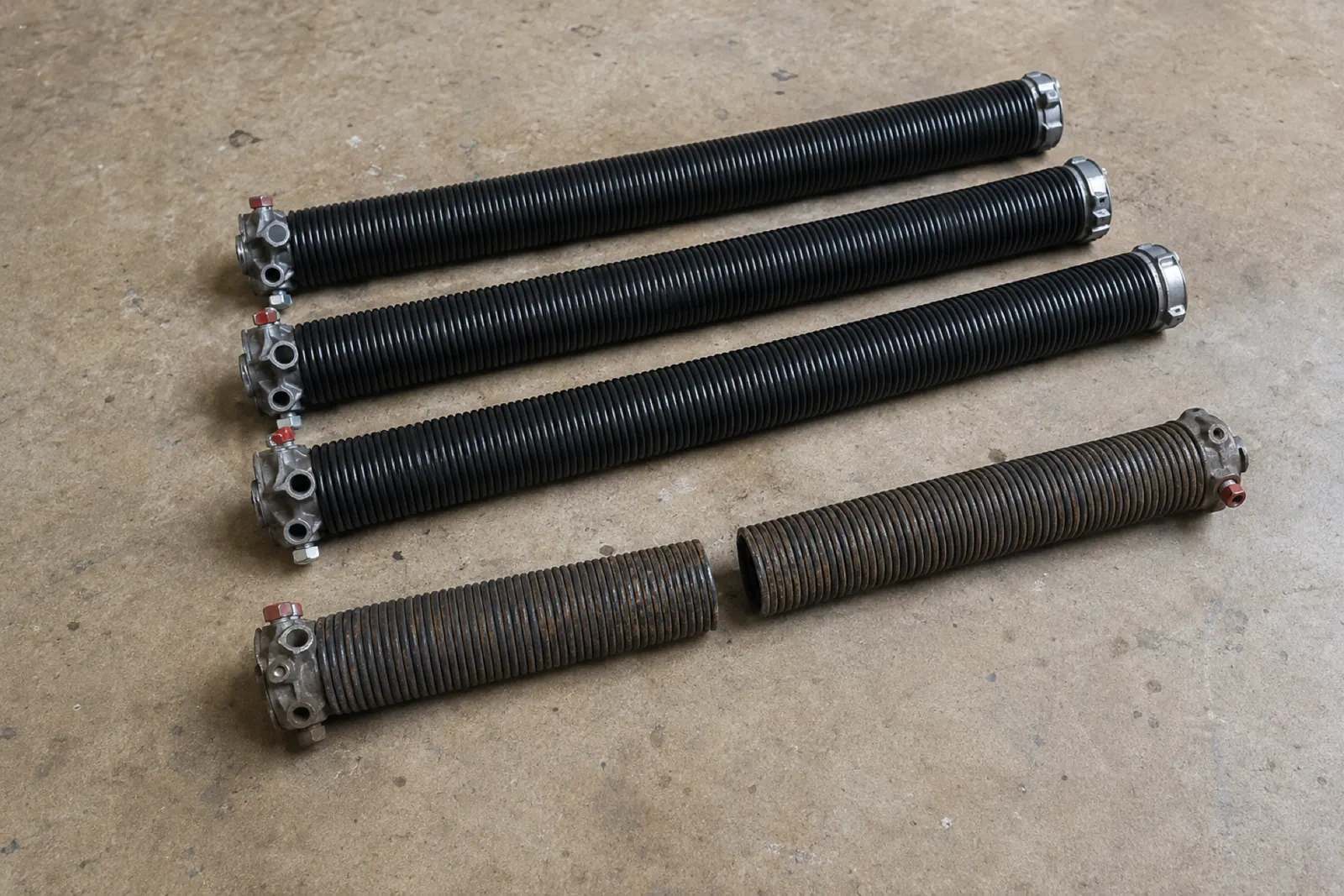
In the van
Track clamps
Bulb or U-style bottom seal
Wire brush and scraper
Seal end caps
Self-drilling retainer screws
Garage Door Bottom Seal Replacement
What affects the quote
Condition of the old seal
A supple strip slides out in a minute. One that has hardened and seized in its channel, or been torn and frozen into the corners, has to come out in pieces, which takes longer.
Rodent-resistant seal
A profile with embedded stainless mesh for a garage that has had repeated chewing costs more per length than plain vinyl and is offered where the history calls for it.
Floor and threshold shape
A dished, sloped or heaved slab may call for a taller bulb profile or a threshold seal on the floor, each of which is quoted as a separate choice you can accept or leave.
What to have ready
- Is there a car or storage inside that needs moving before the visit?
- Does the door stop short of the floor or reverse before it closes?
- What is getting in: light, drafts, water, snow, leaves or pests?
Garage Door Bottom Seal Replacement: questions
QuestionsHow do I know which size and type my door takes?
Look at the end of the bottom section for the metal or plastic strip that holds the seal. Count the channels, note whether they are slotted or rounded, and measure the distance between them and the width of the door. A photo of the end of the retainer and one of the seal's cross-section is usually enough for the technician to identify the profile before the visit and bring the right roll.
How long should I allow for the work?
Plan on an hour or two for a straightforward replacement on a standard door, including the inspection and the opener reset. A retainer replacement, a hardened seal that has to come out in pieces, a wood door with a nail-on strip or the addition of a threshold seal each add time. The technician will give you a realistic window once the door has been looked at.
Why does the seal freeze to the floor, and what should I do when it does?
Snow melts off the car, runs to the low point at the door and refreezes overnight around the seal. When that happens, leave the remote alone, since the opener will tear the strip or pull the door out of level. Free the seal by hand with gentle warmth along the line or by working a plastic scraper under it, then run the door. A film of silicone on the seal each autumn largely prevents it.
Related services
- Garage Door Tune-UpOn windy nights the door rattles in its frame, there is a line of daylight along one side, and the bottom seal has gone hard and flat.
- Off-Track Garage Door ResetA delivery van backed into the shop's overhead door this afternoon.
- Garage Door Panel ReplacementA stray ball went through one of the window panes in the top section.