Openers · Weller Park
Garage Door Opener Diagnosis and Repair in Weller Park
For a few days there was a grinding sound whenever the door started moving.
In plain words
What you get from the visit is more than a working door. You get told, in plain words, what was wrong and why it happened: a gear that had run dry for years, a sensor knocked out of line by a snow shovel, a wall control left in lock mode by a visiting grandchild. Small repairs are done on the spot, settings are recorded, and the door is demonstrated on every control you own. You also learn the short monthly test that catches most opener problems before they strand a car, so the next fault is one you notice while it is still small.
How the visit goesIt is a January morning and the door lifts about a hand's width, groans, and settles back down. When you pull the release and try by hand the door feels far heavier than it used to, and the bottom seal is stuck hard to the slab.
Garage Door Opener Diagnosis and Repair
How the visit goes
The door by itself
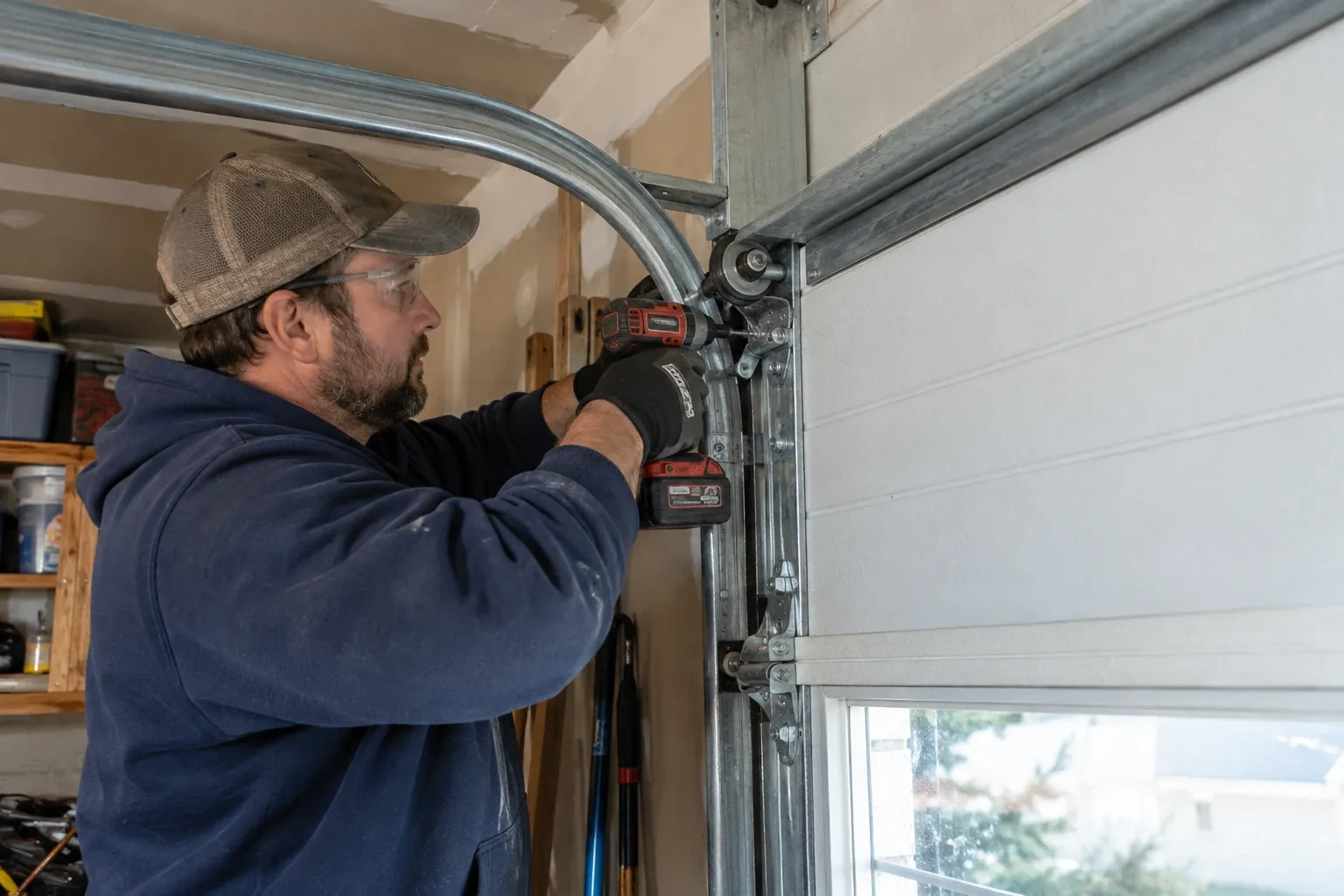
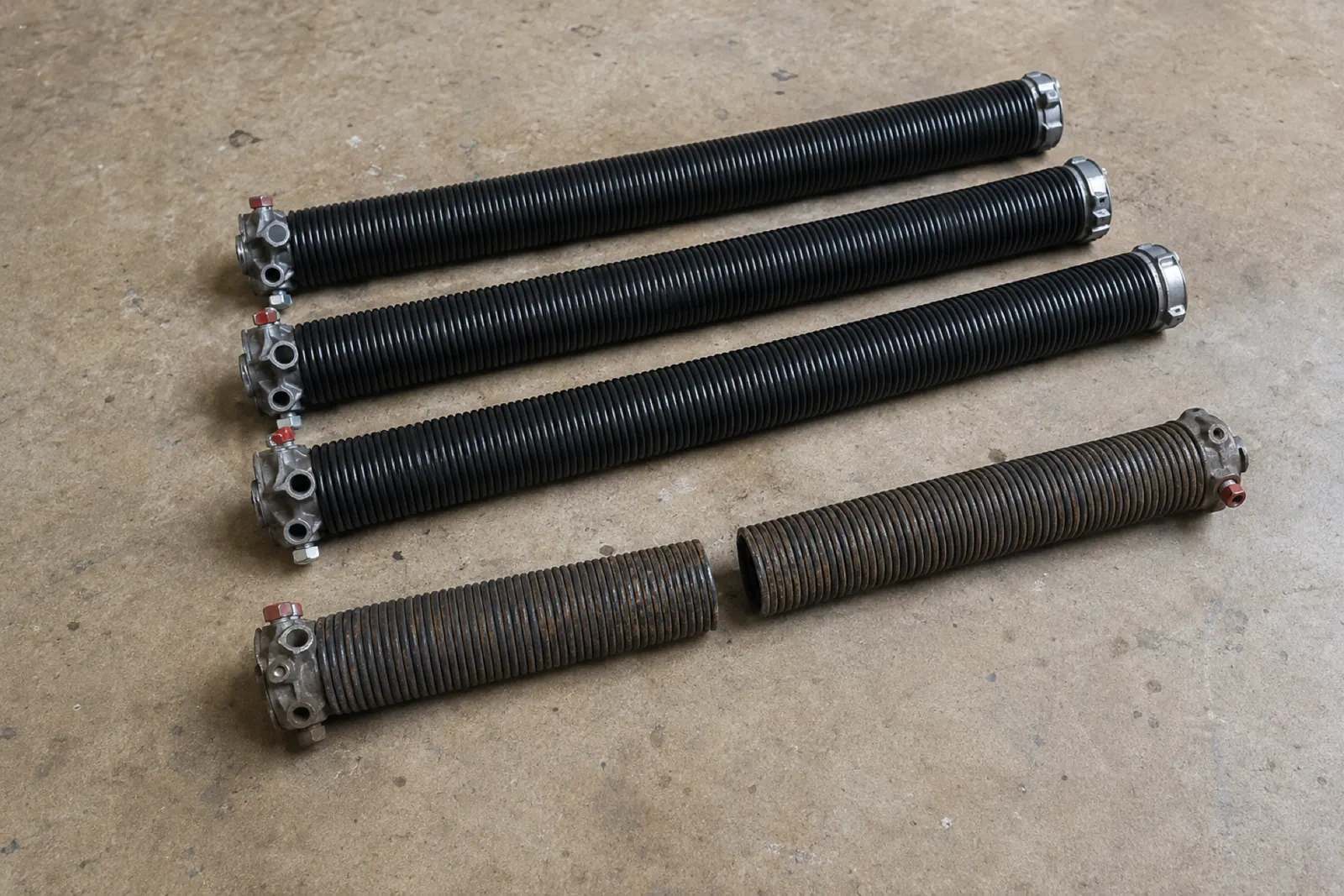
With the door fully closed, the technician pulls the emergency release and lifts the door by hand. A healthy door rises smoothly with modest effort, holds still about a metre off the floor, and stays up when fully open. If it is heavy, drifts down, or stays put only at the top, the springs are tired or broken and the opener has been doing work it was never sized for. Tracks, rollers, hinges, cables and drums are looked over at the same time. This check comes before any powered testing, because a door in this state is corrected on the door side first, by someone with the tools for tensioned hardware.
Setting travel and force, then proving them
Once the mechanical cause is dealt with, the opener is set up as if newly installed. Travel is adjusted so the door seals gently on the floor without hammering the slab and stops at the top clear of the header. Force is set as low as will reliably move the door through a full cycle in the current season, never higher. Then the door is closed onto a 2x4 lying flat on the floor and must climb back to open the moment it touches; and while closing again, a broom handle is passed through the beam and the door must stop and rise. Failing either means the setup is redone, not accepted.
Ready for the cold months
After a winter diagnosis the door is set up for the season rather than for the day. The bottom seal has been freed and, if it was tearing, replaced, with a light silicone wipe so it releases from the slab. Moving parts carry a low-temperature lubricant. The photo eyes have been cleaned and, where low sun was blinding one, shaded or swapped side to side. Force has been set for a cold, stiff door without being pushed up to hide one. Keep snow and ice cleared from the threshold and the sensor lenses, and expect the door to be a shade slower on the coldest mornings.
Garage Door Opener Diagnosis and Repair
In the van
Transformer and board fuse
Remote batteries (coin and cylinder cells)
Garage door lubricant
Photo-eye sensor pair
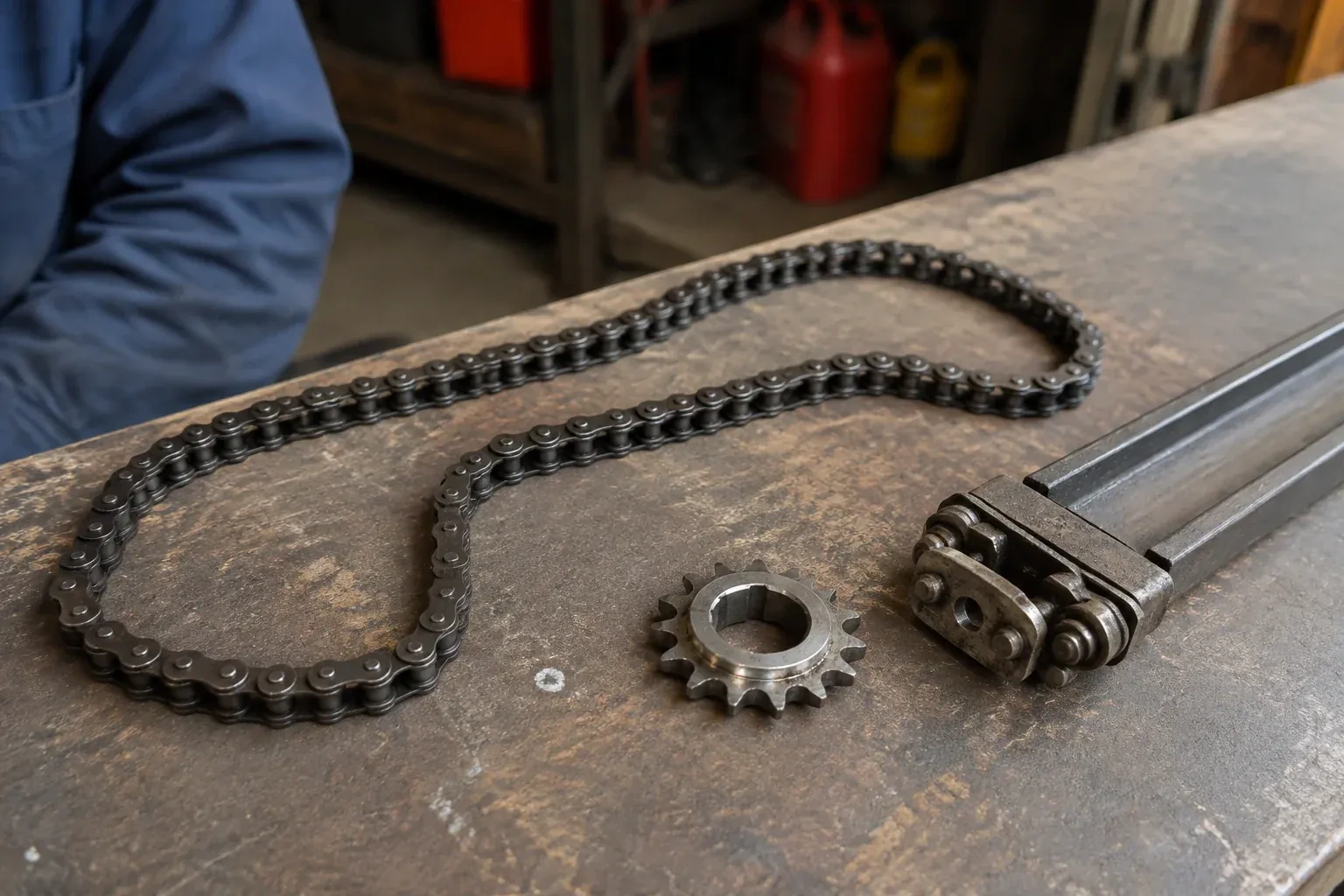
Chain or belt
Garage Door Opener Diagnosis and Repair
What affects the quote
Ceiling height and access
A standard-height garage puts the head unit in easy ladder reach. High ceilings, high-lift tracks, storage lofts or a car that cannot be moved add setup time and sometimes a taller ladder.
Repair or replacement
When diagnosis points to replacement, the quote changes shape entirely: a new head unit, rail and sensors with installation, plus removal of the old opener, rather than a single part and labour.
Condition of the mounting
A rail that has sagged, a header bracket pulling out of the wall, or ceiling angle iron that has loosened must be re-secured before the opener is set up, and that hardware work is itemized.
What to have ready
- Did anything happen just before: a power outage, a storm, new bulbs, a bump?
- Is the garage connected to the house, or does it have a side door?
- Are the lights on the opener or the wall control blinking, and in what pattern?
Garage Door Opener Diagnosis and Repair: questions
QuestionsWhat does an opener diagnosis actually involve?
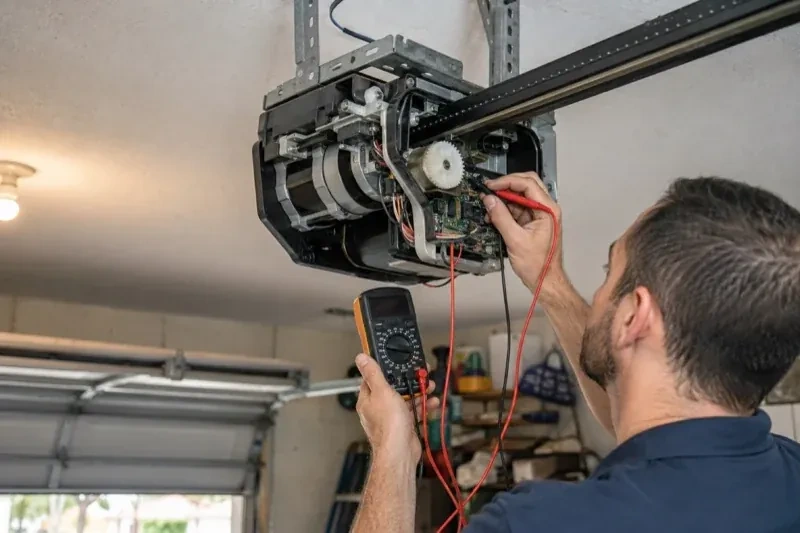
A fixed sequence of checks, done in order so nothing is assumed. Power at the receptacle. Each control tried on its own. The photo eyes and their indicator lights. The head unit's flash code, if it has one. The drive train from motor to trolley. Then the door itself, disconnected and lifted by hand to test its balance. Only after that is a part named and, where it is a small one, replaced during the same visit.
Will the repair happen during the same visit?
When the cause is a common part carried on the truck, yes: capacitors, gear kits, sensor pairs, trolleys, wall controls, remotes and wiring are typical. When the part is specific to an older model and has to be ordered, or when the diagnosis finds a spring or cable problem that needs its own appointment, the door is left safe and the next step is agreed with you before the technician leaves.
The motor hums but the door stays put. What is usually wrong?
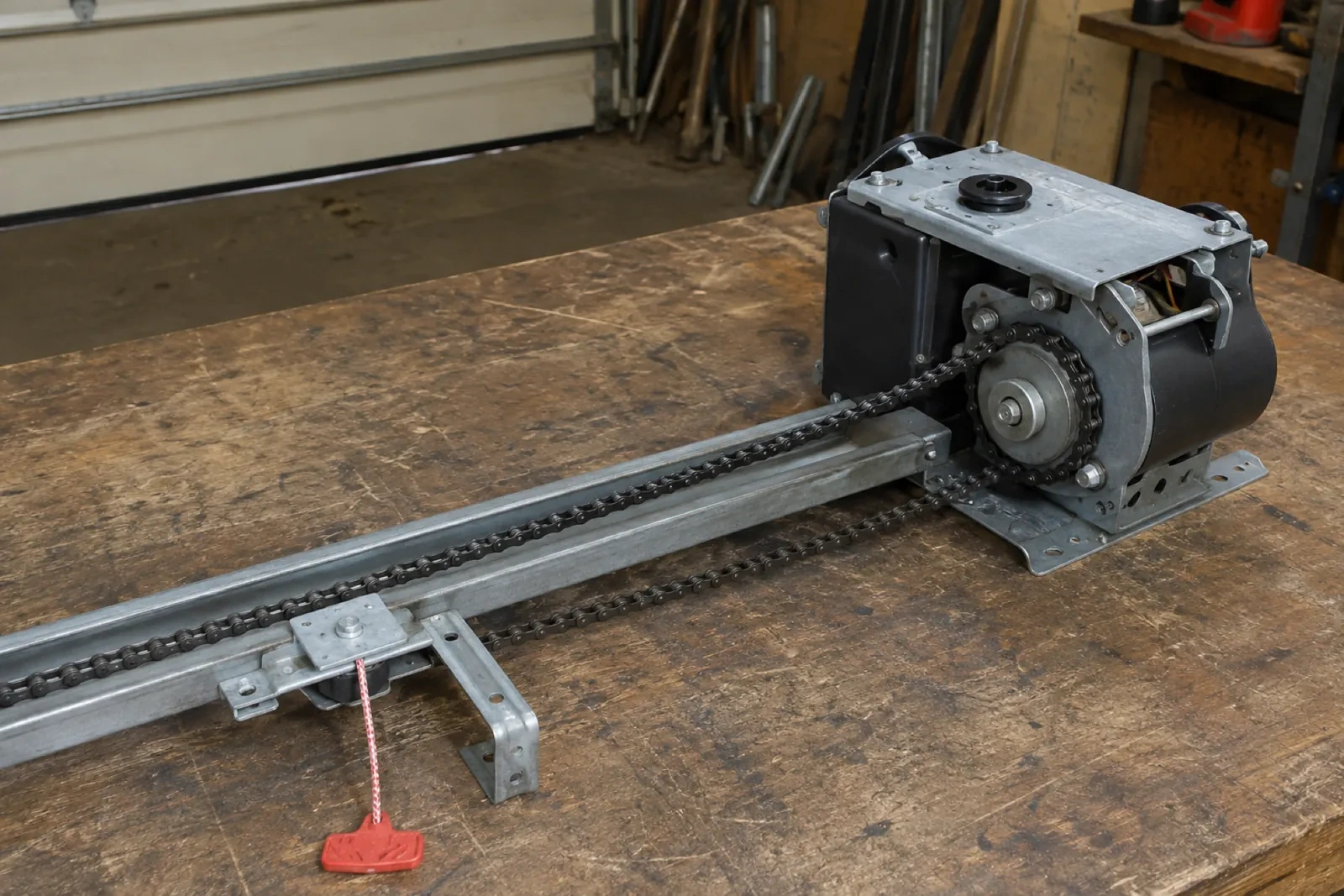
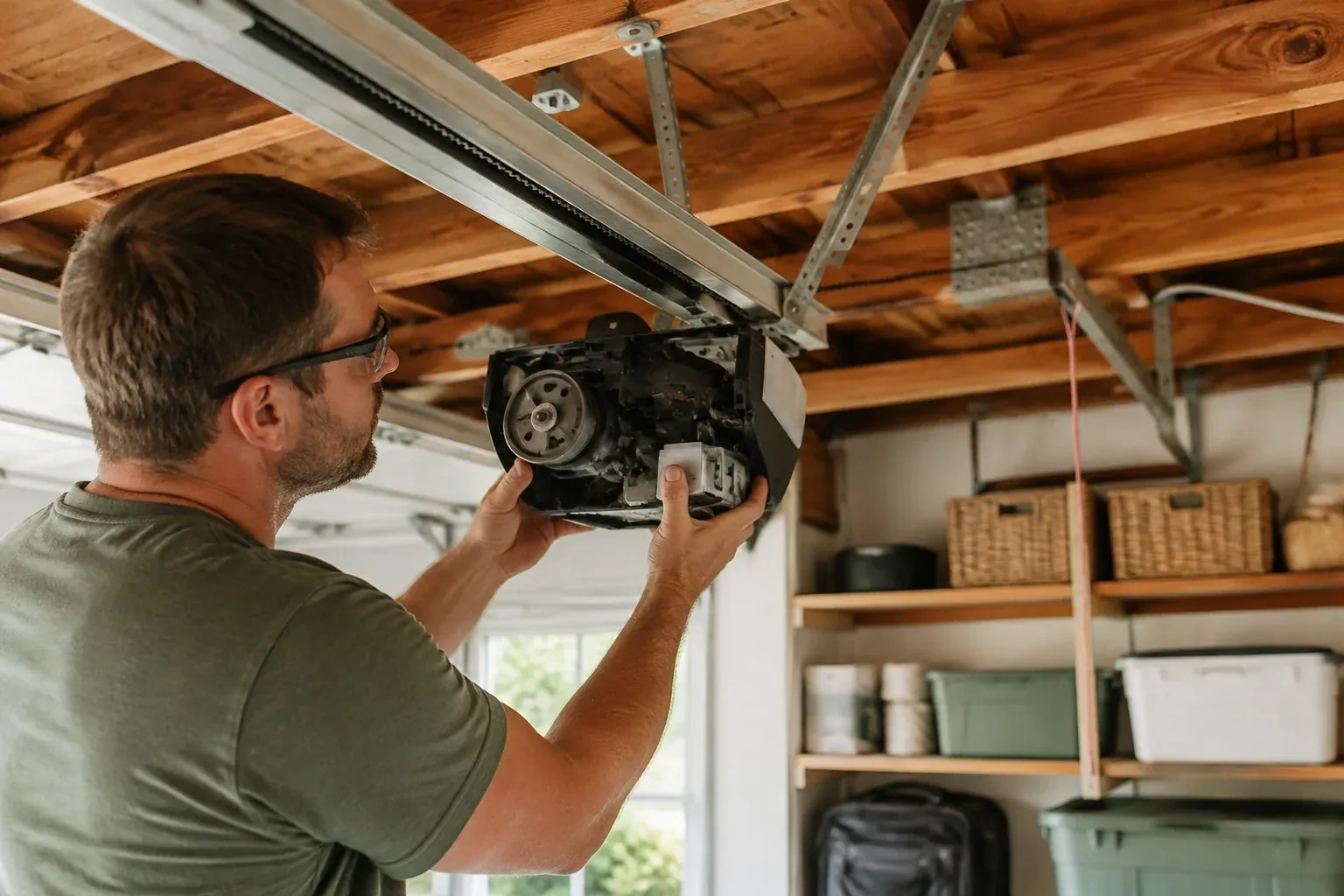
A hum with no movement means the motor is receiving power but something is stopping it turning, or stopping its turn from reaching the door. On AC units a failed start capacitor is the common cause; on chain-drive heads a stripped nylon drive gear is the other. Less often the trolley has simply been released from the carriage. Each of these is a routine repair once identified, and the hum is one of the more helpful sounds an opener makes.
Related services
- Belt-Drive Opener RepairThere is a new squeal from the front of the rail, up near the header, on every cycle.
- Garage Door Opener ReplacementThe remotes only work from the end of the driveway now, and one of them disappeared with a set of keys last month.
- Photo-Eye Sensor Alignment or ReplacementYou press the remote, the door drops a few centimetres, then climbs straight back to the top while the opener light blinks.