Springs · Weller Park
Garage Door Roller Replacement in Weller Park
The door shudders as it rises, worst where the track bends from vertical to horizontal.
In plain words
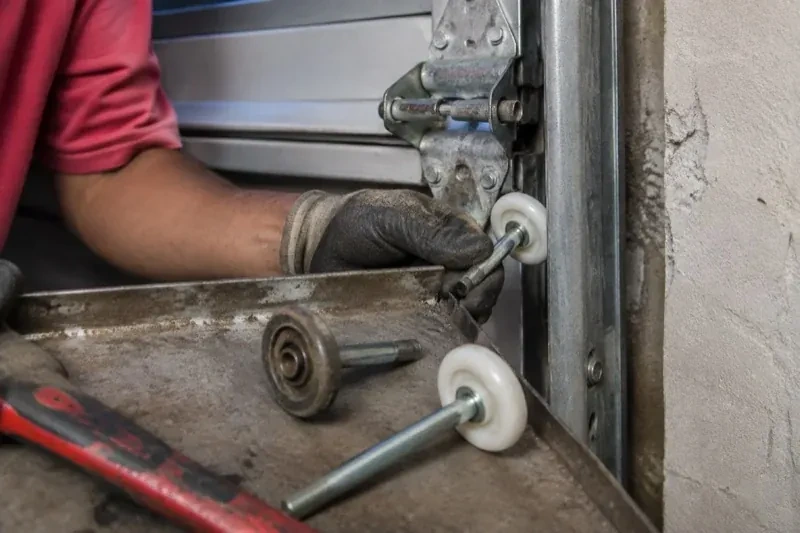
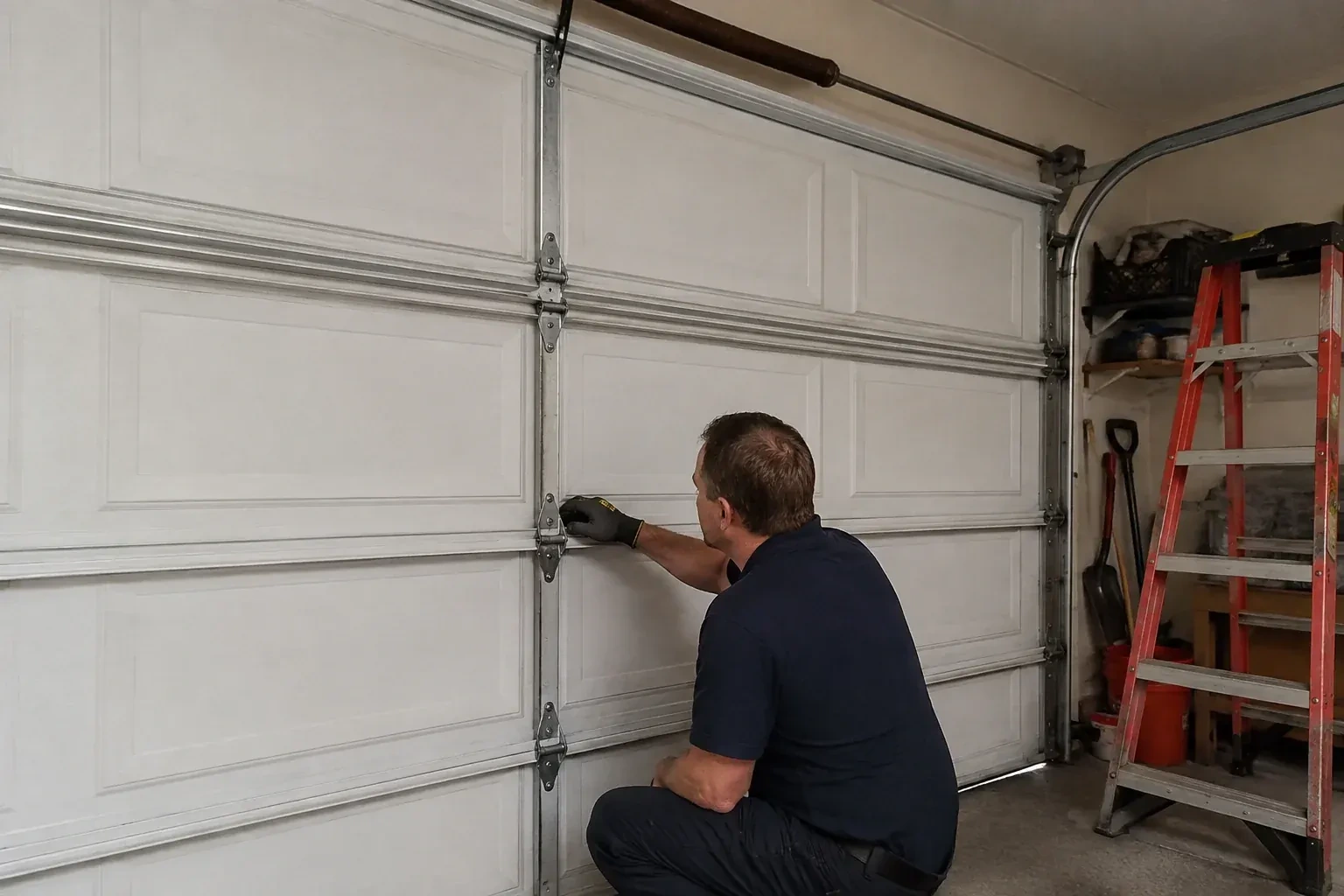
Rollers do more than reduce friction: they are what keeps the door in its track. A wheel worn oval, a bent stem, or a short stem sitting loose in a double hinge lets a section wander until the wheel rides up on the track lip, and from there a door can leave the track altogether. Replacing tired rollers before that point is a small job with a large effect on the door's future. The technician also checks hinge fasteners, jamb brackets and track alignment at the same time, since those are the other pieces that hold the door's path.
How the visit goesEvery morning the door announces itself: a rattle on the way up, a grinding squeal on the way down, loud enough that the neighbours know when you leave. A spray of lubricant settled it for a day or two, then the racket came back.
Garage Door Roller Replacement
How the visit goes
What the winter left behind
In this climate the foot of the track is where trouble collects. Slush and salt carried in on the tires settle in the bottom few inches, freeze overnight into ridges and leave a brine that attacks steel. The technician looks for corrosion on the bottom rollers and their stems, rust on the bottom brackets, ice damage or flat spots on wheels that have been skidding rather than turning, and the state of the lifting cables that share that wet corner. Finding salt damage here steers the recommendation toward sealed-bearing rollers and a thorough track cleaning, and occasionally toward new bottom brackets as well.
Cleaning and squaring the track
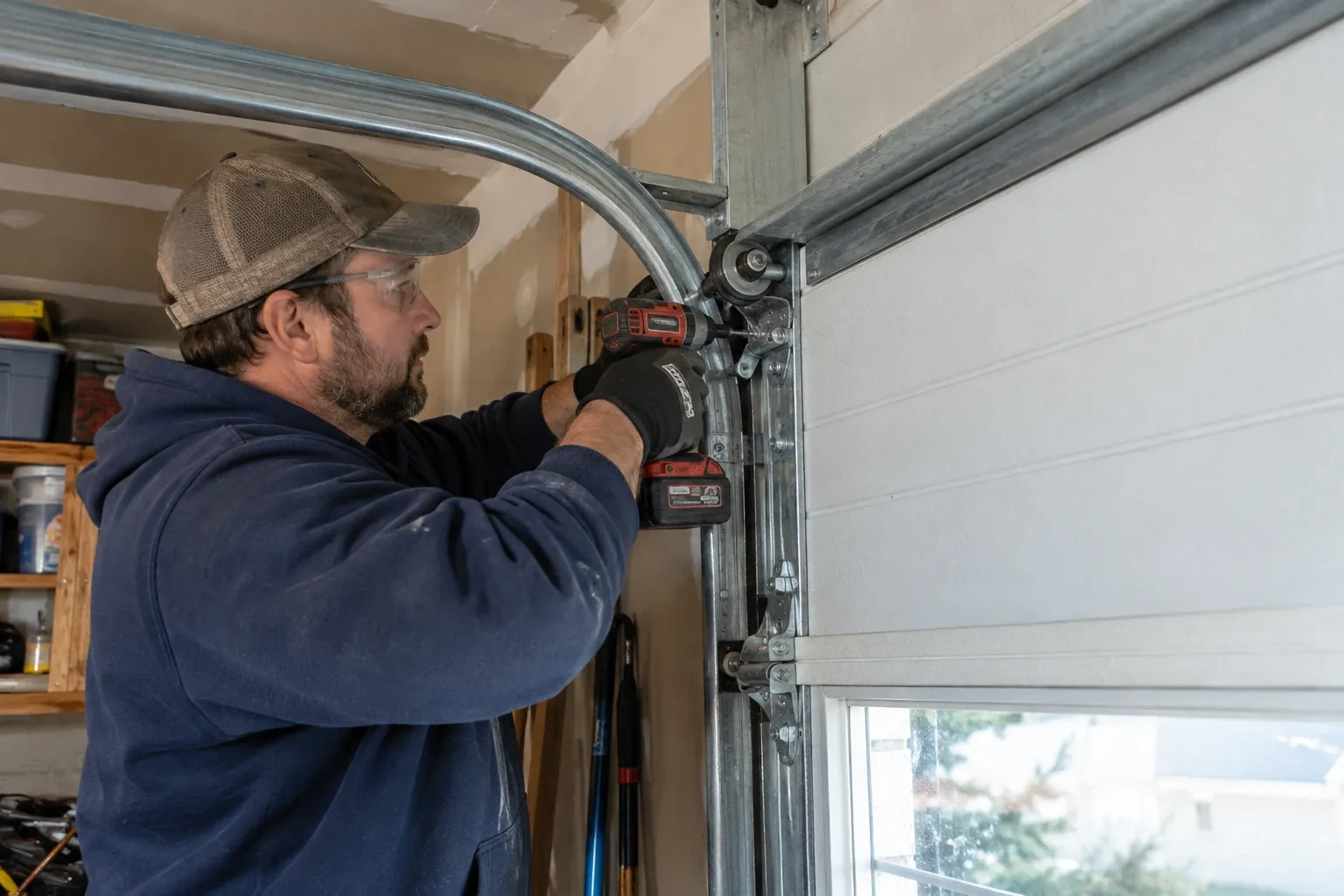
With the rollers changed, attention turns to the channel they run in. The technician clears grit, salt residue, old grease and any ice from the lower track, wipes the raceway clean, and checks each vertical track for plumb and each horizontal track for level and secure hangers. Jamb brackets and flag brackets are tightened or shifted so the track sits at the correct distance from the door, giving each new wheel a small amount of side play and a clear path around the curve. A dented lip is straightened where the metal allows, and a badly damaged length of track is pointed out for replacement.
A door that runs quietly and squarely
The first thing most people notice is the quiet. A door on new nylon ball-bearing rollers moves with a low hum instead of a clatter, sections stay level as they rise, and the landing at the floor is soft rather than a thump. Because the top fixtures have been reset, the top section pulls snug to the header and the draught that used to come over the top of the door is reduced. Beneath the quiet is the structural benefit: every wheel is centred in its track with the right stem through the right hinge, so the door has far less tendency to wander toward the track lip.
Garage Door Roller Replacement
In the van
Two-inch nylon ball-bearing rollers
Three-inch rollers for commercial track
Garage door lubricant
Sealed-bearing nylon rollers
Bottom brackets
Garage Door Roller Replacement
What affects the quote
Residential or commercial track
Three-inch commercial track takes larger, heavier rollers and usually a heavier door behind them, and both the parts and the method of securing the door differ from a residential job.
Combining with spring or cable work
If springs or cables are being replaced in the same visit, the door is secured once and the roller set is added to that job, which is often more economical than a separate call.
Balance adjustment first
If the door drifts when released at halfway, the spring system needs adjusting before new rollers are fitted so they do not wear early; that adjustment is quoted as its own line.
What to have ready
- Are the wheels white plastic, bare steel, or a coloured nylon tire?
- How many sections does the door have, and is it wood, insulated steel or single-skin?
- Has the door ever come off its track or been hit by a vehicle?
Garage Door Roller Replacement: questions
QuestionsWhat is the difference between nylon and steel rollers?
Both are a wheel on a steel stem, commonly on ball bearings though standard nylon rollers can be bearingless; the bigger difference is the wheel material. A steel wheel is tough and suits very heavy or commercial doors, but steel on a steel track is loud and grows louder as bearings wear. A nylon wheel wraps a tire around the hub, absorbing vibration rather than passing it into the track, so the door runs more quietly and the wheel never rusts. For most residential doors, nylon is the usual recommendation.
Can I replace just the one roller that looks bad?
One roller can be changed on its own, and sometimes that is the sensible stopgap after a wheel breaks. The better result comes from a full set, because the other wheels have done the same number of cycles and are close behind, and mixing new with old, or nylon with steel, leaves the door running unevenly and sounding different on each side. A matched set also lets the technician set every top fixture and check every hinge in one pass.
Are the bottom rollers different from the rest?
The wheels themselves are usually the same, but their home is not. The bottom rollers sit in the bottom brackets, which also anchor the lifting cables and therefore carry the counterbalance load whenever the door is closed. That is why manufacturers put warning labels there and why this position is handled by a trained technician who either exchanges the roller without disturbing the bracket or relieves the spring tension first. It is also the position most exposed to salt and slush, so it is inspected with extra care.
Related services
- Garage Door Track Repair or ReplacementYou bought the house with a door that sticks near the top of its travel.
- Garage Door Cable ReplacementStanding inside with the door closed, you notice the cable on the right side near the floor has gone fuzzy.
- Torsion Spring ReplacementAfter pulling the red release cord, you tried lifting the door yourself and it would barely leave the floor.